










Steel Warehouse
A steel warehouse is a versatile and durable industrial building constructed primarily from steel components. It serves as a storage facility for various goods and materials, providing ample space, security, and protection from the elements.
Key Features
- Durability: Steel is known for its exceptional strength and durability. steel warehouses can withstand harsh weather conditions, including heavy snow loads, high winds, and seismic activity, ensuring the safety of stored goods.
- Cost-Effective: Steel structures are cost-effective in terms of construction and long-term maintenance. They are often quicker to build compared to traditional construction methods, reducing labor costs and construction time.
- Customizable Design: Steel warehouses can be customized to meet specific size, layout, and aesthetic requirements. This flexibility allows for the efficient use of space and tailored solutions to accommodate various business needs.
- Versatility: Steel warehouses are versatile and can serve as storage facilities, distribution centers, manufacturing spaces, workshops, retail outlets, and more. Their adaptability makes them suitable for various industries.
- Energy Efficiency: Steel warehouses can be designed with energy-efficient features, such as insulated panels, reflective roofing materials, and advanced HVAC systems, reducing operational costs.
- Low Maintenance: Steel structures require minimal maintenance compared to traditional building materials. They are resistant to pests, corrosion, and fire, reducing ongoing maintenance costs.
- Sustainability: Steel is a recyclable material, making steel warehouses an environmentally friendly choice. Additionally, green building practices, such as incorporating solar panels and rainwater harvesting systems, can enhance sustainability.
- Compliance with Codes and Regulations: Steel warehouses are designed and constructed to meet local building codes, zoning regulations, and safety standards, ensuring compliance and safety for occupants.
- Shorter Construction Time: Steel structures can be erected relatively quickly, reducing downtime and allowing businesses to start operations sooner.
- Longevity: Properly maintained steel warehouses have a long lifespan, providing a reliable and durable solution for storage and industrial needs.
- Resilience: Steel is non-combustible and can withstand extreme weather events and natural disasters better than some other building materials, enhancing the resilience of the warehouse.

Parts & Components
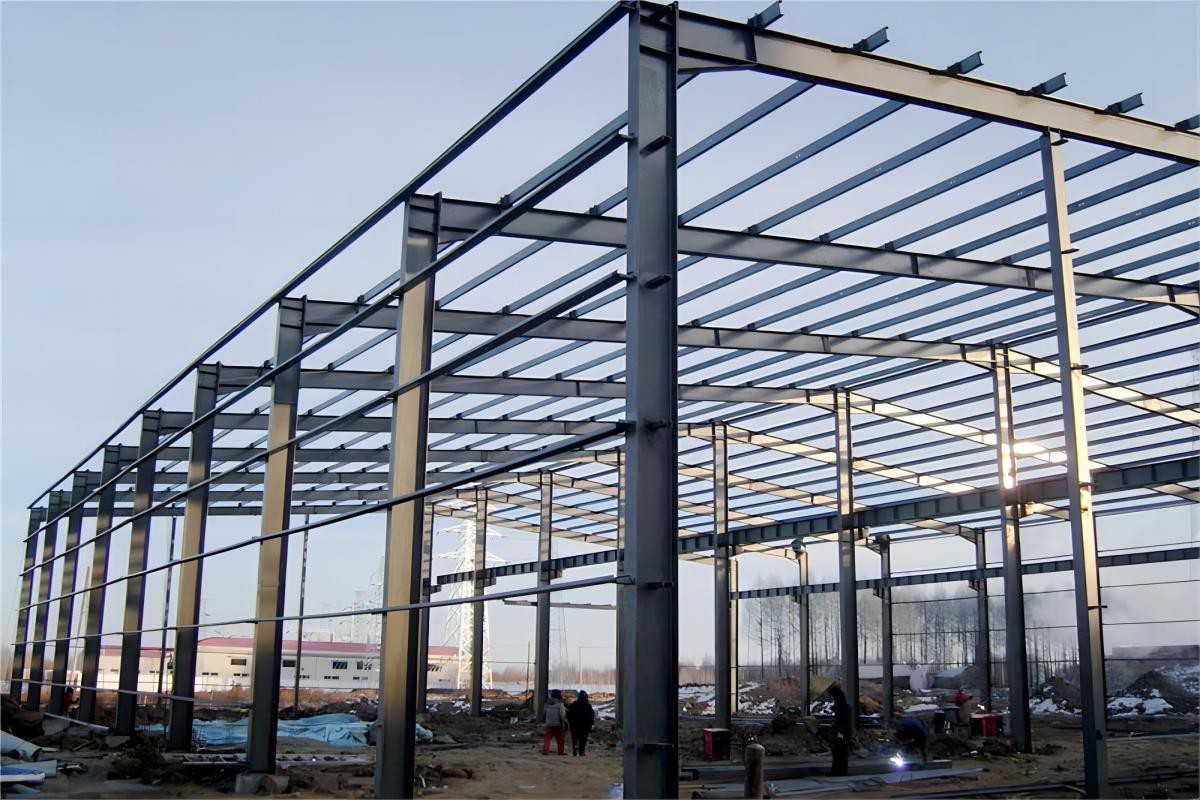
A steel warehouse consists of various parts and components that work together to create a functional and durable building. Here are the key parts and components of a typical steel warehouse:
● Main Frame: The main frame is the primary structural component of the warehouse and includes:
■ Columns: Vertical steel members that support the load of the structure.
■ Beams: Horizontal steel members that connect the columns and provide support for the roof and walls. The arrangement of beams and columns can vary depending on the design, such as clear-span, multi-span, or single-slope.
● Roof System:
■ Roof Trusses: Framework of steel members that support the roof's load and provide stability to the structure. Roof trusses are typically designed to accommodate the chosen roof type (e.g., pitched or flat).
■ Roof Panels: Steel or metal panels that cover the roof, providing weather protection and insulation options.
● Wall System:
■ Wall Columns: Vertical steel members that support the walls.
■ Wall Girts: Horizontal steel members attached to the wall columns, providing support for wall panels.
■ Wall Panels: Steel or metal panels that make up the exterior walls of the warehouse. These panels can be insulated or non-insulated, and they provide protection and aesthetics.
● Foundation: The foundation of a steel warehouse provides stability and load distribution to the soil. Common foundation types include concrete slabs, footings, or piers, depending on the site's soil conditions and local building codes.
● Secondary Framing:
■ Purlins: Horizontal members that span between roof trusses and support the roof panels.
● Girts: Horizontal members that span between wall columns and support the wall panels.
■ Eave Struts: Horizontal members located at the eaves of the building that connect the roof and wall systems.
● Bracing: Diagonal or cross-bracing elements within the structure to enhance stability and resist lateral forces like wind or seismic activity.
● Doors and Windows:
■ Roll-up Doors: Commonly used for vehicle access and loading docks.
■ Man Doors: Regular-sized entry doors for personnel access.
■ Windows: Optional for natural lighting and ventilation.
● Insulation: Insulation materials, such as fiberglass or foam board, may be added to the roof and wall systems to regulate temperature and reduce energy consumption.
● Ventilation and HVAC: Ventilation systems and heating, ventilation, and air conditioning (HVAC) units can be installed to maintain indoor air quality and temperature control.
● Electrical and Plumbing: Electrical wiring, lighting, plumbing for restrooms or offices, and other utility connections are integrated into the structure as needed.
● Fire Protection: Fire suppression systems, such as sprinklers, may be installed to enhance fire safety within the warehouse.
● Security Systems: Security features, such as surveillance cameras, alarms, and access control systems, can be integrated into the structure for asset protection.

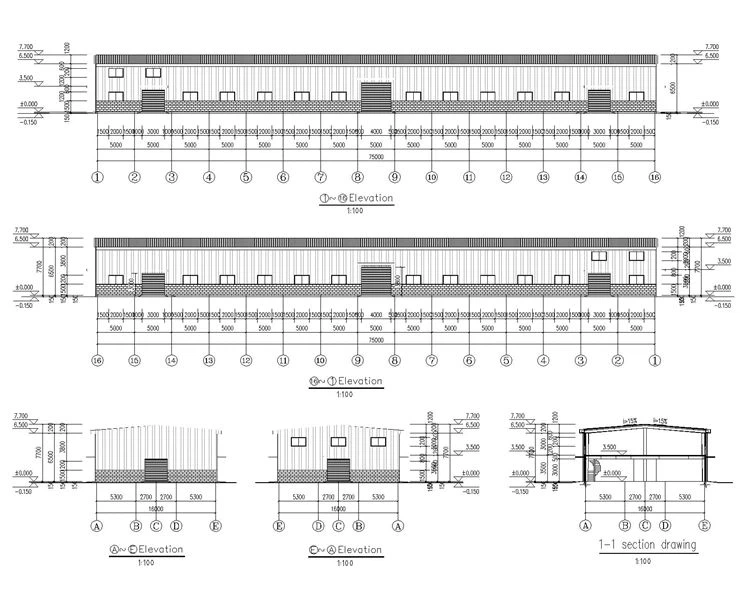
Sketch
Technical Parameter

Advantages
Steel warehouses offer numerous advantages, making them a popular choice for industrial, commercial, and storage facilities. Here are some of the key advantages of steel warehouses:
- Construction Speed: steel warehouses are fabricated away from the construction site in a controlled setting, significantly curtailing construction timelines. When the components reach the building site, assembly typically outpaces traditional construction methods, leading to swifter project finalization.
- Cost Efficiency: These structures frequently offer better cost-efficiency compared to conventional construction. Diminished labor expenses arising from quicker assembly, meager maintenance outlays, and potential energy savings collectively contribute to economic viability.
- Design Adaptability: steel warehouses can be tailored to conform to specific project prerequisites. Architects and engineers have the freedom to explore inventive designs, open floor layouts, and extensive clear spans, delivering adaptability in accommodating diverse purposes and aesthetic preferences.
- Robustness and Endurance: Steel is celebrated for its remarkable robustness and endurance. Prefabricated steel structures can endure severe weather conditions, seismic events, and heavy loads, resulting in an enduring and dependable edifice.
- Energy Conservation: These structures can be conceived with energy-efficient attributes, such as insulated roofing and wall panels, cool roofing materials, and energy-sparing windows and entrances. This can lead to curtailed energy consumption and diminished operational expenditures.
- Minimal Upkeep: steel warehouses mandate minimal maintenance throughout their lifecycle. The inherent durability of steel mitigates issues like decay, infestations, and corrosion, culminating in reduced maintenance costs.
- Environmental Sustainability: Steel is readily recyclable, rendering it an eco-conscious selection. Additionally, the efficiency of the manufacturing process, reduced construction waste, and energy-efficient blueprints all contribute to sustainability.
- Adaptability: Prefabricated steel structures can be deployed for a broad spectrum of applications, encompassing warehouses, manufacturing plants, commercial complexes, agricultural establishments, aircraft hangars, and residential dwellings.
- Expansion and Modification: These edifices can conveniently embrace future expansion or alteration. Incorporating new segments, revising the arrangement, or introducing fresh elements is comparatively uncomplicated.
Application
Steel warehouses have a wide range of applications across various industries due to their versatility, durability, and cost-effectiveness. Here are some common applications of steel warehouses:
- Storage Facilities: Steel warehouses are often used as storage spaces for a wide variety of goods, including raw materials, finished products, machinery, equipment, and inventory. They provide a secure and organized environment for storing and managing materials.
- Distribution Centers: Steel warehouses serve as distribution hubs for logistics and supply chain operations. They are strategically located to efficiently store and distribute products to retailers, wholesalers, and consumers.
- Manufacturing Facilities: Many manufacturing companies utilize steel warehouses as production facilities. These warehouses offer open floor plans and ample space for manufacturing processes, machinery, and assembly lines.
- Agricultural Storage: Farmers and agribusinesses use steel warehouses to store crops, equipment, and agricultural products. The clear-span design allows for the storage of large machinery and equipment.
- Retail Stores: Steel warehouses can be adapted into retail spaces or showrooms. Their customizable design allows for the creation of attractive retail environments while maintaining cost efficiency.
- Cold Storage Facilities: Steel warehouses can be equipped with specialized insulation and refrigeration systems to create cold storage facilities for perishable goods, such as food and pharmaceuticals.

Production Procedure
● Project Planning and Design:
■ Site Selection: Determine the location for the warehouse, considering factors like accessibility, proximity to suppliers and customers, and zoning regulations.
■ Conceptual Design: Work with architects and engineers to create a preliminary design that meets the project's requirements and budget constraints.
■ Detailed Design: Develop detailed architectural and structural plans, including dimensions, layouts, load calculations, and material specifications.
● Permitting and Approvals:
■ Obtain Permits: Ensure that all necessary permits and approvals from local authorities are obtained before proceeding with construction.
● Material Procurement:
■ Order Steel: Procure the required steel components, including beams, columns, roof and wall panels, purlins, and other structural elements.
■ Quality Control: Ensure that the steel materials meet the required quality standards and specifications.
● Fabrication:
■ Cutting and Shaping: Steel components are cut and shaped according to the design specifications using CNC (Computer Numerical Control) machines for precision.
■ Welding: Welding processes join steel members together to create the various structural components.
■ Surface Treatment: Apply protective coatings, such as galvanization or paint, to prevent corrosion and enhance durability.
■ Quality Assurance: Inspect and test fabricated components for quality and structural integrity.
● Transportation to the Site:
■ Loading: Load the fabricated steel components onto trucks or containers for transportation to the construction site.
● On-Site Construction:
■ Foundation Preparation: Prepare the site by excavating and laying the foundation, which can be a concrete slab, footings, or piers, depending on the design.
■ Erection: Assemble the steel components on-site, starting with the main frame, including columns and beams. Crane equipment is often used to lift and position these heavy components.
■ Secondary Framing: Install secondary framing elements, such as purlins, girts, and eave struts.
■ Roof and Wall Panels: Attach roof and wall panels to the frame, ensuring proper insulation and weatherproofing.
■ Doors and Windows: Install doors, windows, and other openings as specified in the design.
■ Utilities and Services: Incorporate electrical wiring, plumbing, and HVAC systems as required for the warehouse's functionality.
■ Safety Measures: Implement safety measures, including fire protection systems and security features.
■ Quality Control: Inspect and verify that construction adheres to design specifications and safety standards.
● Interior Finishing (Optional):
■ If the warehouse includes office spaces or interior finishes, complete the interior design and construction according to the project requirements.
● Final Inspection and Handover:
■ Conduct a final inspection to ensure that all aspects of the warehouse meet quality and safety standards.
■ Obtain any necessary certifications and approvals.
■ Hand over the completed steel warehouse to the owner or operator.

Workshop View


Hot Tags: steel warehouse, China steel warehouse manufacturers, suppliers, factory
Previous
Steel WorkshopNext
Steel StructureYou Might Also Like


Send Inquiry