










Electromagnetic Overhead Crane
The crane consists of a bridge, trolley, and hoist, which are mounted on a gantry structure. The electromagnetic lifting mechanism is attached to the hoist, and it can be turned on and off by the crane operator. When the electromagnetic chuck is activated, it creates a strong magnetic field that attracts the ferromagnetic material and holds it securely in place.
The lifting capacity of electromagnetic overhead cranes ranges from a few tons to several hundred tons. They are designed to operate in harsh environments, with features such as anti-corrosion coatings, high-temperature resistance, and dust-proofing.
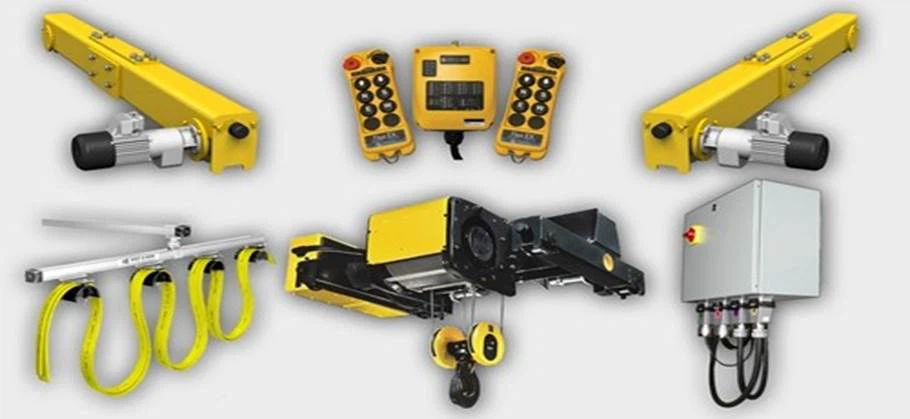
Safety features such as overload protection, emergency stop buttons, and warning alarms are also included in the design to ensure safe and efficient operation. Additionally, these cranes can be equipped with remote control technology, making them easier and safer to operate.
In summary, electromagnetic overhead cranes are essential equipment for heavy industries that require the lifting and transport of ferromagnetic materials. They are durable, reliable, and safe, with features that make them suitable for a wide range of applications.
- Capacity: 5-800/50ton
- Span length: 4-35m
- Lifting height: 3-50m
- Work duty: A4, A5, A6,A7
- Raged voltage: 220V~690V, 50-60Hz, 3ph AC
- Work environment temperature: -25℃~+50℃, relative humidity ≤85%
- Crane control mode: Floor control / Remote control / Cabin room

Pictures & Components
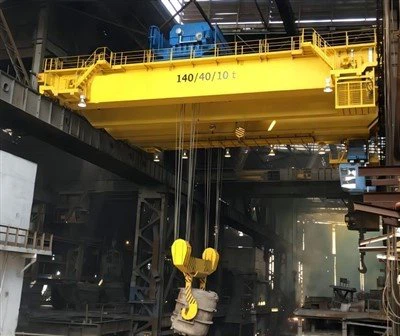
1. Whole set crane
1) An electromagnetic overhead crane is a type of industrial crane that uses an electromagnet to lift and move heavy objects. The crane consists of a metal frame which is mounted on wheels and can move along rails. A hoist is attached to the frame and is used to lower and raise the electromagnet. The magnet is powered by an electrical current and is turned on and off as needed to pick up and release the load.
2) These cranes are commonly used in steel mills, scrap yards, and other heavy-duty industrial settings where large and heavy ferrous objects need to be lifted and transported. They are highly efficient and can handle a wide variety of shapes and sizes of objects with ease.
3) Some of the benefits of using an electromagnetic overhead crane include increased safety, reduced labor costs, and faster loading and unloading times. These cranes are also highly customizable and can be tailored to meet the specific needs of different industries and applications.

2. Main girder
1) Electromagnetic overhead crane main girders are the main load-bearing structures of electromagnetic overhead cranes. They are responsible for carrying the weight of the entire crane, including the hoist, trolley, and load being lifted. These main girders are typically constructed of steel and come in various shapes and sizes depending on the specific requirements of the crane.
2) One of the unique features of electromagnetic overhead crane main girders is the ability to incorporate an electromagnetic system that allows the crane to lift and carry ferromagnetic materials. When an electric current is passed through the electromagnetic system, a magnetic field is generated, which attracts the ferromagnetic material being lifted. This technology is particularly useful in lifting heavy steel or iron objects that would otherwise be too difficult to handle manually.
3) The electromagnetic system is typically mounted on the main girders, and the strength of the magnetic field can be adjusted as needed to accommodate different types of loads. When the magnet is switched off, its magnetic power dissipates, and the material being lifted is released.
4) Overall, the electromagnetic overhead crane main girders are critical components of the crane, enabling it to safely and efficiently lift and move heavy loads.
3. Lifting System
1) The Electromagnetic Overhead Crane Lifting System is a type of crane that uses an electromagnetic lift to hoist heavy loads. The system consists of an overhead crane that is equipped with a specially designed electromagnet mounted on a beam. The electromagnet is an electrical coil that generates a strong magnetic field when an electrical current is passed through it.
2) When the crane operator activates the electromagnet, the magnetic field attracts and lifts any ferrous material in its range. The lifting capacity of the crane depends on the strength of the magnetic field and the weight of the material being lifted.
3) The crane is typically controlled by a remote operator, who can position the magnet over the load and activate or deactivate the lift at will. The electromagnetic overhead crane lifting system is often used in industrial settings such as metalworking, recycling, and scrap yards, where heavy loads of ferrous materials need to be moved quickly and efficiently.
4) Overall, the electromagnetic overhead crane lifting system is a powerful and versatile piece of equipment that can be used to streamline operations and improve productivity in a variety of settings.

4. End Carriages
1) An electromagnetic overhead crane is a type of crane that uses an electromagnet to pick up and move heavy loads. End carriages are the parts of the crane that support the bridge and allow it to move along the rails. End carriages also typically support the hoist and trolley assembly, allowing the crane to move the load from side to side and up and down.
2) Electromagnetic overhead crane end carriages are specifically designed to work with electromagnetic cranes. They are typically made of heavy-duty steel and are designed to withstand the weight and stress of moving heavy loads. The end carriages are often equipped with wheels that allow the crane to move along the rails smoothly and easily.
3) One of the main benefits of electromagnetic overhead crane end carriages is their ability to work with a variety of different loads. Because the electromagnet can be turned on and off, the crane can pick up and move loads of different sizes and shapes. This makes the crane highly versatile and useful in a variety of different industries.
4) Overall, electromagnetic overhead crane end carriages are an essential component of any electromagnetic crane. They provide the necessary support and mobility for the crane to move heavy loads efficiently and safely.
5. Crane traveling mechanism
The electromagnetic overhead crane traveling mechanism is an important component of an electromagnetic overhead crane. It is responsible for moving the crane along the tracks that are located on the ceiling of the building. The traveling mechanism needs to be strong and durable, as it must support the weight of the crane as well as the loads that it carries.
The traveling mechanism consists of several main components:
1. Bridge Structure: The bridge structure is the main body of the crane that spans the width of the building. It is composed of two end trucks and one or more bridge girders that connect them. The end-trucks house the wheels that run along the tracks and support the bridge structure.
2. Wheels and Axles: The wheels and axles are an important part of the traveling mechanism. The wheels are mounted on axles that are supported by the end trucks. The wheels run along the tracks on the ceiling of the building and enable the crane to move forwards and backwards, as well as side to side.
3. Motor: The motor is the driving force behind the traveling mechanism. It provides the power that moves the crane along the tracks. The motor is typically located on one of the end trucks and is connected to the wheels through a transmission system.
4. Brakes: The brakes are an important safety feature of the traveling mechanism. They are designed to stop the crane in an emergency or when power to the motor is cut. The brakes are typically located on both end trucks and are connected to the wheels through a braking system.
5. Control System: The control system is the brain of the traveling mechanism. It is responsible for controlling the motor, brakes, and other components of the crane. The control system can be operated manually or automatically, depending on the requirements of the job.
Overall, the electromagnetic overhead crane traveling mechanism is a vital component of the crane. It must be designed and built to withstand the heavy loads that are carried by the crane, as well as the often-harsh conditions of the work environment.
6. Trolley traversing mechanism
1) The electromagnetic overhead crane trolley traversing mechanism is an important part of an overhead crane system. It is responsible for the movement of the trolley along the bridge of the crane, allowing it to pick up and transport heavy loads.
2) The trolley traversing mechanism uses powerful electromagnetic forces to move the trolley. A series of electromagnets are mounted on the bottom of the trolley, which can be turned on and off as necessary. When the electromagnets are activated, they create a magnetic field that interacts with the steel rails on the bridge of the crane. This causes the trolley to move along the rails.
3) The trolley traversing mechanism can be controlled by a variety of methods, including manual controls or computerized systems. These systems can provide precise control over the movement of the trolley, allowing it to be maneuvered into position for loading and unloading.
4) Overall, the electromagnetic overhead crane trolley traversing mechanism is a crucial component of any overhead crane system. Its ability to move the trolley smoothly and efficiently is essential for maximizing the productivity and safety of the crane.
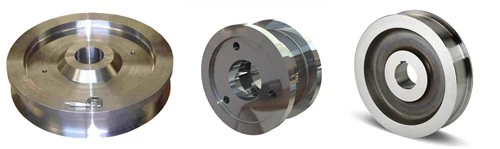
7. Crane wheel
1) Double girder electric hoist bridge crane wheel refers to the wheels installed on the bridge beam of a double girder electric hoist bridge crane. The crane wheels are responsible for the movement of the bridge beam along the runway rails, allowing the crane to travel horizontally across the working area. These wheels are typically made of forged steel or cast iron, and are designed to withstand the weight of the crane and its load. The wheels are often equipped with bearings or lubrication systems to ensure smooth operation and reduce wear and tear. Proper maintenance and inspection of the crane wheels is essential for safe and efficient operation of the crane.
2) The crane wheels are typically made of cast or forged steel and are designed to run on rails installed on the top of the runway or bridge. The wheels are driven using a motor or geared drive mechanism to move the crane along the runway or bridge.
8. Electromagnet
1) An electromagnetic overhead crane lifting electromagnet is a type of lifting device that uses an electromagnetic field to pick up and move ferromagnetic materials. The device is typically mounted on an overhead crane and consists of an electromagnet that is powered by a DC voltage source. When electricity flows through the electromagnet, it creates a magnetic field that attracts the ferromagnetic material.
2) The electromagnet is constructed from a coil of wire, wound around a magnetic core made from iron or steel. The coil is connected to a power supply that delivers a DC voltage sufficient to energize the coil's wire. The magnetic field produced by the coil is proportional to the amount of current flowing through it.
3) The electromagnet is attached to the crane's hook via a heavy-duty cable or chain, and can be moved up, down, and across the work area to pick up and move materials. When the crane operator energizes the electromagnet, the magnetic field attracts the ferromagnetic material, which is lifted off the ground and carried to a new location.
4) The lifting capacity of an electromagnetic overhead crane lifting electromagnet depends on the size and strength of the electromagnet, as well as the voltage supplied to it. The device is commonly used in steel mills, metal fabrication plants, and scrap yards, where large amounts of ferromagnetic materials need to be moved quickly and safely.

9. Motor
An electromagnetic overhead crane motor is a type of motor that uses electromagnets to generate magnetic fields to produce torque (rotational force) and power. These motors are commonly used in overhead cranes to lift heavy loads and move them from one location to another in industrial settings. The electromagnetic motors are known for their high efficiency, precise control, and ability to handle heavy loads. They are designed to operate in harsh environments and can withstand high temperatures, dust, and moisture. Electromagnetic overhead crane motors are commonly powered by AC (alternating current) or DC (direct current) sources depending on the application requirements.

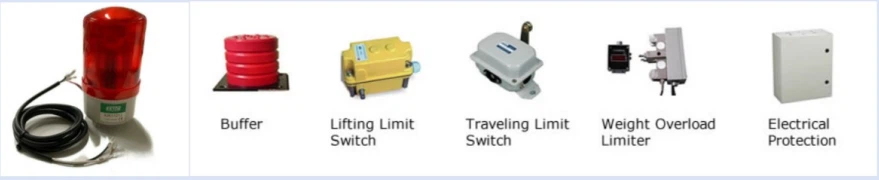
10. Sound and light alarm system & limit switch& safety parts
1) Every crane will be equipped a sound and light alarm system and so that it is an effective way to keep people safe in emergency situations. It is important to ensure that the system is regularly tested and maintained to ensure that it is in good working order.
2) The limit switch can be widely used in three - dimensional control and travel limitation of hoisting machinery, and it can protect the crane.
11. Control Mode

12. Sketch

Main Technical Data
|
Lifting capacity |
5t+5t; 7.5t+7.5t; 10t+10t; 16t+16t |
||
|
Lifting height |
up to 20m |
||
|
Span (Standard) |
10.5-31.5m |
||
|
Speed |
Hoisting |
Slow |
1 m/min |
|
Fast |
15 m/min |
||
|
crab |
4-40 m/min |
||
|
Crane |
10-100 m/min |
||
|
Working system |
A5~A6 |
||
Advantages
1. High lifting capacity: Electromagnetic overhead cranes can lift heavy loads up to several tons with ease.
2. Efficient material handling: With electromagnetic cranes, materials can be lifted and transported quickly and efficiently, making tasks significantly more manageable.
3. Improved safety: Electromagnetic cranes enhance safety by eliminating the need for workers to come into direct contact with heavy loads, reducing the risk of injury or accidents.
4. Easy to operate: These cranes come with intuitive controls, which are easy to use by crane operators. They offer user-friendly control panels and wireless remote-controlled operation for maximum convenience.
5. Versatile use: Electromagnetic cranes are perfect for a wide range of industrial applications, including steel mills, shipyards, warehouses, and storage yards.
6. Cost-effective: Due to their high efficiency, electromagnetic cranes can help reduce labor costs, resulting in significant savings over time.
7. Environmentally friendly: These cranes are designed to reduce energy consumption; therefore, they are an environmentally friendly option in the long run.
8. Robust construction: These cranes are designed to last for years, making them a great long-term investment.
Application
An electromagnetic overhead crane is a type of crane that uses an electromagnet to lift and move heavy materials. It is typically used in industrial settings, such as factories, construction sites, and ports, where large and heavy materials need to be transported quickly and efficiently.
Some common applications of electromagnetic overhead cranes include:
1. Steel mills: Electromagnetic cranes are used to transport raw materials, such as scrap metal, to be processed in steel mills. They can also move finished products, such as sheet metal or steel beams, for storage and shipping.
2. Heavy equipment production: Electromagnetic cranes can move large components of heavy equipment, such as engines or hydraulic systems, between workstations on the production line.
3. Ports and shipping: Electromagnetic cranes are used to load and unload shipping containers and cargo from ships and trucks.
4. Recycling centers: Electromagnetic cranes are used to lift and move large volumes of scrap metal or other recyclable materials to be sorted and processed.
5. Aerospace industry: Electromagnetic cranes are used to handle large components of aircraft, such as wings or engines, during manufacturing and assembly.
Overall, electromagnetic overhead cranes are a versatile and powerful tool used in a variety of industrial settings to move heavy materials quickly and efficiently.
Crane Production Procedure
The production procedure for an electromagnetic overhead crane is as follows:
1. Design: The first step in producing an electromagnetic overhead crane is to design it according to the client's requirements. This involves determining the crane's lifting capacity, span, and any other specific requirements.
2. Fabrication: Once the design is finalized, the fabrication process begins. The fabrication process involves cutting, welding, and assembling the various parts of the crane.
3. Electrical wiring: After the fabrication process, electrical wiring is added to the crane. This includes the installation of the electromagnetic brakes, control panel, power circuit, and other electrical components.
4. Testing: Once the crane is fully assembled, it undergoes rigorous testing to ensure optimal performance. This includes load testing, functional testing, and electrical testing.
5. Delivery and installation: After testing, the crane is ready for delivery and installation. The installation process involves positioning the crane on the overhead rails and connecting it to the power and control systems.
6. Commissioning: Once the crane is installed, it undergoes thorough commissioning procedures to verify its optimal performance. This involves running several tests and adjustments to ensure that the crane meets the specified requirements.
7. Andover: After commissioning, the crane is handed over to the client for use. The client is provided with training on how to operate the crane safely and effectively.
8. Overall, the production procedure for an electromagnetic overhead crane is a complex process that requires precision, expertise, and quality assurance. The aim is to produce a reliable and capable crane that can meet the needs of the client and ensure optimal efficiency in material handling.

Workshop View
The company has installed an intelligent equipment management platform, and has installed 310 sets (sets) of handling and welding robots. After the completion of the plan, there will be more than 500 sets (sets), and the equipment networking rate will reach 95%. 32 welding lines have been put into use, 50 are planned to be installed, and the automation rate of the entire product line has reached 85%.


Hot Tags: electromagnetic overhead crane, China electromagnetic overhead crane manufacturers, suppliers, factory, Electromagnetic Overhead Crane, Upper Rotary Electromagnetic Bridge Crane, Magnetic Overhead Crane, Electromagnetic Overhead Crane with Rotary Carrier Beam
You Might Also Like




Send Inquiry