










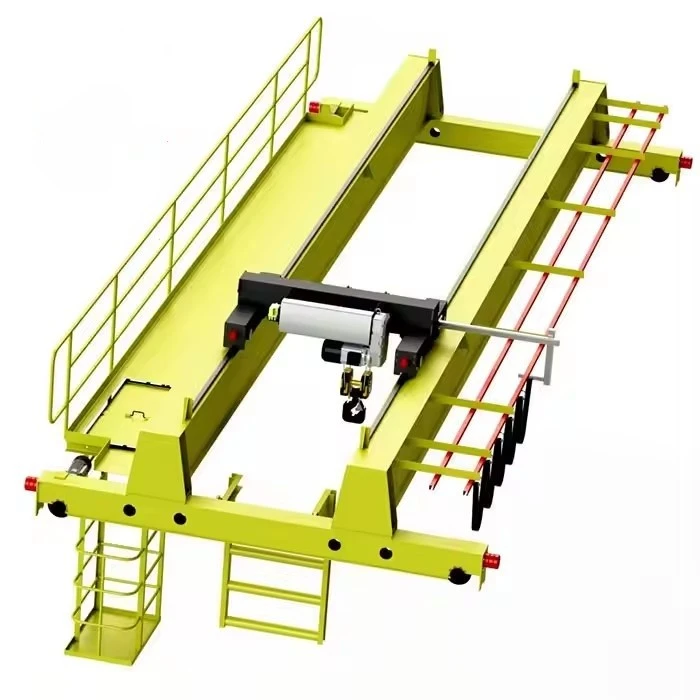


Traveling Overhead Crane
Products Description
Advantages
Space Optimization
Utilizes overhead space, keeping floor area clear
Minimal footprint compared to mobile cranes
Precision Handling
Smooth load positioning (±10mm accuracy)
Ideal for delicate or high-value loads
Workflow Efficiency
Reduces material handling time by 50-70%
Enables just-in-time manufacturing processes
Safety Features
Fail-safe brakes
Overload protection
Emergency stop systems
Anti-collision systems (for multiple cranes)
Operational Characteristics
Load Capacity: 1 ton to 500+ tons
Span: Typically 10-35 meters (custom spans available)
Lifting Height: Up to 30+ meters
Travel Speeds:
Bridge: 10-60 m/min
Trolley: 5-30 m/min
Hoist: 0.5-10 m/min

Pictures & Components
A traveling overhead crane consists of multiple integrated components that work together to provide safe and efficient material handling. Here's a detailed breakdown of all major components and their functions:
1. Primary Structural Components
Bridge Structure
Main Girder(s) - Single or double box-type beams that span the work area
Single girder: For lighter loads (up to 20 tons)
Double girder: For heavier loads (20-500+ tons)
End Trucks - Steel frames with wheels that move along runway rails
Include drive motors, brakes, and wheel assemblies
Anti-derailment devices standard

Runway System
Runway Beams - Heavy steel I-beams or box beams supporting the crane
Top-running (most common) or underhung configurations
Runway Rails - Precision steel tracks (usually ASCE or DIN standards)
Support Columns - Structural steel posts or building columns
May include seismic bracing in earthquake zones
 |
 |
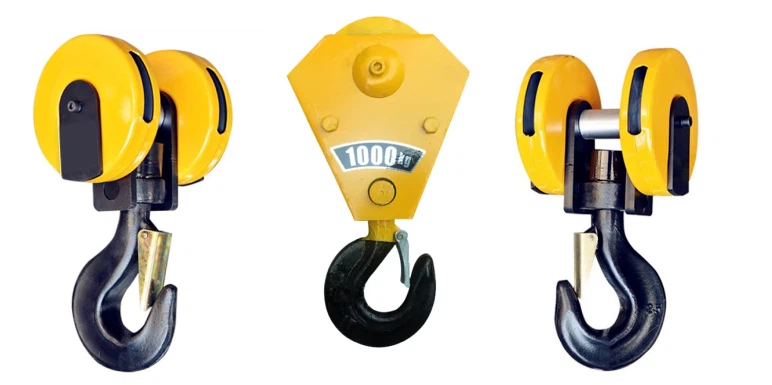
2. Lifting Mechanism
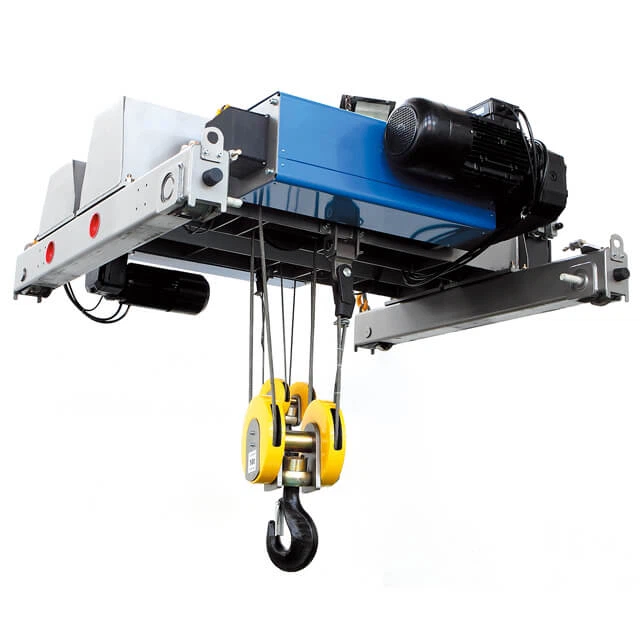
Hoist Unit
Electric Hoist (most common):
Geared motor with drum or disc brakes
Wire rope or chain lifting medium
Rated for specific duty cycle (H3-H4 common)
Hydraulic Hoist (for heavy loads):
Cylinder-based lifting system
Used in steel mills and foundries
 |
 |
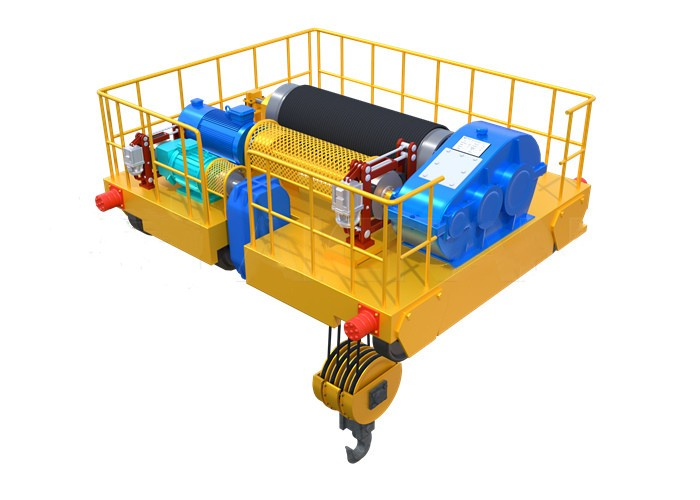
Trolley Assembly
Motorized Trolley:
Drive motor with speed reducer
Travel wheels with flanges
Guide rollers for smooth movement
Manual Trolley (light duty only)
3. Motion Systems
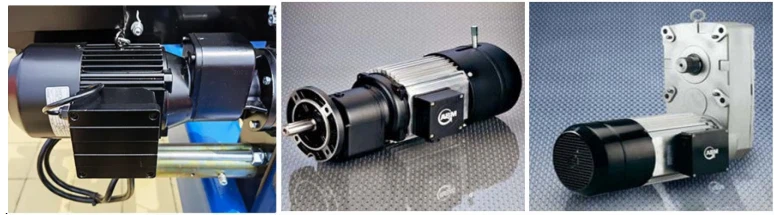
Bridge Drive System
Drive Motors (typically 2-4 motors)
AC or DC powered
Common power: 3-phase 415V 50Hz or 480V 60Hz
Speed Reducers - Gearboxes with proper ratio
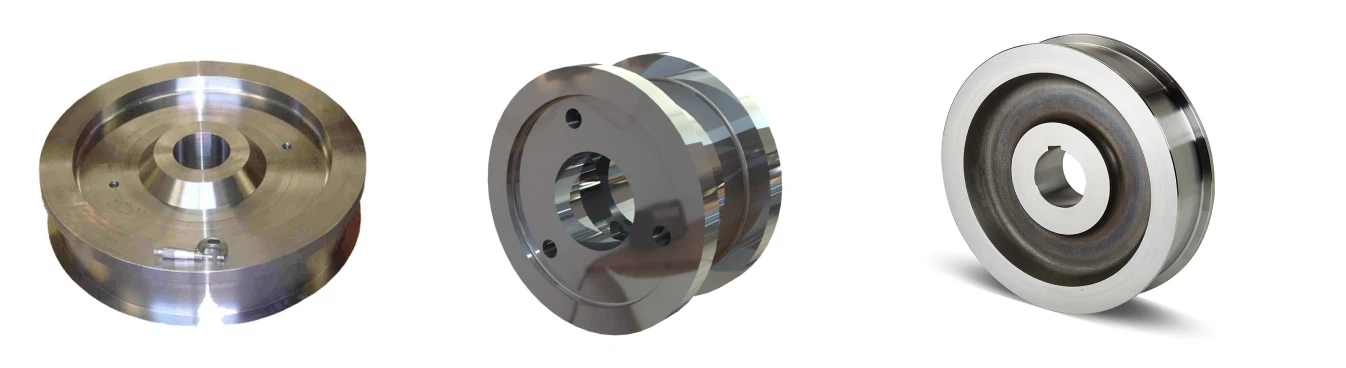
Wheel Assemblies - Forged steel wheels with replaceable treads
Trolley Drive System
Similar components to bridge drive but smaller scale
May include anti-sway technology
4. Control & Electrical Systems
Power Delivery
Festoon System - Cable management for moving power
Conductor Bars - Enclosed power rails (for heavy duty)
Bus Bar System (for very large cranes)
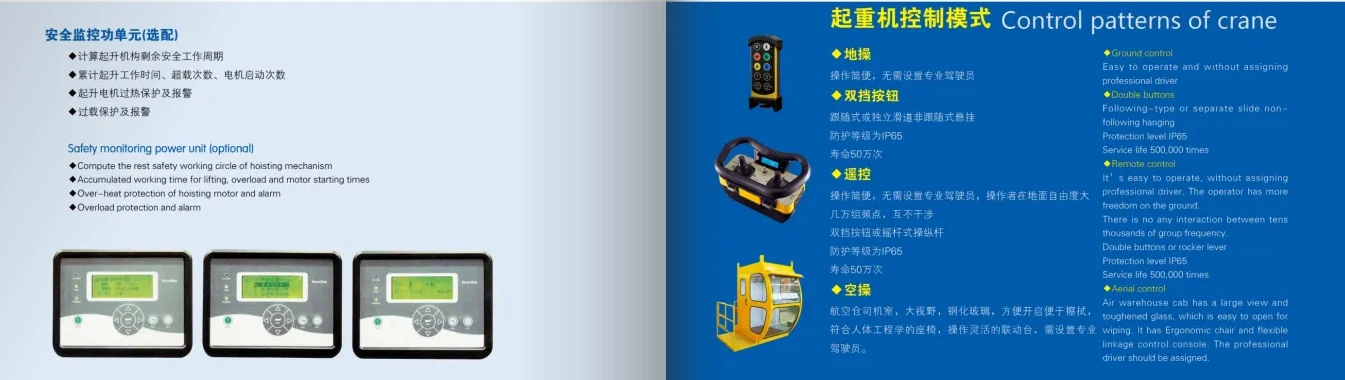
Control Devices
Pendant Control Station:
IP65 rated for industrial environments
Emergency stop, speed control
Radio Remote Control:
2.4GHz frequency hopping technology
Safety-rated systems available
Cabin Control (for very large cranes)

5. Safety Components
Load Monitoring
Load Cells - For weight measurement
Overload Limit Switch - Prevents >110% rated load
Movement Safety
Buffer & Bumper Systems - End-of-travel protection
Anti-Collision Systems - For multiple cranes
Limit Switches - All axes of movement
Emergency Systems
Fail-Safe Brakes - Spring-applied, electrically released
Emergency Stop Circuits - Redundant systems
Undervoltage Protection

6. Optional Components
Specialty Features
Crane Scales - Integrated weighing
Automation Packages - PLC control, positioning
LED Work Lights - For low-light areas
Heating Systems - For cold environments
Special Environment Packages
Explosion-Proof - For hazardous areas
Corrosion-Resistant - Marine environments
High-Temperature - Foundry applications
Sketch

Main technical

Advantages
Traveling overhead cranes offer numerous benefits for industrial and commercial applications, making them indispensable in material handling operations. Here are the key advantages:
1. High Load Capacity & Precision Handling
Capacity Range: From 1 ton to 500+ tons, suitable for both light and extremely heavy loads.
Precision Control: Smooth operation with ±10mm positioning accuracy, ideal for delicate or high-value loads.
2. Optimal Space Utilization
No Floor Obstruction: Operates overhead, keeping ground space free for other operations.
Full Coverage: Moves along runways to cover the entire length and width of a workspace.
3. Improved Efficiency & Productivity
Faster Material Handling: Reduces manual labor and speeds up workflows by 50-70%.
Automation-Ready: Can integrate with PLC controls, RFID tracking, and robotic systems.
4. Enhanced Safety Features
Overload Protection: Prevents lifting beyond rated capacity.
Anti-Collision Systems: Ensures safe operation when multiple cranes are used.
Fail-Safe Brakes: Spring-applied brakes engage during power loss.
5. Durability & Low Maintenance
Robust Construction: Made from high-grade steel with corrosion-resistant coatings.
Long Service Life: Properly maintained cranes can last 25-30+ years.
Modular Design: Easy to repair or upgrade components.
6. Customizable for Specific Needs
Adjustable Span & Height: Can be tailored to fit different facility layouts.
Specialized Configurations: Available for hazardous, high-temperature, or corrosive environments.
7. Cost-Effective Operation
Lower Labor Costs: Reduces reliance on forklifts and manual labor.
Energy-Efficient Motors: Modern VFD-controlled drives minimize power consumption.
Application:
Traveling overhead cranes are used across various industries due to their versatility and efficiency. Below are the most common applications:
1. Manufacturing & Assembly Plants
Automotive Industry: Lifting car frames, engines, and heavy molds.
Machinery Manufacturing: Handling large CNC machines and industrial equipment.
2. Warehousing & Logistics
Loading/Unloading: Moving heavy pallets, containers, and storage racks.
Just-in-Time (JIT) Systems: Efficiently positioning materials for production lines.
3. Steel & Metal Processing
Steel Mills: Transporting coils, slabs, and molten metal ladles.
Foundries: Handling castings and dies in high-heat environments.
4. Power Generation & Heavy Industry
Turbine Installation: Lifting and positioning massive generators and rotors.
Nuclear Plants: Handling radioactive materials with specialized cranes.
5. Aerospace & Defense
Aircraft Assembly: Moving wings, fuselage sections, and engines.
Shipbuilding: Installing large ship components in dry docks.
6. Construction & Infrastructure
Prefab Concrete Handling: Transporting large precast segments.
Bridge Construction: Positioning steel girders and heavy materials.
7. Mining & Heavy Machinery
Excavator & Crusher Maintenance: Lifting massive mining equipment.
Mineral Processing: Handling ore and bulk materials.
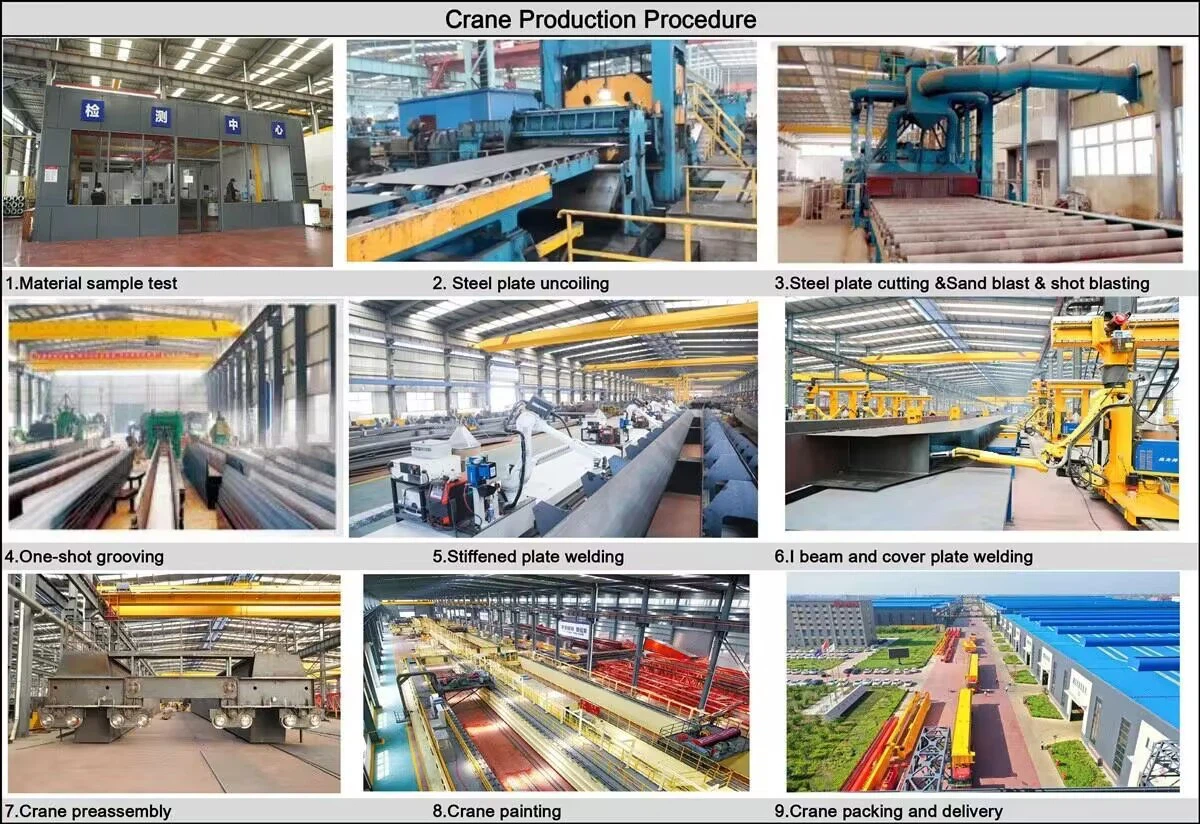
Crane production procedure
The production procedure for a 45-ton Double Girder Overhead Crane involves several key stages, from design to final testing. Below is a detailed step-by-step overview:
1. Design & Engineering
Load & Span Calculation: Determine crane capacity (45 tons), span (distance between rails), lifting height, and duty cycle (FEM/ISO classification).
Structural Design:
Main girders (box-type or truss design)
End carriages (for movement along rails)
Hoist and trolley mechanism
Electrical & Mechanical Design:
Motor power, gearbox, brakes, and control system
Wiring, pendant/radio remote control, or cabin operation
Software & Simulation: Finite Element Analysis (FEA) for stress testing.
2. Material Procurement
Steel Plates & Profiles: High-quality Q235B/Q345B steel for girders.
Electrical Components: Motors (hoist/travel), brakes, limit switches, and control panels.
Mechanical Parts: Wheels, gears, wire ropes, hooks, and bearings.
3. Fabrication of Main Components
A. Double Girder Fabrication
Cutting & Welding: CNC plasma cutting for precision; automatic submerged arc welding (SAW) for girders.
Assembly: Align and weld girders with end carriages.
Shot Blasting & Painting: Anti-rust treatment (primer + topcoat).
B. Hoist & Trolley Assembly
Hoist Mechanism:
45-ton electric wire rope hoist (or chain hoist).
Drum, motor, gearbox, and brake assembly.
Trolley Frame: Fabrication and mounting of wheels, motors, and rails.
C. End Carriages
Frame Construction: Welded steel with wheel assemblies.
Buffers & Bumpers: Installation for collision protection.
4. Electrical System Installation
Wiring & Controls:
Power supply (3-phase AC)
Variable Frequency Drives (VFDs) for smooth operation
Pendant/remote control system
Safety Devices:
Overload limiter
Limit switches (upper/lower travel)
Emergency stop
5. Assembly & Integration
Erection of Girders: Mount double girders onto end carriages.
Trolley & Hoist Installation: Position trolley between girders; secure hoist.
Rail Alignment: Ensure runway rails are level and parallel.
6. Testing & Quality Control
A. Factory Testing (Before Shipment)
No-Load Test: Run crane without load to check movement, brakes, and controls.
Load Test:
Static Test: 1.25 × rated load (56.25 tons) for 10 mins.
Dynamic Test: 1.1 × rated load (49.5 tons) with movements.
Safety Checks: Verify limit switches, emergency stop, and overload protection.
B. On-Site Testing (After Installation)
Re-run load tests under customer supervision.
7. Painting & Corrosion Protection
Final Coating: Weather-resistant paint (e.g., epoxy zinc-rich primer).
Markings: Labels for load capacity, warnings, and manufacturer info.
8. Packaging & Delivery
Disassembly (if needed): For easy transport.
Packaging: Waterproof wrapping for sea/land shipping.
9. Installation & Commissioning (On-Site)
Runway Beam Inspection: Ensure proper alignment and strength.
Crane Assembly: Reassemble girders, hoist, and electrical systems.
Final Testing: Conduct load tests and operator training.
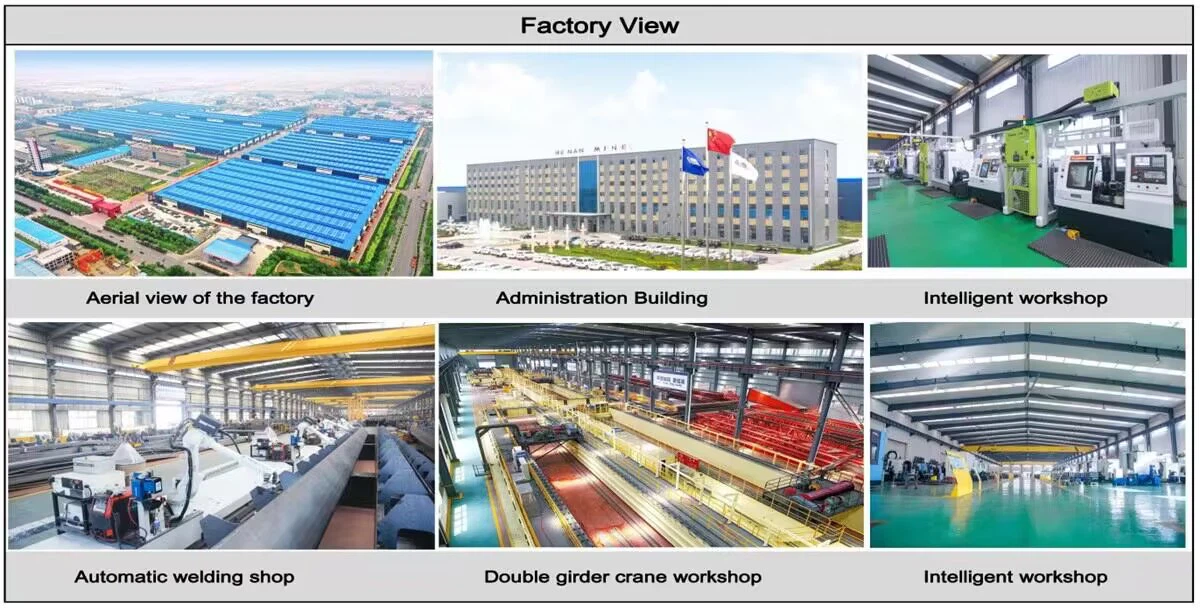
Workshop view:
The company has installed an intelligent equipment management platform, and has installed 310 sets (sets) of handling and welding robots. After the completion of the plan, there will be more than 500 sets (sets), and the equipment networking rate will reach 95%. 32 welding lines have been put into use, 50 are planned to be installed, and the automation rate of the entire product line has reached 85%.


Hot Tags: traveling overhead crane, China traveling overhead crane manufacturers, suppliers, factory, Double Girder Overhead Crane, Double Girder Overhead Travelling Crane
You Might Also Like


Send Inquiry