


Wall-mounted cantilever crane is a good choice for auxiliary cranes in workshops. It has the characteristics of saving space, saving costs and flexible solutions. This article explains the installation steps and applicable working conditions of wall-mounted cantilever cranes. I hope it will be a reference for everyone to purchase wall-mounted cantilever cranes.
Wall-mounted cantilever crane installation steps
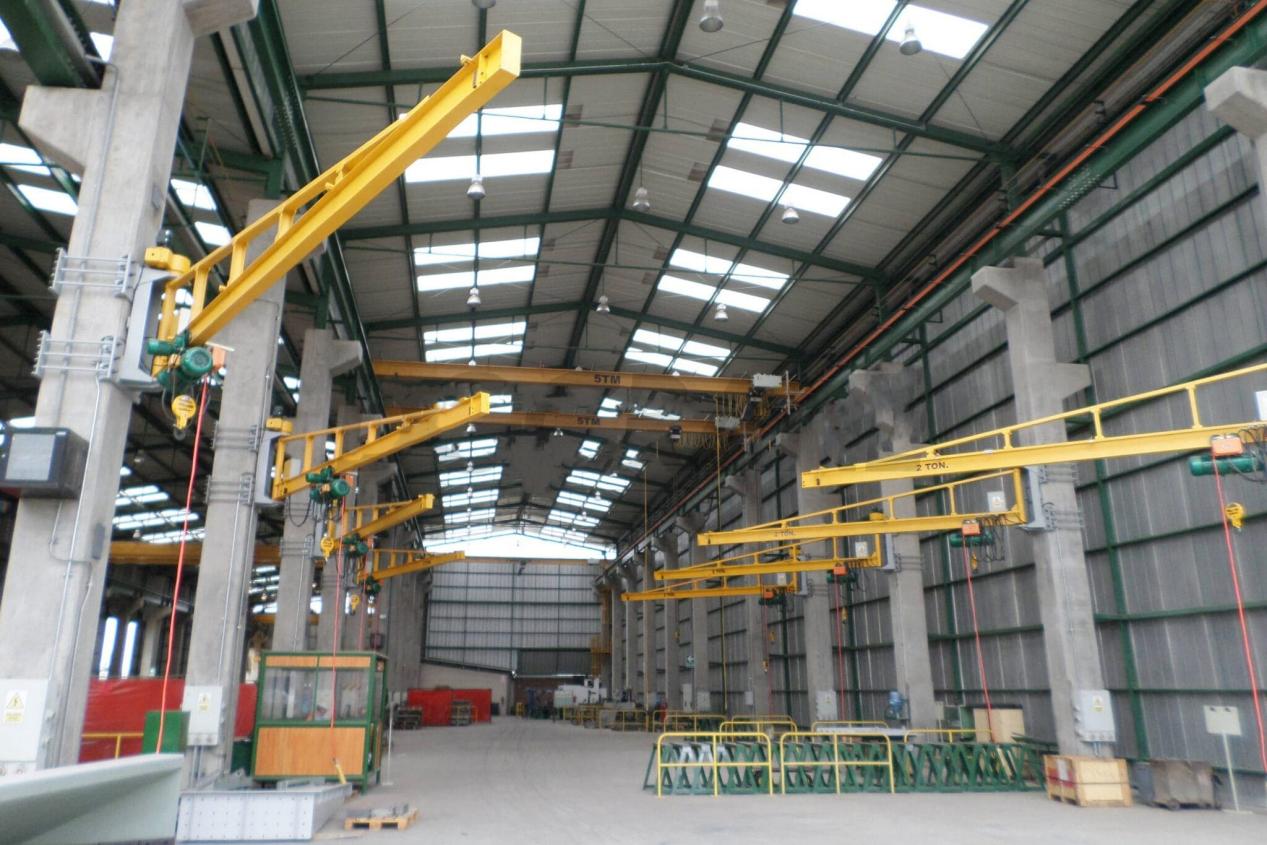
Wall-mounted jib cranes are designed to be mounted on a wall or structural steel column. The installation process for a wall-mounted jib crane generally involves the following steps:
Step 1: Prepare the Installation Site
Before installing a wall-mounted jib crane, it is important to ensure that the installation site is level and has enough space for the crane to rotate freely. The installation site should also be clear of any obstructions that may impede the operation of the crane.
Step 2: Install the Wall Mount Bracket
The first step in installing a wall-mounted jib crane is to install the wall mount bracket itself. The wall mount bracket should be mounted on a wall or structural steel column that is strong enough to support the weight of the crane and the load it will be lifting. The bracket should also be perfectly vertical and aligned with the center of rotation of the crane.
Step 3: Install the Boom
Once the wall bracket is in place, the next step is to mount the boom to the bracket. The boom should be mounted at a height that will clear any obstructions in the surrounding area. The mounting bolts should be tightened to the manufacturer's specifications to ensure a secure connection.
Step 4: Install the Hoist and Trolley
The final step in installing a wall-mounted jib crane is to install the hoist and trolley. The hoist and trolley should be mounted to the boom and secured with bolts. Electrical wiring and controls should also be installed and tested before the crane is put into service.
Different methods of mounting a wall-mounted jib crane
Pole-mounted
In this method, the jib crane is mounted on a free-standing column or pole. This allows for greater placement flexibility and can accommodate larger work areas.
Steel-mounted
For facilities with large open spaces, a steel-mounted jib crane may be the best choice. This method requires the crane to be attached to a sturdy steel structure or frame, which provides a stable base while still allowing the crane to move freely.
Wall-mounted
This method requires the jib crane to be mounted directly to the wall using heavy-duty bolts and brackets. The crane arm extends perpendicular to the wall, allowing for easy access along the length of the wall.


