


 |
 |
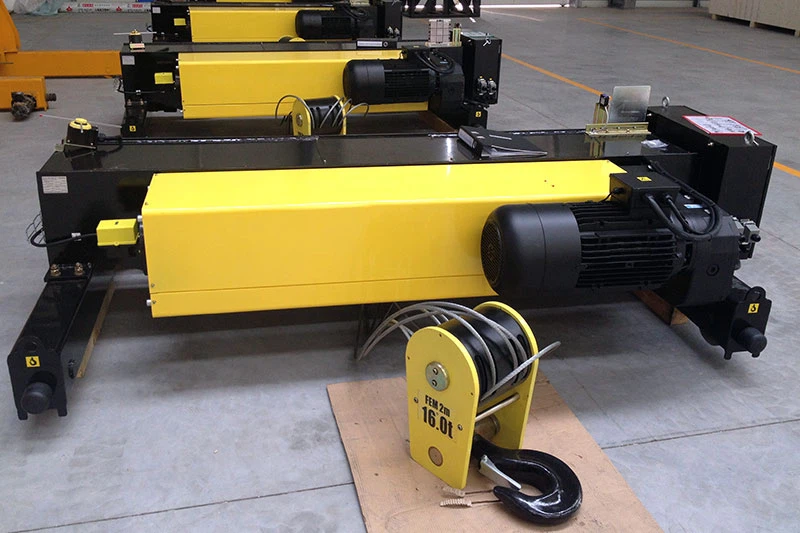
As an important lifting equipment, the normal operation of the crane electric hoist is crucial for industrial production and logistics warehousing. However, in actual use, the electric hoist may not be able to operate, which not only affects work efficiency, but also may bring safety hazards. The following will analyze the reasons why the crane electric hoist cannot operate and propose corresponding solutions:
Power supply problem
The fuse is blown: the starting torque of the electric hoist is zero, causing the motor to fail to start. The solution is to replace enough fuses.
The grid voltage is too low: the dynamic torque of the equipment is proportional to the square of the voltage. If the voltage is too low, the acceleration torque will not be able to overcome the load torque and the operating speed will not be reached. The grid voltage of the equipment needs to be increased.
No power: Whether the power supply system supplies power to the electric hoist power supply is generally tested with a test pen. If no power is supplied, wait until power is supplied before working.
2. Circuit failure
The stator winding is short-circuited, grounded or open-circuited: This means that the grounding wire of the winding of the electric hoist appears at the grounding plate, and the junction box needs to be opened for inspection. The motor cannot be checked when the short circuit occurs, and the control device wiring must be checked to see if it is correct.
Poor contact of AC contactor: If the circuit cannot be connected, the contactor contact marks should be smoothed with sandpaper, and the iron core should be checked for attraction and disconnection, and whether there is any jamming. If necessary, replace it.
3. Mechanical failure
Excessive load: The electric hoist cannot lift heavy objects and cannot be overloaded, resulting in inability to rotate. The solution is to unload the load first. If the motor under inspection can start normally, it means that the transmission mechanism such as the reduction box has a fault. Check the dragged mechanism and eliminate the fault.
Reducer failure: If the reduction box or bearing lacks lubricating oil, the gear is worn or damaged, the bearing is damaged, etc., the machine should be stopped for inspection and the lubricating oil should be replaced regularly.
4. Motor failure
Single-phase operation: The motor emits abnormal noise, which may be single-phase operation, or bearing damage, coupling axis misalignment and "sweeping" faults. According to the different noises, find out the faults and perform repairs one by one.
Brake failure: The stopping sliding distance during braking exceeds the specified requirements, which may be due to excessive wear of the brake ring or oil stains on the brake surface. Readjust the brake nut or clean the brake surface.
5. Environmental factors
Winter construction: The brake ring freezes and the motor cannot start. The solution is to open the motor cover and pry the motor with a crowbar so that it can rotate freely.
In summary, there are many reasons why the crane electric hoist cannot operate, including power supply problems, circuit failures, mechanical failures, motor failures, and environmental factors. When facing these problems, corresponding solutions should be taken, such as replacing fuses, increasing grid voltage, overhauling circuits, adjusting brakes, etc. At the same time, regular maintenance and care of electric hoists, as well as improving the skills and safety awareness of operators, are also important means to prevent failures. Through these measures, the reliability and safety of crane electric hoists can be effectively improved to ensure the normal progress of production and work.


