


10 Ton Bridge Crane Project– Mechanical Manufacturing Workshop
This project comes from a medium-sized mechanical manufacturing workshop. Not a small repair shop, and not a fully automated factory either. It is a practical production site where lifting work is part of daily operations.
When you walk inside, it is quite direct-you see machines running, steel parts moving, and overhead lifting happening throughout the day. Nothing exaggerated, just steady industrial work.
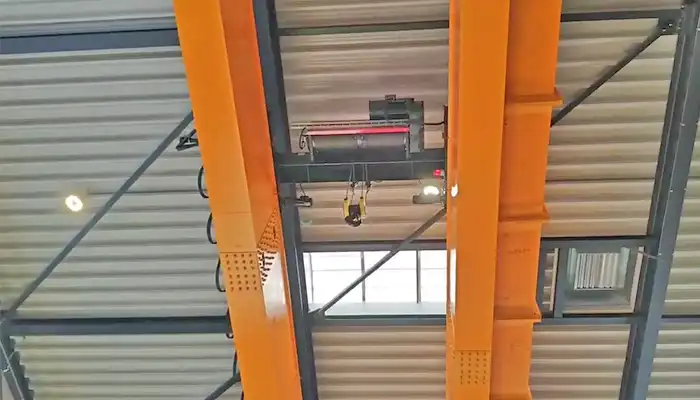
10 ton overhead crane double girder for sale , yuantai better crane - Advanced European style overhead cranes
+Industry Background
+Workshop Layout and Operation Style
+Main Production Items
+Production Flow and Working Rhythm
Lifting Requirements Analysis
This is the point where the crane selection really becomes clear. Not from theory, but from what is actually lifted every day inside the workshop.
+Lifting Objects in Production
+Load Range and Capacity Demand
+Working Accuracy and Stability Needs
+Production Flow and Usage Pattern
Working Environment Conditions
This part is often overlooked during early discussion, but in actual crane selection work, it directly affects structure choice, safety performance, and long-term service life.
+Workshop Structure and Layout
+Span Requirement and Travel Range
+Lifting Height Requirement
+Environmental Working Condition
+Power Supply Condition
Practical Note
In this kind of environment, the key requirement is consistency rather than extreme conditions.
Same span, same height, same daily rhythm-so the crane must operate in a stable, predictable way during long working hours without unnecessary variation.
Crane Solution Design
At this stage, the selection is no longer theoretical. It turns into a clear configuration based on real lifting work inside the workshop and daily operating conditions.
Advantages of the Solution
This 10 ton double girder crane is selected mainly for stable daily production, not occasional lifting. The benefits are practical and directly related to workshop operation.
High structural rigidity, suitable for continuous 10 ton lifting without deformation concerns
Stable movement with reduced load swing, easier for operators during positioning
Designed for long working hours, supports 8–12 hour daily operation
Better lifting accuracy for assembly work, especially when aligning large components
More balanced load distribution compared to single girder design, improving safety and stability
Longer service life under medium to high duty cycles, suitable for long-term industrial use
In real use, it feels more "steady and predictable," especially when the workshop is running full capacity.
Problems Solved
+Why choose double girder instead of single girder for 10 ton lifting?
+How is safety ensured under full load operation?
+Why is A5 duty class selected for this application?
+Can this crane improve positioning accuracy?
+Can the system support future expansion?
Key Buyer Insight Summary
The decision is not just about choosing a "10 ton bridge crane" capacity. In real workshop planning, buyers usually realize the key point only after comparing different options.
The real selection depends on practical working conditions, such as:
Working frequency and duty class (how often the crane runs each day)
Load stability requirements during lifting and positioning
Production intensity across multiple shifts or continuous operation
Workshop layout, span, and lifting height limitations
When these factors are considered together, the final solution is not just about lifting weight. It is about keeping the crane stable, predictable, and efficient during long-term industrial use in a real production environment.


