










Trussed Mh Type Single Girder Gantry Cranes
Products Description
What is a Trussed MH-Type Single Girder Gantry Crane?
Let's break down the name:
Trussed: Refers to the design of the main girder. Instead of a solid web (like a box girder), it is constructed as an open latticework or truss structure, typically made of angled or rolled steel sections. This is a lightweight yet strong design.
MH-Type: This is a common industry designation, often standing for "Manual Hoist" or "Medium Heavy" duty. It typically denotes a crane designed for lower capacities and lighter duty cycles, often utilizing a standard chain hoist as the lifting mechanism.
Single Girder: The bridge consists of a single main beam (the trussed girder), with the hoist and trolley suspended from and running along the bottom flange of this girder.
Gantry Crane: A freestanding crane supported by legs that run on floor-level rails or wheels.
In essence, it is a lightweight, economical gantry crane designed for moderate lifting tasks, primarily indoors or in sheltered areas.
Advantages
Cost-Effectiveness: This is the primary advantage. The truss design uses less steel than a box girder, and the use of manual components (hoist, trolley, travel) significantly reduces manufacturing and purchase costs.
Lightweight and Portable: The lightweight structure makes it easier to assemble, disassemble, and relocate. Some smaller models are even on casters for easy movement around a workshop by a single person.
Ease of Installation: Requires no complex wiring or power sources. It can be set up quickly with basic tools.
Low Maintenance: With no motors, brakes, or electrical systems, there is very little that can wear out or require maintenance beyond occasional lubrication and inspection.
Sufficient for Light Duties: Perfectly suited for the repetitive lifting of lighter loads (e.g., loading machinery, handling materials in a warehouse, maintenance work), where investing in a motorized crane is unnecessary.
Disadvantages and Limitations
Low Capacity and Speed: Designed for light duties, typically with capacities ranging from 0.5 tons to 10 tons. Lifting and moving are slow and labor-intensive as they rely on human power.
Not for Severe Duty: The design is not suitable for heavy-duty cycles, abrasive environments, or lifting critical/high-value loads where precise control is needed.
Limited Span and Height: While available in various sizes, the trussed girder can become deflective (bend) under its own weight over very long spans, limiting practical maximum span length compared to double girder designs.
Operator Fatigue: Manual operation can be strenuous for frequent or heavy lifting tasks, impacting productivity and ergonomics.
Comparison with Other Gantry Cranes
| Feature | Trussed MH-Type (Single Girder) | Box Girder (Single/Double) | Double Girder Gantry |
|---|---|---|---|
| Girder Design | Open Latticework (Truss) | Solid Web (Box Beam) | Two Solid Webs (Box Beams) |
| Capacity | Low (Up to ~10 Tons) | Medium (5 - 20 Tons) | High (20 - 500+ Tons) |
| Operation | Manual (Hoist & Travel) | Electric / Powered | Electric / Powered |
| Cost | Lowest | Medium | Highest |
| Primary Use | Light, occasional lifting | Regular, motorized lifting | Severe-duty, continuous use |
| Environment | Indoor, Sheltered | Indoor/Outdoor | Indoor/Outdoor (Hardened) |
Place of Origin:Henan, China
Warranty:2 years
Weight (KG):60000 kg
Video outgoing-inspection:Provided
Machinery Test Report:Provided
Application:warehouses,factory and other place
Crane type:box type gantry crane
Travelling speed:20m/min
Lifting mechanism:Electric Hoist
Control method:Ground Control+ Remote Control (customized)
Working duty:A5
Working Temperature:-20~+40℃
Industrial voltage:380V50HZ3Phanse or other
Color:Customised
Customization:Accepted

Pictures & Components
1. Bridge Girder System
This is the primary horizontal beam that spans the work area.
Main Trussed Girder: The core component. It is not a solid beam but an open lattice structure fabricated from angled steel sections (like angles or channels) welded together in a triangular pattern. This truss design provides rigidity and strength while minimizing weight and material cost.
Bottom Flange / Runway Beam: The bottom part of the truss is often a solid flange or a small I-beam. This is the surface on which the trolley wheels run.
2. Leg & Support System
The vertical structures that support the bridge girder from the floor.
Legs (2): Typically constructed from standard I-beams or channel sections. They are bolted or pinned to the ends of the main girder.
Diagonal Braces: Smaller angled beams that connect the legs to the main girder. These are crucial for providing lateral stability, preventing the entire structure from swaying side-to-side.
Height Adjustment Mechanism: A simple but critical feature. Many MH-type gantries have adjustable leg sockets or telescoping leg sections that allow the crane to be leveled on uneven floors. This is often a pin-and-hole system.
Top Cap / Connection Plate: The plate or assembly at the top of the leg that connects it to the main girder.

3. Hoist & Trolley System
The equipment that handles the actual lifting and moving of the load along the girder.
Manual Trolley: The assembly that carries the hoist and moves along the bottom flange of the main girder. It consists of:
Trolley Frame: The body that holds the wheels.
Trolley Wheels: Typically two or four wheels that ride on the bottom flange of the main girder.
Trolley Movement Chain: A hand chain that, when pulled, engages a gear mechanism to drive the wheels and move the trolley.

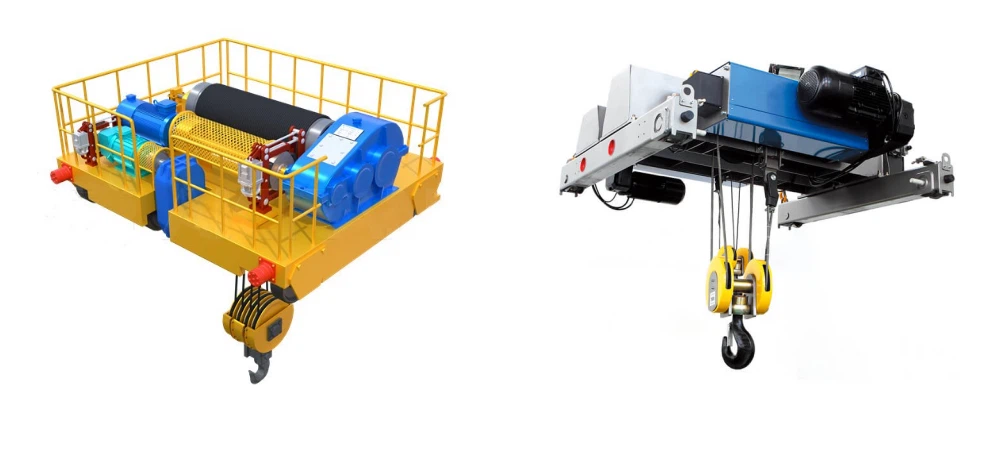
Manual Hoist: The lifting device mounted to the trolley. The "MH" often specifically refers to this component.
Load Chain: The high-strength alloy chain that lifts the hook and load.
Lifting Mechanism: A gearbox operated by pulling a hand chain (for a chain hoist) or a lever (for a lever hoist).
Hook: The device that holds the load.
Hand Chain / Lever: The operator interface for lifting and lowering.

4. Runway & Movement System
The components that allow the entire crane to move along the floor.
End Trucks: The assemblies at the bottom of each leg. For a basic MH-type crane, these are very simple.
Wheels: Typically four wheels in total (two per leg). They can be:
Fixed Wheels: Provide stability but no steering.
Swivel Casters: Allow the crane to be maneuvered and turned easily, making it highly portable.

.
Travel Mechanism: On the most basic models, the crane is manually pushed by the operator. Some models may have a geared travel drive where a hand crank is used to turn the wheels via a shaft and gearbox, making it easier to move heavier loads.
Runway Surface: The crane runs directly on a firm, level concrete floor. For more permanent or precise tracking, it can run on lightweight steel rails fixed to the floor.

Summary Table of Components
| System | Key Components | Function & Notes |
|---|---|---|
| Bridge Girder | Main Trussed Girder, Bottom Flange | Provides the span; the truss design is lightweight and rigid. |
| Leg & Support | Legs (I-Beams), Diagonal Braces, Adjustment | Supports the girder; braces provide stability; adjustment allows for leveling. |
| Hoist & Trolley | Manual Trolley, Manual Hoist, Hand Chains | The core of the "MH" type. The operator uses muscle power to move the load. |
| Runway & Movement | Wheels (Fixed/Swivel), Axles, Manual Push | Allows the entire crane to be repositioned manually on the floor. |

Sketch

Main technical

Advantages
Advantages of Trussed MH-Type Single Girder Gantry Cranes
The advantages stem from its fundamental design principles: a trussed girder and manual operation.
1. Exceptional Cost-Effectiveness (Lowest Initial Investment)
Simplified Design: The truss structure uses less steel than a solid web box girder, significantly reducing material costs.
Manual Components: Eliminating motors, electrical panels, wiring, and VFDs drastically cuts down the purchase price compared to powered cranes. This is its single biggest advantage.
2. Lightweight and High Portability
Easy Relocation: The lightweight truss design and often modular construction (bolt-together components) mean it can be easily disassembled and moved by a small crew, often without needing a rental crane.
Caster Options: Many models come with swivel casters, allowing a single operator to move the entire crane around the shop floor to exactly where it's needed.
3. Easy Installation and Setup
No Infrastructure Required: There is no need for complex electrical work, runway beams, or special foundations. It requires only a firm, level floor to operate on.
Quick Assembly: It can be assembled with basic tools in a matter of hours, minimizing downtime.
4. Virtually Zero Operating Costs and Low Maintenance
No Electricity Consumption: Manual operation means it uses no power, reducing ongoing utility costs.
Simple Mechanics: With no motors, contactors, or brakes, there are far fewer components that can fail. Maintenance is typically limited to periodic lubrication and inspection of the hoist, trolley, and wheels.
5. Flexibility and Versatility in Use
Adjustable Height: Many models feature telescoping or adjustable legs, allowing the crane to be leveled on slightly uneven floors or adapted to different ceiling heights and load sizes.
Ideal for Low Headroom: The single girder design provides good hook height without requiring excessive building height.
Application:
Applications of Trussed MH-Type Single Girder Gantry Cranes
This crane is not for heavy industry; it's a utilitarian tool for smaller-scale, practical lifting tasks. Its applications are defined by infrequent use, lighter loads, and a limited budget.
1. Workshops and Garages:
Use Case: The quintessential application. Perfect for automotive shops to lift engines and transmissions out of vehicles, or for machine shops to handle chucks, vices, and raw materials.
2. Small Warehouses and Storage Facilities:
Use Case: Moving palletized goods, machinery parts, or bulky items that are too heavy for manual lifting but don't justify a full-powered overhead system.
3. Loading Docks and Receiving Areas:
Use Case: Unloading heavy items from trucks where a permanent overhead crane isn't available. It can be wheeled into place only when needed.
4. Construction Sites (Light Duty):
Use Case: Handling materials like bags of concrete, piping, or small prefabricated components on smaller job sites.
5. Maintenance and Repair Bays:
Use Case: Ideal for plant maintenance crews to use for repairing pumps, motors, and other equipment. Its portability allows it to be brought directly to the broken machine.
6. Fabrication and Assembly Shops:
Use Case: Lifting and positioning steel sheets, tubes, or fabricated parts during the assembly process.
7. Agriculture:
Use Case: In barns or repair sheds for maintaining tractors and other heavy equipment.
Crane production procedure
The production procedure for a single beam traveling gantry crane involves several key stages, from design and material procurement to assembly, testing, and final delivery. Below is a step-by-step outline of the typical manufacturing process:
1. Design & Engineering
Customer Requirements Analysis: Determine lifting capacity, span, lifting height, duty cycle, and operating environment.
Structural Design:
Design the main girder (single box or I-beam structure).
Design end carriages (legs/wheels) and runway beams.
Select hoist/trolley type (electric or manual).
Load & Stress Calculations: Ensure compliance with standards (ISO, FEM, DIN, or ASME).
Electrical & Control System Design: Choose motors, brakes, limit switches, and control panels.
2. Material Procurement
Steel Plates & Profiles: High-quality Q235B/Q345B steel for main girders and supports.
Mechanical Components: Wheels, axles, bearings, gears, and couplings.
Electrical Components: Motors, cables, control panels, and safety devices.
3. Fabrication of Main Components
A. Main Girder Fabrication
Cutting: CNC plasma/oxy-fuel cutting for precision.
Welding: Automated submerged arc welding (SAW) for strong seams.
Straightening & Inspection: Ensure proper camber (pre-bend) and check for defects (UT/RT testing).
B. End Carriages & Legs
Frame Assembly: Welded steel construction with reinforced bracing.
Wheel & Bearing Installation: Machined wheels for smooth travel.
C. Hoist & Trolley
Pre-assembled Hoist: Electric chain hoist or wire rope hoist.
Trolley Frame: Fabricated to accommodate hoist movement.
4. Surface Treatment & Painting
Shot Blasting: Removes rust and improves paint adhesion.
Primer & Paint: Anti-corrosion coatings (epoxy + polyurethane).
5. Assembly
Girder & End Carriage Joining: Bolt or weld the main beam to legs.
Hoist/Trolley Installation: Mounted on the girder.
Electrical Wiring: Connect motors, controls, and safety devices.
6. Testing & Quality Control
Dimensional Inspection: Verify span, height, and alignment.
Load Testing:
Static Load Test: 125% of SWL (Safe Working Load).
Dynamic Load Test: 110% of SWL with operational checks.
Functional Tests: Travel, lifting, braking, and limit switch verification.
7. Disassembly & Packaging
For Shipment: Crane may be disassembled into modules (girder, legs, hoist).
Protective Packaging: Waterproof wrapping for sea transport.
8. Installation & Commissioning (On-Site)
Runway Preparation: Ensure level rails or ground support.
Reassembly: Bolt components together.
Final Testing: Operational checks under load.
9. Documentation & Delivery
Manual & Certificates: Include load test reports, CE/ISO certifications.
Training: Operator and maintenance guidance.

Workshop view:
The company has installed an intelligent equipment management platform, and has installed 310 sets (sets) of handling and welding robots. After the completion of the plan, there will be more than 500 sets (sets), and the equipment networking rate will reach 95%. 32 welding lines have been put into use, 50 are planned to be installed, and the automation rate of the entire product line has reached 85%.


Hot Tags: trussed mh type single girder gantry cranes, China trussed mh type single girder gantry cranes manufacturers, suppliers, factory, Gantry Crane, Single Girder Gantry Crane, Electric Hoist Single Girder Gantry Crane
You Might Also Like


Send Inquiry