










High Quality Single Girder Gantry Crane
Products Description
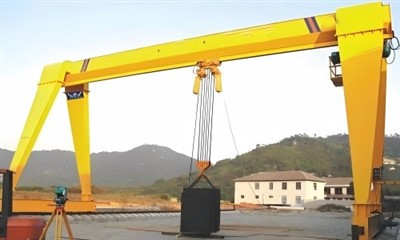
A single girder gantry crane is a lifting solution where the hoist and trolley run along the bottom flange of a single, primary beam (the girder). This beam is supported by two legs that run on wheels along ground-mounted tracks or on a firm surface. They are highly versatile and are a cost-effective alternative to a traditional overhead bridge crane when there are no suitable runway support structures (like building columns).
Warranty of core components:1 Year
Core Components:PLC, Bearing, Gearbox, Motor, Gear
Condition:New
Warranty:1 Year
Weight (KG):500 kg
Feature:Gantry Crane
Product name:Single Girder Gantry Crane
Color:Customized
Capacity:1-20t
Type:Single Girder
Power supply:110V/220V/230V/380V/440V
Control Method:Ground Control+ Remote Control (customized)
Lifting mechanism:Eliectric Hoist
Work Duty:A3-A4
Pictures & Components
1.Main beam
This is where craftsmanship separates a premium beam from a mediocre one.
Submerged Arc Welding (SAW): For the main longitudinal seams, high-quality manufacturers use automated SAW. This process produces deep penetration, high-strength, and exceptionally consistent welds with a smooth, clean appearance.
Certified Welders: For other welds (e.g., diaphragms, end connections), work should be performed by certified welders following strict Welding Procedure Specifications (WPS).
Weld Inspection: All critical welds should be visually inspected and may undergo Non-Destructive Testing (NDT) like Magnetic Particle Inspection (MPI) or Ultrasonic Testing (UT) to ensure they are free of cracks, porosity, and lack of fusion.

Lifting System
The trolley carries the hoist and moves it laterally along the bottom flange of the main girder.
Key Quality Indicators in the Trolley:
Drive Mechanism:
Motorized Trolley: For any crane over 5 tons or requiring precise positioning, a motorized trolley is essential. High-quality systems use a separate gearmotor to drive the trolley wheels.
Wheels: The trolley wheels should be made of forged or alloy steel (not simple cast iron) and run on sealed, pre-lubricated ball or roller bearings. More wheels distribute the load better and reduce flange pressure.
Connection to the Girder:
The trolley frame should be rigid and designed to minimize "crabbing" or binding as it travels.
Guide Rollers: Adjustable lateral guide rollers are a premium feature. They keep the trolley centered on the girder flange, preventing sideloading on the wheels and ensuring smooth, friction-free travel.
 |
 |
3.End carriage
The end carriage is the vertical support structure that:
Supports the main girder and the entire lifting system.
Houses the wheels, bearings, and drive motors that allow the crane to travel along the runway.
Transfers the entire load from the crane to the ground or runway track.
 |
 |
4.Crane travelling mechanism
A high-quality crane traveling mechanism is defined by its independence, robustness, and intelligence. The combination of independent helical gearmotors, forged steel wheels on tapered roller bearings, and Variable Frequency Drive control creates a system that moves the crane smoothly, precisely, and reliably for years with minimal downtime. When specifying a crane, insisting on these features for the travel mechanism is a direct investment in long-term productivity and safety.
5.Trolley travelling mechanism
1. The Trolley Frame
Robust Construction: The frame is fabricated from steel plate (S355JR or better), not lightweight sections. It is designed to be rigid, resisting deflection under load to maintain proper wheel alignment.
Integrated Design: On premium cranes, the trolley is often an integrated "package" from a reputable hoist manufacturer (e.g., Demag, Kito), ensuring perfect compatibility between the hoist, trolley frame, and drive components.
2. Drive System
Motorized Drive: For any crane over 1-2 tons, a motorized trolley is essential for quality and safety. The drive system consists of a gearmotor (motor coupled with a gear reducer).
Gear Reducer Type: A helical gear reducer is the mark of quality. It is significantly more efficient, quieter, and durable than a worm gear reducer, and provides better braking hold.
Drive Configuration:
Single-Side Drive: One gearmotor drives the wheels on one side of the trolley, connected by a drive shaft to the wheels on the opposite side. This is common and effective for most applications.
Independent Dual-Drive (Premium): For very wide spans or heavy-duty applications, a separate motor on each side of the trolley can be used, often synchronized with a VFD for perfect alignment.
3. Wheels and Axles
Wheel Material: Wheels are made of forged or alloy steel (e.g., 55Mn), machined to a precise diameter and often heat-treated for high surface hardness and wear resistance.
Wheel Flange: The wheels are double-flanged to run securely on the bottom flange of the main girder, preventing derailment.
Number of Wheels: A high-quality trolley will have multiple wheels (typically 4 or 8) to distribute the load evenly across the girder flange, reducing point load stress and preventing flange damage.
Axles and Bearings: Axles are machined from high-tensile steel. They use sealed, pre-lubricated anti-friction bearings (ball or roller bearings from brands like SKF or FAG) for smooth operation and long service life with minimal maintenance.
4. Guidance and Alignment System
This is a critical feature that distinguishes a high-quality trolley.
Horizontal Guide Rollers: Adjustable lateral guide rollers are mounted on the trolley frame. These rollers contact the web (the vertical section) of the main girder.
Function: They keep the trolley centered on the girder, preventing sideloading and the resulting friction, wear, and "crabbing" motion. This ensures the trolley travels in a perfectly straight line with minimal effort.
6.Crane wheel
The wheel must withstand:
Extreme Static Load: The total weight of the crane, girder, hoist, and the rated load.
Dynamic & Impact Loads: Forces from starting, stopping, and traveling over minor rail imperfections.
Wear: Constant friction against the rail surface.
Fatigue: Repeated stress cycles over its lifetime.
A failure in a wheel can lead to catastrophic derailment, making it a paramount safety component.

7.Crane Hook
Material and Manufacturing Process
Material: Alloy Steel is mandatory. Common grades include 34CrMo4 or AISI 4140. These steels offer an excellent combination of high tensile strength and toughness (resistance to impact and cracking).
Manufacturing Process:
Forging (The Standard for Quality): The hook is formed by heating the steel and shaping it under immense pressure in dies. This process aligns the grain structure of the metal to the shape of the hook, resulting in superior strength and fatigue resistance.
Why Not Casting? While cast hooks exist for very specialized shapes, forging is preferred for standard hooks as it eliminates the risk of internal defects like porosity and shrinkage, which can be weak points.

Motor
Motor Type and Duty Classification
Type: Three-Phase Asynchronous Squirrel Cage Motors are the industrial standard for their robustness and reliability.
Duty Class and Insulation: This is a critical specification.
Duty Class (S3): Cranes operate in an intermittent duty cycle (S3), characterized by frequent starts and stops. The motor must be rated for this.
Insulation Class: High-quality motors feature Class F or even Class H insulation.
Class F: Allows the motor to operate at a higher temperature (155°C) without degradation.
Why it matters: This provides a significant thermal safety margin over the standard Class B (130°C), dramatically increasing the motor's service life, especially in demanding cycles. It prevents insulation breakdown from heat buildup.

.
Sound and light alarm system & limit switch
Sound and Light Alarm System (Audible & Visual Warning)
This system is the crane's primary method of communicating with people on the ground and in the vicinity. Its purpose is to provide clear, unambiguous warnings before and during crane movement.
Limit Switch System
Limit switches are safety devices that automatically cut off power to a motor when a moving part travels beyond a predetermined safe point. They are the last line of defense against over-travel and collisions.

10.Safety Devices
Electrical & Control Safety Systems
These are the intelligent, active safety systems that monitor and control the crane's functions.
Mechanical Safety Components
These are physical devices that provide passive or direct physical protection.
Operational & Structural Safety Features
These are design and operational elements that contribute to overall safety.
11.Control Mode
Pendant Control (Push Button Station)
This is the most common and versatile control mode for single girder gantry cranes.
Radio Remote Control
This is the premium choice for safety, flexibility, and efficiency, especially in demanding environments.
Cabin Control (Operator Cab)
Less common for single girder cranes due to cost and structural considerations, but used for very heavy or frequent cycles.
Semi-Automatic and Smart Control Systems
This is the cutting edge for high-quality cranes, often as an add-on to pendant or radio control.

12.Sketch
Main technical

Advantages
1. Cost-Effectiveness & Economic Advantages
Lower Initial Investment: Compared to a double girder crane, a single girder design is inherently less expensive due to simpler structure, fewer components, and a lighter overall weight.
Reduced Operating Costs:
Energy Efficiency: With a lighter structure and high-efficiency motors, it consumes less power.
Low Maintenance: High-quality components are built to last and require less frequent adjustment and repair. This minimizes downtime and saves on maintenance labor and parts.
Excellent Return on Investment (ROI): The combination of a reasonable purchase price, low operating costs, and high reliability leads to a fast and excellent ROI.
2. Structural & Installation Advantages
Lighter Weight: The single girder design is lighter than a double girder of equivalent span, reducing the load on the building structure (for top-running cranes) or allowing for simpler foundation requirements for freestanding gantries.
Easier Installation & Relocation: The lighter and often modular design makes installation quicker and less costly. This is a major benefit for temporary sites or facilities that may need to reconfigure their layout.
Compact and Space-Saving Design: The hoist and trolley are mounted under the girder, resulting in a lower headroom requirement. This maximizes the usable lifting height in facilities with low ceilings.
3. Performance & Operational Advantages
Ease of Operation: High-quality cranes feature smooth and responsive controls (pendant or radio remote), making precise load positioning easy for the operator. This reduces cycle times and operator fatigue.
Maneuverability: They are ideal for applications that require moving loads over a wide, rectangular area. They can cover a large "footprint" efficiently.
Versatility: A high-quality single girder gantry crane is not a one-trick pony. It can be configured as:
Top-Running: For the highest lifting capacity and span.
Under-Running: Where the crane wheels run on the bottom flange of the building's runway beams.
Freestanding: With fixed or adjustable span legs for complete independence from the building.
4. Reliability & Durability
Built to International Standards: High-quality cranes are designed and manufactured according to strict standards (like FEM, ISO, or CMAA), ensuring structural integrity and performance predictability.
Superior Components: They use brand-name hoists, motors, and electrical components, along with high-grade steel and professional welding. This translates to a longer service life and consistent performance under daily use.
Reduced Downtime: The core advantage of reliability is that the crane is available when you need it. Robust construction and quality parts mean fewer unexpected breakdowns.
Application:
1. Manufacturing & Assembly Workshops
This is one of the most common applications, where the crane acts as an integral part of the production process.
Machine Servicing & Maintenance: Lifting heavy motors, molds, or machine parts for repair, replacement, or installation. The precision control of a high-quality crane is essential for accurate positioning.
Assembly Lines: Moving large components (e.g., engine blocks, vehicle chassis, machinery frames) between workstations. Its ability to cover a large rectangular area makes it ideal for linear production flows.
Staging and Handling: Unloading raw materials (steel, aluminum bars) from trucks and feeding them to processing machines like CNC mills, lathes, or presses.
2. Warehousing, Logistics & Storage Yards
Here, the crane excels in loading, unloading, and organizing heavy goods.
Loading and Unloading Trucks: A freestanding gantry crane is perfect for areas without existing overhead crane systems. It can efficiently move goods from the yard directly into a truck or warehouse.
Moving Heavy Palletized Goods: Handling pallets of goods, industrial products, or heavy machinery that exceed the capacity of standard forklifts.
Storage Yard Management: Organizing and retrieving heavy items like steel pipes, timber, concrete blocks, or construction materials in an open yard.
3. Construction & Precast Concrete Industry
The portability and strength of these cranes are highly beneficial in dynamic environments.
Handling Precast Elements: Lifting and placing concrete panels, beams, hollow-core slabs, and other prefabricated elements on construction sites.
Material Supply: Moving bundles of rebar, formwork, and other construction materials to the precise location where workers need them.
Steel Erection: Assisting in the placement of structural steel beams and columns, especially in smaller-scale projects or for prefabricated steel structures.
4. Shipping, Ports & Intermodal Terminals
While larger cranes handle ships, single girder gantry cranes play a crucial supporting role.
Container Stuffing and De-stuffing (CFS): In Container Freight Stations, these cranes are used to efficiently load and unload cargo from containers.
Handling Breakbulk Cargo: Moving heavy, non-containerized goods like machinery, crates, or large drums within a warehouse or terminal area.
Maintenance Workshops: Used in port workshops for maintaining and repairing port equipment like reach stackers, forklifts, and terminal tractors.
Crane production procedure
Phase 1: Engineering & Design
This is the foundational phase where the crane is conceived and planned.
Step 1.1: Client Requirement Analysis
Understanding the client's specific needs: Capacity, Span, Lifting Height, Duty Cycle (Class), Control Mode, and Operating Environment.
High-Quality Differentiator: Engineers consult with the client to ensure the design is optimized for their application, not just a standard off-the-shelf solution.
Step 1.2: Structural Design & Calculation
Using specialized software (e.g., AutoCAD, SolidWorks, SAP2000) to create detailed drawings.
Performing Finite Element Analysis (FEA) to simulate stress, deflection, and dynamic loads on the girder and end trucks. This ensures the design can handle the rated capacity with a significant safety factor.
High-Quality Differentiator: Designs comply with international standards (FEM, ISO, CMAA), and FEA is standard practice to eliminate potential failure points.
Step 1.3: Electrical & Control System Design
Designing the control circuit, selecting appropriate motors, contactors, Variable Frequency Drives (VFDs), and safety devices.
Creating wiring diagrams and panel layouts.
Step 1.4: Bill of Materials (BOM) Generation
Creating a comprehensive list of all raw materials (steel grades, sheet metal), purchased components (hoists, wheels, motors, electrical components), and standard parts (bolts, bearings).
Phase 2: Material Procurement & Preparation
Step 2.1: Sourcing of Materials and Components
Procuring certified raw materials (e.g., S355JR steel) from reputable mills.
Sourcing high-quality, brand-name components: Hoists from reputable manufacturers (e.g., Demag, Kito, CM), motors (Siemens, SEW), electrical gear (Schneider, Siemens), and wheels.
High-Quality Differentiator: Traceability of materials and use of proven, reliable components.
Step 2.2: Material Preparation
Shot Blasting: Steel plates and profiles are shot-blasted to remove mill scale and rust, creating a clean surface ideal for painting and inspection.
Cutting: Using CNC plasma or laser cutting machines for high-precision cutting of steel plates. This ensures perfect fit-up for welding.
Phase 3: Fabrication & Assembly
This is the core manufacturing phase.
Step 3.1: Girder Fabrication
The main girder is typically a welded box-section.
Jigging & Fixturing: Plates are placed in a large, rigid assembly jig to prevent distortion and ensure straightness and correct dimensions.
Welding: Performed by certified welders using Submerged Arc Welding (SAW) for long main seams (for superior strength and consistency) and Manual Metal Arc (MMA) or Gas Metal Arc Welding (GMAW) for smaller attachments.
High-Quality Differentiator: Pre-heating of thick materials, controlled welding procedures, and 100% visual inspection of welds.
Step 3.2: End Truck Fabrication
The end frames (legs) and wheel assemblies are fabricated with precision to ensure squareness and proper alignment of the wheels.
Step 3.3: Stress Relieving (Vibratory or Thermal)
Thermal Stress Relieving: The welded girder is heated in a large furnace to a specific temperature and cooled slowly. This relieves internal stresses from welding, preventing future distortion and stabilizing the structure.
Vibratory Stress Relieving: An alternative method using vibrations to achieve a similar result for smaller cranes or components.
High-Quality Differentiator: Stress relieving is a critical step for a high-quality crane that is often skipped in low-cost manufacturing.
Step 3.4: Machining
After stress relieving, critical surfaces are machined. This includes the rail running surface on the girder and the mounting pads for the end trucks, ensuring a perfectly level and straight track for the trolley.
Step 3.5: Surface Treatment & Painting
The entire structure is thoroughly cleaned.
Priming: A high-quality, anti-corrosion primer is applied.
Top Coating: A durable topcoat (often polyurethane) is applied, typically using an airless spray system for a uniform, thick finish. The color is according to client specification or standard safety yellow/red.
High-Quality Differentiator: Multi-coat system with a defined dry film thickness, providing excellent corrosion protection for harsh environments.
Step 3.6: Mechanical Assembly
The girder is bolted to the end trucks using high-tensile strength bolts.
The trolley frame and the hoist are assembled and mounted onto the girder.
Wheels, buffers, and rail sweeps are installed.
Step 3.7: Electrical Assembly & Wiring
The electrical panel is assembled and wired.
Cabling is run along the girder to the hoist, trolley, and travel motors.
Limit switches, the pendant station, and warning devices (beacon/horn) are installed and connected.
High-Quality Differentiator: Neat, labeled wiring in proper cable trays or conduits. All connections are secure and follow the electrical diagrams.
Phase 4: Testing, Inspection & Dispatch
This is the final validation phase before the crane reaches the customer.
Step 4.1: Pre-Test Inspection
A visual inspection of all components, welds, and paintwork.
Verification of all safety devices (limit switches, E-stops) are correctly installed.
Step 4.2: No-Load Test
The crane is energized and operated without a load.
All functions are tested: Hoist Up/Down, Trolley Travel, Long Travel.
Checks for smooth operation, unusual noises, and correct direction of movement.
Step 4.3: Load Testing (The Most Critical)
Static Load Test: The crane is lifted with a test load 25% greater than the rated capacity (as per ISO/FEM standards). The load is held for a period to check the structure's integrity and measure girder deflection.
Dynamic Load Test: The crane is operated with a test load 10% greater than the rated capacity. All motions are tested under this load to ensure performance and safety.
High-Quality Differentiator: Load testing is mandatory and is often witnessed by a third-party inspector or the client. Certified test weights are used.
Step 4.4: Final Adjustment & Documentation
Any minor adjustments are made based on test results.
The crane is cleaned, and a final protective coating is applied.
Operation and Maintenance Manuals, test certificates, and CE/other compliance certificates are prepared.
Step 4.5: Dismantling & Packing for Shipment
The crane is carefully disassembled into transportable sections (girder, legs, trolley, etc.).
All parts are securely packed with protective coverings to prevent damage during transit.

Workshop view:
The company has installed an intelligent equipment management platform, and has installed 310 sets (sets) of handling and welding robots. After the completion of the plan, there will be more than 500 sets (sets), and the equipment networking rate will reach 95%. 32 welding lines have been put into use, 50 are planned to be installed, and the automation rate of the entire product line has reached 85%.

Workshop view
Material Inspection
Quality Inspection: Strict quality inspection is carried out on the purchased raw materials to ensure that they meet the design requirements and national standards.
Material Storage: Qualified materials are stored according to classification to prevent corrosion or damage.
Cutting and Forming
Steel Cutting: Use plasma cutting, laser cutting or flame cutting and other technologies to cut the steel according to the size of the design drawing.
Forming Processing: Form the steel plate through bending, rolling, welding and other processes to manufacture the main beam, end beam and other structural parts.
Welding
Component Welding: The cut and formed steel parts are welded into the main structures such as the main beam, end beam and trolley. The welding process needs to be strictly controlled to ensure the structural strength and welding quality.
Weld Inspection: Use non-destructive testing technology (such as ultrasonic testing, radiographic testing) to inspect the welds to ensure that there are no cracks or other defects.
Machining
Precision Machining: Precision machining is performed on the key components of the crane, such as wheel sets, bearing seats, pulleys, etc., to ensure their dimensional accuracy and surface quality.
Assembly of the whole machine
General assembly: On the basis of pre-assembly, the overall assembly of the crane is carried out, including the final installation of the main beam, end beam, lifting mechanism, walking mechanism, etc.
Commissioning and testing
Under dynamic conditions, the operating performance of the crane is tested, including the testing of lifting, walking, steering and other functions. The overall size of the assembled bridge crane is checked to ensure that all dimensions meet the design requirements.
Spraying and anti-corrosion treatment
Surface treatment Rust removal: Rust removal on the surface of the crane, common methods include sandblasting, pickling, etc. Primer spraying: Spray anti-corrosion primer on the treated surface to prevent metal oxidation and corrosion. Topcoat spraying Color spraying: Spray topcoat according to customer requirements or industry standards to give the crane a protective and decorative effect. Marking: After spraying, mark the crane's identification information in accordance with the specifications, such as model, rated load, etc.
Factory and installation
Packaging and transportation
Packaging protection: Protectively package the key components of the crane to prevent damage during transportation. Transportation arrangement: According to the equipment size and transportation conditions, select a suitable transportation method to transport the crane to the customer's site.
Acceptance and delivery
Customer acceptance
On-site acceptance: The customer conducts on-site acceptance of the crane according to the contract requirements and technical specifications to check the performance and quality of the equipment.
Problem rectification: If any problems are found, the manufacturer needs to rectify them in time to ensure that the equipment fully meets the customer's requirements. Delivery and use Operation training: The manufacturer usually trains the customer's operators to ensure that they can operate the crane correctly and safely.


Hot Tags: high quality single girder gantry crane, China high quality single girder gantry crane manufacturers, suppliers, factory, Gantry Crane, Electric Hoist Single Girder Gantry Crane, Single Girder Gantry Crane
You Might Also Like



Send Inquiry