







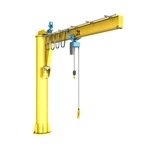


30t Single Beam Gantry Crane With Electric Hoist
Products Description
Key Features & Benefits
1. Single Beam (Girder) Design
Lightweight yet strong – Made from high-quality steel (box-type or I-beam construction).
Cost-effective – More affordable than double girder cranes while still handling 5-ton loads efficiently.
Space-saving – Requires less headroom than double girder cranes.
2. Electric Hoist System
Types of Electric Hoists:
Chain Hoist (e.g., CM Lodestar, Kito, Yale) – Best for frequent, medium-duty lifting.
Wire Rope Hoist (e.g., Demag, ABUS, GH) – Smoother operation for heavy-duty use.
Hoist Controls:
Pendant control (wired, hanging remote).
Wireless remote (for safer, long-distance operation).
Variable speed (for precise load positioning).
3. Mobility & Adjustability Options
Fixed Gantry – Stationary, bolted to the floor for permanent use.
Adjustable Height – Telescopic legs for different workspace needs.
Mobile Gantry – Equipped with wheeled legs (manual push or motorized travel).
4. Safety & Reliability
✔ Overload protection – Prevents lifting beyond 5-ton capacity.
✔ Limit switches – Automatic stop at maximum height/travel.
✔ Emergency stop button – Instant power cutoff for safety.
✔ Anti-sway control (optional) – Reduces load swinging.
Comparison: Electric Chain Hoist vs. Wire Rope Hoist
| Feature | Electric Chain Hoist | Electric Wire Rope Hoist |
|---|---|---|
| Best For | Medium-duty, frequent lifts | Heavy-duty, high-precision |
| Lifting Speed | Faster (up to 8 m/min) | Slower but smoother (3-5 m/min) |
| Durability | Good for workshops | Better for harsh environments |
| Maintenance | Low (fewer parts) | Moderate (requires lubrication) |
| Cost | Lower | Higher |
Place of Origin:Henan, China
Warranty:2 years
Weight (KG):60000 kg
Video outgoing-inspection:Provided
Machinery Test Report:Provided
Application:warehouses,factory and other place
Crane type:box type gantry crane
Travelling speed:20m/min
Lifting mechanism:Electric Hoist
Control method:Ground Control+ Remote Control (customized)
Working duty:A5
Working Temperature:-20~+40℃
Industrial voltage:380V50HZ3Phanse or other
Color:Customised
Customization:Accepted

Pictures & Components
Here's a detailed breakdown of the components of a single beam gantry crane with electric hoist:
1. Main Structural Components
A. Single Girder (Main Beam)
Function: Primary load-bearing structure
Material: Welded steel box-type or I-beam construction
Features:
Optimized for 5-ton capacity
May include reinforcement plates at stress points
Often galvanized or painted for corrosion resistance
B. End Carriages (Support Legs)
Function: Vertical support structure
Types:
Fixed legs: Permanent installation
Adjustable legs: Telescopic for height variation
Mobile legs: Equipped with wheels
Components:
Vertical columns
Diagonal bracing for stability
Base plates or wheel assemblies

2. Hoisting System
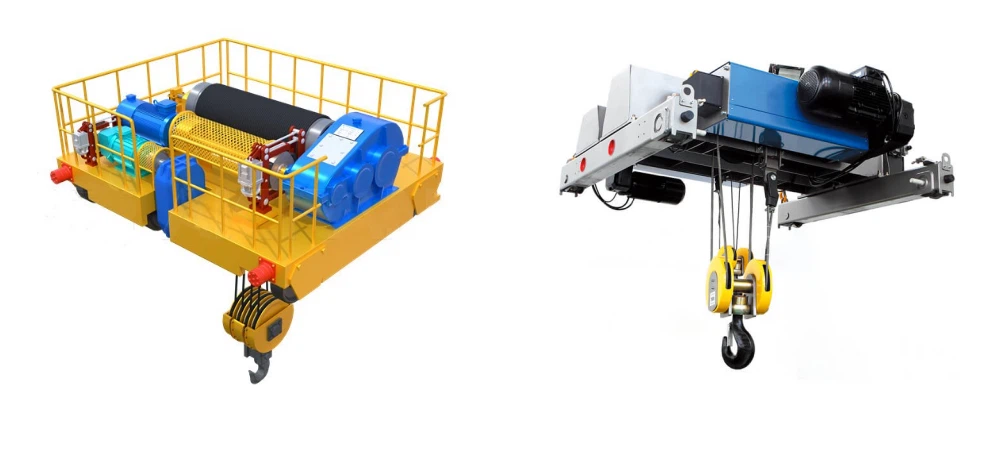
A. Electric Hoist Unit
Core Components:
Electric motor (3-phase, typically 380V/415V)
Gear reduction system
Drum or chain wheel assembly
Braking system (electromagnetic or mechanical)
Types:
Chain hoist:
Load chain (Grade 80 or higher)
Chain container
Wire rope hoist:
Steel wire rope (6-12mm diameter)
Rope drum with groove system
Rope guide

B. Trolley Assembly
Function: Allows horizontal movement along the beam
Components:
Trolley frame
Drive wheels (polyurethane or steel)
Guide rollers
Optional motorized travel system

3. Motion Systems
A. Bridge Travel System
Components:
Drive wheels (single or double drive)
Travel motors (for powered models)
Rail system (for tracked models)
Buffers/bumpers
B. Optional Motorized Systems
Bridge travel motors
Trolley travel motors
Variable frequency drives (VFDs) for smooth operation

4. Electrical Components
A. Power Supply System
Components:
Festoon system or cable reels
Power collector (for rail-mounted systems)
Junction boxes
Circuit breakers
B. Control System
Components:
Pendant control station (IP54 or higher)
Wireless remote system (optional)
Control panel with contactors and relays
Emergency stop circuit
C. Safety Devices
Standard Features:
Overload limiter
Upper/lower limit switches
Phase protection relay
Emergency stop button
Optional Features:
Anti-collision system
Load moment indicator
Sway control system
.
5. Safety & Auxiliary Components
A. Structural Safety Features
Components:
End stops
Rail sweeps
Warning labels
Anti-drop devices
B. Operational Aids
Components:
Load indicators
Crane lighting
Warning alarms
Wind-resistant devices (for outdoor use)

6. Optional Accessories
Lifting Attachments:
Spreader beams
Electromagnets
Vacuum lifters
Monitoring Systems:
Load cells
Remote monitoring
Usage tracking

Sketch

Main technical

Advantages
1. Cost Efficiency
Lower initial investment compared to double girder cranes
Reduced installation costs (no need for runway beams)
Energy-efficient operation with electric power
2. Space Optimization
Compact design requires less headroom
No permanent foundation needed (mobile versions available)
Ideal for low-clearance workspaces
3. Operational Advantages
Precise load control with variable speed options
Smooth operation with electric hoist (vs. manual)
Reduced operator fatigue with pendant/remote control
4. Versatility
Adjustable span and height for different applications
Multiple hoist options (chain or wire rope)
Customizable configurations for specific needs
5. Safety Features
Built-in overload protection
Emergency stop function
Limit switches for safe travel range
Anti-sway control (optional)
6. Easy Maintenance
Simpler structure with fewer components
Easy access to all parts
Modular design for quick repairs
Application:
1. Manufacturing & Assembly
Machine installation and maintenance
Production line material handling
Component assembly in automotive/aerospace
2. Warehousing & Logistics
Loading/unloading trucks and containers
Pallet handling in distribution centers
Heavy inventory management
3. Construction Sites
Steel structure erection
Precast concrete handling
Material positioning at height
4. Repair & Maintenance
Industrial equipment servicing
Vehicle repair (buses, trucks, rail)
Power plant maintenance
5. Metalworking
Foundry operations
Steel plate handling
Fabrication shop applications
6. Ports & Shipyards
Cargo handling
Ship repair operations
Container management
7. Energy Sector
Transformer installation
Wind turbine component handling
Power generation equipment maintenance
8. Specialized Applications
Stage equipment handling
Aircraft maintenance
Mining equipment repair
Crane production procedure
The production procedure for a single beam traveling gantry crane involves several key stages, from design and material procurement to assembly, testing, and final delivery. Below is a step-by-step outline of the typical manufacturing process:
1. Design & Engineering
Customer Requirements Analysis: Determine lifting capacity, span, lifting height, duty cycle, and operating environment.
Structural Design:
Design the main girder (single box or I-beam structure).
Design end carriages (legs/wheels) and runway beams.
Select hoist/trolley type (electric or manual).
Load & Stress Calculations: Ensure compliance with standards (ISO, FEM, DIN, or ASME).
Electrical & Control System Design: Choose motors, brakes, limit switches, and control panels.
2. Material Procurement
Steel Plates & Profiles: High-quality Q235B/Q345B steel for main girders and supports.
Mechanical Components: Wheels, axles, bearings, gears, and couplings.
Electrical Components: Motors, cables, control panels, and safety devices.
3. Fabrication of Main Components
A. Main Girder Fabrication
Cutting: CNC plasma/oxy-fuel cutting for precision.
Welding: Automated submerged arc welding (SAW) for strong seams.
Straightening & Inspection: Ensure proper camber (pre-bend) and check for defects (UT/RT testing).
B. End Carriages & Legs
Frame Assembly: Welded steel construction with reinforced bracing.
Wheel & Bearing Installation: Machined wheels for smooth travel.
C. Hoist & Trolley
Pre-assembled Hoist: Electric chain hoist or wire rope hoist.
Trolley Frame: Fabricated to accommodate hoist movement.
4. Surface Treatment & Painting
Shot Blasting: Removes rust and improves paint adhesion.
Primer & Paint: Anti-corrosion coatings (epoxy + polyurethane).
5. Assembly
Girder & End Carriage Joining: Bolt or weld the main beam to legs.
Hoist/Trolley Installation: Mounted on the girder.
Electrical Wiring: Connect motors, controls, and safety devices.
6. Testing & Quality Control
Dimensional Inspection: Verify span, height, and alignment.
Load Testing:
Static Load Test: 125% of SWL (Safe Working Load).
Dynamic Load Test: 110% of SWL with operational checks.
Functional Tests: Travel, lifting, braking, and limit switch verification.
7. Disassembly & Packaging
For Shipment: Crane may be disassembled into modules (girder, legs, hoist).
Protective Packaging: Waterproof wrapping for sea transport.
8. Installation & Commissioning (On-Site)
Runway Preparation: Ensure level rails or ground support.
Reassembly: Bolt components together.
Final Testing: Operational checks under load.
9. Documentation & Delivery
Manual & Certificates: Include load test reports, CE/ISO certifications.
Training: Operator and maintenance guidance.

Workshop view:
The company has installed an intelligent equipment management platform, and has installed 310 sets (sets) of handling and welding robots. After the completion of the plan, there will be more than 500 sets (sets), and the equipment networking rate will reach 95%. 32 welding lines have been put into use, 50 are planned to be installed, and the automation rate of the entire product line has reached 85%.


Hot Tags: 30t single beam gantry crane with electric hoist, China 30t single beam gantry crane with electric hoist manufacturers, suppliers, factory, Electric Hoist Single Girder Gantry Crane, Single Girder Gantry Crane, Gantry Crane
You Might Also Like




Send Inquiry