










Rubber Tyre Travel Lift
Products Description
Key Features of a Rubber Tyre Travel Lift:
Rubber-Tired Mobility – Unlike rail-mounted gantry cranes, RTGs use rubber tires for movement, allowing greater flexibility in yard operations.
Gantry Structure – Features a large overhead gantry with a hoist mechanism to lift and move cargo.
Self-Propelled – Equipped with an engine (diesel, electric, or hybrid) for independent movement.
High Lifting Capacity – Can handle heavy loads, typically ranging from 30 to 50 tons (or more for specialized models).
Precision Handling – Often includes automated controls, GPS, or laser guidance for accurate container stacking.
Comparison with Other Lifting Equipment
| Feature | RTG (Rubber Tyre) | Rail-Mounted Gantry (RMG) | Straddle Carrier |
|---|---|---|---|
| Mobility | High (rubber tires) | Limited (fixed rails) | High (rubber tires) |
| Stacking Height | 5-6 rows | 7+ rows | 3-4 rows |
| Infrastructure Cost | Low (no rails) | High (needs rails) | Medium |
| Automation | Yes (ERTG) | Yes (Full automation) | Limited |
| Best For | Medium-sized ports, flexibility | Large automated terminals | Fast truck loading |
Lifting Capacity 320 tons
Span (Width) 3 - 12 meters (adjustable)
Lifting Height 3 - 10 meters
Working Class A3-A5 (light to medium duty)
Hoisting Speed 0.5 - 8 m/min (variable)
Main Beam Type Single/double girder (box-type)
Power Supply 220V/380V 3-phase or manual
Control Mode Pendant control/wireless remote
Hoist Type Electric chain hoist/wire rope hoist
Travel Drive Manual push or motorized
Corrosion Protection Hot-dip galvanized or marine-grade paint
Wind Resistance Up to Beaufort scale 6 (for outdoor use)
Operating Temp -20°C to +50°C

Pictures & Componen
A Rubber Tyre Travel Lift (or Rubber-Tired Gantry Crane - RTG) is a complex machine with multiple critical components that work together to lift, move, and position heavy loads. Below is a breakdown of its key components:
1. Structural Components
Gantry Frame – The main steel structure that spans the working area, providing support for the lifting mechanism.
Legs & Supports – Vertical columns that hold the gantry frame; may include telescopic or fixed legs.
Cross Beams – Horizontal beams that connect the legs and support the hoist trolley.
2. Mobility & Drive System
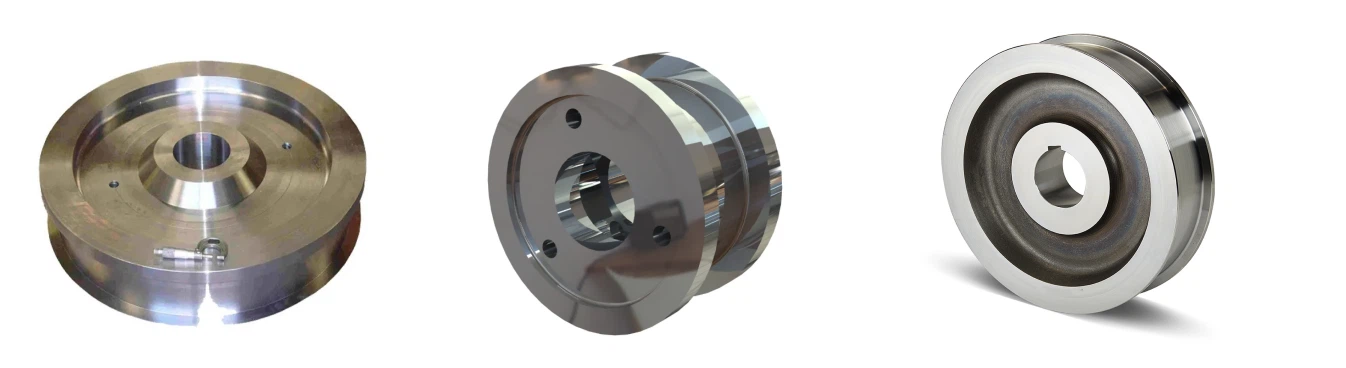
Rubber Tires – Heavy-duty, high-load tires (often pneumatic or solid) for smooth movement.
Wheel Assemblies – Includes axles, bearings, and suspension systems.
Drive Motors – Electric or hydraulic motors powering the wheels (some models use diesel engines).
Steering System – Allows for precise maneuvering (crab steering, 90-degree steering, or coordinated wheel turning).
Braking System – Disc or hydraulic brakes for safe stopping.

3. Lifting Mechanism
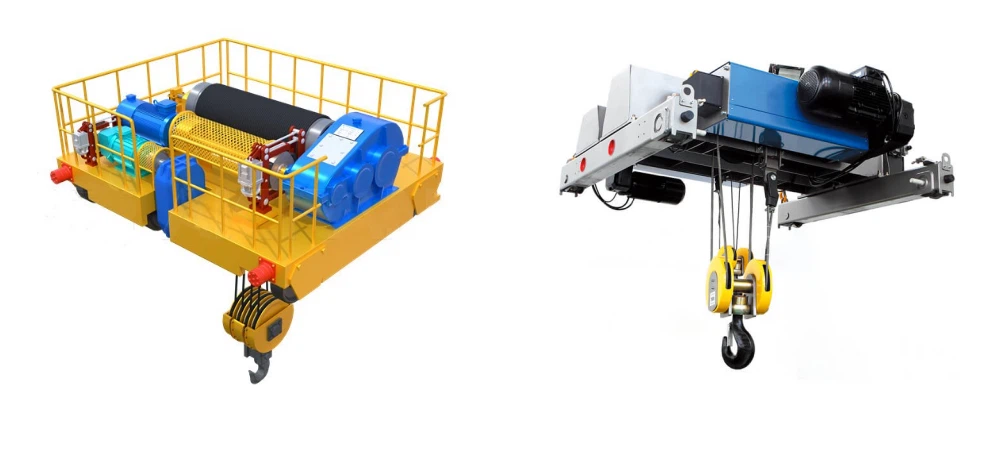
Hoist & Winch System – Electric or hydraulic winches with wire ropes or chains for lifting.
Trolley – Moves horizontally along the gantry beam to position the load.
Spreader (for container handling) – An attachment that locks onto shipping containers (fixed or telescopic).
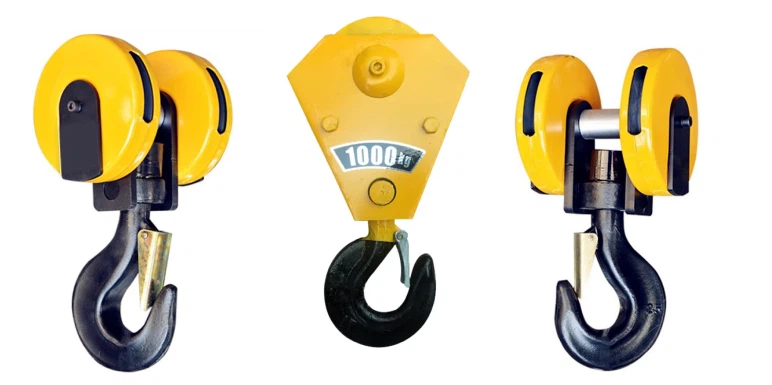
Hooks & Slings (for non-container loads) – Used for lifting machinery, boats, or other heavy objects.
4. Power System
Diesel Engine (in traditional models) – Provides independent power.
Electric Drive (ERTG) – Uses a cable reel or conductor bar for grid power (more eco-friendly).
Hybrid Systems – Combine diesel and electric power for efficiency.
Battery-Powered (Full Electric RTG) – Emerging technology for zero emissions.
5. Control & Automation
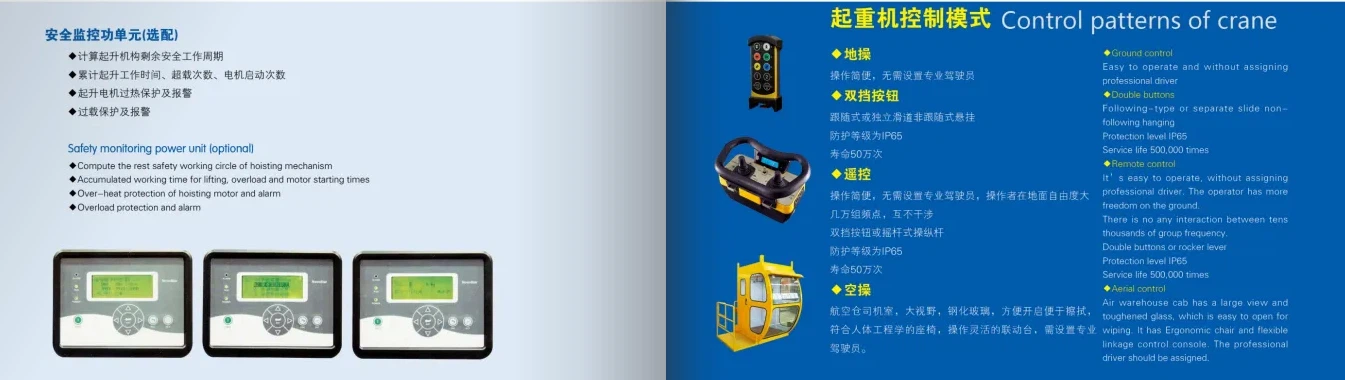
Operator Cabin – Mounted on the gantry for visibility; includes joysticks, screens, and controls.
Remote Control – Some models allow wireless operation.
Automation & Sensors – GPS, laser positioning, anti-sway systems, and load moment indicators (LMI) for safety.


6. Safety & Auxiliary Systems
Outriggers / Stabilizers – Extendable supports for added stability during lifting.
Anti-Collision Systems – Prevents crashes with other equipment or containers.
Lighting & Alarms – Warning lights and horns for safe operation.
Fire Suppression System – Especially important in diesel-powered models.

Common Wear & Tear Parts (Maintenance Focus)
Tires & Wheel Bearings – High wear due to constant movement.
Wire Ropes / Chains – Require regular inspection for fraying.
Hydraulic Hoses & Seals – Prone to leaks over time.
Brake Pads & Discs – Need periodic replacement.
Electrical Components – Sensors and control systems may degrade.
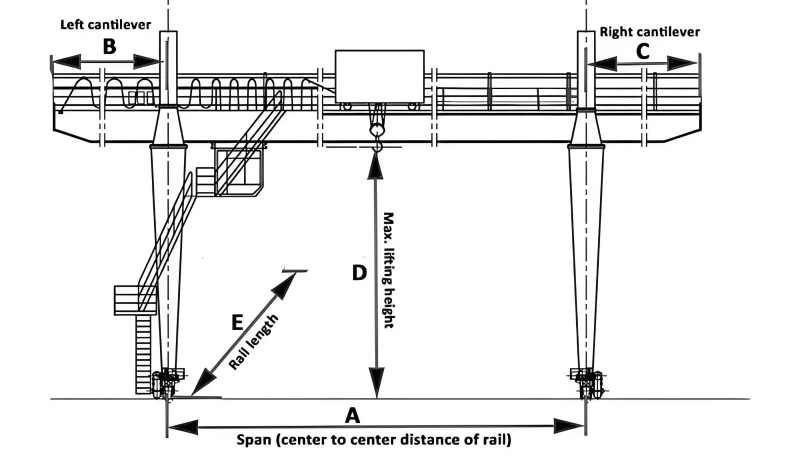
SKETCH
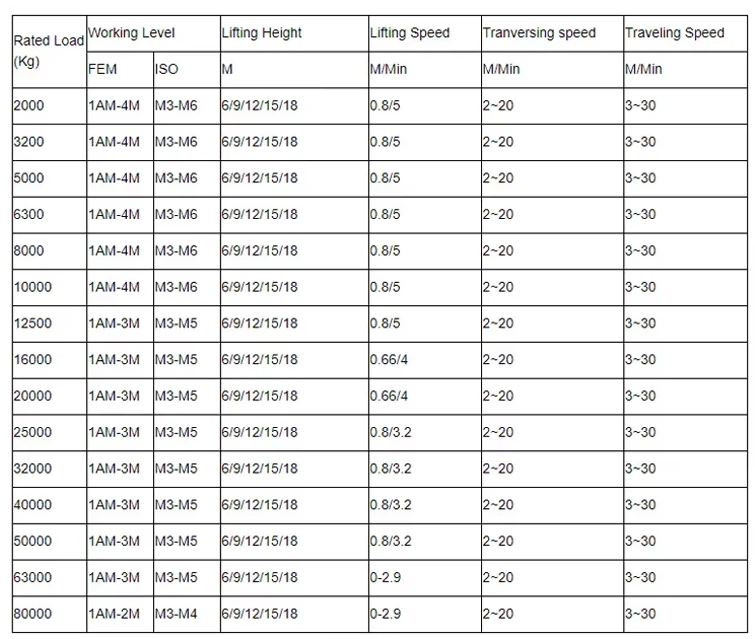
Main technical
Advantages
Rubber Tyre Travel Lifts (or Rubber-Tired Gantry Cranes - RTGs) offer several benefits in material handling, especially in ports, logistics yards, and heavy industries. Here are the key advantages:
1. Mobility & Flexibility
No Fixed Tracks Needed – Unlike rail-mounted gantry cranes, RTGs can move freely on rubber tires, allowing flexible yard layouts.
Easy Relocation – Can be driven to different work areas without disassembly.
2. High Efficiency & Productivity
Fast Load Handling – Can quickly lift, move, and stack containers or heavy loads.
Automation-Ready – Modern RTGs feature GPS, laser guidance, and remote control for precision handling.
3. Versatility in Applications
Suitable for containers, heavy machinery, boats, and bulk cargo.
Adjustable spreaders and lifting attachments allow handling of different load types.
4. Cost-Effective Operation
Lower Infrastructure Cost – No need for rail tracks or fixed foundations.
Hybrid & Electric Options – Reduce fuel costs and emissions (ERTG – Electric RTG).
5. Better Space Utilization
Can stack containers higher (up to 5-6 rows) compared to forklifts.
Optimizes yard space in busy ports and terminals.
6. Safety Features
Anti-Sway Systems – Prevents load swinging.
Collision Avoidance – Sensors and alarms prevent accidents.
Overload Protection – Load Moment Indicators (LMI) ensure safe lifting.
Application
1. Ports & Container Terminals (Most Common Use)
Stacking shipping containers in storage yards.
Loading/unloading from trucks and trains.
Inter-terminal transport of containers.
2. Boat & Shipyards
Lifting and moving boats (similar to a boat travel lift).
Dry docking and maintenance operations.
3. Heavy Industry & Logistics
Moving large machinery (e.g., steel coils, wind turbine parts).
Warehouse operations for oversized cargo.
4. Rail & Intermodal Yards
Transferring containers between trucks and trains.
Sorting and organizing freight in logistics hubs.
5. Construction & Project Cargo
Handling prefabricated structures.
Transporting heavy construction materials.
Crane production process
The production process of a 200-ton mobile boat/marine lift crane involves several stages, from design and engineering to fabrication, assembly, and testing. Below is a detailed breakdown of the typical production process:
1. Design & Engineering
Conceptual Design: Engineers create initial sketches and 3D models based on load capacity (200 tons), reach, mobility, and environmental conditions (marine use).
Structural Analysis: Finite Element Analysis (FEA) ensures the crane can handle dynamic loads, wind, and wave forces.
Hydraulic & Electrical Systems: Design of hydraulic cylinders, winches, and control systems for smooth lifting operations.
Material Selection: High-strength steel (e.g., ASTM A514) for corrosion resistance in marine environments.
Regulatory Compliance: Meets standards like DNV-GL, ABS, or Lloyd's Register for marine cranes.
2. Material Procurement
Steel Plates & Beams: Sourced for the boom, chassis, and structural framework.
Hydraulic Components: Pumps, cylinders, hoses, and valves from certified suppliers.
Electrical Systems: Motors, sensors, and control panels (often waterproof for marine use).
Wire Ropes & Sheaves: High-grade steel cables for lifting.
3. Fabrication
A. Structural Fabrication
Cutting & Shaping: CNC plasma/laser cutting for precision parts.
Welding: Automated and manual welding (Submerged Arc Welding for thick sections).
Boom Construction: Lattice or telescopic design for strength and mobility.
Chassis & Outriggers: Reinforced for stability during lifts.
B. Hydraulic & Mechanical Assembly
Hydraulic System: Installation of pumps, cylinders, and hoses.
Winches & Drums: Mounted for lifting and lowering operations.
Slewing Mechanism: Allows 360° rotation (if applicable).
C. Electrical & Control Systems
Control Cabin: Waterproof operator station with joysticks/sensors.
Load Monitoring: Load cells and limit switches for safety.
Power Supply: Diesel engine or electric motor (marine-grade).
4. Assembly & Integration
Boom Installation: Mounted onto the chassis with pivot points.
Counterweights: Added for balance (if required).
Final Wiring & Plumbing: Connecting hydraulic and electrical systems.
Painting & Coating: Anti-corrosion paint (epoxy or zinc coatings).
5. Testing & Quality Control
Load Testing: Lifting 200 tons (+25% overload test, per standards).
Functional Tests: Checking hydraulic movements, rotation, and stability.
Environmental Tests: Salt spray tests for marine durability.
Safety Checks: Emergency stop systems, overload alarms.
6. Delivery & Commissioning
Transport: Disassembled for shipping or delivered as a mobile unit.
On-Site Assembly: Reassembled at the dock or shipyard.
Operator Training: Handling and safety protocols.

Workshop view:
The company has installed an intelligent equipment management platform, and has installed 310 sets (sets) of handling and welding robots. After the completion of the plan, there will be more than 500 sets (sets), and the equipment networking rate will reach 95%. 32 welding lines have been put into use, 50 are planned to be installed, and the automation rate of the entire product line has reached 85%.




Hot Tags: rubber tyre travel lift, China rubber tyre travel lift manufacturers, suppliers, factory
You Might Also Like


Send Inquiry