






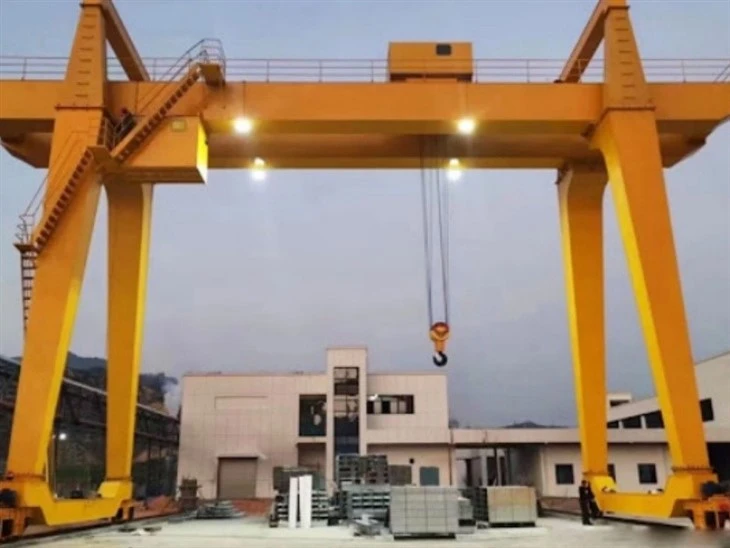
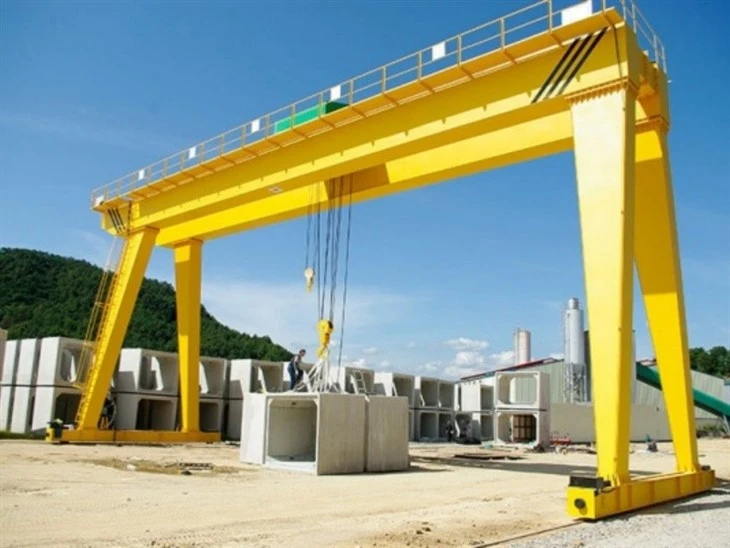

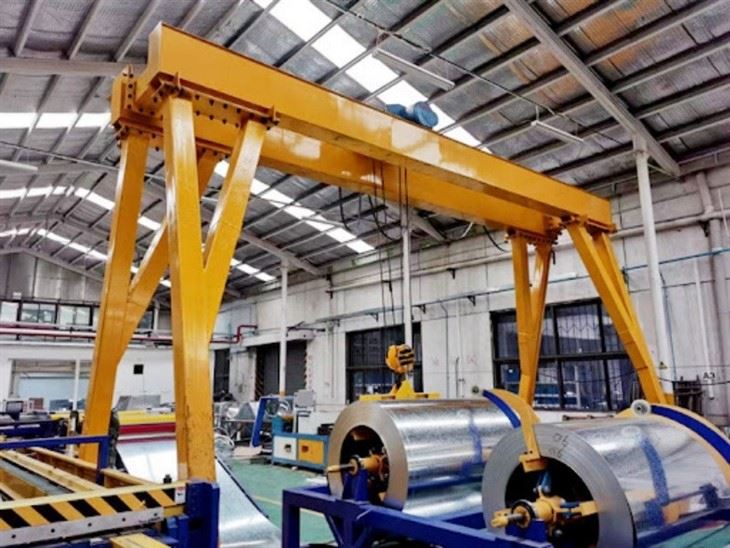
Remote Control Double Girder Gantry Crane
Products Description
1. Structure
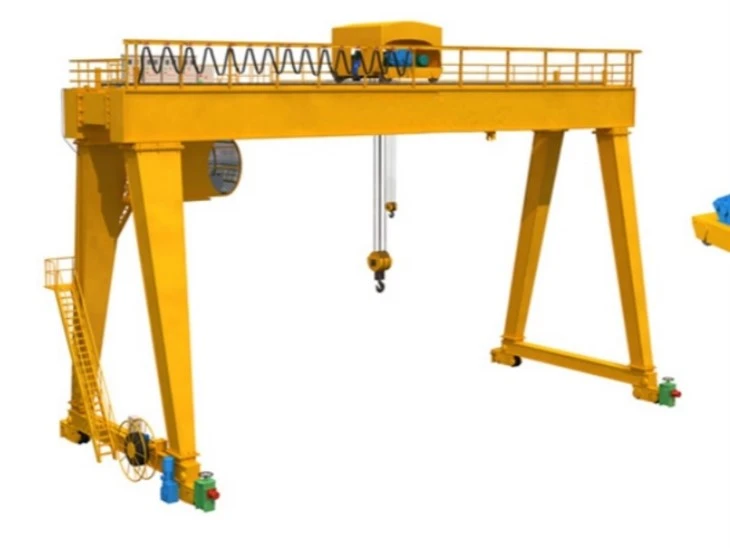
Double girders for increased load capacity and structural stability.
Mounted on legs with wheels running on ground rails or rubber tires (RTG).
Winch trolley or hoist travels between girders for precise lifting.
2. Remote Control Operation
Wireless radio remote control system with push-button pendant.
Enables the operator to control:
Lifting (up/down)
Trolley travel (left/right)
Crane travel (forward/backward)
Emergency stop
Improves safety by allowing the operator to stand away from the load.
Core Components:Engine, Bearing, Gearbox, Motor, Gear
Place of Origin:Henan, China
Warranty:2 years
Weight (KG):50000 kg
Video outgoing-inspection:Provided
Machinery Test Report:Provided
Application:Outdoor
Keywords:Gantry Crane
Rated Loading Capacity:50Ton
Cross travelling speed:44.6m/min
Long travelling speed:47.1m/min
Control way:cabin
Power supply:Cable reel
Steel track:QU80
Power:3-phase AC 50HZ 380V

Pictures & Components
1.Main beam
1)Structure
Double girder box-type design made from high-strength Q235B/Q345B steel.
Welded from flange plates, web plates, and stiffeners to form a closed, rigid rectangular beam.
Designed for high lifting capacity (commonly 5–100 tons or more).
2)Dimensions
Span: Customizable, usually from 10 m to 40+ m depending on application.
Height & Thickness: Optimized based on lifting load and crane design.
3)Trolley Rail System
Equipped with precision-machined rails on top of the girders for smooth and accurate trolley travel.
Rails are securely bolted or welded, with wear-resistant design for heavy-duty use.
2.Lifting System
The lifting system of a remote control double girder gantry crane is the heart of the crane's operation - it performs the vertical lifting and lowering of loads, guided and managed entirely through a wireless remote control system. This system ensures precise control, safety, and efficiency, especially for heavy-duty or high-risk lifting environments.
 |
 |
3.End carriage
1)Structure & Design
Made of high-strength Q235/Q345 steel box beam or welded profile.
Provides rigid support for the main girder and transfers load to the wheels.
Designed to resist torsional deformation under heavy loads and long spans.
2)Wheel Assembly
Equipped with forged or cast steel wheels, typically:
2 driving wheels (with motors and gearboxes).
2 idle wheels (for load support and steering).
Surface-hardened and heat-treated for wear resistance.
3)Drive Units
Motorized wheels driven by electric motors + reducers (SEW, ABB, or similar).
Integrated with soft start or inverter-controlled drive systems for smooth acceleration and deceleration.
Brakes are automatically engaged when power is off, ensuring crane stability.
  |
4.Crane travelling mechanism
The crane traveling mechanism of a remote control double girder gantry crane is responsible for the horizontal movement of the entire crane along its ground rails. This system enables the crane to move loads across large distances with high precision, all controlled wirelessly via a remote control.
5.Trolley travelling mechanism
The trolley traveling mechanism of a remote control double girder gantry crane is the system that allows the lifting trolley (which houses the hoist or winch) to move laterally along the top of the double girders. This movement is crucial for accurate positioning of the load across the crane's span, and it is fully operated via a wireless remote control.

7.Crane Hook
The hook of a remote control double girder gantry crane is one of the most vital components in the lifting system. It is the direct interface between the crane and the load, responsible for securely holding, lifting, and lowering heavy materials. In remote-controlled systems, the hook's operation is fully managed through the crane's wireless controls, ensuring safety, efficiency, and precision.

8.Motor
The motor of a remote control double girder gantry crane is the powerhouse that drives all major mechanical movements - including lifting, trolley travel, and crane travel. These motors are specially selected for heavy-duty operation, high efficiency, and compatibility with wireless remote control systems to ensure precise and safe operation from a distance.

.
9.Sound and light alarm system & limit switch
The Sound and Light Alarm System and Limit Switches on a remote control double girder gantry crane are essential safety and control components. They help prevent accidents, signal operating status, and ensure the crane doesn't exceed safe travel or lifting limits - all while being integrated into the remote control system for full operator awareness and intervention.
1)Sound and Light Alarm System
Purpose:
Provides audible (buzzer/siren) and visual (flashing beacon/strobe light) alerts during:
Crane start-up or movement
Lifting and lowering operations
Emergency stops
Overload or fault detection
2)Limit Switches
Purpose:
Prevent mechanical over-travel of the crane, trolley, and hoist
Stop the system automatically before damage or collision occurs

10.Safety Devices
The safety devices of a remote control double girder gantry crane are critical components that ensure secure, reliable, and accident-free operation, especially since the operator is not physically on the crane. These devices work together with the control system to detect abnormal conditions, prevent overloads, avoid collisions, and protect both the crane and surrounding personnel.
11.Control Mode
The control mode of a remote control double girder gantry crane refers to the various methods used to operate and control the crane's movements and functions. Since the crane is remotely operated, the control mode allows operators to safely and precisely handle the crane from a distance. There are multiple control modes, each offering different features, depending on the crane's application, complexity, and user preferences.

12.Sketch

Main technical

Advantages
1. Enhanced Operator Safety
Distance Control: Operators can control the crane from a safe distance, reducing exposure to dangerous environments, heavy loads, or potential accidents.
No Need for Climbing: Operators don't need to enter the crane cabin, minimizing the risk associated with climbing and accessing the crane.
Immediate Emergency Response: Remote control systems allow for quick activation of emergency stop functions if there's an issue, ensuring that hazards are mitigated promptly.
2. Increased Operational Flexibility
Mobility: Operators can move around the work area while controlling the crane, offering more flexibility in positioning and handling materials in large yards or warehouses.
Precise Control: Remote control systems allow for fine-tuned, smooth movements (including speed control), which is crucial for tasks that require high accuracy, such as lifting delicate equipment.
Multiple Crane Operation: With remote control, operators can manage multiple cranes at once (in some cases), enhancing the efficiency of operations in large facilities.
3. Improved Efficiency and Productivity
Faster Setup: The ability to control the crane remotely allows for quick responses to changes in the job site or material handling needs.
Reduced Downtime: The crane's continuous, uninterrupted operation reduces downtime, and operator mobility ensures that issues can be quickly addressed without waiting for access to the crane cabin.
Precise Load Handling: The combination of a double girder design and remote control systems allows for precise load positioning with minimal risk of swaying or misplacement.
4. Cost Savings
Lower Labor Costs: Since operators can control the crane from a distance, fewer personnel are required in hazardous areas, reducing labor costs and improving workplace safety.
Reduced Maintenance Costs: Modern wireless remote control systems are low-maintenance, requiring less time for repairs or servicing compared to older, wired control systems.
Energy Savings: The crane's variable speed control allows for optimized energy use, potentially lowering operational costs.
Application
1. Port and Shipyard Operations
Container Handling: Used in ports and container yards to load and unload containers from ships, trucks, or railcars.
Shipbuilding and Repair: In shipyards, these cranes are used to move large parts, steel sheets, and heavy equipment for constructing and repairing ships.
Heavy Lifting: Can lift heavy loads such as ship sections, boilers, and large equipment, allowing precise control during handling.
Benefits:
Efficient for large-scale loading/unloading
Remote control ensures the operator is away from potential hazards like heavy materials or moving vehicles
2. Construction and Heavy Industry
Building Material Handling: Used to move heavy construction materials like steel beams, concrete slabs, and structural components at construction sites.
Heavy Equipment Assembly: In factories and construction sites, these cranes assist in moving parts for assembly or installation of heavy machinery, power plants, and structural frameworks.
Site Transporting: Ideal for transporting materials across large construction sites, as it can easily move items over long distances with precision.
Benefits:
Increases productivity by quickly moving materials across construction sites
Allows for precise placement of heavy materials in tight spaces
3. Manufacturing and Steel Industries
Steel Coil Handling: Used to lift and move steel coils, plates, and sheets in steel mills and manufacturing plants, where safety and efficiency are paramount.
Machine Part Movement: Ideal for transporting heavy machine parts, molds, or large production components in manufacturing plants, such as auto manufacturing, aerospace, and heavy equipment manufacturing.
Assembly Lines: Used in assembly lines for lifting and placing parts or components that require careful handling.
Benefits:
Perfect for handling heavy and sensitive materials like steel
Remote control ensures safety in environments with heavy machinery
4. Warehousing and Logistics
Material Storage and Retrieval: Used in warehouses to move and store large or heavy items that are difficult to handle manually. This includes pallets, large boxes, and industrial equipment.
Transporting Goods: Moves heavy goods between storage areas and loading docks or to shipping areas, especially for large warehouses and distribution centers.
High-Density Storage Areas: Used in high-rise warehouses or storage systems for lifting goods to upper shelves with precise control.
Benefits:
Improves operational efficiency in high-volume environments
Allows flexible movement in large storage spaces with limited aisle width
5. Rail and Transport Industry
Railcar Loading/Unloading: Used in rail yards to load and unload goods from railcars, such as bulk materials or containers, onto trucks or storage facilities.
Locomotive Handling: In maintenance yards, these cranes are used to move large parts of locomotives and trains for servicing or repair.
Benefits:
Efficient for handling large and heavy rail cargo
Remote operation minimizes the risk of accidents in busy transport environments
Crane production procedure
1. Design and Engineering
Requirement Analysis: The production process begins with understanding the specific requirements of the client, such as the crane's load capacity, span, lifting height, and operating environment. This information guides the design.
Crane Design: Based on the requirements, engineers design the crane using specialized software, ensuring that the crane's components, such as the main girder, trolley, and lifting mechanism, are suitable for the intended application.
Remote Control System Integration: The remote control system is designed and integrated into the crane's electrical system, ensuring reliable wireless operation with precise controls and safety features.
2. Material Selection and Procurement
Quality Materials: The production of the crane requires high-strength steel and other durable materials for the girder, trolley, hoist, and support structure. The selection of materials is crucial for ensuring strength, safety, and longevity.
Component Sourcing: Components like wheels, electric motors, wire ropes, and the remote control system are sourced from trusted suppliers. These parts undergo rigorous testing and quality checks before being used in production.
3. Fabrication of Components
Main Beam and Girder Fabrication: The main girder, which forms the primary structural component of the crane, is fabricated by welding together high-strength steel plates. Precision is critical to ensure proper alignment and load distribution.
End Carriage and Support Structures: The end carriages, which carry the crane along the track, are manufactured and tested for smooth operation. These parts are designed to support the weight of the crane and provide stability.
Lifting Mechanism Construction: The hoist, trolley, and lifting system are assembled, ensuring that they are properly calibrated for smooth, reliable lifting operations.
4. Assembly and Integration
Crane Frame Assembly: The crane's main frame, including the girders, is assembled. The end carriages are installed, and the crane's structural integrity is checked.
Lifting System Installation: The lifting mechanism, including hoists and trolleys, is installed and connected to the main frame. All components are aligned and tested for proper functioning.
Electrical System Integration: The remote control system is integrated into the crane's electrical system, which includes power supplies, wiring, and control systems. This ensures seamless communication between the operator and the crane, with the added safety features.
Safety Devices Installation: Safety features such as limit switches, anti-collision systems, and emergency stop mechanisms are integrated into the crane to prevent accidents.
5. Testing and Quality Control
Load Testing: The crane undergoes rigorous load tests to verify that it can handle the specified maximum load capacity. This includes checking the lifting mechanism, stability, and operational performance.
Operational Testing: The crane is tested in real operating conditions, including remote control testing, to ensure it operates smoothly and safely. The crane's remote control system is tested for range, responsiveness, and ease of use.
Safety Checks: All safety features, including alarms, emergency stops, and overload protection, are tested thoroughly to ensure compliance with safety regulations and standards.
6. Final Inspection and Certification
Detailed Inspection: After assembly and testing, the crane undergoes a final inspection to verify that it meets all design specifications and quality standards.
Certification: Once the crane passes all tests, it is certified by relevant regulatory bodies. This ensures that the crane complies with safety standards, such as ISO, CE, or other regional standards.
Documentation: The crane's technical documentation, including manuals for operation, maintenance, and safety guidelines, is prepared and handed over to the customer.
7. Delivery and Installation
Transportation: The crane is carefully disassembled (if needed) and transported to the installation site.
On-Site Installation: The crane is reassembled, installed, and calibrated at the customer's location. This may include installing rails, adjusting the crane's track system, and setting up the remote control systems.
Operator Training: Operators are trained on how to use the remote control system and how to handle the crane safely and efficiently.
8. Post-Installation Support
Commissioning: The crane is tested one final time at the installation site to ensure that it works as expected in real-world conditions.
Maintenance and Service: Ongoing maintenance services are provided to ensure that the crane remains in optimal working condition, including routine checks and repair services if necessary.

Workshop view:
The company has installed an intelligent equipment management platform, and has installed 310 sets (sets) of handling and welding robots. After the completion of the plan, there will be more than 500 sets (sets), and the equipment networking rate will reach 95%. 32 welding lines have been put into use, 50 are planned to be installed, and the automation rate of the entire product line has reached 85%.


Hot Tags: remote control double girder gantry crane, China remote control double girder gantry crane manufacturers, suppliers, factory
You Might Also Like


Send Inquiry