







Outdoor Rail Mounted Gantry Crane With Electric
Products Description
What It Is
An Outdoor Electric RMG is a large gantry crane that runs on a fixed track or rail system, much like a train. The "electric" designation means it is powered by an external electrical source, typically through a cable reel system or conductor bars (busbars) that run along the length of the crane's runway.
Comparison with Rubber-Tired Gantry (RTG) Cranes
| Feature | Rail-Mounted Gantry (RMG) - Electric | Rubber-Tired Gantry (RTG) |
|---|---|---|
| Mobility | Fixed to a track; moves in a straight line only. | Highly mobile; can be driven to different stacking lanes. |
| Storage Density | Very High. Can stack many rows wide. | Lower. Limited by lane width and crane stability. |
| Power Source | Electric (grid power via cable/busbar) | Diesel (on-board generator) or Electric (with cable reel) |
| Environmental Impact | Zero emissions on-site, quieter. | Diesel versions produce emissions and noise. |
| Foundation Cost | High (requires extensive rail network). | Lower (only requires a flat, paved surface). |
| Operational Area | Best for high-volume, fixed layouts. | Best for flexible, changing layouts. |
Advantages of an Outdoor Electric RMG
High Efficiency & Productivity: Can stack containers many rows wide and several tiers high, maximizing storage density in a limited yard space.
Excellent Lifting Capacity: Designed to handle the heaviest loads, including fully laden shipping containers (40+ tons).
Precision Handling: The rail-guided movement allows for extremely accurate load placement, which is critical for high-density stacking.
Environmental Benefits (Electric vs. Diesel):
Zero Local Emissions: No diesel exhaust, making them ideal for ports and terminals near urban areas.
Lower Noise Pollution: Significantly quieter than diesel-powered rubber-tired gantry cranes (RTGs).
Higher Energy Efficiency: Electric motors are more efficient than diesel engines.
Lower Operating Costs: Electricity is generally cheaper than diesel fuel, and electric systems have fewer moving parts, leading to reduced maintenance.
Reliability and Safety: Electric drives offer smooth acceleration and deceleration. Built-in safety systems (anti-collision, wind sensors, overload protection) ensure safe operation.
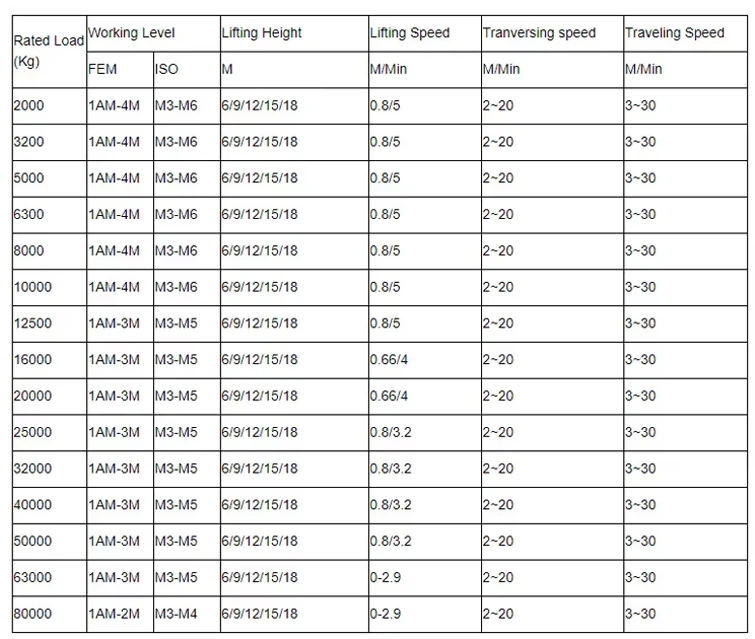
Lifting Capacity 320 tons
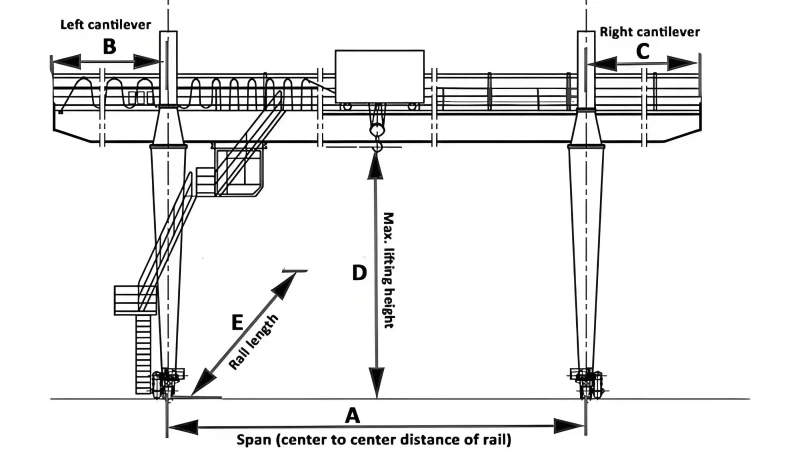
Span (Width) 3 - 12 meters (adjustable)
Lifting Height 3 - 10 meters
Working Class A3-A5 (light to medium duty)
Hoisting Speed 0.5 - 8 m/min (variable)
Main Beam Type Single/double girder (box-type)
Power Supply 220V/380V 3-phase or manual
Control Mode Pendant control/wireless remote
Hoist Type Electric chain hoist/wire rope hoist
Travel Drive Manual push or motorized
Corrosion Protection Hot-dip galvanized or marine-grade paint
Wind Resistance Up to Beaufort scale 6 (for outdoor use)
Operating Temp -20°C to +50°C

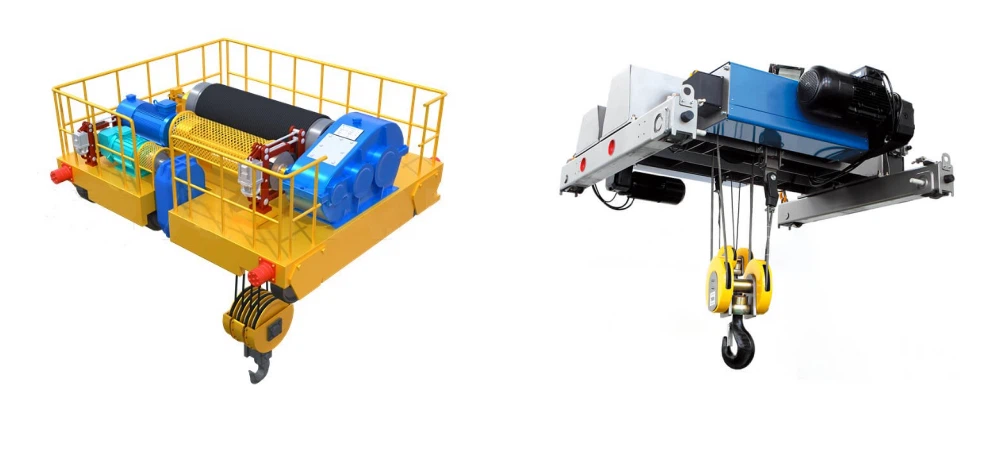
Pictures & Components
Here is a detailed breakdown of the major electric components that power and control such a crane:
Power Delivery System
This system brings electrical energy from the ground-based grid to the moving crane.
Conductor Bar System (Busbar / Festoon System):
What it is: The most common method for outdoor RMGs. It consists of insulated electrical conductors mounted parallel to the crane runway.
How it works: Collector Shoes (or collector carts) mounted on the crane make sliding contact with these energized bars, providing continuous power as the crane travels. This system is highly reliable and well-suited for long travel distances and harsh outdoor conditions.

Cable Reel System (Power Reel):
What it is: A large motorized or spring-operated drum that pays out and retracts a heavy-duty, reinforced electrical cable as the crane moves back and forth.
Application: More common for smaller gantries or shorter travel distances. For very large RMGs, a cable reel is often used in conjunction with a conductor bar system for specific functions, but the main power is typically delivered via busbars for reliability.
Drive and Motion Control System
This is the "muscle" of the crane, responsible for all movement.
Hoist Drive:
Function: Controls the electric motor that lifts and lowers the load. It is the most powerful drive on the crane.
Key Feature: Utilizes Variable Frequency Drive (VFD) technology for precise speed control, smooth acceleration/deceleration, and high positional accuracy when placing loads.
Trolley Drive:
Function: Controls the motor that moves the hoist and spreader horizontally across the bridge (the girders of the crane).
Key Feature: Also uses VFDs for smooth, controlled travel and precise positioning over a container stack or truck.

Gantry Drive (Long Travel Drive):
Function: Controls the motors that move the entire crane along the runway rails. Typically, there are multiple motors (one on each leg, often two per leg for large cranes).
Key Feature: Critical for synchronization. All gantry drive motors must work in perfect unison to avoid twisting the crane structure. Modern systems use sophisticated control algorithms to maintain alignment.
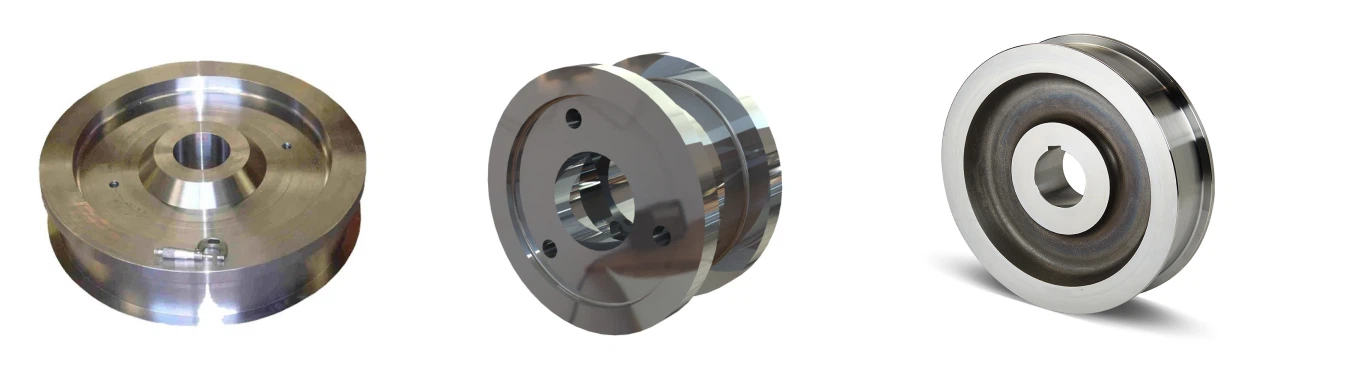
Control and Operator Interface
This is the "brain" and "nervous system" of the crane.
Programmable Logic Controller (PLC):
The Central Brain: This industrial computer receives signals from all sensors and from the operator, and it sends commands to all the drives and other components.
Function: It executes the control logic for all crane functions, manages safety interlocks, monitors diagnostics, and communicates with higher-level systems (like a Yard Management System).
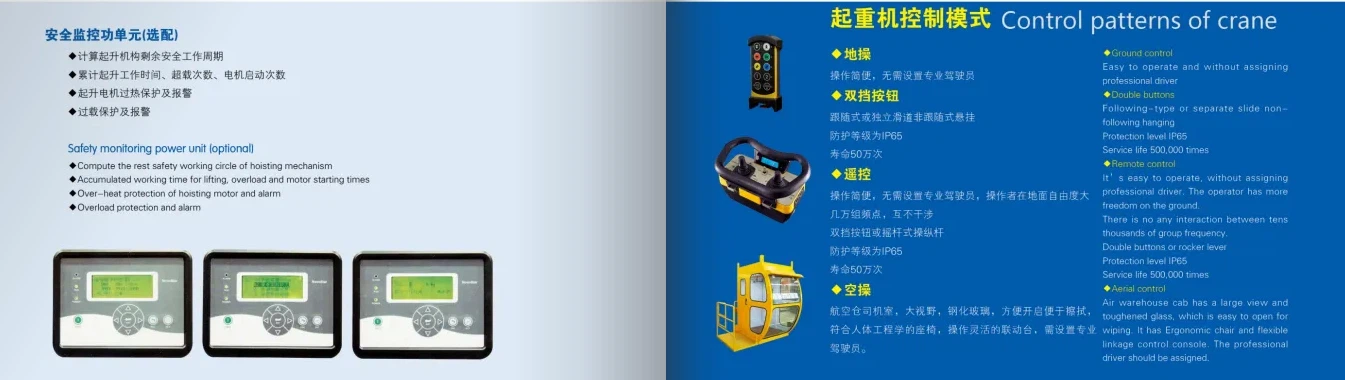
Operator's Cabin / Remote Control Station:
Cabin: An environmentally controlled cabin mounted on the crane, equipped with:
Control Joysticks / Pendants: For precise control of all crane motions (hoist, trolley, gantry).
Human-Machine Interface (HMI) Touchscreen: A diagnostic screen showing load weight, height, crane position, error messages, and system status.
Radio Remote Control: Allows an operator to control the crane from the ground, offering flexibility and often a better field of view.

Safety and Sensor Systems
These components protect the crane, the load, and personnel.
Anemometer:
Critical for Outdoor Cranes: Measures wind speed. The PLC will trigger alarms, automatically derate the crane's capacity, and eventually shut down operations if wind speeds exceed safe limits.
Anti-Collision System:
Uses laser scanners, radar, or GPS to detect obstacles, other cranes, or personnel in the crane's path and automatically slows or stops movement to prevent collisions.
Load Moment Indicator (LMI) System:
Includes: A load cell (often in the spreader) to measure weight and angle sensors to detect load sway.
Function: Prevents crane overloads and provides vital data to the operator and control system.

Limit Switches and Encoders:
Limit Switches: Hardwired safety devices that physically cut power to a motor at the extreme ends of travel (e.g., for hoist upper/lower limit, trolley end stops).
Encoders: High-precision sensors attached to motors. They provide real-time feedback to the drives and PLC on position, speed, and direction, enabling precise automated control.
Positioning Systems:
Absolute Positioning System: Uses laser transmitters/receivers or GPS to know the crane's exact location in the yard within millimeters. This is essential for automation and interacting with other equipment.

Power Distribution & Auxiliary Components
Main Circuit Breaker / Disconnect Switch:
The primary safety switch to isolate all power to the crane for maintenance.
Control Panel & Distribution Cabinets:
Houses the PLC, drives, circuit breakers, contactors, and relays. They are NEMA-rated or IP-rated enclosures to protect components from dust and moisture.
Auxiliary Hoists & Spreader Control:
Separate, smaller electric motors and drives for operating the spreader (twist locks, telescopic movement) and any auxiliary lifting hooks.
SKETCH
Main technical
Advantages
Advantages of an Outdoor Electric RMG
The combination of a rail-mounted structure and an all-electric drive system offers a powerful set of benefits for modern industrial yards and terminals.
1. Operational & Economic Advantages
High Storage Density and Yard Utilization: RMGs run on fixed rails, allowing them to stack containers or cargo in many rows wide and several tiers high. This maximizes storage capacity within a limited footprint, which is crucial where land is expensive.
Superior Lifting Capacity and Reach: Designed for heavy-duty cycles, electric RMGs can handle extremely heavy loads (e.g., 40-ton shipping containers, heavy coils) with ease. Their design provides a clear span over the entire storage yard.
Precision Handling and Control: Electric motors paired with Variable Frequency Drives (VFDs) allow for exceptionally smooth acceleration, deceleration, and positioning. This minimizes load swing and enables precise placement of cargo, increasing operational efficiency and safety.
High Degree of Automation: The fixed rail path and electric control make RMGs ideal for automation. They can be integrated with Yard Management Systems (YMS) for fully automated stacking, retrieval, and inventory tracking, reducing human error and labor costs.
Lower Operating Costs (OpEx):
Energy Efficiency: Electric motors are far more energy-efficient than diesel engines.
Cheaper Fuel: Electricity is generally less expensive than diesel fuel.
Reduced Maintenance: Electric systems have fewer moving parts than diesel engines and hydraulic systems. There are no engine oil changes, fuel filter replacements, or exhaust system repairs.
2. Environmental and Safety Advantages
Zero On-Site Emissions: As fully electric cranes, they produce no diesel exhaust emissions (NOx, SOx, particulate matter). This makes them ideal for ports and terminals near urban areas and helps companies meet stringent environmental regulations.
Significantly Reduced Noise Pollution: Electric motors are much quieter than diesel generators. This drastically reduces noise levels, benefiting both workers and surrounding communities.
Enhanced Safety Features: The design allows for integrated safety systems:
Anemometers automatically slow or stop operations in high winds.
Anti-collision systems prevent crashes with other cranes or obstacles.
Load Moment Indicators (LMI) prevent dangerous overloads.
Elimination of Ground Obstructions: Unlike Rubber-Tired Gantry Cranes (RTGs), RMGs have no tires or diesel generators on the ground, creating a cleaner, safer, and more organized work environment for yard trucks and personnel.
3. Reliability and Performance Advantages
Consistent Power: Connected to the main power grid, they avoid the power fluctuations and refueling downtime associated with diesel generators.
Robust for Outdoor Use: They are engineered with reinforced structures and IP-rated electrical enclosures to withstand harsh outdoor conditions like rain, wind, snow, and temperature extremes.
High Duty Cycle: Built for continuous, 24/7 operation, making them perfect for high-throughput terminals.
Application
Applications of an Outdoor Electric RMG
This combination of advantages makes the electric RMG the machine of choice for specific high-volume, high-density outdoor applications:
1. Intermodal Container Terminals and Ports
Primary Application: This is the most common use. Electric RMGs are used in container yards to efficiently transfer containers between ships, trucks, and trains.
Why it's used: Their high stacking ability (1-over-5 or 1-over-6) maximizes yard space. Precision control allows for safe handling of valuable cargo, and automation speeds up the vessel loading/unloading process.
2. Steel and Coil Handling
Application: Moving and stacking heavy steel coils, sheets, and structural beams in steel service centers and mill yards.
Why it's used: Their high capacity and precise control are essential for handling expensive and easily damaged steel products. Specialized lifting attachments like magnets or C-hooks can be easily integrated.
3. Bulk Material Handling
Application: Handling bulk goods such as scrap metal, logs, coal, and biomass in storage yards.
Why it's used: The robust structure can handle abrasive materials. Electric power is ideal for operating heavy-duty magnets or grapples, providing strong, consistent lifting force without the inefficiency of a diesel engine.
4. Logistics and Freight Hubs
Application: Large distribution centers and rail-to-truck transshipment yards.
Why it's used: To achieve high-density storage and automate the movement of goods between transportation modes, reducing turnaround time for trucks and trains.
5. Energy and Heavy Industry
Application: Handling large, heavy components in power plants (e.g., turbine parts) or prefabricated concrete sections in construction material yards.
Why it's used: The combination of massive lifting capacity, outdoor reliability, and precise control is unmatched for these specialized tasks.
Crane production process
The production process for an Outdoor Rail-Mounted Gantry Crane (RMG) with an Electric drive is a complex undertaking that combines heavy steel fabrication, precise machining, sophisticated electrical assembly, and rigorous testing. It is typically executed in a highly organized factory environment by specialized engineers and technicians.
Phase 1: Design & Engineering (The Digital Blueprint)
This is the most critical phase, where the entire crane is modeled and simulated before any metal is cut.
Conceptual & Detailed Design:
Customer Requirements: Engineers work with the client to determine specifications: lifting capacity (e.g., 40 tons, 100 tons), span (distance between legs), lift height, runway length, and environmental conditions (wind speed, seismic zone, temperature).
3D Modeling: Using CAD software (like AutoCAD, SolidWorks), every component is designed in 3D. This includes the main girders, end carriages, trolley, and hoist assembly.
Structural Analysis (FEA): Finite Element Analysis (FEA) software is used to simulate stresses, deflections, and dynamic loads on the structure. This ensures the design can handle the rated capacity with a significant safety factor.
Electrical System Design: Schematics for the power distribution, drive systems (VFDs), PLC controls, and safety circuits are created.
Automation Integration: If required, the interface for the automated stacking system (ASC), GPS positioning, and Yard Management System (YMS) is designed.
Phase 2: Procurement & Sourcing
Material Sourcing: Raw materials are ordered, primarily high-quality steel (e.g., S355, ASTM A572) in plates, profiles, and tubes.
Component Procurement: Major purchased components are sourced from specialized suppliers:
Electrical: Motors, Variable Frequency Drives (VFDs), PLCs, conductor bars, cable reels.
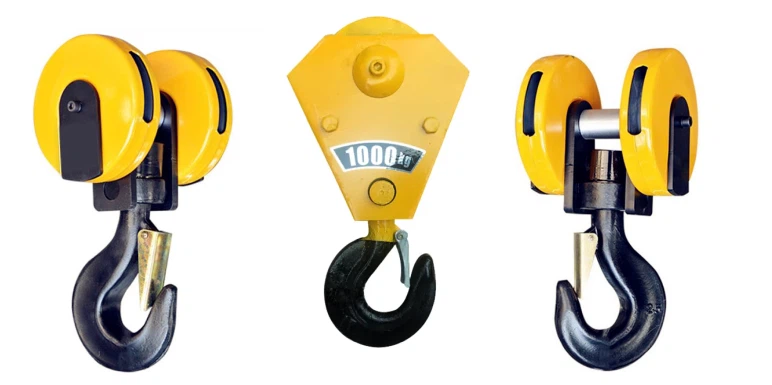
Mechanical: Wheels, axles, bearings, gearboxes, brakes, wire ropes, hooks, and specialized spreaders.
Safety Systems: Anemometers, anti-collision sensors, load moment indicators (LMI).
Phase 3: Fabrication & Manufacturing (The Physical Build)
This phase transforms raw steel and components into the crane's structure.
Steel Cutting and Preparation:
Steel plates are cut to size using CNC plasma or laser cutting machines for extreme precision.
Beams are cut and prepared for welding.
Welding and Assembly of Main Structure:
Main Girders: The two primary bridge girders are fabricated. This involves welding stiffeners and plates to form robust box girders or I-beams. Welding is performed by certified welders and is often automated (SAW - Submerged Arc Welding) for consistency and strength.
End Carriages (Legs): The supporting legs that house the travel wheels and drive units are fabricated.
Trolley Frame: The frame that carries the hoist across the bridge is built.
Quality Control (QC): All critical welds are inspected by Non-Destructive Testing (NDT) methods like Ultrasonic Testing (UT) or Magnetic Particle Inspection (MPI) to ensure they are free of defects.
Machining and Drilling:
Critical connection points, such as where the legs connect to the girders or where the drive units mount, are machined to ensure perfectly flat, level, and aligned surfaces. Holes are precision-drilled for high-strength bolts.
Shot Blasting and Painting (Corrosion Protection):
Shot Blasting: Every steel component is blasted with abrasive material to remove mill scale, rust, and create a perfect surface profile for paint adhesion.
Priming: A high-quality, corrosion-inhibitive primer is immediately applied.
Painting: Multiple coats of specialized industrial paint (often epoxy and polyurethane) are applied. The paint system is specified to withstand harsh outdoor UV exposure, salt air, and moisture. Color is often according to customer specifications.
Phase 4: Pre-Assembly & Electrical Installation
Mechanical Pre-Assembly:
The main girders are often bolted together on the factory floor to check for alignment.
The end carriages are fitted with wheels, axles, and travel drive motors.
The trolley is assembled with its drive mechanism.
Electrical Installation:
Cabling: Electricians run power and control cables throughout the structure in cable trays and conduits.
Component Mounting: Drives, PLC panels, resistor banks, and control cabinets are installed in their designated, protected locations.
Sensor Installation: Limit switches, encoders, and position sensors are mounted and connected.
Testing: Electrical circuits are meticulously checked for continuity, proper grounding, and insulation resistance before power is applied.
Phase 5: Factory Acceptance Testing (FAT)
Before disassembly for shipment, the crane is tested under load in the factory.
Dimensional Check: Verification that all critical dimensions match the design drawings.
No-Load Test: All functions (hoist, trolley, gantry travel) are operated without a load to check for smooth operation, noise, and basic functionality.
Load Test:
Static Load Test: The crane is tested to 125% of its rated capacity. The load is lifted and held suspended for a period to check for structural integrity and brake holding capability.
Dynamic Load Test: The crane is tested to 110% of its rated capacity. All motions are operated under this load to ensure performance under stress.
Functionality Test: All safety systems (e.g., E-stops, limit switches, overload protection) are rigorously tested.
Phase 6: Dismantling, Packaging, and Shipping
Dismantling: The crane is carefully disassembled into transportable modules (girders, legs, trolley, etc.).
Packaging: Components are packaged to prevent damage during long-distance transport, often by sea. Electrical components are crated and protected from moisture.
Shipping: All parts are marked and shipped to the customer's site along with detailed assembly drawings and manuals.
Phase 7: Site Installation & Commissioning (At the Customer's Yard)
Runway Preparation: The customer prepares the foundation and installs the parallel rails with extreme precision (alignment and levelness are critical).
Erection: A team of erectors uses mobile cranes to assemble the RMG on its runway.
Final Connection: All mechanical and electrical connections are made, and the power supply (conductor bars) is installed along the runway.
Site Acceptance Testing (SAT): The entire FAT is repeated on-site to ensure the crane performs perfectly in its final operating environment. Operator training is also conducted.

Workshop view:
The company has installed an intelligent equipment management platform, and has installed 310 sets (sets) of handling and welding robots. After the completion of the plan, there will be more than 500 sets (sets), and the equipment networking rate will reach 95%. 32 welding lines have been put into use, 50 are planned to be installed, and the automation rate of the entire product line has reached 85%.




Hot Tags: outdoor rail mounted gantry crane with electric, China outdoor rail mounted gantry crane with electric manufacturers, suppliers, factory
You Might Also Like


Send Inquiry