










Grab Bucket Gantry Cranes
Products Description
What is a Grab Bucket Gantry Crane?
A Grab Bucket Gantry Crane is a type of gantry crane equipped with a grab bucket (or grabber) as its primary lifting attachment. Instead of a simple hook, it uses a motorized, clamshell-like bucket to grab, lift, transport, and release bulk materials without manual assistance.
These cranes are essential in industries where the efficient handling of loose, granular, or fragmented materials is a core activity.
Advantages of Grab Bucket Gantry Cranes
High Efficiency: Fully mechanizes the process of loading, unloading, and stacking bulk materials, drastically reducing time and labor compared to manual methods.
Versatility in Material Handling: Can handle a wide range of bulk solids, including:
Dry Bulk: Coal, ore, gravel, sand, wood chips, grain.
Scrap Material: Fragmented scrap metal.
Reduced Material Loss: The enclosed grab minimizes spillage during transport.
Improved Stockpile Management: Can be used to create neat stockpiles and reclaim material from them, reducing the need for front-end loaders.
All-Weather Operation: Enables material handling operations to continue in conditions that might stop other equipment.
Comparison with Other Cranes
| Feature | Grab Bucket Gantry Crane | Standard Hook Gantry Crane | Mobile Crane with Grab |
|---|---|---|---|
| Primary Function | Bulk Material Handling | Lifting Unit Loads (e.g., beams, panels) | Versatile, but less efficient for bulk |
| Efficiency | Very High for continuous bulk cycles | Lower for bulk materials | Moderate; requires repositioning |
| Site Requirements | Fixed rail or track system | Fixed rail or track system | Flexible, can drive around site |
| Typical Capacity | High (focus is on volume and cycle time) | Very High (focus is on single lift weight) | Moderate to High |
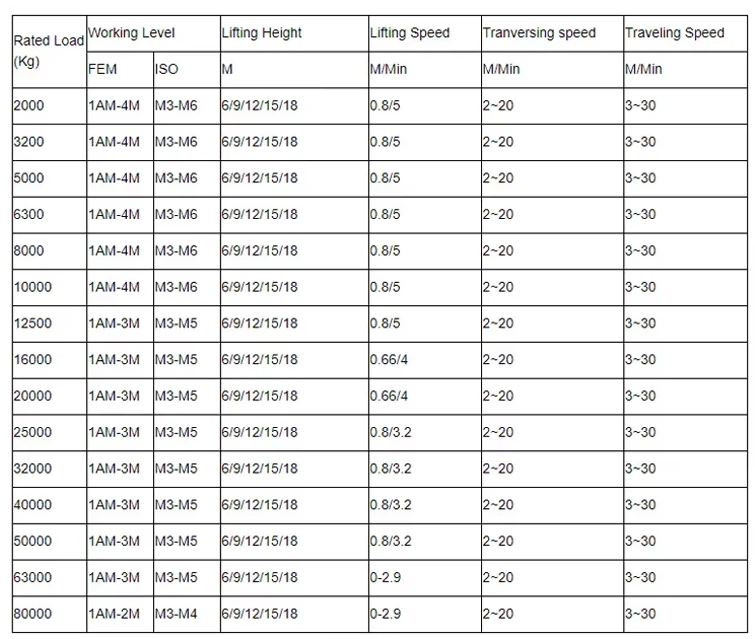
Lifting Capacity 320 tons
Span (Width) 3 - 12 meters (adjustable)
Lifting Height 3 - 10 meters
Working Class A3-A5 (light to medium duty)
Hoisting Speed 0.5 - 8 m/min (variable)
Main Beam Type Single/double girder (box-type)
Power Supply 220V/380V 3-phase or manual
Control Mode Pendant control/wireless remote
Hoist Type Electric chain hoist/wire rope hoist
Travel Drive Manual push or motorized
Corrosion Protection Hot-dip galvanized or marine-grade paint
Wind Resistance Up to Beaufort scale 6 (for outdoor use)
Operating Temp -20°C to +50°C

Pictures & Components
System Overview
A Grab Bucket Gantry Crane builds upon the standard gantry crane framework but integrates a complex system dedicated to operating the grab.
Detailed Component Breakdown
1. The Grab Bucket (Grapple) Assembly
This is the core attachment that performs the grabbing function.
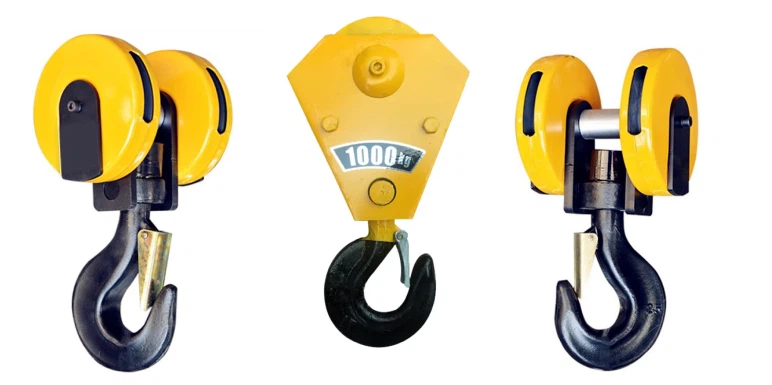
Grab Body (Head): The central frame that houses the sheaves and to which the jaws are attached.
Jaws (Shells or Clamshells): The two or more hinged halves that close to encapsulate the material. They come in different designs:
Lightweight Jaws: For low-density materials like grain or wood chips.
Heavy-Duty Jaws (with Teeth): For abrasive or hard-to-penetrate materials like rock, ore, or scrap metal.
Sheaves (Pulleys): Mounted on the grab body, these guide the wire ropes that control the opening and closing of the jaws.

2. Specialized Hoist and Trolley System
The lifting mechanism is more complex than a standard crane's.
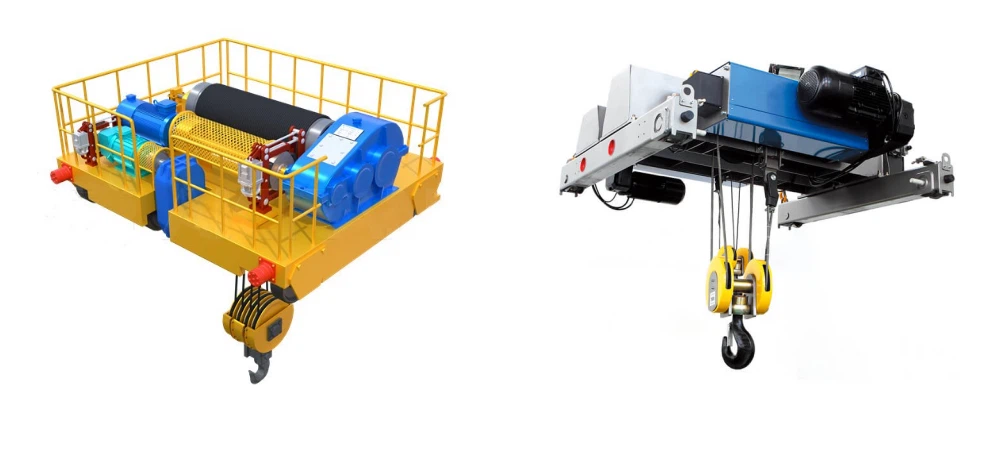
Hoist Unit with Multiple Drums: A critical component. Instead of a single drum, it typically has two or more independent drums:
Hold Line Drum: Controls the main supporting ropes that hold the entire grab.
Close Line Drum: Controls the ropes that open and close the jaws. The coordinated action of these drums is what makes the grab work.
Trolley Frame: Reinforced to carry the heavier and more dynamic loads associated with the grab digging into a pile.
Wire Ropes: High-strength, abrasion-resistant cables. A rope-operated grab uses multiple ropes (hold ropes and close ropes) threaded through the sheaves on the grab.
3. Base Gantry Crane Structure
This provides the mobility and support for the entire system.
Bridge Girder: The primary horizontal beam(s). Typically a double girder design is used for its strength and to provide a clear path for the trolley and grab.
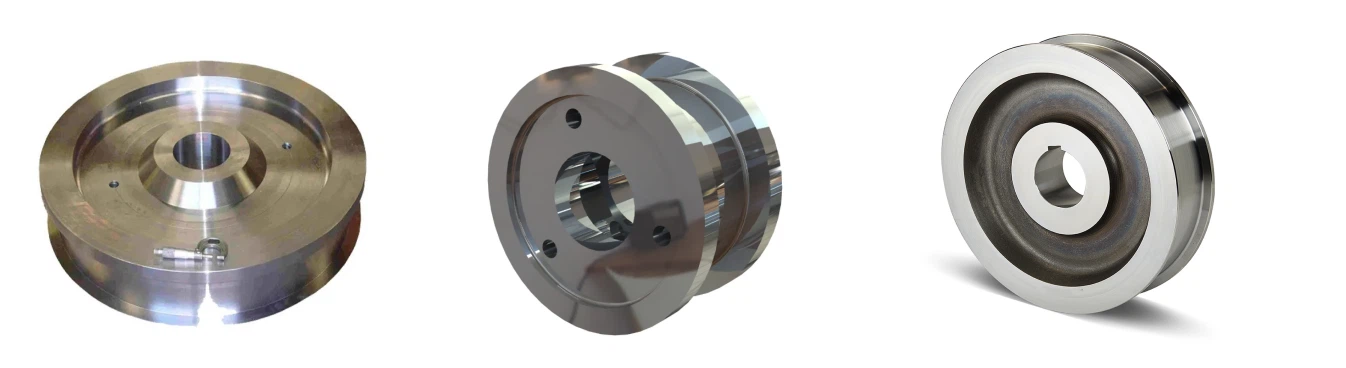
Legs & End Trucks: The freestanding supports that allow the crane to travel along a ground-level rail system. The end trucks contain the motors and wheels for long travel.
Travel Wheels/Rails: The crane moves on a fixed rail track, ensuring precise and stable movement over the work area (e.g., a quayside or stockpile).


4. Power and Control System
This system allows for precise operation of the complex grab cycle.
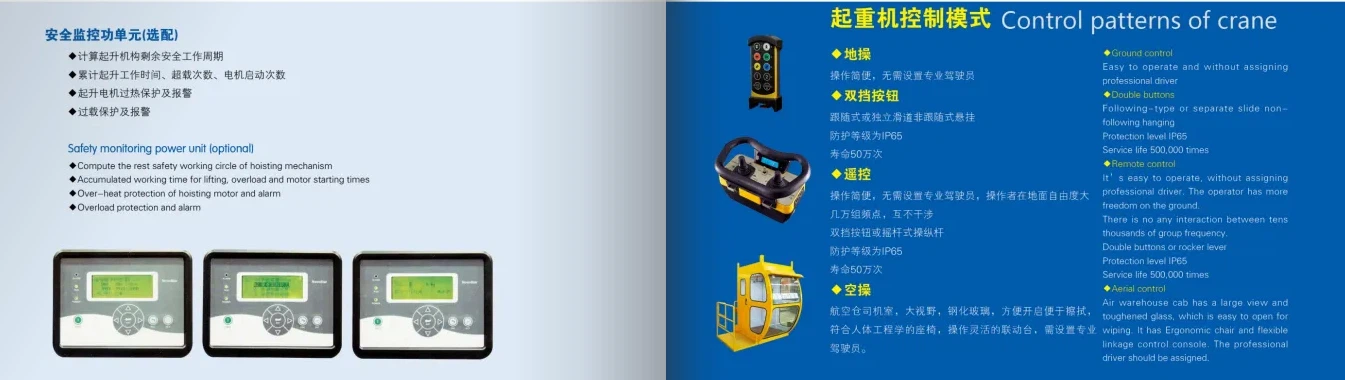
Operator's Cab: Usually, a cabin is mounted on the trolley or bridge, giving the operator a direct and clear view of the grab cycle (picking and dropping points).
Control System: Sophisticated controls that allow the operator to seamlessly coordinate all movements:
Crane Long Travel (along the rails)
Trolley Cross Travel (across the bridge)
Hoisting (lifting/lowering the grab)
Grab Opening/Closing
Cable Reel System (for Motorized Grabs): If the grab is motorized (electrical or hydraulic), a cable reel is used to manage the power supply cable between the crane and the moving grab.

5. Safety and Auxiliary Components
Anti-Sway System: Helps stabilize the grab during travel to prevent it from swinging, which is crucial for safety and accurate placement.
Load Moment Indicator (LMI): Monitors the load weight to prevent crane overloads, which can easily occur if the grab bites off more than it can chew.
Rope Guide Systems: Ensure the wires ropes wind correctly onto the drums and prevent tangling.
SKETCH
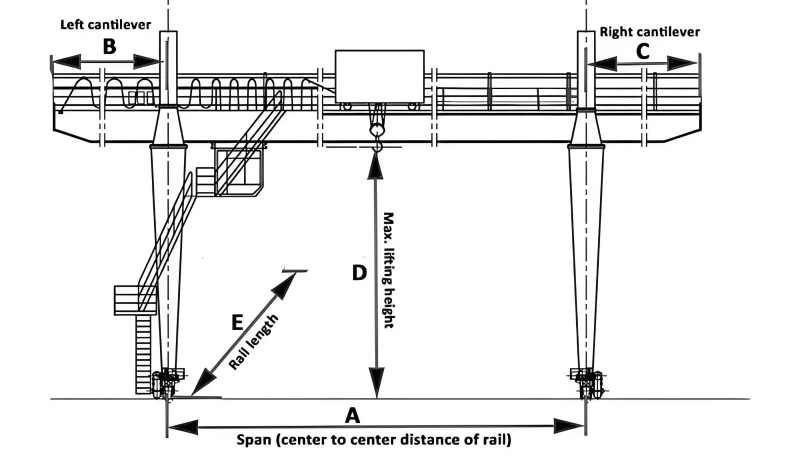
Main technical
Advantages
Advantages of Grab Bucket Gantry Cranes
These cranes are designed for efficiency and reliability in handling bulk materials, offering distinct benefits over other methods.
1. High Efficiency and Automation
Continuous Operation: The grab cycle (grab, lift, travel, release, return) is highly efficient and can be performed quickly and repeatedly, enabling massive throughput.
Reduced Labor Costs: One operator can handle material that would otherwise require multiple front-end loaders and trucks, significantly reducing manpower needs.
Fast Cycle Times: Mechanized grabbing and releasing is much faster than manual methods or using a hook and slings.
2. Exceptional Versatility
Wide Range of Materials: Can handle diverse bulk solids, from lightweight grains and wood chips to heavy ore, rock, and scrap metal.
Various Tasks: Suitable for multiple operations like unloading, loading, stacking (creating stockpiles), and reclaiming (taking from stockpiles).
Different Jaws Available: The grab buckets can be fitted with specialized jaws (e.g., lightweight for grain, heavy-duty with teeth for rock) to suit the specific material.
3. Cost-Effectiveness
Lower Operational Cost: High automation and reduced labor lead to a lower cost per ton of material handled.
Reduced Spillage: The enclosed nature of the grab minimizes material loss during transport compared to open shovels or conveyors.
Minimal Infrastructure Damage: Operates on a fixed rail system, causing less wear and tear on the ground compared to continuous truck and loader traffic.
4. Space Optimization and Large Coverage
Wide Span: The gantry design can span a large area, such as a railway track, a ship, or a wide stockpile, allowing for comprehensive coverage from a single crane.
High Stacking: Can create tall, neat stockpiles, maximizing storage capacity within a confined yard area.
5. Improved Safety and Control
Defined Work Area: The crane operates on a fixed runway, creating a predictable and controllable work zone that can be easily segregated from other operations.
Reduced Congestion: By replacing multiple trucks and loaders, the site becomes less congested and safer for personnel.
Precise Operation: The operator has precise control over the grab, allowing for accurate placement and reducing the risk of accidents.
Application
Applications of Grab Bucket Gantry Cranes
These cranes are indispensable in industries that require the movement of large volumes of loose materials. Here are the primary applications:
1. Ports and Bulk Terminals (Most Common Application)
Application: Loading and unloading bulk cargo carriers (ships). They are the primary tool for handling materials like coal, iron ore, grain, fertilizers, and bauxite.
Why it's Ideal: A single crane can unload a ship by moving along the quay, reaching into the ship's hold, and transferring the material directly to a conveyor system or stockpile on land. This is far more efficient than using a fleet of smaller machines.
2. Power Plants
Application: Coal handling. Moving coal from the storage yard (stockpile) to the conveyor belt that feeds the plant's boilers. They are also used for handling ash.
Why it's Ideal: They provide a reliable, all-weather method for reclaiming coal from the stockpile and ensuring a continuous fuel supply for power generation.
3. Scrap Metal Recycling Yards
Application: Handling and sorting fragmented scrap metal.
Why it's Ideal: The grab bucket's powerful jaws are perfect for lifting and moving piles of irregular, heavy scrap metal for processing, loading, and unloading.
4. Steel Mills and Foundries
Application: Handling raw materials such as iron ore, coke, limestone, and sinter.
Why it's Ideal: They transport these raw materials from storage areas to the charging systems for blast furnaces and other smelting equipment.
5. Construction Material and Mining Operations
Application: Handling sand, gravel, crushed stone, and other aggregates.
Why it's Ideal: At large quarries or material distribution yards, they efficiently load outgoing trucks and manage stockpiles.
6. Grain Silos and Food Processing
Application: Handling wheat, corn, barley, and other grains.
Why it's Ideal: Using specially designed grain grabs, they can gently and efficiently move grain from storage silos to transportation vehicles or processing lines.
Crane production process
TThe production process for a grab bucket gantry crane is a complex undertaking that combines heavy steel fabrication, mechanical assembly, and electrical integration. It's typically carried out in a specialized heavy industrial workshop.
Here is a detailed breakdown of the production process.
Stage 1: Design & Engineering
This is the foundational stage where the crane is conceived based on customer requirements.
Customer Specifications: The process begins with detailed customer requirements: lifting capacity (e.g., 25 tons), span, lifting height, duty cycle (e.g., Class A4 for moderate use), and the specific material to be handled (e.g., coal, scrap metal).
Structural Design: Engineers use CAD (Computer-Aided Design) software to create detailed drawings of all structural components-bridge girders, legs, trolley frame. They perform Finite Element Analysis (FEA) to simulate stresses and ensure structural integrity.
Mechanical Design: Design of the hoist machinery, trolley drive, end truck assemblies, and the selection of standard components like wheels, bearings, gears, and wire ropes.
Electrical Design: Creation of schematics for the power supply, motor controls, drive systems, and operator interfaces (cabin or pendant).
Bill of Materials (BOM): A comprehensive list of all raw materials (steel plates, profiles) and purchased components (motors, brakes, sensors) is generated.
Stage 2: Steel Fabrication
This is the primary workshop activity where raw steel is transformed into crane components.
Material Preparation: Steel plates and sections (like I-beams) are cut to size using CNC (Computer Numerical Control) plasma cutters or laser cutters for precision.
Sub-Assembly Fabrication: Smaller components are fabricated. For example, the end trucks are built by welding housings for wheels and axles.
Major Assembly Fabrication:
Girder Fabrication: The main bridge girders are built. For double girder cranes, this involves creating two identical box girders by welding steel plates. Strongbacks and diaphragms are welded inside to prevent buckling.
Leg Fabrication: The leg structures are welded from steel plates, creating robust columns that will support the girders.
Machining: Critical surfaces, such as the pads where the girder sits on the legs or the tracks for the trolley wheels, are machined to ensure perfect flatness and alignment.
Stage 3: Component Assembly
Mechanical sub-assemblies are put together.
Hoist Assembly: The hoist unit is assembled, including mounting the electric motor, gearbox, brake, and drum onto a rigid frame. The wire ropes are spooled onto the drum.
Trolley Assembly: The trolley frame is fitted with its wheels, drives, and the pre-assembled hoist unit.
End Truck Assembly: Wheels, axles, bearings, and drive motors are installed into the end truck housings.
Stage 4: Surface Treatment & Painting
This crucial step protects the crane from corrosion, especially since it often operates in harsh environments like ports.
Surface Preparation: All steel components are shot-blasted to remove rust, mill scale, and contaminants, creating a clean, rough surface for paint adhesion.
Priming: A rust-inhibitive primer is applied immediately after blasting.
Painting: Multiple coats of high-performance paint (e.g., epoxy, polyurethane) are applied to specified thicknesses. Color coding is often used for safety and aesthetics.
Stage 5: Electrical System Integration
Cabin Wiring: The operator's cabin is equipped with control panels, joysticks, and safety devices.
Crane Wiring: Electrical panels, variable frequency drives (VFDs for smooth control), and cable festoon systems are installed on the bridge and trolley.
Motor Installation: All drive motors (bridge, trolley, hoist) are connected to the electrical system.
Sensor Installation: Limit switches, anti-collision systems, and load moment indicators (LMI) are installed and wired.
Stage 6: Workshop Trial Assembly
Before disassembly for shipment, the crane is often partially or fully assembled in the workshop.
Dimensional Verification: This "dry fit" ensures all components align correctly-that the legs are perpendicular, the girder is level, and the trolley runs smoothly.
Function Testing: Basic motor functions are tested without load to check rotation direction and control response.
Stage 7: Dismantling, Packaging, and Shipment
Dismantling: The crane is carefully disassembled into transportable modules (girders, legs, trolley, etc.).
Packaging: Components are packaged to prevent damage during transit. Lifting points are clearly marked.
Shipment: All parts are shipped to the customer's site, along with detailed assembly drawings and manuals.
Stage 8: On-Site Installation & Commissioning
The final phase, often supervised by the manufacturer's engineers.
Site Preparation: The runway rails are installed and precisely leveled by the client or a contractor.
Erection: Using mobile cranes, the components are assembled on the runway.
Commissioning: This is the final validation:
Alignment Checks: Verifying the crane's alignment with the runway.
Load Testing: Conducting two critical tests:
Static Load Test: Lifting a load 25% greater than the rated capacity to test structural integrity.
Dynamic Load Test: Lifting the full rated capacity and running it through all motions to test performance under real-world conditions.
Safety System Checks: Verifying that all limit switches, brakes, and emergency stops function correctly.
Operator Training: The manufacturer's team trains the client's operators on safe and efficient crane use.

Workshop view:
The company has installed an intelligent equipment management platform, and has installed 310 sets (sets) of handling and welding robots. After the completion of the plan, there will be more than 500 sets (sets), and the equipment networking rate will reach 95%. 32 welding lines have been put into use, 50 are planned to be installed, and the automation rate of the entire product line has reached 85%.




Hot Tags: grab bucket gantry cranes, China grab bucket gantry cranes manufacturers, suppliers, factory
You Might Also Like


Send Inquiry