










Gantry Crane For Shield
Product Introduction
Gantry Crane for Shield (Shield Tunneling Gantry Crane)
The Gantry Crane for Shield is a specialized heavy-duty gantry crane designed for shield tunneling and TBM (Tunnel Boring Machine) construction projects. It is mainly used for lifting, transporting, assembling, and maintaining shield machine components and tunnel segments in tunnel yards, shafts, and construction sites.
Main Functions
Lifting and assembling shield machine components
Handling TBM cutter heads, main drives, and backup systems
Transporting precast tunnel lining segments
Supporting maintenance and replacement operations
TECHNICAL SPECIFICATIONS (TYPICAL RANGES)
| Parameter | Segment Gantry | TBM Assembly Gantry | Material Gantry |
|---|---|---|---|
| Capacity | 3-15 tons | 50-1000 tons | 5-30 tons |
| Span | 5-12m (tunnel width + clearance) | 10-25m (launch shaft width) | 6-15m |
| Lift Height | 2-6m | 10-50m (shaft depth) | 3-8m |
| Travel Speed | 5-20 m/min | 2-10 m/min (precision) | 10-30 m/min |
| Control | Radio remote + automation | Cab + remote + CCTV | Radio remote |
| Power Supply | Cable reel or sliding contact | Fixed power (shaft) | Cable reel |
Typical Technical Parameters
Lifting Capacity: 50–500 t
Span: Customized according to shaft or yard size
Lifting Height: Customized
Working Duty: A5–A7
Control Mode: Cabin / Pendant / Remote


Pictures & Components
The Gantry Crane for Shield is a specialized heavy-duty gantry crane designed for shield tunneling and TBM construction, consisting of structural, mechanical, electrical, and safety systems to ensure safe, precise, and reliable operation in harsh construction environments.
1. Main Girder System
Heavy-duty box-type welded steel girders
Designed to withstand ultra-heavy and concentrated loads
High rigidity and excellent torsional resistance
Optimized camber for precise lifting
2. Gantry Legs (Portal Structure)
Rigid gantry legs or rigid + flexible leg design
Box or tubular steel structure
Transfers load from girder to ground rails
Designed for deep shafts and confined spaces
3. End Beams
Installed at the bottom of gantry legs
Support crane traveling mechanism
Precision-machined wheel seats for accurate alignment


4. Crane Traveling Mechanism
Heavy-duty traveling motors with gear reducers
Electromagnetic or hydraulic braking system
High-load crane wheels suitable for rail operation
Ensures stable longitudinal movement
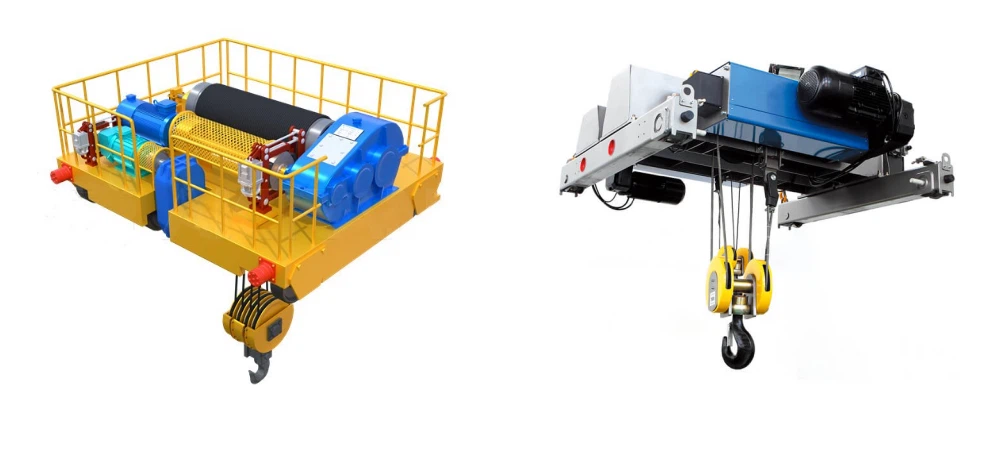
5. Lifting Trolley (Winch / Hoist System)
Heavy-duty electric winch trolley
Single or dual-trolley configuration (optional)
Includes:
Lifting motors
Gearboxes
Drums
Wire ropes
 |
 |
 |
6. Hook Block & Lifting Device
Heavy-duty forged hook block
Multiple sheave system for high capacity
Optional:
Dual hooks for synchronous lifting
Special lifting beams or spreaders for TBM parts
7. Trolley Traveling Mechanism
Trolley motors and reducers
Precision wheels and rails
Smooth transverse movement
 |
 |
 |
8. Electrical Control System
Central electrical control cabinet
PLC control system (optional)
Frequency inverter (VFD) for smooth speed control
Sensors and monitoring devices
9. Operator Control System
Enclosed operator cabin with excellent visibility
Pendant control
Wireless remote control (optional)

.
10. Safety Protection Devices
Overload protection system
Upper and lower lifting limit switches
Traveling limit switches
Emergency stop system
Anti-sway and synchronous lifting control (optional)
11. Power Supply System
Busbar system or cable reel
Power distribution equipment
Grounding and lightning protection

12. Environmental Protection Components
Dust-proof enclosures
Moisture-resistant electrical parts
Anti-corrosion coatings for harsh environments
13. Auxiliary Components
Maintenance platforms and ladders
Walkways and guardrails
Buffers and end stops
Warning lights and alarms

Sketch

Main technical

Advantages
Advantages of Gantry Crane for Shield
1. Designed Specifically for Shield & TBM Operations
Customized according to shield diameter, weight, and site conditions
Optimized for lifting cutter heads, main drives, and backup systems
Perfect fit for tunnel construction requirements
2. Ultra-High Load Capacity
Capable of lifting 50–500 tons or more
Handles large, concentrated loads safely
Suitable for heavy TBM components
3. Excellent Structural Stability
Heavy-duty box-type steel structure
Strong resistance to bending, torsion, and impact loads
Stable operation even in deep shafts
4. Precise & Synchronous Lifting
Dual-hoist or multi-hoist synchronous lifting (optional)
Frequency inverter (VFD) or PLC control
Accurate positioning of precision components
5. High Lifting Height
Designed to meet deep shaft and tunnel access requirements
Enables vertical assembly and disassembly of shield machines
6. Adaptability to Harsh Environments
Dust-proof, moisture-resistant, and anti-corrosion design
Reliable operation in underground, outdoor, and high-humidity environments
7. Enhanced Safety Performance
Equipped with:
Overload protection
Limit switches
Emergency stop systems
Anti-sway and anti-overload control
Reduces operational risks during heavy lifting
8. Modular Design & Easy Installation
Modular structure for easy transportation
Quick on-site assembly and disassembly
Suitable for temporary tunnel construction sites
Application:
Applications of Gantry Crane for Shield
The Gantry Crane for Shield is widely used in underground and tunnel construction projects.
1. Metro & Subway Tunnel Construction
Lifting and assembling shield machines
Handling precast tunnel lining segments
2. Railway Tunnel Projects
Assembly and maintenance of TBM equipment
Heavy component installation
3. Highway & Urban Tunnel Construction
Shield tunneling equipment handling
Material transfer in tunnel shafts
4. Shield Machine Assembly Yards
Pre-assembly and testing of shield components
Storage and transportation operations
5. TBM Maintenance & Service Areas
Replacement of cutter heads and main drive systems
Equipment inspection and repair
Crane production procedure
The Gantry Crane for Shield is a specialized heavy-duty gantry crane designed for shield tunneling and TBM construction. Due to its ultra-high load capacity, precision lifting requirements, and harsh working environment, the crane is manufactured under strict quality-control standards, complying with GB/T, FEM, ISO, and CE (optional) norms.
1. Project Requirement Analysis & Engineering Design
Confirm project-specific parameters:
Shield/TBM weight and dimensions
Lifting capacity and lifting height
Span and rail gauge
Working class (A5–A7)
Structural stress, fatigue, and stability calculations
Design of synchronous lifting and anti-sway systems
Electrical and safety system configuration
2. Raw Material Selection & Quality Inspection
High-strength structural steel (Q345B / Q355 / Q460 or equivalent)
Verification of steel certificates
Ultrasonic testing (UT) for plates and key components
Shot blasting or surface cleaning before fabrication
3. CNC Cutting & Component Preparation
CNC plasma/flame cutting of:
Box-type main girder plates
Gantry leg panels
End beam and stiffeners
Edge beveling for full-penetration welding
Dimensional inspection and traceability marking
4. Heavy-Duty Main Girder Fabrication
4.1 Assembly
Assembly of box-type girders using high-precision jigs
Accurate camber control based on design calculations
4.2 Welding
Submerged arc welding for primary load-bearing seams
CO₂ gas-shielded welding for secondary structures
4.3 Stress Relief & Straightening
Thermal or vibration stress relief
Mechanical straightening to ensure dimensional accuracy
4.4 Weld Inspection
Visual inspection
Ultrasonic testing (UT)
Magnetic particle testing (MT) on critical welds
5. Gantry Legs & End Beam Manufacturing
Fabrication of rigid gantry legs (or rigid + flexible design)
Welding of box or tubular structures
CNC machining of wheel seats and connection surfaces
End beam assembly with bearing housings
6. Crane Traveling Mechanism Assembly
Installation of heavy-duty traveling motors and reducers
Assembly of crane wheels and braking systems
Alignment and running accuracy inspection
7. Lifting System & Trolley Assembly
Assembly of heavy-duty electric winch system:
High-power lifting motors
Gearboxes
Multi-layer wire rope drums
Installation of single or dual trolley systems
Assembly of hook blocks or special lifting beams
8. Electrical & Intelligent Control System Installation
Installation of main electrical control cabinets
PLC-based synchronous lifting control (optional)
Frequency inverter (VFD) system for precise speed control
Installation of sensors and monitoring systems
9. Safety Protection System Installation
Overload protection devices
Upper/lower lifting limit switches
Travel limit and emergency stop systems
Anti-sway, anti-tilt, and synchronization control
Grounding and lightning protection
10. Surface Treatment & Anti-Corrosion Coating
10.1 Shot Blasting
Surface treatment to Sa2.5 standard
10.2 Painting
Zinc-rich epoxy primer
Epoxy intermediate coating
Polyurethane or heavy anti-corrosion topcoat
Special coating for humid and underground environments
11. Factory Assembly & Comprehensive Testing
Partial or full factory assembly
No-load functional testing
Static load test (125% rated capacity)
Dynamic load test (110% rated capacity)
Synchronous lifting and safety system verification
12. Packing & Transportation
Modular disassembly for easy transport
Electrical systems packed in moisture-proof crates
Steel structures securely protected for long-distance shipping
13. On-Site Installation & Commissioning
Rail installation and leveling
Gantry crane erection and alignment
Electrical connection and system integration
On-site commissioning and performance testing
14. Final Inspection & Project Acceptance
Full operational acceptance testing
Delivery of:
Quality certificates
Load test reports
Operation & maintenance manuals
Operator training and after-sales service support

Workshop view
Material Inspection
Quality Inspection: Strict quality inspection is carried out on the purchased raw materials to ensure that they meet the design requirements and national standards.
Material Storage: Qualified materials are stored according to classification to prevent corrosion or damage.
Cutting and Forming
Steel Cutting: Use plasma cutting, laser cutting or flame cutting and other technologies to cut the steel according to the size of the design drawing.
Forming Processing: Form the steel plate through bending, rolling, welding and other processes to manufacture the main beam, end beam and other structural parts.
Welding
Component Welding: The cut and formed steel parts are welded into the main structures such as the main beam, end beam and trolley. The welding process needs to be strictly controlled to ensure the structural strength and welding quality.
Weld Inspection: Use non-destructive testing technology (such as ultrasonic testing, radiographic testing) to inspect the welds to ensure that there are no cracks or other defects.
Machining
Precision Machining: Precision machining is performed on the key components of the crane, such as wheel sets, bearing seats, pulleys, etc., to ensure their dimensional accuracy and surface quality.
Assembly of the whole machine
General assembly: On the basis of pre-assembly, the overall assembly of the crane is carried out, including the final installation of the main beam, end beam, lifting mechanism, walking mechanism, etc.
Commissioning and testing
Under dynamic conditions, the operating performance of the crane is tested, including the testing of lifting, walking, steering and other functions. The overall size of the assembled bridge crane is checked to ensure that all dimensions meet the design requirements.
Spraying and anti-corrosion treatment
Surface treatment Rust removal: Rust removal on the surface of the crane, common methods include sandblasting, pickling, etc. Primer spraying: Spray anti-corrosion primer on the treated surface to prevent metal oxidation and corrosion. Topcoat spraying Color spraying: Spray topcoat according to customer requirements or industry standards to give the crane a protective and decorative effect. Marking: After spraying, mark the crane's identification information in accordance with the specifications, such as model, rated load, etc.
Factory and installation
Packaging and transportation
Packaging protection: Protectively package the key components of the crane to prevent damage during transportation. Transportation arrangement: According to the equipment size and transportation conditions, select a suitable transportation method to transport the crane to the customer's site.
Acceptance and delivery
Customer acceptance
On-site acceptance: The customer conducts on-site acceptance of the crane according to the contract requirements and technical specifications to check the performance and quality of the equipment.
Problem rectification: If any problems are found, the manufacturer needs to rectify them in time to ensure that the equipment fully meets the customer's requirements. Delivery and use Operation training: The manufacturer usually trains the customer's operators to ensure that they can operate the crane correctly and safely.


Hot Tags: gantry crane for shield, China gantry crane for shield manufacturers, suppliers, factory
You Might Also Like



Send Inquiry