





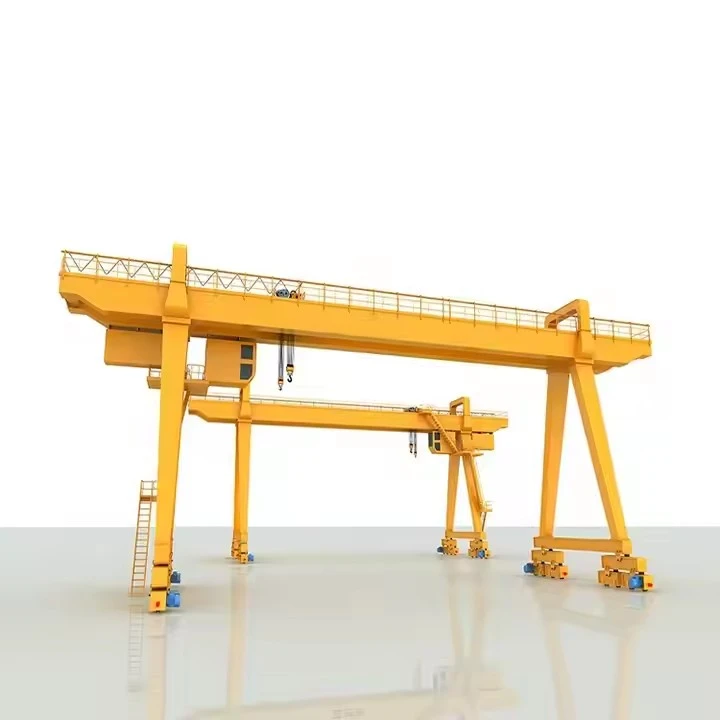

Ground Rail Gantry Crane
Products Description
Types of Ground Rail Gantry Cranes
Single-Girder Rail Gantry Crane
Lighter duty, cost-effective.
Suitable for workshops and small shipyards.
Double-Girder Rail Gantry Crane
Heavy-duty lifting with higher hook height.
Used in large shipyards and industrial plants.
Semi-Gantry Crane
One side runs on a rail, while the other moves on ground wheels.
Ideal for facilities with space constraints.
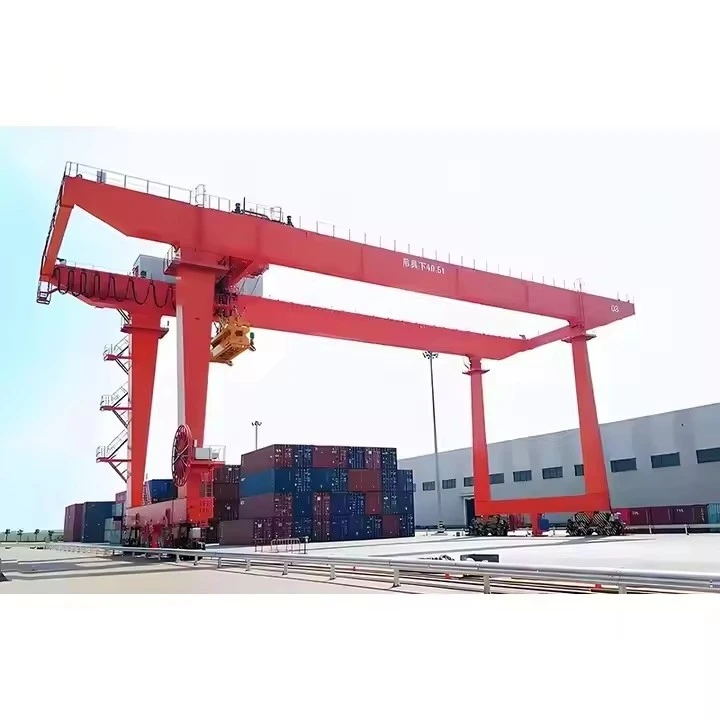
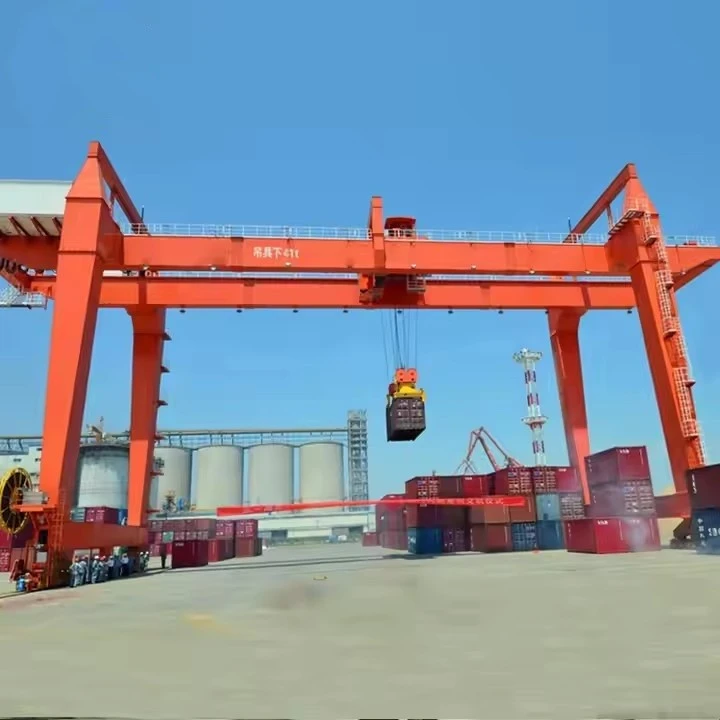
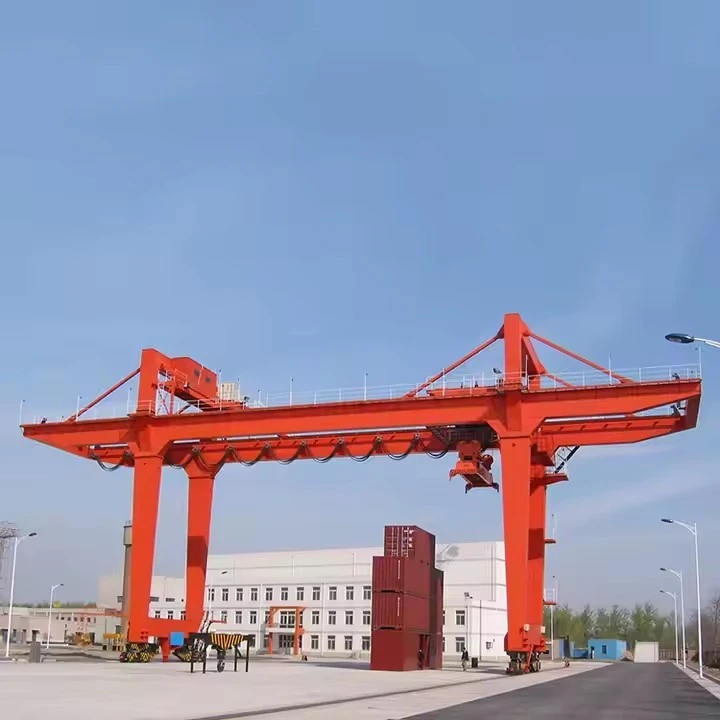
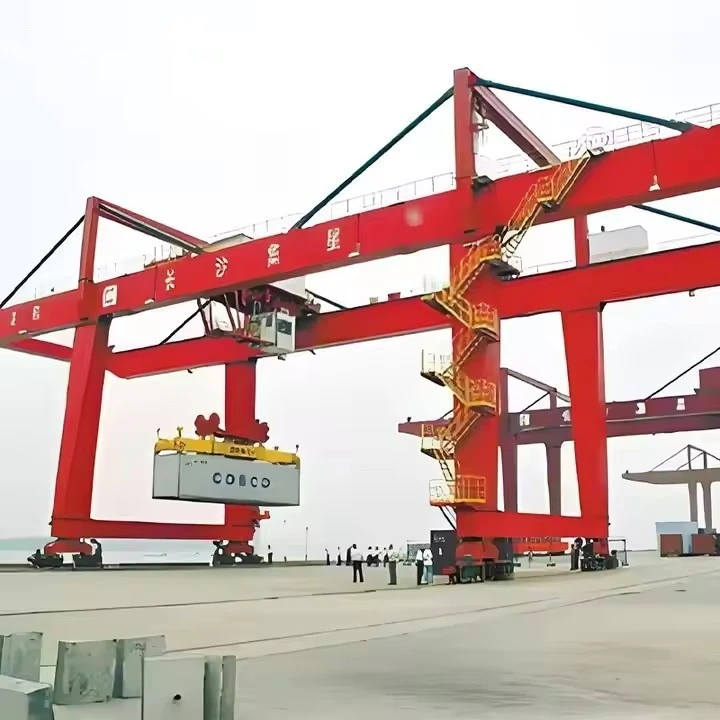
Container Gantry Crane (RMG – Rail Mounted Gantry)
Used in ports and intermodal yards for stacking containers.
Key Features of Ground Rail Gantry Cranes
Rail-Mounted Movement
Runs on embedded or surface-mounted steel rails for smooth travel.
Ensures precise positioning of heavy loads.
High Load Capacity
Can handle from a few tons to over 1,000 tons, depending on design.
Suitable for shipbuilding, bridge construction, and large machinery handling.
Customizable Span & Height
Adjustable gantry width to cover different work areas.
Can be designed for indoor or outdoor use.
Sturdy Construction
Made from high-grade steel for durability.
Reinforced legs and cross beams for stability.
Powered Movement
Electric or hydraulic drive systems for smooth operation.
Can be operated via pendant control, cabin, or remote control.
Safety Features
Anti-collision systems, overload protection, and rail end buffers.
Emergency stop functions and wind-resistant designs (for outdoor use).
Comparison with Other Crane Types
| Feature | Ground Rail Gantry Crane | Rubber-Tired Gantry (RTG) | Overhead Crane | Mobile Crane |
|---|---|---|---|---|
| Mobility | Rail-guided (fixed path) | Wheel-mounted (mobile) | Fixed runway | Fully mobile |
| Max Capacity | Up to 1,000+ tons | Up to 100 tons | Up to 500 tons | Up to 3,000+ tons |
| Precision | High (rail-guided) | Moderate | High | Low (sway risk) |
| Installation Cost | High (requires rails) | Medium | High (runway beams) | Low (no setup) |
| Best For | Heavy, repetitive lifts | Ports, container yards | Workshops, factories | One-time lifts |
Core Components:Engine, Bearing, Gearbox, Motor, Gear
Place of Origin:Henan, China
Warranty:2 years
Weight (KG):50000 kg
Video outgoing-inspection:Provided
Machinery Test Report:Provided
Application:Outdoor
Keywords:Gantry Crane
Rated Loading Capacity:50Ton
Cross travelling speed:44.6m/min
Long travelling speed:47.1m/min
Control way:cabin
Power supply:Cable reel
Steel track:QU80
Power:3-phase AC 50HZ 380V

Pictures & Components
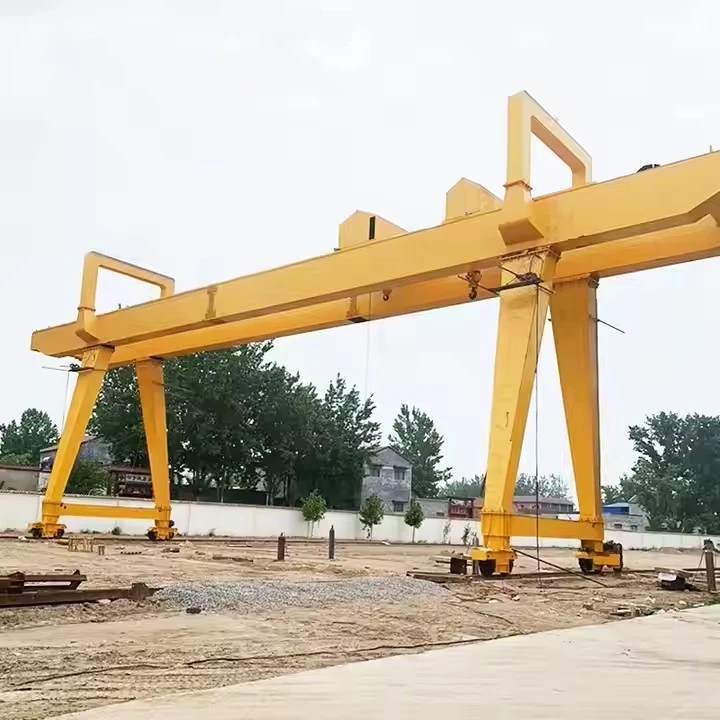
A ground rail gantry crane consists of several key structural and mechanical components that work together to ensure safe and efficient lifting operations. Below is a detailed breakdown of its major parts:
1. Main Structural Components
A. Gantry Bridge (Main Girder)
The horizontal beam that spans the work area.
Single-girder (lighter loads) or double-girder (heavy-duty).
Made of welded steel (box-type or truss design for rigidity).
B. Legs (Support Columns)
Vertical structures that support the bridge.
Can be fixed-height or adjustable (for variable lifting heights).
Equipped with end trucks (wheel assemblies) for rail movement.
C. End Trucks (Traveling Mechanism)
Wheel assemblies mounted at the base of the legs.
Include rail wheels, motors, gearboxes, and brakes.
Can be driven (powered) or idler (non-powered).
D. Rails & Track System
Heavy-duty steel rails installed on the ground.
Flat-top rails (common) or grooved rails (for better wheel grip).
Requires proper alignment and foundation (concrete or steel sleepers).
 |
 |
2. Lifting & Hoisting Mechanism
A. Hoist Unit
The primary lifting device (electric or hydraulic).
Types: Wire rope hoist or chain hoist.
Includes a hook, drum, motor, and brake system.
B. Trolley (Crab Unit)
Moves along the bridge girder to position the load.
Contains the hoist and its drive system.
Powered by electric motors with gear-driven wheels.
C. Spreader Beam (Optional)
Used for balanced lifting of wide loads (e.g., ship sections, containers).
Distributes weight evenly to prevent load sway.
  |
3. Drive & Control Systems
A. Travel Drives
Electric motors powering the end truck wheels.
May include variable frequency drives (VFDs) for smooth acceleration.

B. Control System
Pendant control (hanging remote).
Radio remote control (wireless operation).
Operator cabin (for large cranes).
C. Power Supply
Sliding cable reels (for electric cranes).
Festoon systems (cable management along the bridge).
Diesel generators (for remote locations).

4. Safety Components
A. Limit Switches
Prevent over-travel of the trolley or hoist.
End-of-rail limiters stop the crane at track limits.
B. Overload Protection
Load cells or sensors to prevent exceeding capacity.

C. Anti-Collision Systems
Laser or ultrasonic sensors for multi-crane environments.
D. Rail Clamps & Brakes
Lock the crane in place during high winds or maintenance.
E. Emergency Stop (E-Stop)
Installed on control panels for immediate shutdown.
.
5. Additional Accessories (Optional)
Crane Lights & Alarms – For visibility in low-light conditions.
Wind Speed Sensors – Auto-shutdown in high winds (outdoor cranes).
Weighing System – Integrated load measurement.
Ladder & Maintenance Platform – For servicing.

Maintenance Checklist for Key Components
| Component | Maintenance Task |
|---|---|
| Rails & Wheels | Clean debris, check alignment, lubricate. |
| Wire Rope/Hoist | Inspect for wear, apply grease. |
| Electrical System | Check cables, connections, and sensors. |
| Brakes | Test emergency braking function. |
| Structural Welds | Look for cracks or corrosion. |

SKETCH

Main technical

Advantages
1. High Load Capacity & Stability
Can lift from 10 tons to over 1,000 tons, depending on design.
Steel rails provide superior stability compared to rubber-tired or mobile cranes.
Ideal for heavy, oversized loads (ship sections, industrial machinery, bridge components).
2. Precise & Smooth Movement
Rails ensure accurate positioning for assembly and installation tasks.
Reduced swaying compared to overhead cranes with long spans.
3. Long Span & Customizable Design
Can span up to 50 meters or more, covering large work areas.
Adjustable height, width, and lifting mechanisms for different applications.
4. Durability & Long Service Life
Heavy-duty steel construction withstands harsh environments (ports, shipyards).
Low maintenance compared to mobile cranes with complex hydraulics.
5. Safety & Reliability
Anti-collision systems for multi-crane operations.
Overload protection & emergency brakes prevent accidents.
Fixed rails reduce the risk of tipping (unlike mobile cranes).
6. Cost-Effective for Repetitive Tasks
More efficient than mobile cranes for frequent, high-capacity lifts.
Lower long-term operational costs compared to renting mobile cranes.
Application
Applications of Ground Rail Gantry Cranes
These cranes are widely used in industries requiring heavy lifting, precision handling, and large work areas.
1. Shipbuilding & Repair
Lifting ship hulls, engines, and large sections.
Positioning propellers, rudders, and other heavy marine components.
2. Ports & Container Terminals
Handling shipping containers (Rail-Mounted Gantry, RMG).
Loading/unloading bulk cargo, heavy machinery, and project cargo.
3. Heavy Machinery & Manufacturing
Installing industrial boilers, turbines, and generators.
Moving press machines, molds, and large factory equipment.
4. Bridge & Construction Projects
Assembling precast concrete segments.
Lifting steel girders and bridge components.
5. Power Plants & Energy Sector
Handling wind turbine blades, nuclear reactor parts, and transformers.
Maintenance of hydroelectric dam equipment.
6. Aerospace & Defense
Moving aircraft fuselages, rocket sections, and military vehicles.
Crane production procedure
1. Design and Engineering
Custom Design:
The crane design is created based on the customer's specific requirements, including lifting capacity (50 tons), span, lifting height, and environment (e.g., outdoor, indoor, harsh environments).
Detailed 3D modeling and structural analysis are performed using design software to optimize performance and safety.
Engineering Specifications:
Calculation of load-bearing capacity, structural stability, power requirements, and material specifications.
Ensuring compliance with international ISO, DIN, and ANSI standards.
2. Material Selection
High-Quality Steel:
Steel plates, beams, and structural components are selected for their strength, durability, and corrosion resistance.
For critical parts like the main girder and end carriage, high-strength steel is chosen to handle the heavy loads and high stresses involved.
Component Sourcing:
Electric motors, gearboxes, wire ropes, wheels, and other mechanical parts are sourced from trusted suppliers that meet the crane's requirements for reliability and long service life.
3. Fabrication and Assembly
a) Main Girder Manufacturing
Cutting and Welding:
Steel plates and sections are cut to size, and the main girder components are welded together in strict alignment to maintain dimensional accuracy and load distribution.
Inspection:
Each component is thoroughly inspected for welding integrity, alignment, and material strength.
b) End Carriage and Supporting Structures
Fabrication:
The end carriages are fabricated using similar techniques, ensuring they are capable of supporting the full weight of the crane and load.
Wheel Assembly:
Wheels are installed on the end carriages, with precise alignment to ensure smooth crane travel along the rails.
c) Assembly of Lifting Mechanism
Hoisting System:
The electric hoist is assembled, which includes the motor, gearbox, drum, and wire rope.
The trolley and hoist are mounted onto the main girder, with all components tested for proper alignment and smooth operation.
4. Electrical and Control Systems
Wiring and Control Panel:
Electrical components such as motors, limit switches, control panels, and safety alarms are wired and connected.
Installation of Variable Frequency Drive (VFD) for smooth speed control and remote control systems for operation.
Control System Testing:
The control panel is tested to ensure responsive operation, including all buttons, switches, and safety features.
5. Testing and Quality Control
Static Testing:
The crane structure undergoes static load testing to ensure it can safely support its rated lifting capacity of 50 tons.
Dynamic Testing:
Dynamic load testing is performed to verify the crane's operational capabilities under real working conditions, including lifting and moving a full load.
Safety and Functionality Testing:
Each safety device (overload protection, limit switches, anti-sway systems) is tested for proper functionality.
The crane's motion system (lifting, traveling, and trolley) is thoroughly tested for smooth operation, accuracy, and stability.
6. Final Inspection and Painting
Visual Inspection:
A final visual inspection is performed to ensure quality, fit, and finish. Any adjustments are made to the assembly if needed.
Painting and Anti-Corrosion Treatment:
The crane is coated with a corrosion-resistant paint (usually a primer, base coat, and top coat) to protect the structure from wear and harsh environmental conditions.
7. Packaging and Delivery
Disassembly for Shipment:
The crane is often partially disassembled (e.g., hoist, trolley) for easier shipment.
Packing and Transport:
Components are carefully packed to prevent damage during transport.
The crane is delivered to the customer's site, along with all necessary documentation (manuals, certificates, and safety data).
8. Installation and Commissioning
On-Site Assembly:
Once delivered, the crane is reassembled at the installation site, ensuring proper alignment with rails and structural components.
Final Testing and Calibration:
After assembly, final testing is conducted to ensure the crane operates as expected under the specified conditions.
Operator Training:
The customer's operators are trained on crane operation, maintenance, and safety procedures.

Workshop view:
The company has installed an intelligent equipment management platform, and has installed 310 sets (sets) of handling and welding robots. After the completion of the plan, there will be more than 500 sets (sets), and the equipment networking rate will reach 95%. 32 welding lines have been put into use, 50 are planned to be installed, and the automation rate of the entire product line has reached 85%.


Hot Tags: ground rail gantry crane, China ground rail gantry crane manufacturers, suppliers, factory
You Might Also Like


Send Inquiry