










Gantry Crane For Containers
Products Description
Types of Container Gantry Cranes
1. Rubber-Tired Gantry (RTG) Crane
Mobility: Runs on rubber tires (no rails needed).
Use Case: Container stacking in yards, intermodal terminals.
Stacking Height: Typically 4-5 high (1-over-4).
Power Options: Diesel, electric (E-RTG), or hybrid.
2. Rail-Mounted Gantry (RMG) Crane
Mobility: Moves on fixed rails.
Use Case: High-density terminals, automated ports.
Stacking Height: Up to 6-7 high (1-over-6).
Power: Typically electric (grid-powered).
3. Ship-to-Shore (STS) Gantry Crane
Mobility: Runs on rails along the quay.
Use Case: Loading/unloading ships (ship-to-land transfer).
Lifting Capacity: 50-100+ tons (for ultra-large vessels).
4. Mobile Gantry Crane (Smaller, Portable)
Mobility: Wheeled or track-based for temporary setups.
Use Case: Construction sites, small depots, emergency logistics.
Lifting Capacity: 10-50 tons.
Choosing the Right Gantry Crane
For flexibility & mobility → RTG
For high automation & dense stacking → RMG
For port quayside operations → STS
RTG vs. RMG vs. STS Gantry Cranes
| Feature | RTG Crane | RMG Crane | STS Crane |
|---|---|---|---|
| Mobility | Rubber tires | Rails | Rails (quayside) |
| Stack Height | 4-5 high | 6-7 high | N/A (ship-to-land) |
| Automation | Possible | Common | Advanced |
| Cost | Medium | High | Very High |
| Best For | Medium yards | High-density terminals | Port quays |
Core Components PLC, Engine, Bearing, Gearbox, Motor, Pressure vessel, Gear, Pump
Place of Origin Henan, China
Warranty 1 Year
Weight (KG) 30000 kg
Application Precast yard, construction site, warehouse, etc.
Product name 40 ton straddle carrier rubber tired single girder gantry cranes
Crane Type A Type, Single Girder, Double Girder Straddle Carrier
Lifting mechanism Customer Requirements
Control Method Cabin Control+Remote Control
Lifting Capacity 5~1200 Ton
Multiple Steering Modes Go straight, transverse traveling, carousel steering, etc.
Install On-site and online
Motor Famous brand
Work Duty A3~A5

Pictures & Components
A container gantry crane is a complex machine designed for efficient handling of shipping containers. Below is a detailed breakdown of its major components:
1. Structural Components
A. Gantry Frame (Main Bridge)
The primary load-bearing structure spanning the work area.
Made of high-strength steel to withstand heavy loads.
Supports the trolley, hoist, and spreader.
B. Legs & End Carriages
Vertical supports that hold the gantry frame.
Equipped with:
Rubber tires (RTG) for mobility.
Rail wheels (RMG/STS) for guided movement.
Some models have hydraulic legs for stabilization.
C. Boom (For STS Cranes)
Extendable arm for reaching over ships.
Luffing (adjustable-angle) or fixed design.
 |
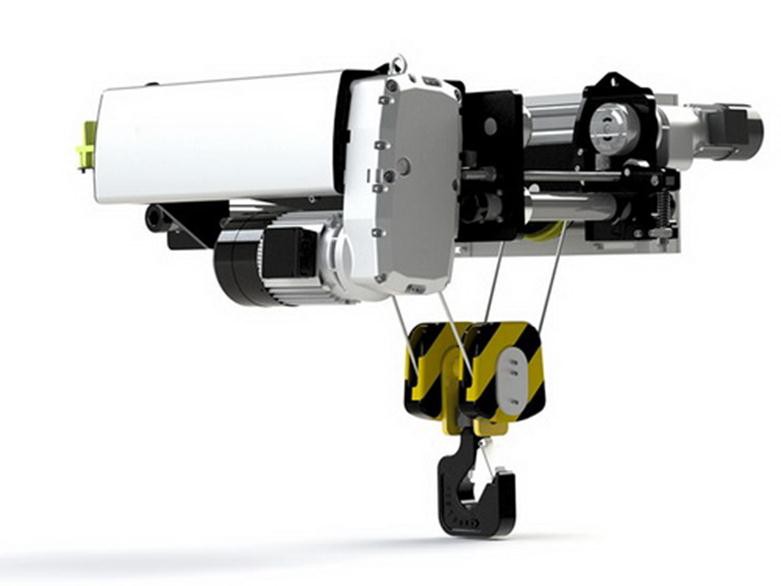 |
2. Lifting & Handling System
A. Hoisting Mechanism
Electric or hydraulic motors power the lifting.
Includes:
Wire ropes & sheaves (for lifting).
Drums & pulleys (for cable management).
Lifting capacity: 30–100+ tons (depending on type).
B. Trolley System
Moves horizontally along the gantry beam.
Carries the hoist and spreader for precise positioning.
Can be manual, semi-automated, or fully automated.
C. Spreader (Container Lifter)
Attaches to containers via twist locks.
Adjustable for 20ft, 40ft, 45ft, and high-cube containers.
Some have auto-latching for faster operations.
 |
 |
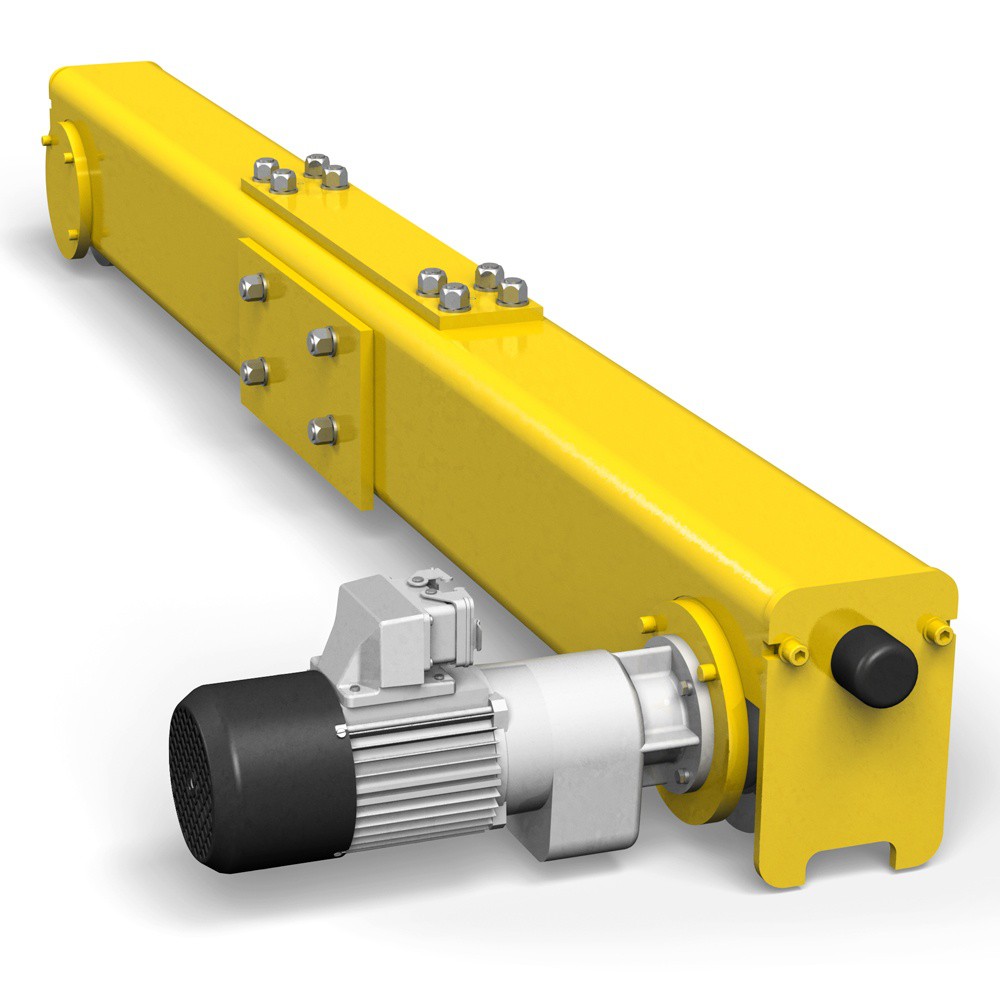
3. Mobility & Drive System
A. Travel Mechanism
RTG: Rubber tires (8–16 wheels) for free movement.
RMG/STS: Rail-guided wheels for precise alignment.
B. Drive Motors & Power Source
Diesel-electric (traditional RTGs).
Electric (E-RTG) via cable reel or battery.
Hybrid (diesel + battery for fuel savings).
C. Steering & Braking
RTG Steering Modes:
Crab steering (diagonal movement).
90° steering (tight turns).
Braking System:
Disc brakes + regenerative braking (for E-RTGs).
Emergency stop functions.

4. Control & Automation Systems
A. Operator Cabin
Mounted on the gantry for visibility.
Equipped with joysticks, touchscreens, and cameras.
B. Remote Control (Optional)
Wireless operation from ground level.
Enhances safety in busy yards.

C. Automation & Smart Features
Anti-sway system (smoother load handling).
Laser scanners & cameras (obstacle detection).
GPS/RTK positioning (for automated stacking).
AI-based optimization (for route planning).


5. Safety & Auxiliary Components
A. Outriggers/Stabilizers
Extendable supports to prevent tipping during lifts.
B. Wind Resistance Systems
Anemometer (wind speed sensor).
Auto shutdown in high winds.
C. Lighting & Sensors
LED work lights for night operations.
Load sensors (prevents overload).
Proximity sensors (collision avoidance).

6. Optional Add-Ons
Generator sets (backup power).
Battery packs (for electric RTGs).
Automated stacking software (for smart terminals).

Sketch

Advantages
Advantages of Container Gantry Cranes:
High Efficiency
Rapid container handling (30-50 moves/hour for RTGs)
Faster than reach stackers or forklifts
Simultaneous horizontal/vertical movement capability
Space Optimization
Vertical stacking (up to 7 containers high for RMGs)
Narrow working aisles (as little as 15m for RTGs)
40-60% better yard space utilization than ground slots
Operational Flexibility
Mobile RTGs can be repositioned as needed
Handle multiple container sizes (20'-53')
Can work in all weather conditions
Cost Effectiveness
Lower labor costs (1 operator per crane)
Reduced fuel consumption (E-RTGs use ~50% less energy)
Minimal ground infrastructure required
Automation Potential
Fully automated versions available
Integration with terminal operating systems
Remote monitoring and control capabilities
Safety Features
Anti-collision systems
Load moment indicators
Automatic sway control
Application
Port Container Terminals
Yard stacking and retrieval
Truck loading/unloading operations
Inter-terminal transfers
Intermodal Facilities
Rail-to-truck transfers
Container yard management
Cross-docking operations
Depot Operations
Empty container storage
Container maintenance and repair
Equipment staging areas
Specialized Applications
Project cargo handling
Heavy lift operations
Military logistics support
Crane production procedure
1. Design stage: Determine the parameters of the crane, such as rated load, span and lifting height, according to the customer's needs and working environment. Carry out detailed structural design, including main beam, end beam, crane, lifting mechanism, etc., to ensure that the design meets safety standards and usage requirements. Select appropriate materials according to the design, usually high-strength steel to ensure the stability and durability of the structure.
2. Manufacturing stage: Prepare the required raw materials and parts according to the design drawings. Cut, bend and shape the steel to prepare structural components such as main beams and end beams. Weld the various components and assemble them into an overall structure. This step requires guaranteed welding quality to ensure strength and stability.
3. Machining: Machining key components such as motors, gears, bearings, etc. to ensure that their size and accuracy meet the requirements. Anti-corrosion treatment of components, such as painting and galvanizing, increases the durability and aesthetics of the equipment.
4. Electrical system installation: Install electrical components such as motors, controllers, switches, sensors and alarm systems. Connect and wire cables to ensure the normal operation of the electrical system.
5. Assembly phase: Assemble all components and systems as a whole, connect the lifting mechanism, trolley running mechanism and control system. Perform a comprehensive inspection of the assembled crane to ensure that all components and systems are working properly, and perform preliminary debugging.
6. Testing phase: Perform static load test on the crane to check the structural strength and stability. Perform dynamic test on the crane, including tests on lifting, moving, braking and other functions, to ensure that its performance meets the design requirements. Check the functions of safety devices, such as limit switches, overload protection, etc., to ensure the safety of the equipment during operation.
7. Quality control: Perform quality control on each link in the production process to ensure compliance with industry standards and customer requirements. Record various data and inspection results in the production process for subsequent traceability and analysis.
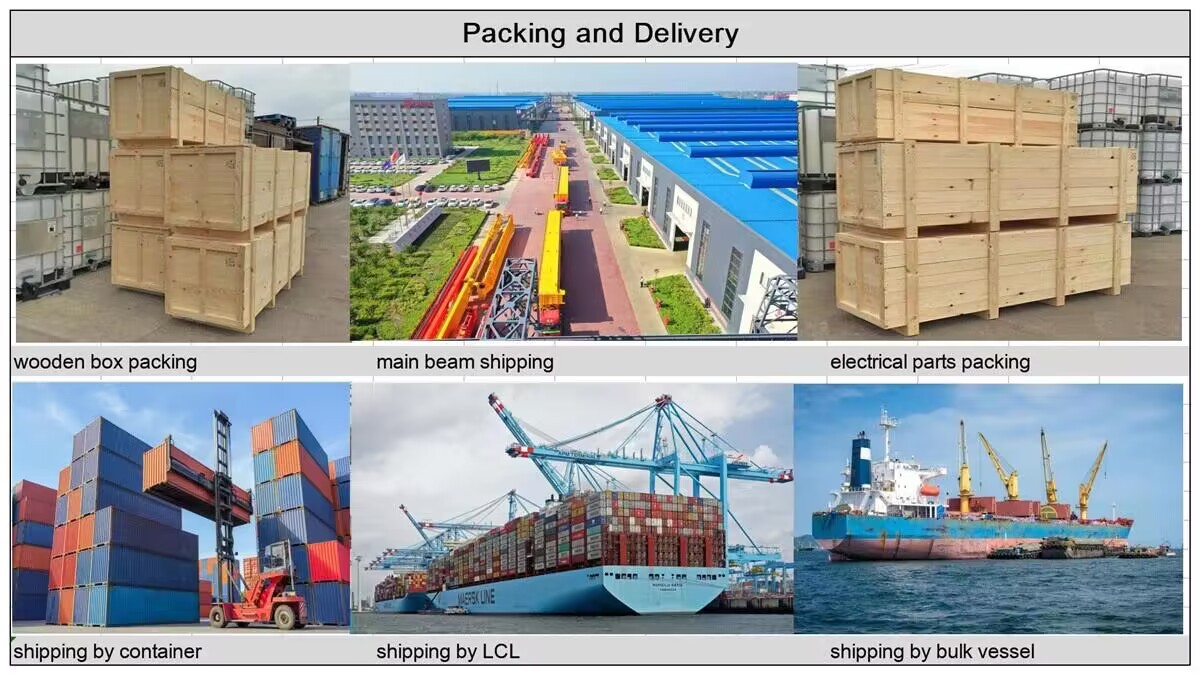
8. Delivery and installation: Pack and prepare the completed crane for transportation to ensure that it is not damaged during transportation. Deliver the crane to the customer's site for installation, and perform on-site debugging and acceptance. Provide operation training to customers to ensure that they are proficient in the use and maintenance of the crane.

Workshop view:
The company has installed an intelligent equipment management platform, and has installed 310 sets (sets) of handling and welding robots. After the completion of the plan, there will be more than 500 sets (sets), and the equipment networking rate will reach 95%. 32 welding lines have been put into use, 50 are planned to be installed, and the automation rate of the entire product line has reached 85%.


Hot Tags: gantry crane for containers, China gantry crane for containers manufacturers, suppliers, factory
You Might Also Like


Send Inquiry