








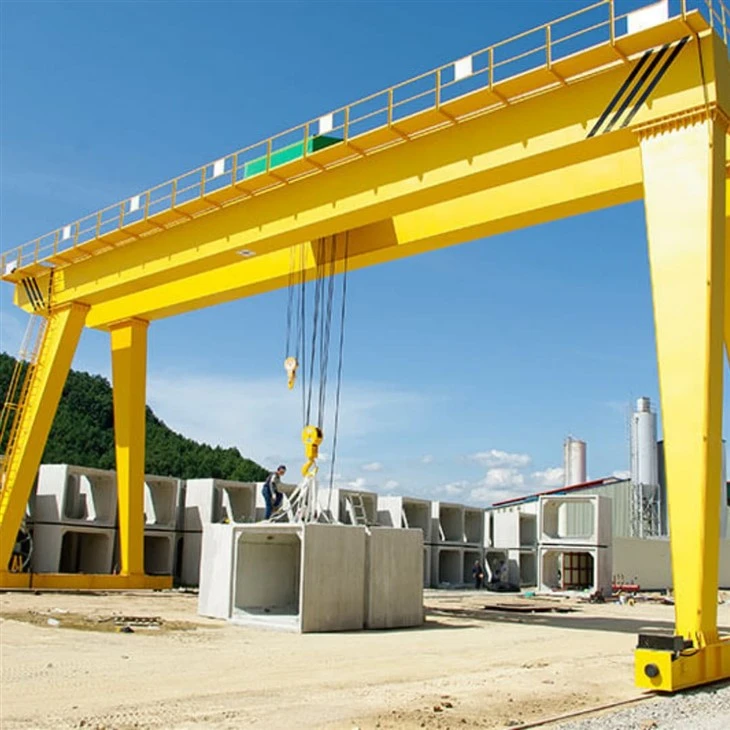

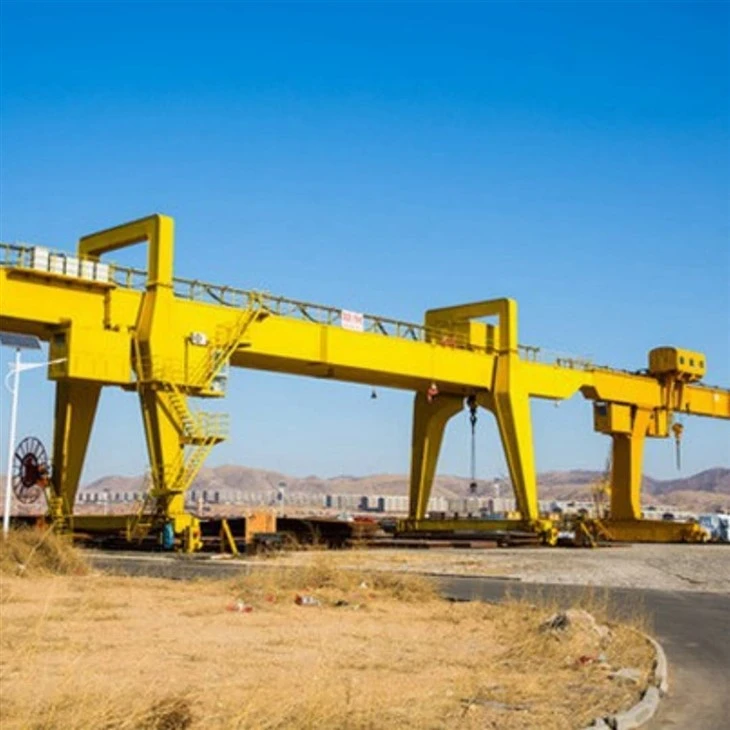
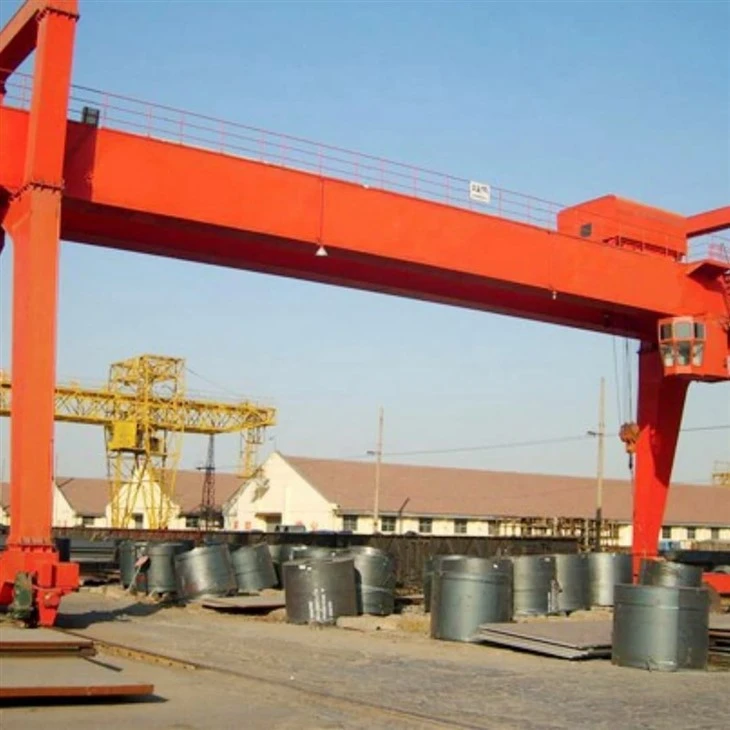
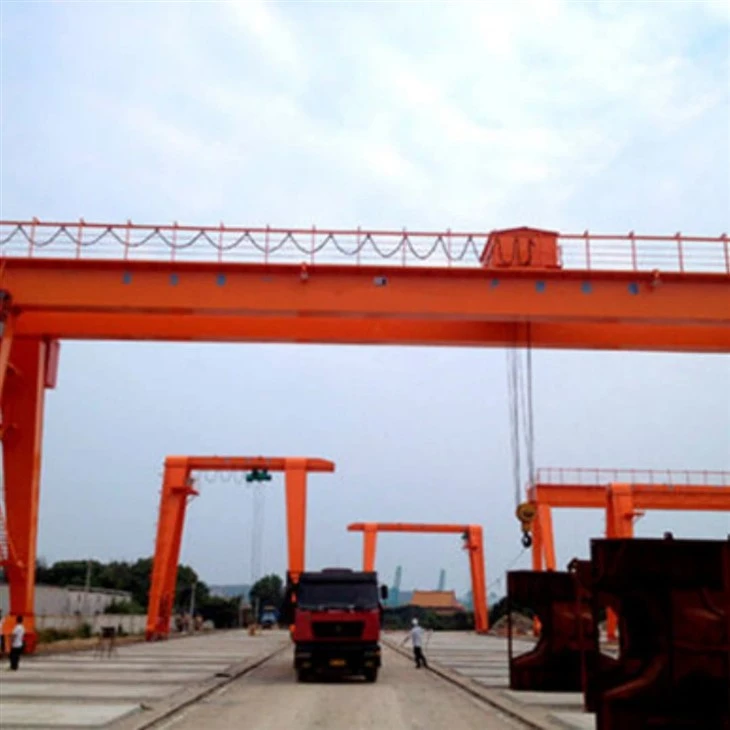


Electric Gantry Crane
Products Description
Introduction to Electric Gantry Cranes
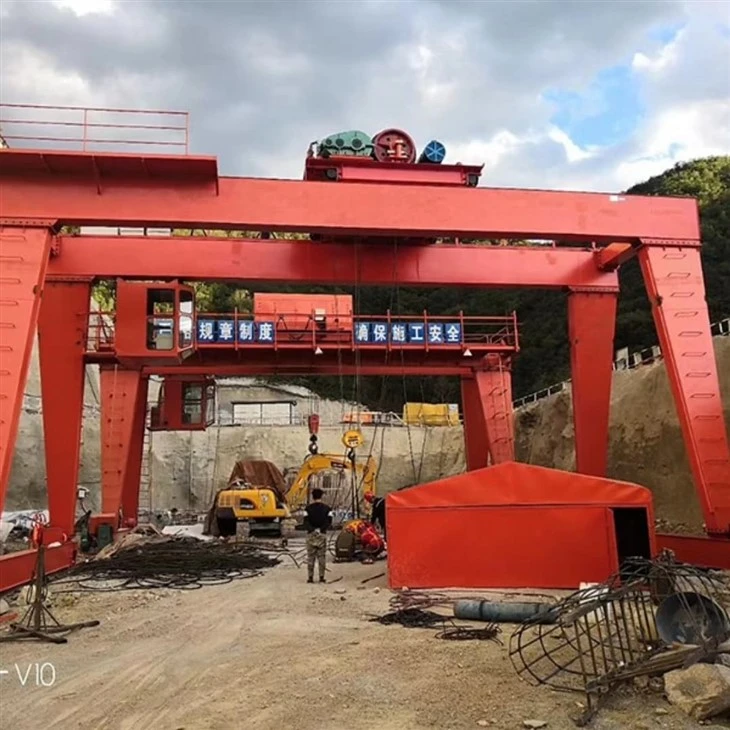
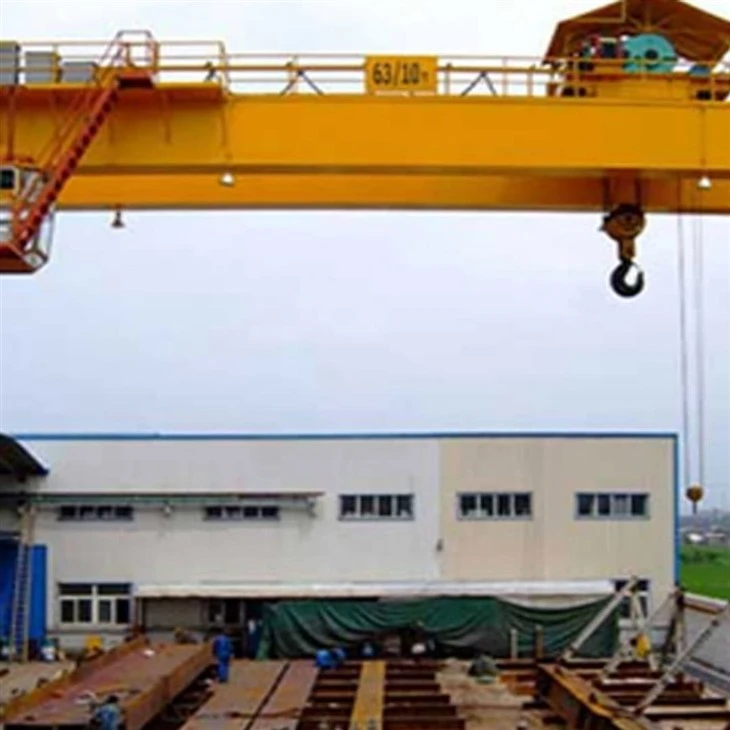
An electric gantry crane is a type of overhead crane that is supported by freestanding legs and typically runs on rails or wheels on the ground. Unlike bridge cranes that are fixed to the ceiling or a structure, gantry cranes are portable and versatile, making them ideal for both indoor and outdoor applications.
Powered by electric motors, these cranes are used to lift, move, and lower heavy loads efficiently and safely. They are commonly found in shipyards, warehouses, construction sites, and manufacturing plants where heavy materials and equipment need to be handled with precision.
Electric gantry cranes come in various sizes and configurations, from small portable units to massive systems capable of lifting hundreds of tons. Their key features include a hoist mechanism, a movable bridge supported by legs, and an electric control system for smooth operation.
Core Components PLC, Engine, Bearing, Gearbox, Motor, Pressure vessel, Gear, Pump
Place of Origin Henan, China
Weight (KG) 9000 kg
Video outgoing-inspection Provided
Machinery Test Report Provided
Product name MG model double girder gantry crane
Crane type Double girder gantry crane
Work Duty A3 ~ A7
Control mode Pendent Line, Remote Control, Cabin Control
Traveling Speed 50 m/min
Voltage 3P 380V 50/60HZ or customized
Main electrical parts Schneider/ABB/Siemens
Color Yellow,Red or Customzied
Working temperature -20 ~ 40 ℃
Control voltage DC-24 / 36V

Pictures & Components
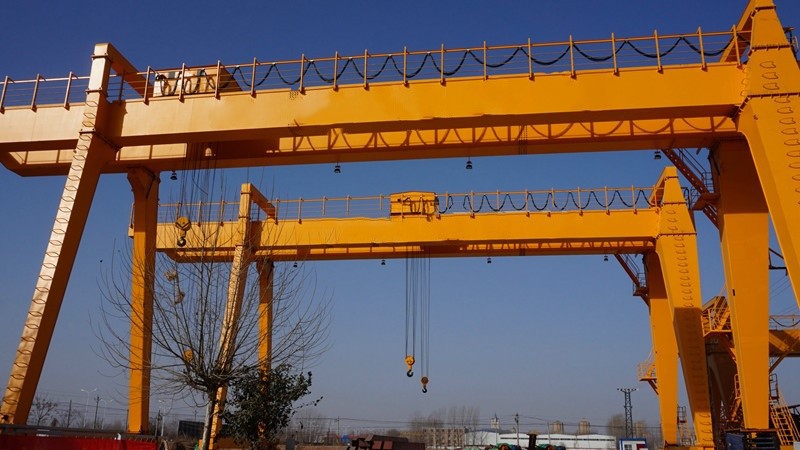
Bridge (Girder)
The horizontal beam that supports the hoist and runs along the crane's span. It can be a single or double girder depending on load capacity.
Legs (Support Structure)
Vertical supports that connect the bridge to the ground. These can be fixed or adjustable, and usually rest on wheels or tracks.
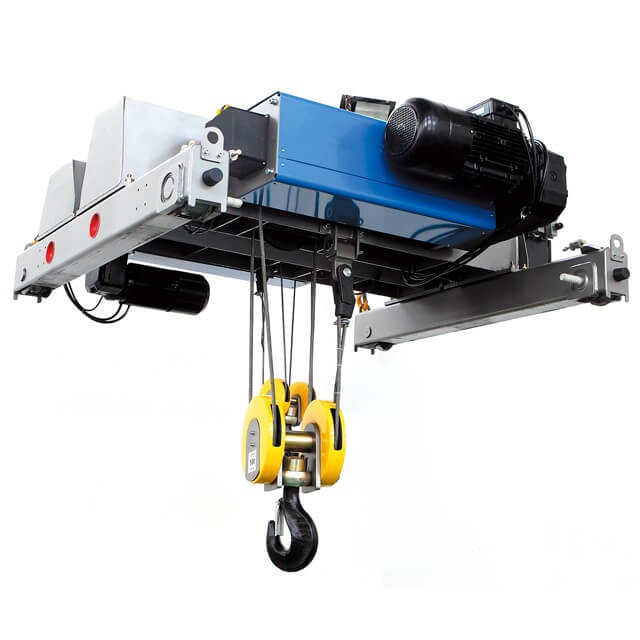
Hoist
The lifting mechanism that raises and lowers the load. It is electrically powered and typically moves along the bridge.
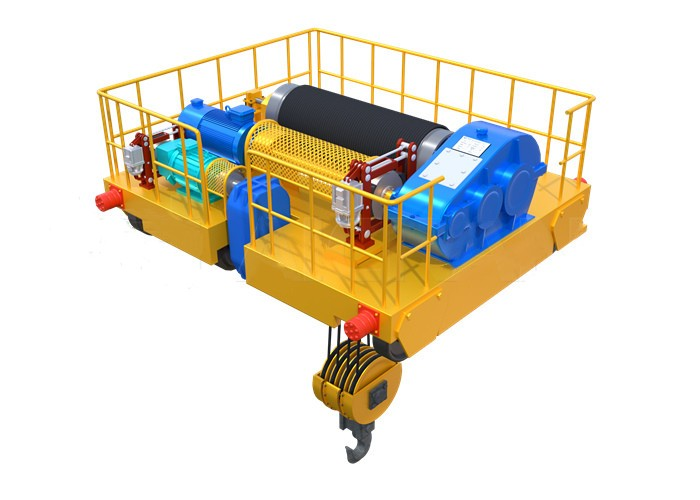
Trolley
A frame that carries the hoist across the span of the bridge. The trolley travels horizontally to position the load.
 |
 |
End Trucks / Carriages
These are mounted at the ends of the bridge and house the wheels or track rollers that allow the crane to move along the runway or ground rails.
 |
 |
4.Crane travelling mechanism
1)The crane's wheels are mounted on the end carriages and are responsible for guiding the crane along the rails (for track-based systems) or directly on the surface (for rubber-tired systems).Rails: For track-based Goliath Gantry Cranes, the rails are fixed on the ground in a straight or curved layout. The wheels of the end carriage follow these rails, allowing the crane to move along a predetermined path. The rails are typically made of heavy-duty steel to handle the weight of the crane and its load.Rubber Tires: In the case of rubber-tired Goliath cranes, the crane moves on large, durable tires, allowing it to move freely across open areas. This system provides greater flexibility and mobility, especially in outdoor environments like shipyards or construction sites.
2)Travel Motors and Drive System;The travel motors are responsible for powering the crane's movement along the rails or surface. These electric motors are typically installed on the end carriages, with a motor on each end carriage for larger cranes or a single motor for smaller models.
Drive Mechanism: The travel motor is connected to a gearbox (often a reduction gearbox) that reduces the motor's speed and transfers the power to the wheels. This setup ensures smooth and controlled movement.
Adjustable Speed Control: The crane traveling mechanism usually allows for adjustable speed control, enabling operators to move the crane slowly or at higher speeds, depending on the operational requirements.
3)Control System for Traveling Mechanism;The crane's control system manages the horizontal movement of the crane, allowing the operator to control the speed, direction, and positioning with ease. This system typically includes:Pendant or Remote Control: Operators can control the crane traveling mechanism using a pendant control or a wireless remote control, which provides flexibility and improved safety by allowing the operator to move away from the crane during operation.
Cabin Control: In larger models, the crane may have a dedicated operator's cabin where the operator controls both the lifting and traveling movements.Variable Frequency Drive (VFD): A VFD can be used to control the speed of the travel motor, ensuring smooth acceleration and deceleration, which is crucial for safe and precise movement, especially when handling heavy or sensitive loads.
5.
Electrical System
Includes control panels, wiring, motors, and sensors. This system powers the hoist, trolley, and bridge movements.
Wheels / Rail System
For mobile gantry cranes, wheels allow movement across the floor. For fixed gantry cranes, rails guide the crane's motion.
6.Crane wheel
1)Material;Crane wheels are typically made from high-grade, heat-treated steel to ensure durability and strength under heavy loads.The material is often forged steel or cast steel with high tensile strength, offering excellent resistance to wear and deformation.
2)Load Capacity Crane wheels are designed to bear the crane's total weight and the weight of the load being lifted. Their load-bearing capacity depends on the material, size, and design of the wheel.The wheels distribute this weight evenly across the rails or ground surface to ensure stability and prevent damage to the infrastructure.
3)Size and Dimensions The size of the crane wheels (diameter, width, and flange height) is determined based on the crane's capacity, track gauge, and operational environment.Larger wheels are used for higher load capacities, while smaller wheels are suitable for lighter loads or compact cranes.

7.Crane Hook
1)The hook is Material Made of high-strength alloy steel or forged steel to provide superior durability, resistance to wear, and strength under heavy loads.Heat-treated for enhanced toughness and to prevent deformation under extreme stress.
2)The hook is Design;Typically designed with a U-shaped structure for ease of attaching slings, ropes, or chains.Available in various shapes and configurations based on the application:Single Hook: A simple design used for lighter loads or less critical operations.
Double Hook: Designed to evenly distribute heavy loads, reducing stress on the hook.Equipped with a safety latch or spring-loaded locking mechanism to prevent accidental disengagement of the load.
3)Capacity Rated for specific load capacities (e.g., 5 tons, 10 tons, 50 tons, etc.), depending on the crane's lifting requirements.Clearly marked with the safe working load (SWL) or working load limit (WLL) for operational safety.
Rotation Many crane hooks are mounted on a swivel bearing to allow 360-degree rotation, providing flexibility during load handling.This feature reduces stress on the lifting slings or chains and ensures better alignment of the load.

Motor
Hoisting Motor Powers the lifting mechanism, allowing the crane to lift and lower heavy loads.Designed for high torque and controlled speed to handle heavy materials safely and efficiently.Trolley Traveling Motor Drives the horizontal movement of the trolley along the main girder.Offers smooth acceleration and deceleration for precise positioning.
Crane Traveling Motor Powers the movement of the entire gantry crane along its rails.Must provide consistent performance to move the crane and load across long distances.Key Features of Goliath Gantry Crane Motors
Power Rating;power output of the motor depends on the crane's capacity, operational requirements, and duty cycle.Typically ranges from a few kilowatts (kW) to hundreds of kilowatts for heavy-duty cranes.Duty Class Motors are classified based on their duty cycle:S1 (Continuous Duty): For operations with minimal interruptions.S4 (Intermittent Duty with Start-Stop): Suitable for cranes with frequent load lifting and lowering.

.
Sound and light alarm system & limit switch
1)Audible Alarm:Emits a loud siren or beeping sound during critical operations such as:Crane movement (traveling along rails).Load lifting or lowering.
Emergency stop activation.Volume levels are typically adjustable to ensure the sound is noticeable in noisy environments, such as shipyards or industrial sites.
Visual Alarm:Includes flashing lights, typically LED, mounted on the crane.Colors are often coded for different warnings (e.g., red for emergencies, yellow for caution).
Automation:The alarm system is integrated with the crane's control panel and activates automatically during specific events, such as:Overload detection.Limit switch activation.Power failure or fault conditions.
4)Durability:Built to withstand harsh environmental conditions, such as dust, moisture, and extreme temperatures, ensuring reliable performance in industrial settings.Benefits of the Alarm System Enhanced Safety: Warns nearby workers of crane operations or hazards, reducing the risk of accidents.Operational Awareness: Keeps operators informed of critical events or system faults in real time.Compliance: Meets industry safety standards and regulations.

10.Safety Devices
Includes limit switches, emergency stop buttons, overload protection, and anti-collision systems to ensure safe operation.
11.Control Mode
1)Remote Control Overview: Allows operators to control the crane from a distance using a wireless remote control.
Key Features:Radio frequency (RF) or infrared (IR) communication.Compact, ergonomic controllers with buttons, joysticks, or touchscreens.Control range varies depending on the system, typically up to several hundred meters.
2)Cabin Control Overview: The crane is operated from an onboard cabin located on the gantry.Key Features:
Equipped with joysticks, control panels, and monitoring displays for precise operation.Provides the operator with a clear, elevated view of the work area.Climate-controlled cabins for operator comfort.
3) Programmable Logic Controller (PLC) / Automated Control;Overview: The crane is operated automatically or semi-automatically using pre-programmed commands and sensors.Key Features:Integrated PLC systems for automated movements and task execution.
Sensors and encoders ensure precise control and positioning.Customizable programs for repetitive or specialized tasks.

Sketch

Main technical

Advantages
Here are the key advantages of electric gantry cranes:
Advantages of Electric Gantry Cranes
High Efficiency & Productivity
Electric motors provide smooth, fast, and precise movements, improving load handling speed and reducing downtime.
Versatility
Can be used both indoors and outdoors for lifting and transporting heavy loads in warehouses, shipyards, construction sites, and more.
Mobility
Many gantry cranes are mobile (with wheels or rails), allowing them to be easily relocated within a facility or job site.
Cost-Effective
Compared to permanent overhead crane systems, gantry cranes often have lower installation and structural support costs.
Flexible Design
Available in various configurations (single/double girder, adjustable height, portable), making them adaptable to different operational needs.
Minimal Structural Requirements
Unlike bridge cranes, gantry cranes don't require building columns or runway beams, which is especially useful in outdoor or open areas.
Electric Operation
Electric power reduces manual labor, lowers operational costs, and supports automation and remote control capabilities.
Safety Features
Built-in safety mechanisms such as overload protection, emergency stops, and limit switches enhance workplace safety.
Low Maintenance
Fewer mechanical parts and advanced electric components contribute to reduced wear and tear and lower maintenance needs.
Application:
Goliath gantry cranes are used in a variety of industries due to their versatility, mobility, and heavy lifting capacities. Their design makes them suitable for outdoor applications where large and heavy materials need to be handled. Here are some of the main applications of Goliath gantry cranes
Shipbuilding and Shipyards;Application: Goliath gantry cranes are frequently used in shipyards for constructing and assembling ships, as well as for heavy lifting of ship parts and large equipment.Benefits: These cranes can move along the length of the shipyard, making them highly effective for lifting heavy components, such as ship hulls, large equipment, and prefabricated sections.
Port and Container Handling;Application: In port facilities, Goliath gantry cranes are used to handle containers and large cargo. These cranes are essential for loading and unloading containers from ships, moving cargo across dockyards, and stacking containers.
Construction Sites;Application: On large construction sites, particularly in infrastructure projects such as bridges, dams, or high-rise buildings, Goliath gantry cranes are used to lift and move heavy construction materials, such as steel beams, concrete slabs, and precast structures.
Heavy Industry and Manufacturing;Application: In industries like steel, automotive, and aerospace manufacturing, Goliath gantry cranes are used to move heavy machinery, steel coils, and large fabricated parts during production or assembly.
Mining and Quarrying;Application: Goliath gantry cranes can be used in mining and quarrying industries to move large mining equipment, such as crushers, grinders, and conveyor systems, or to lift and transport extracted materials like rocks and ores.
Steel Mills;Application: In steel mills, Goliath gantry cranes are used to handle large steel products, such as rolls, slabs, billets, and coils.Benefits: These cranes help facilitate the handling of heavy, hot, and bulky materials within the steel production process, where precision and strength are critical.
Crane production procedure
1. Design stage: Understand the specific needs of customers, including load-bearing capacity, span, height and use environment. Carry out preliminary design according to the needs and draw scheme drawings, including structural design, power system and control system design. Carry out structural strength, stability and dynamic analysis to ensure that the design meets relevant standards and specifications.
2. Material preparation: Select suitable materials according to design requirements, such as high-strength steel, aluminum alloy, etc., to ensure good mechanical properties and durability. Purchase the required raw materials and components according to the design drawings, including motors, reducers, hooks, control systems, etc.
3. Processing and manufacturing: Cut the steel and process the main beam, end beam and other structural parts according to the design dimensions. Connect the cut parts by welding to form the main structural frame of the crane. Finish the welded components, including drilling, turning and milling, to ensure the matching accuracy of each component.
4. Assembly: Preliminary assembly of the processed components to check the stability and matching of the structure. Install the lifting mechanism, trolley running mechanism and trolley running mechanism to ensure that all moving parts can run smoothly.
5. Electrical system installation: Install motors, inverters, control panels and other electrical components to ensure that the electrical system is connected correctly. Arrange the cable lines reasonably to ensure safety and beauty, and reduce interference and wear.
6. Commissioning and testing: Test the various functions of the crane, including lifting, moving, braking and alarm systems, to ensure that all functions are normal. Carry out safe load tests to ensure that the crane operates stably under maximum load and meets safety standards.
7. Inspection and quality control: Carry out quality inspections on each link of production to ensure that all components meet design and standard requirements. Carry out qualification certification according to relevant regulations to ensure that the equipment meets national and industry standards.
8. Delivery and installation: Transport the manufactured crane to the customer site. Install it at the customer site, including fixing the foundation, commissioning and connecting the power supply. Provide operation training to customers to ensure that they can use the equipment safely and effectively, and officially deliver it for use.

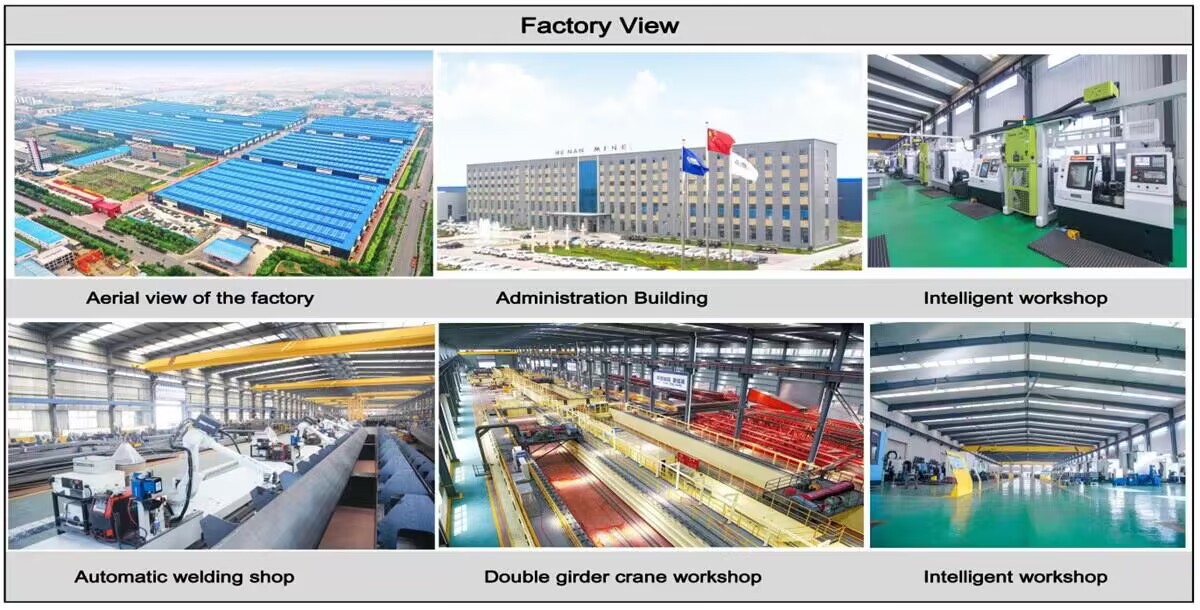
Workshop view:
The company has installed an intelligent equipment management platform, and has installed 310 sets (sets) of handling and welding robots. After the completion of the plan, there will be more than 500 sets (sets), and the equipment networking rate will reach 95%. 32 welding lines have been put into use, 50 are planned to be installed, and the automation rate of the entire product line has reached 85%.


Hot Tags: electric gantry crane, China electric gantry crane manufacturers, suppliers, factory
Previous
100-ton Gantry Hoist CraneYou Might Also Like




Send Inquiry