







10 Ton Wire Rope Electric Hoist
Product Overview
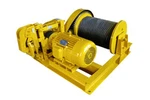
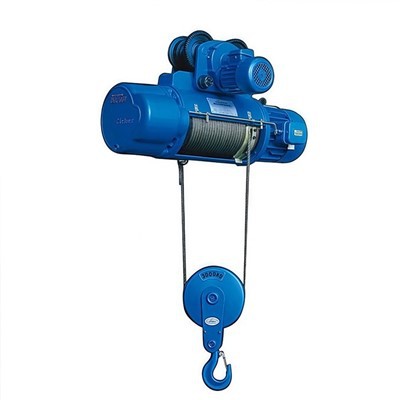
The 10-ton wire rope hoist is a heavy-duty lifting device designed for industrial applications requiring precise and efficient material handling. Built with a robust steel frame and high-performance motor, this hoist ensures durability, reliability, and smooth operation.
Key Features
✅ High Load Capacity – Capable of lifting up to 10 tons (22,000 lbs), making it ideal for heavy-duty industrial tasks.
✅ Durable Wire Rope – Equipped with a high-strength galvanized steel wire rope that offers excellent wear resistance and long service life.
✅ Powerful Motor – High-efficiency motor with thermal protection ensures consistent performance and safety.
✅ Smooth & Precise Operation – Advanced gearbox and braking system provide stable lifting and lowering with minimal vibration.
✅ Safety Features – Includes overload protection, emergency stop button, and limit switches to prevent over-travel.
✅ Flexible Installation – Suitable for use on monorail trolleys, overhead cranes, gantry cranes, and workstation lifting systems.
✅ Customizable Options – Available in various lifting heights, speeds, and control configurations to meet different application needs.

Parts & Components
A 10-ton wire rope electric hoist consists of several key parts and components, each playing a crucial role in lifting and moving heavy loads. Here are the main components:
1. Hoisting Mechanism
Wire Rope – High-strength steel rope that lifts and lowers the load.
Drum – A grooved cylinder where the wire rope is wound and unwound.
Motor – Electric motor that provides power for lifting.
Gearbox/Reducer – Transmits motor power to the drum while reducing speed and increasing torque.
Brake System – Ensures the load remains securely held when lifting stops.
2. Trolley Mechanism (for hoists with trolleys)
Trolley Frame – Supports the hoist and moves along the beam.
Trolley Wheels – Run on the I-beam or rail.
Trolley Motor – Drives the trolley movement along the beam.
Gearbox & Drive System – Transfers power to the wheels.
3. Hook & Load Handling
Hook Block – Heavy-duty hook attached to a rotating block.
Safety Latch – Prevents accidental load release.
Sheaves (Pulleys) – Guide the wire rope and reduce the required lifting force.
4. Electrical System
Control Panel – Houses electrical components such as contactors, relays, and circuit breakers.
Pendant Control / Remote Control – Allows operators to control hoist functions.
Limit Switches – Prevents over-lifting and over-lowering.
5. Safety & Protection Features
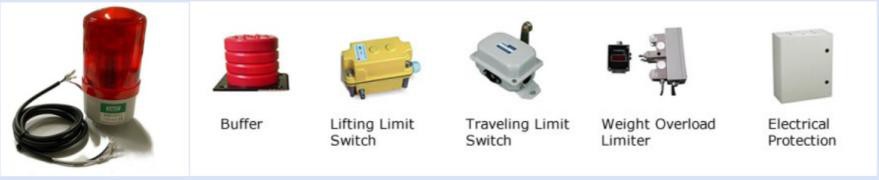
Overload Protection – Prevents lifting beyond the hoist's rated capacity.
Emergency Stop Button – Immediately halts operation.
Thermal Protection – Prevents motor overheating.
Anti-Sway System (optional) – Reduces load swinging during movement.

- Wire Rope: High-strength steel wire, usually 6x37 or 6x19 construction
- Hoist Hook: A hoist hook for a 10-ton wire rope electric hoist is a critical component designed to safely lift and secure heavy loads.
- Control Panel:
A control panel for a 10-ton wire rope electric hoist typically includes:
Main Contactor – Controls power to the hoist motor.
Control Transformer – Converts high voltage to a lower control voltage (e.g., 24V or 110V).
Push Button Pendant or Remote Control – For up/down & left/right travel.
Limit Switches – Prevents over-travel of the hook.
Thermal Overload Relay – Protects the motor from overheating.
Emergency Stop – Safety feature to cut power in case of emergency.
Inverter (VFD, optional) – If variable speed control is required. - Limit Switches: A limit switch in a 10-ton wire rope electric hoist is a safety device that prevents the hook or load block from traveling beyond its designed limits. It ensures safe operation and prevents damage to the hoist or surrounding structures.
- Brakes: The brakes of a 10-ton wire rope electric hoist are a critical component to ensure safety and load control.
- Safety Features:
- 1. Overload Protection
- Equipped with an overload limiter to prevent lifting loads beyond the rated 10-ton capacity.
Automatically stops operation if the load exceeds the safe limit.
2. Emergency Stop Button
Immediate shutdown of the hoist in case of an emergency.
Allows operators to quickly stop all movement to prevent accidents.
3. Upper & Lower Limit Switches
Prevents over-travel of the hook by stopping movement at the maximum and minimum safe positions.
Protects both the hoist and the load from damage.
4. Anti-Drop and Anti-Slip Mechanism
Ensures the rope remains securely in the drum groove.
Reduces the risk of the load slipping or dropping unexpectedly.
5. Thermal Protection System
Motor is equipped with a thermal overload relay to prevent overheating.
Automatically shuts down the hoist if the motor temperature exceeds safe levels. - Housing and Frame:
Housing:
The housing is the protective outer structure of the hoist. It houses the key components, such as the motor, gearbox, and electrical systems, to prevent damage from external elements and to ensure smooth operation.Material: Typically made of high-quality steel or cast iron to provide durability, strength, and resistance to wear.
Design: It is usually designed to be compact yet robust to protect internal parts from debris, dust, moisture, and harsh environmental conditions.
Function: The housing keeps the internal components safe and contributes to the overall stability and integrity of the hoist.
Frame:
The frame is the structural base that supports the entire hoist system. It holds the motor, gearbox, and other components in place and distributes the load evenly.Material: Usually constructed from heavy-duty steel or alloy for high strength and to withstand the weight and load capacity of the hoist.
Design: The frame is designed to be strong and rigid to handle the heavy load of a 10-ton hoist. It must also be lightweight enough to allow easy installation and operation.
Function: It provides a secure foundation for the hoist's moving parts and ensures stability during operation.
Sketch

Advantages
High Lifting Capacity: With a 10-ton capacity, this hoist can handle heavy loads, making it ideal for lifting large machinery, materials, and other heavy items in various industrial applications.
Increased Efficiency: Electric hoists are faster than manual hoists, reducing downtime and improving overall productivity. They can lift heavy loads quickly and consistently.
Ease of Use: Electric hoists are generally easy to operate, requiring less effort from the operator compared to manual hoists. This can reduce operator fatigue and improve safety.
Safety Features: Many 10-ton wire rope electric hoists come with built-in safety mechanisms, such as overload protection, limit switches, and emergency stop buttons, reducing the risk of accidents and damage to both the hoist and the load.
Precision Control: These hoists offer better control over the lifting process, allowing operators to raise and lower loads with high accuracy. This is especially important when positioning loads in tight spaces.
Durability: Wire rope hoists are designed for long-term use and can withstand harsh working conditions. The wire rope itself is strong and durable, offering a high level of reliability even under heavy usage.
Reduced Labor Costs: With a 10-ton electric hoist, fewer workers are needed to perform the same tasks, reducing labor costs and enhancing overall efficiency in the workplace.
Compact Design: Many electric hoists are designed to be compact and space-efficient, making them suitable for environments with limited space while still offering powerful lifting capacity.
Versatility: These hoists can be used for a wide range of tasks, from lifting large materials in construction to moving machinery and equipment in warehouses, making them highly versatile for various industries.
Low Maintenance: Electric hoists typically require less frequent maintenance compared to manual alternatives, contributing to reduced downtime and maintenance costs

Application
A 10-ton wire rope electric hoist is commonly used for lifting heavy loads in various industries. Here are some typical applications for this type of hoist:
Construction Sites: Used for lifting and moving building materials, such as steel beams, concrete panels, and equipment. It helps in speeding up construction projects by lifting heavy loads to higher floors.
Factories and Warehouses: It's often used to move heavy machinery, large raw materials, or finished products. In manufacturing plants, these hoists are used for assembly, loading, and unloading goods.
Shipping and Docking: In ports, electric hoists are used for loading and unloading shipping containers, heavy equipment, and cargo. They are especially useful for lifting heavy weights from ships to the dock and vice versa.

Production Procedure
1. Design and Planning
Specification Determination: The first step is to determine the specifications of the hoist, including its lifting capacity (10 tons), power requirements, dimensions, safety features, and any custom features needed.
Materials Selection: Steel for the wire rope, motor components, gearbox, and frame materials are chosen based on strength, durability, and weight.
2. Manufacturing of Key Components
Wire Rope Manufacturing:
The wire rope is produced using high-strength steel wires that are twisted together. For a 10-ton hoist, the rope needs to be thick and durable.
The wire rope is then tested for tensile strength and flexibility.
Motor Fabrication:
The electric motor, often a squirrel-cage induction motor, is manufactured. It is selected to handle the lifting capacity and speed of the hoist.
The motor's housing is usually made of cast iron or steel for durability and proper heat dissipation.
Gearbox Production:
The gearbox is designed to reduce the motor speed to a suitable level for the hoist's operation. It is fabricated with precision gear cutting techniques and assembled with high-quality bearings and seals.
Frame Construction:
The frame is the structural skeleton of the hoist, made from steel, and is designed to hold the motor, gearbox, and other components. It's welded and reinforced to handle heavy lifting loads.
3. Assembly Process
Motor and Gearbox Assembly: The motor is mounted onto the gearbox and connected to the hoist's lifting mechanism.
Wire Rope Installation: The wire rope is spooled onto the drum or reel that is connected to the hoist's lifting mechanism.
Control System Integration:
The electric hoist is equipped with a control system, often a pendant control, to allow the operator to control the hoist's movement.
The control system includes safety features like overload protection, emergency stop, and limit switches to prevent over-lifting or damage.
4. Testing and Quality Control
Load Testing: The hoist undergoes load testing to ensure it can handle the 10-ton lifting capacity. The motor, gearbox, and lifting mechanism are thoroughly tested.
Safety Checks: The hoist is checked for proper braking system function, emergency stop, overload protection, and correct wiring of the control system.
Final Inspection: A detailed inspection is done to ensure that the hoist meets all technical and safety standards.
5. Packaging and Shipping
After successful testing and quality checks, the hoist is carefully packaged for shipping.
The packaging includes protective coverings to avoid damage during transportation, and detailed manuals and safety instructions are provided.
6. After-Sales Support
Once the hoist is delivered, installation and operational support are often provided to ensure that the hoist is set up correctly and functions smoothly.
Maintenance guides and troubleshooting tips are typically included to assist the client in keeping the hoist in good working condition.

Workshop View


Hot Tags: 10 ton wire rope electric hoist, China 10 ton wire rope electric hoist manufacturers, suppliers, factory, Grab Overhead Crane, Forged Wheel, Gantry Crane, Forged Crane Wheels, Train Wheels, Casting Overhead Ladle Crane
You Might Also Like



Send Inquiry