






40ton Rail Mounted Gantry Crane
Products Description
Key Design & Performance Features
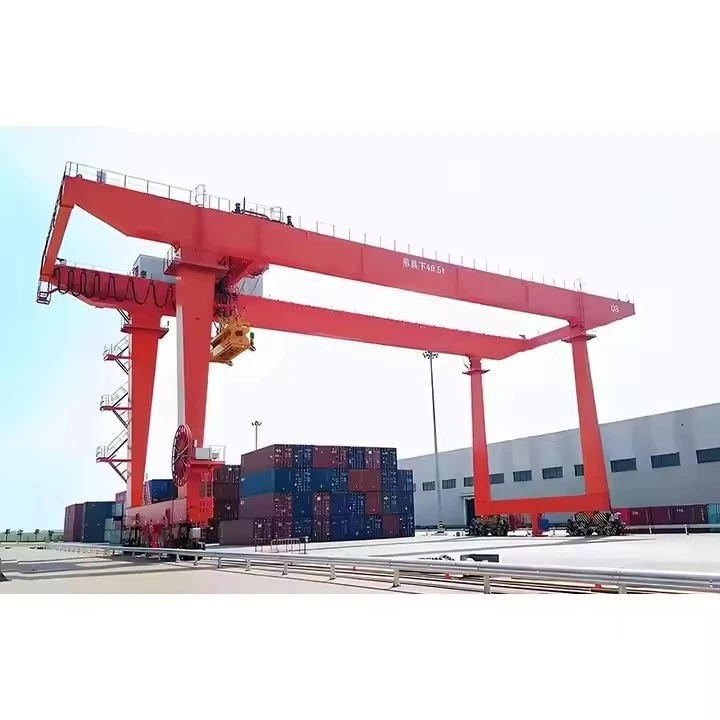
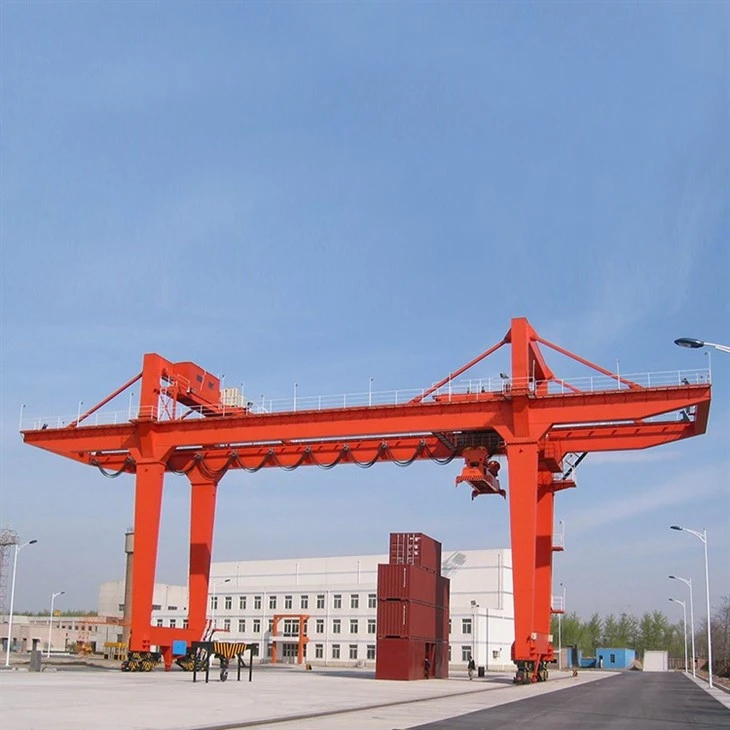
Structural Design: Most modern 40t RMGs utilize a double-girder box structure fabricated from high-strength steel. This design provides superior rigidity and stability when handling heavy containers at wide spans .
Hoisting & Travel Speeds: Speeds are optimized for cycle efficiency. Typical ranges include:
Hoisting: 15–25 m/min (full load) to 50 m/min (empty) .
Trolley Travel: 40–70 m/min .
Gantry Travel: 40–90 m/min .
Spreader System: Equipped with telescopic spreaders compatible with 20ft, 40ft, and 45ft ISO containers. Optional features may include rotation (±5°) or anti-sway technology for precise alignment .
Power & Control: Standard power supply is typically high-voltage cable reel (e.g., 6.6kV or 380V/50Hz). Most units feature VFD (Variable Frequency Drive) control for smooth acceleration, precise positioning, and energy regeneration during lowering .
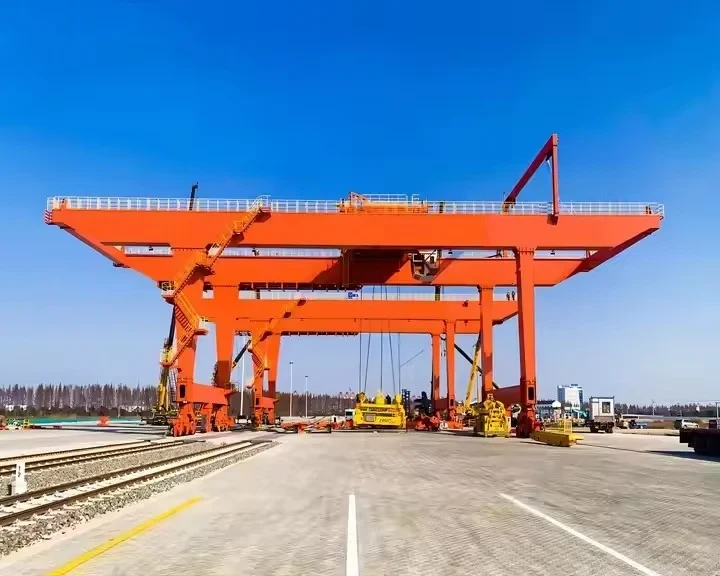
Pictures & Components
Main Girder: The core load-bearing component, typically of box-type or truss structure, supporting the trolley and lifting mechanism, and bearing the full weight of the containers.
Outriggers (Legs): Rigid support structures connecting the main girder and the traveling cart, transferring the load to the rails and ensuring overall stability of the crane.
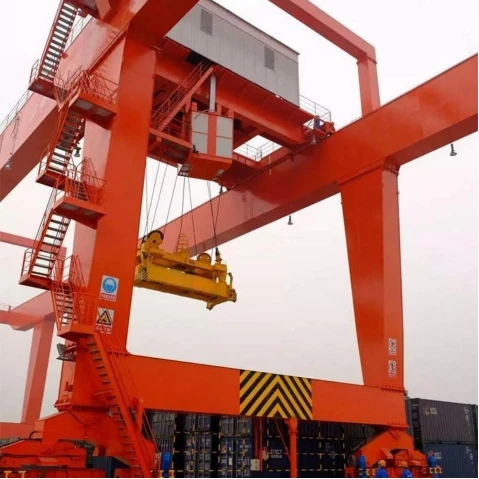
Hoisting Mechanism: Composed of motor, drum, wire rope, and container spreader, responsible for vertical lifting and lowering, featuring speed regulation and anti-sway functions. |
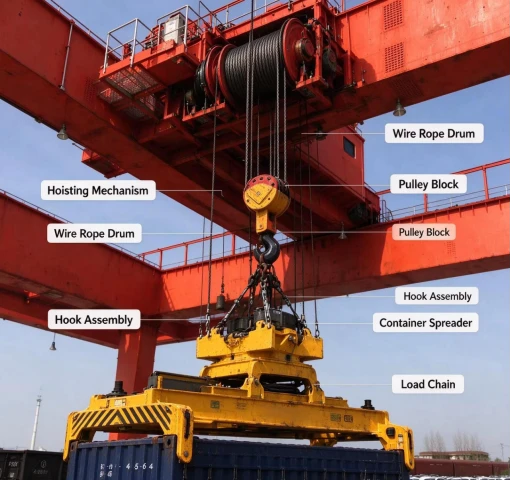
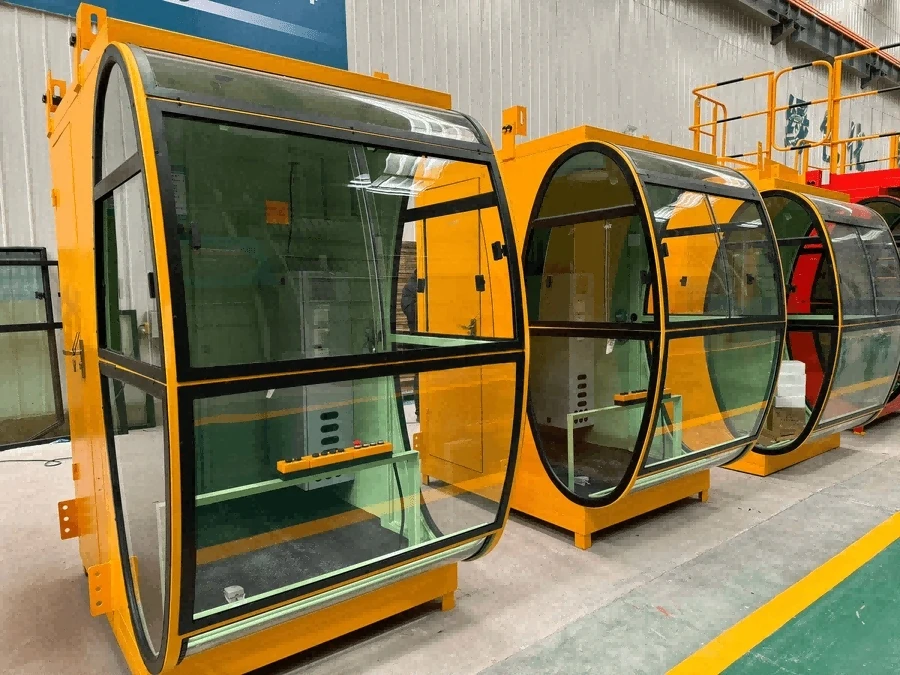
Trolley Traveling Mechanism: Drives the spreader to move horizontally along the main girder, typically using variable frequency control for smooth operation and precise alignment.
Gantry Traveling Mechanism: Drives the entire crane to travel longitudinally along the ground rails, serving as the primary means of moving between different container bays.

Electrical Control System: Integrates PLC and variable frequency drive technology, coordinating the movements of all mechanisms, supporting automated operations, and fault monitoring.

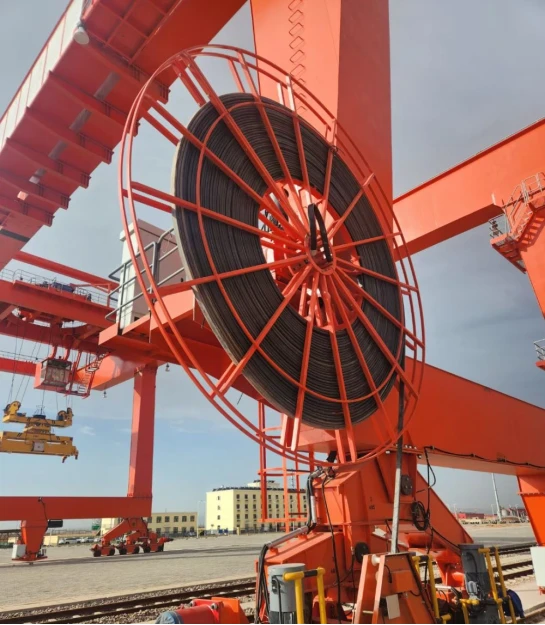
Power Supply System: Typically powered by cable reel (high-voltage cable drum) or conductor rail, providing electrical energy for the entire crane.
.
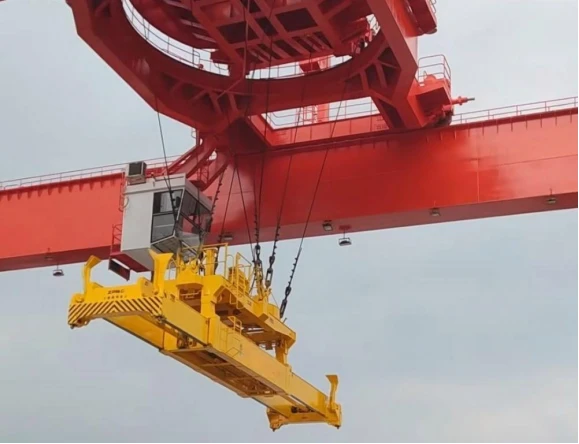
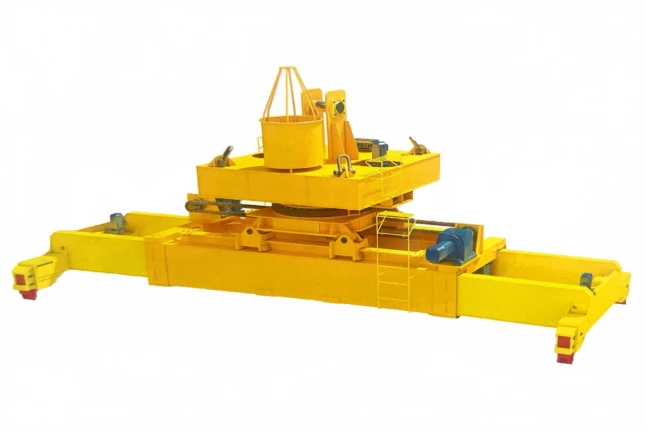
Container Spreader: A dedicated spreader with telescopic function, compatible with 20ft, 40ft, and 45ft standard containers, equipped with twist-locks for locking the container corner fittings.

Safety Protection Devices: Including limit position limiters, overload limiters, windproof anchoring devices, etc., ensuring equipment and operational safety.

Sketch
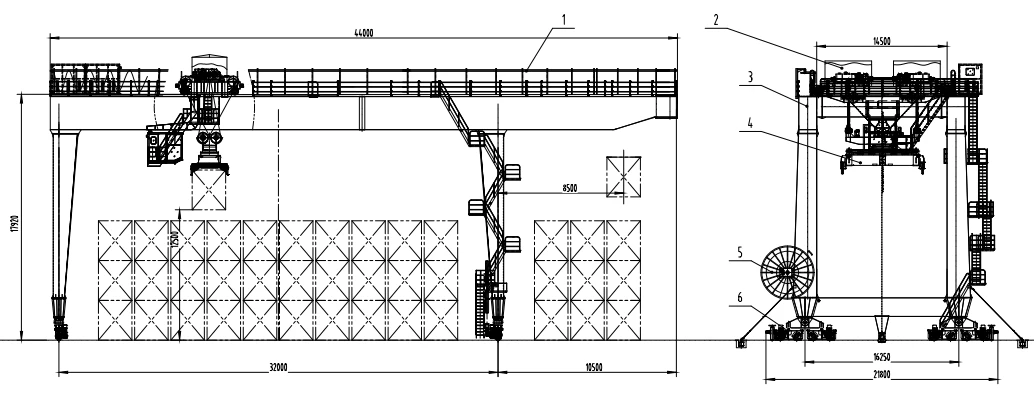
Main technical
| Category | Parameter | Typical Range / Example | Remarks / Source Reference |
|---|---|---|---|
| Basic Parameters | Rated capacity (under spreader) | 40 t / 40.5 t | SANY RMG5508: 40 t ; railway depot type: 40.5 t |
| Working duty class | A6 – A7 (heavy / extra-heavy duty) | A7 typically selected for continuous operation | |
| Total machine mass (reference) | Approx. 50,000 kg (50 t) | Varies with span and configuration | |
| Geometry | Rail gauge / span | 20 m – 50 m (customizable) | SANY RMG5508: 35 m ; Weihua typical: 23.47 m |
| Lifting height (above rail) | 12.5 m – 21 m | Railway depot type: 12.5 m ; RMG5508: 21 m | |
| Effective cantilever length | Single cantilever 3 m / double cantilever 8 m / no cantilever | Depends on yard layout | |
| Stacking layers | 3 – 6 layers (stack 3 over 4 to stack 5 over 6) | Determined by lifting height | |
| Speed Parameters | Hoisting speed (full load) | 12 m/min – 25 m/min | RMG5508: 25 m/min ; railway depot type: 12 m/min |
| Hoisting speed (empty) | 24 m/min – 50 m/min | As above | |
| Trolley travel speed | 50 m/min – 80 m/min (full load) | RMG5508: 70 m/min | |
| Gantry travel speed | 40 m/min – 90 m/min | RMG5508: 40 m/min ; railway depot type: 90 m/min | |
| Spreader & Functions | Spreader type | Telescopic container spreader | For 20 ft / 40 ft / 45 ft ISO containers |
| Spreader rotation | ±5° (micro-rotation) or -5° to +275° (full rotation) | Micro-rotation for alignment; full rotation for special operations | |
| Anti-sway system | Mechanical / electronic anti-sway (e.g., torque anti-sway, four-rope anti-sway) | Key configuration for improving handling efficiency | |
| Electrical & Power | Power supply voltage | 6.6 kV / 380 V / 400 V / 480 V | HV or LV options available |
| Power supply method | Cable reel / conductor rail (festoon) / cable drag chain | Cable reel most common | |
| Control method | PLC + variable frequency drive (VFD) | Standard; semi-automatic / fully automatic (ARMG) optional | |
| Safety & Auxiliary | Wind protection | Electric rail clamp / wheel clamp / rail clamp / anchoring device | Essential for outdoor yards |
| Skew correction system | Intelligent gantry skew correction (anti-rail gnawing) | Automatic detection of gantry deviation | |
| Energy regeneration | Active inverter feedback to grid | Energy-saving configuration, reduces operating cost |
Advantages
🎯 Operational Efficiency
High Positioning Accuracy: Fixed rails eliminate steering deviation, enabling precise alignment over rail wagons, trucks, and container stacks, which shortens cycle times and reduces re-handling.
Fast Travel & Hoisting Speeds: Optimized drive systems (VFD-controlled) allow high gantry, trolley, and hoisting speeds, supporting high-throughput terminal operations.
Continuous Heavy-Duty Operation: Rated A7/M7 duty class enables round-the-clock, high-cycle performance with minimal downtime.
Wide Span Coverage: Spans of 20–50 m cover multiple container rows plus truck/rail lanes in a single pass, reducing equipment moves.
💰 Cost & Maintenance
Lower Maintenance Costs: No tires, steering mechanisms, or diesel engines-fewer wear parts and simpler maintenance compared to RTGs.
Reduced Energy Costs: Grid-powered electric operation is significantly cheaper per move than diesel, with regenerative braking recovering energy during lowering.
Long Service Life: Robust steel structure and fixed-rail operation reduce structural fatigue and extend equipment lifespan.
🌱 Environmental & Safety
Zero On-Site Emissions: Fully electric drive eliminates diesel exhaust, making RMGs suitable for indoor yards and environmentally sensitive terminals.
Low Noise: Electric drives and rail travel produce far less noise than diesel-powered RTGs.
High Stability: Rail guidance provides superior resistance to wind and dynamic loads, improving safety during heavy lifts and wide-span operations.
Integrated Safety Devices: Overload protection, limit switches, anti-sway systems, and windproof anchoring ensure safe operation.
🏗️ Terminal Layout & Integration
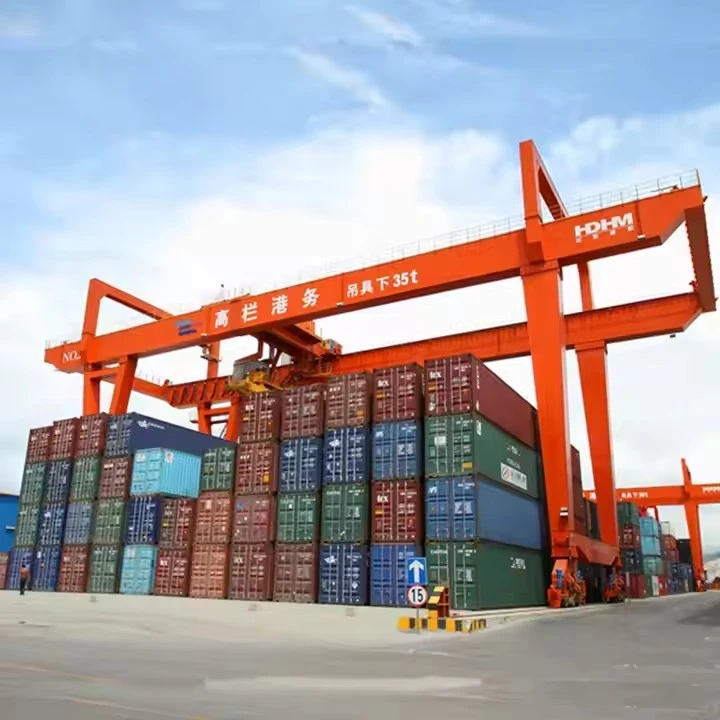
High Storage Density: Ability to stack 4–5 containers high and span wide areas maximizes yard utilization.
Seamless Rail Intermodal Integration: Directly serves rail sidings, enabling efficient transfer between trains and yard stacks-ideal for dry ports and intermodal terminals.
Automation-Ready: Fixed-rail operation is highly compatible with automated control systems (e.g., remote operation, auto-positioning), supporting future smart-terminal upgrades.
Predictable Infrastructure: Fixed rails simplify civil works and allow optimized yard planning compared to flexible RTG layouts.
Application
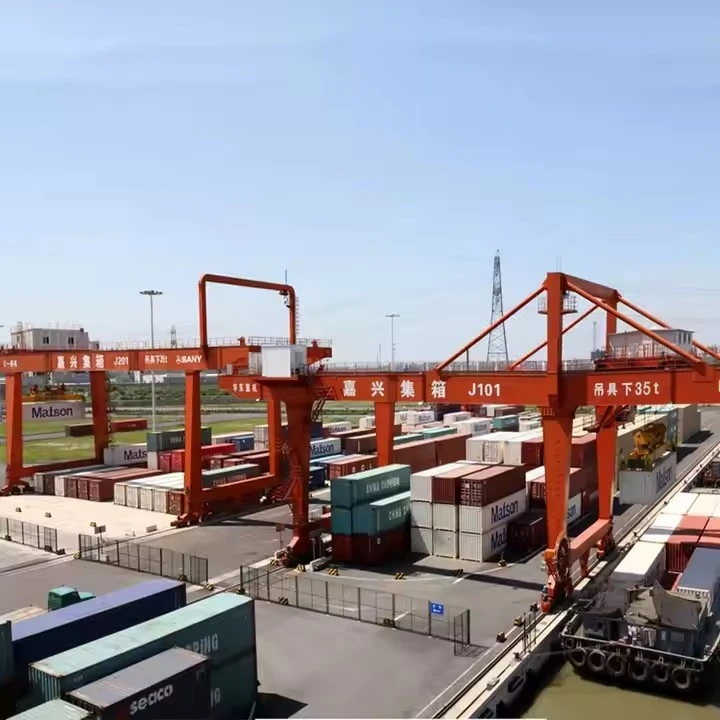
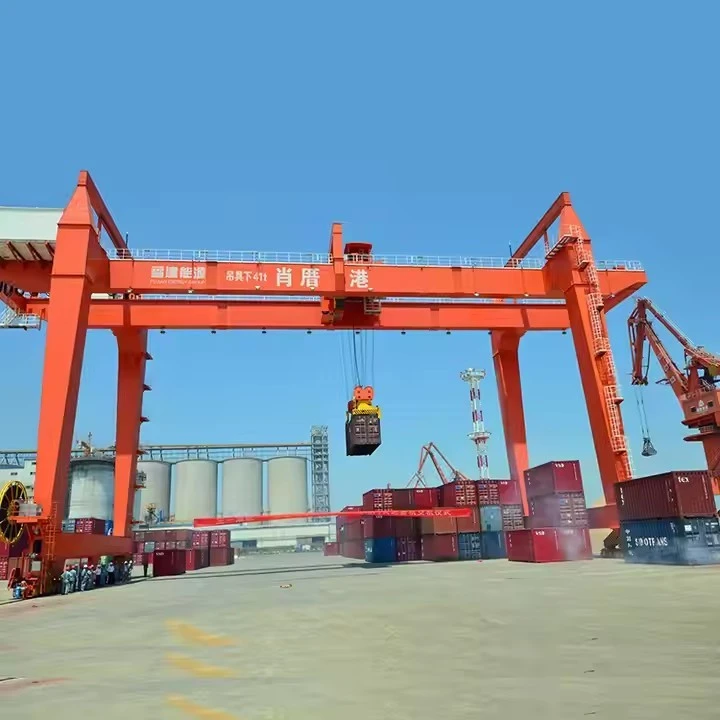
A 40-ton rail-mounted gantry crane (RMG) is primarily applied in fixed-layout container yards that require high-density stacking and seamless rail intermodal connections. Its core value lies in efficiently transferring containers between railway wagons, truck lanes, and storage blocks.
🚢 Port Container Yards
In coastal or river ports, 40t RMGs are widely used for container stacking, loading/unloading, and transshipment operations in the yard area. Its wide span and high stacking capability (typically 4-5 tiers) maximize yard utilization, making it particularly suitable for specialized container terminals with high throughput demands.
🚂 Rail Intermodal Terminals / Dry Ports
This is the most representative application scenario for 40t RMGs. In inland container terminals (dry ports) or railway container center stations, RMGs straddle over rail sidings, directly performing loading/unloading operations between train wagons and the yard. For example, a South American inland terminal deployed a 40t RMG specifically for container stacking and rail-to-yard transfer, requiring it to handle 20ft and 40ft ISO containers while adapting to continuous outdoor operation. An Indian terminal also ordered RMG cranes for a new terminal to handle container loading/unloading on trains traveling between coastal and inland areas.
🏭 Large Logistics Parks and Multimodal Transport Hubs
In large logistics parks, inland port container concentration and distribution centers, and sea-rail intermodal hubs, RMGs are used for container centralized storage, allocation, and transit operations. Its fixed-rail operation mode is suitable for sites with stable cargo flows and clear planning, facilitating integration with terminal operating systems (TOS) for automated scheduling.
Crane Production Procedure
The production of a 40-ton rail-mounted gantry crane (RMG) follows a systematic procedure that combines heavy steel fabrication, precision machining, and rigorous testing. Modern manufacturing increasingly emphasizes modular construction to improve efficiency and quality control.
🏗️ 1. Design & Material Preparation
The process begins with engineering design customized to the terminal's span, lifting height, and duty cycle. Steel plates undergo pre-treatment (sandblasting and primer spraying) to eliminate internal stress and improve corrosion resistance before fabrication. Material selection focuses on high-strength structural steel suitable for heavy-duty cyclic loading.
✂️ 2. Steel Structure Fabrication
This is the core manufacturing phase, involving the main girder, outriggers (legs), and trolley frame.
Cutting: CNC plasma or flame cutting ensures dimensional accuracy, typically controlled within 1 mm deviation.
Welding: Main girders are welded using automated processes (e.g., MAG welding with Ar+CO₂ shielding gas for internal joints, and automatic submerged arc welding for external fillet welds) to ensure deep penetration and consistency.
Stress Relief & Inspection: After welding, girders undergo shot-blasting (Sa2.5) to relieve stress and prepare the surface. Weld seams are tested via radiographic (RT) and ultrasonic (UT) inspection to detect internal defects.
⚙️ 3. Precision Machining of Components
Critical mating surfaces require post-welding machining to guarantee assembly accuracy.
Trolley Frame: The upper structure (main beams) and lower structure are fabricated separately, then transferred to a boring machine for integral machining of wheel mounting holes and support surfaces. This ensures the flatness and hole alignment meet strict tolerances (e.g., wheel position height difference within 1 mm) before final assembly.
End Carriages: Wheel sets are assembled with hardened treads (hardness HB320–350) and high-quality bearings to ensure smooth travel along the rails.
🔧 4. Modular Assembly & Integration
Following a modular approach, pre-fabricated components are assembled into larger units.
Sub-assembly: Outriggers are pre-assembled with ladders, platforms, and travel mechanisms on the ground. High-strength bolts (Grade 10.9) are used for critical connections between girders and legs, torqued to specification.
Trolley Integration: The trolley frame is assembled with the hoisting mechanism (winch, wire rope, and pulleys) and the spreader connection point. For cranes with slewing capability, the slewing bearing is installed with precise alignment before the upper and lower frames are joined.
🎨 5. Surface Treatment & Painting
After fabrication and machining, the structure undergoes final surface preparation and coating. A high-quality epoxy zinc-rich primer system (e.g., 140 μm total thickness) is applied to protect against harsh port environments.
🔌 6. Electrical & Control System Installation
The electrical room, cabling (along the girder), and control cabinets are installed. The crane is equipped with PLC-based control systems and variable frequency drives (VFD) for smooth acceleration and precise positioning. Safety devices such as limit switches, overload protection, and anti-collision sensors are wired and calibrated.
🧪 7. Testing & Commissioning
Before delivery, the crane undergoes rigorous testing:
Static Load Test: Lifting a load exceeding the rated capacity (e.g., 125%) to verify structural integrity.
Dynamic Load Test: Operating all mechanisms (hoist, trolley, gantry) with the rated load to check performance and braking systems.
Geometric Verification: Laser or total station measurements confirm span, camber, and rail alignment accuracy.
📦 8. Final Inspection & Delivery
The crane is typically disassembled into transportable modules, packed, and shipped. Final documentation, including material certificates and test reports, is provided. On-site installation and commissioning support (or remote guidance) is then offered to ensure the crane operates correctly in its terminal environment.

Workshop view:
The company has installed an intelligent equipment management platform, and has installed 310 sets (sets) of handling and welding robots. After the completion of the plan, there will be more than 500 sets (sets), and the equipment networking rate will reach 95%. 32 welding lines have been put into use, 50 are planned to be installed, and the automation rate of the entire product line has reached 85%.


Hot Tags: 40ton rail mounted gantry crane, China 40ton rail mounted gantry crane manufacturers, suppliers, factory
Next
No InformationYou Might Also Like


Send Inquiry