







Girder Erection Crane
With advanced features, superior engineering, and a focus on safety and efficiency, our Girder Erection Crane is set to become an indispensable asset on construction sites worldwide.

Key Features
These key features collectively make Girder Erection Cranes essential tools for modern construction projects, enabling efficient and safe lifting of heavy loads to facilitate the construction of complex structures.
1. Heavy Lifting Capacity: Girder Erection Cranes are designed to handle substantial loads, often in the form of heavy girders or structural components. Their lifting capacity is a critical feature, enabling them to safely hoist and position these massive elements.
2. Telescopic Boom: The crane's telescopic boom can extend and retract, allowing it to reach different heights and distances. This feature provides versatility in positioning and reaching various areas of a construction site.
3. Stability Systems: Advanced stabilization systems, such as outriggers or counterweights, help maintain the crane's stability during lifting operations. These systems ensure that the crane remains balanced and secure even when dealing with heavy loads and dynamic conditions.
4. Remote Control Operation: Remote control technology enables operators to control the crane's movements and functions from a safe distance. This enhances visibility and safety, particularly when lifting and placing loads in intricate or hard-to-reach areas.
5. Adaptability and Mobility: Girder Erection Cranes are often designed for easy transport and assembly. Modular components and efficient setup procedures enable these cranes to be quickly moved between different job sites.
6. Safety Features: Safety is paramount in crane operations. Features like anti-collision systems, emergency stop functions, and alarms for critical situations contribute to a safer work environment for both operators and other personnel on the construction site.
7. Environmental Considerations: Many modern cranes are designed with energy-efficient components and technologies, including emission reduction systems, to align with sustainable construction practices.
8. Operator Comfort: Ergonomic operator cabins equipped with modern controls, comfortable seating, climate control, and excellent visibility contribute to operator comfort and efficiency during extended work hours.
9. Versatility: Girder Erection Cranes are not limited to specific types of construction projects. They can be used in various scenarios, from building construction and bridge erection to infrastructure projects, making them versatile assets.
Specification


Pictures & Components
A Girder Erection Crane is a complex piece of machinery consisting of several essential components that work together to lift and position heavy girders and structural elements in construction projects. Here are the primary components you would typically find in a Girder Erection Crane:
1. Boom: The boom is the long, extendable arm of the crane that carries the load. It can be raised, lowered, extended, and retracted to reach different heights and distances.
2. Counterweights: Counterweights are heavy weights attached to the rear of the crane to balance the weight of the load being lifted on the front. They prevent the crane from tipping over during lifting operations.
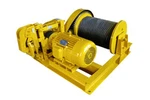
3. Hoist: The hoist is the mechanism responsible for lifting and lowering the load. It includes a drum around which the lifting cable is wound and a motor that powers the lifting operation.
4. Cabin & Control System: The operator's cab is where the crane operator sits and controls the crane's movements. It usually provides a panoramic view of the work area and is equipped with control panels and instruments. The control system includes the various controls and levers that the operator uses to control the crane's movements, including lifting, lowering, rotating, and extending/retracting the boom.
5. Emergency Stop System: This system enables the operator to halt all crane movements immediately in case of an emergency or unsafe situation.
6. Power Source: Girder Erection Cranes can be powered by various sources, including electric, diesel, or hybrid engines, depending on the crane's design and the environmental considerations of the construction site.
7. Diagnostic and Monitoring Systems: Some modern cranes feature diagnostic and monitoring systems that provide data about the crane's performance, health, and maintenance needs.

Sketch


Advantages
Girder Erection Cranes play a crucial role in modern construction by optimizing efficiency, safety, and productivity, and their advantages make them a valuable asset for construction projects of all sizes and complexities:
1. Heavy Lifting Capability: The primary advantage of a Girder Erection Crane is its ability to lift and position heavy girders and structural elements that would be otherwise challenging or impossible to handle manually.
2. Increased Efficiency: These cranes significantly speed up construction processes by efficiently placing girders and structural components, reducing the time required for assembly and erection.
3. Enhanced Safety: Girder Erection Cranes prioritize safety with features like remote control operation, load monitoring systems, stability mechanisms, and anti-collision technology. These features reduce the risk of accidents and injuries.
4. Versatility: These cranes are adaptable to various construction scenarios, including building construction, bridge erection, and infrastructure projects. They can be used in diverse settings to handle different types of loads.
5. Precision Placement: The 360-degree rotation and telescopic boom enable precise placement of loads, making it easier to position girders accurately, even in tight or complex spaces.
6. Reduced Labor Requirements: The use of a Girder Erection Crane reduces the need for manual labor in lifting and positioning heavy loads, saving both time and labor costs.
7. Minimized Downtime: These cranes are designed for quick assembly and disassembly, reducing downtime during setup and allowing for efficient transfer between different construction sites.
8. Remote Operation: Remote control technology enables operators to control the crane from a safe distance, ensuring better visibility and reducing the risk of accidents caused by proximity to the load.
9. Adaptable to Challenging Conditions: These cranes can handle challenging construction conditions, such as uneven terrain, varying weather, and restricted access points.
10. Reduced Environmental Impact: Many modern Girder Erection Cranes incorporate energy-efficient components and emission reduction technologies, aligning with sustainable construction practices.
11. Consistent Performance: These cranes offer reliable and consistent performance, reducing the likelihood of delays due to equipment malfunction.
12. Operator Comfort: Operator cabins are designed for comfort and visibility, allowing operators to work for extended periods without discomfort.

Application
Girder Erection Cranes find application in a wide range of construction projects that involve lifting and placing heavy girders and structural components. These cranes are designed to meet the specific needs of various industries and projects, making them versatile tools in modern construction. Here are some common applications of Girder Erection Cranes:
1. Bridge Construction: Girder Erection Cranes are often used to lift and place the large girders that form the main span of bridges. These cranes ensure precise alignment and positioning of bridge segments, facilitating faster bridge construction.
2. High-Rise Building Construction: When constructing tall buildings, Girder Erection Cranes assist in lifting and placing heavy components such as precast concrete panels, steel beams, and floor sections to different levels of the building.
3. Infrastructure Projects: Whether it's constructing elevated highways, overpasses, or tunnels, these cranes play a pivotal role in lifting and positioning the components needed for large-scale infrastructure projects.
4. Industrial Construction: Girder Erection Cranes are utilized in industrial settings to assemble heavy equipment, machinery, and structures within manufacturing facilities, warehouses, and power plants.
5. Energy Projects: In power generation projects, such as installing wind turbines or assembling components in hydroelectric plants, Girder Erection Cranes handle the lifting and positioning of heavy equipment.
6. Port and Shipyard Construction: These cranes are used to handle large cargo containers, ship components, and heavy machinery in port and shipyard construction, enhancing efficiency in loading and unloading operations.
7. Railway Projects: Girder Erection Cranes are employed to lift and position railway track components, bridge sections, and other elements crucial for railway construction and maintenance.
8. Sports Stadium Construction: When constructing large sports stadiums with complex steel structures, these cranes assist in placing the heavy trusses and beams that form the stadium's roof and seating areas.
9. Cultural and Architectural Projects: For projects involving unique architectural designs and complex structures, Girder Erection Cranes aid in positioning artistic elements and intricate components accurately.
10. Mining Operations: Girder Erection Cranes are utilized in mining to assemble and maintain equipment such as conveyor systems, crushers, and processing machinery.

Production Procedure
The production procedure of a Girder Erection Crane involves several stages, from design and engineering to manufacturing, assembly, testing, and final delivery. Here's an overview of the typical production process for a Girder Erection Crane:
1. Design and Engineering:
- Engineers and designers collaborate to create detailed plans for the crane, considering factors such as lifting capacity, boom reach, stability mechanisms, safety features, and environmental considerations.
- Computer-aided design (CAD) software is used to create precise 3D models and simulations of the crane's components and operation.
2. Material Procurement:
- Once the design is finalized, the necessary materials, such as steel, hydraulic components, electrical systems, and other mechanical parts, are sourced from suppliers.
3. Fabrication and Manufacturing:
- Structural components, such as the crane's boom, base, outriggers, and counterweights, are fabricated using cutting, bending, welding, and machining processes.
- Mechanical and hydraulic systems, such as the hoist mechanism, slewing system, and stabilization mechanisms, are manufactured and assembled.
4. Electrical and Control System Integration:
- Electrical components, including control panels, sensors, and wiring, are integrated into the crane's structure.
- The control system, which enables remote operation and monitors various functions, is installed and tested.
5. Painting and Surface Treatment:
- The crane's components undergo surface treatment, such as sandblasting and priming, to prepare them for painting.
- A durable protective coating is applied to the components to enhance their resistance to corrosion and environmental factors.
6. Assembly:
- The crane's various components, including the boom, hoist, counterweights, outriggers, and cab, are assembled according to the design specifications.
- Bolts, nuts, and other fasteners are securely tightened to ensure structural integrity.
7. Hydraulic and Mechanical Testing:
- Hydraulic and mechanical systems are thoroughly tested to ensure proper functioning. This includes testing the hoist, rotation, boom extension, and stabilization mechanisms.
8. Electrical and Control System Testing:
- The crane's electrical systems, including the control panel, sensors, and safety features, are rigorously tested to ensure accurate and reliable operation.
9. Load Testing:
- A load testing procedure is conducted to assess the crane's lifting capacity and stability. This involves lifting heavy loads to validate the crane's performance under different conditions.
10. Quality Control and Inspection:
- Quality control checks are performed at various stages of production to identify and rectify any defects or issues.
- Inspections ensure that the crane meets industry standards, safety regulations, and customer requirements.
11. Final Assembly and Finishing:
- After successful testing and inspection, the crane components are reassembled, and any finishing touches are applied.
12. Installation and Training:
- Technical experts from the manufacturing company may assist with the installation and setup of the crane on the construction site.
- Training sessions are conducted for crane operators to ensure safe and effective operation.

Workshop View
The company has installed an intelligent equipment management platform, and has installed 310 sets (sets) of handling and welding robots. After the completion of the plan, there will be more than 500 sets (sets), and the equipment networking rate will reach 95%. 32 welding lines have been put into use, 50 are planned to be installed, and the automation rate of the entire product line has reached 85%.


Hot Tags: girder erection crane, China girder erection crane manufacturers, suppliers, factory
Previous
No InformationYou Might Also Like


Send Inquiry