










European Type Workshop Double Girder Bridge Crane
Products Description
What is a European Type Workshop Double Girder Bridge Crane?
It is a modular, standardized overhead crane design that originated in Europe (following standards like FEM). It is characterized by its optimized structure, high-performance components, and built-in safety features, making it a premium choice for workshops and factories requiring reliable, heavy-duty lifting.
Think of it as the "premium European sedan" of the crane world-sleek, efficient, packed with technology, and built for performance and operator comfort.
Advantages over "Traditional" Cranes
Superior Hook Height: The low-headroom design maximizes lifting height in facilities with low ceilings.
Smooth and Precise Control: VFDs on all motions allow for micro-speed control and pinpoint load placement, essential for precision assembly tasks.
High Reliability & Low Maintenance: The use of premium, standardized components and enclosed systems leads to less downtime and easier servicing.
Enhanced Safety: Built with features like overload limiters, limit switches, collision avoidance systems, and safe power supply as standard.
Energy Efficiency: Modern motors and drives consume less power than older crane technologies.
Aesthetics and Cleanliness: These cranes often have a sleek, enclosed design with painted finishes, contributing to a cleaner and more professional workshop environment.
European Type vs. Conventional Double Girder Crane
| Feature | European Type | Conventional/General Double Girder |
|---|---|---|
| Girder Design | Optimized, lightweight box girder | Often heavier I-beam or truss structure |
| Headroom | Low Headroom | Higher Headroom |
| Control | VFDs on all motions for smoothness | May have contactor-based, stepped control |
| Hoist Position | Between girders (top-running) | Can be top-running or under-running |
| Components | Modular, standardized | Can be custom-built with varying brands |
| Safety & Cleanliness | Enclosed systems, sleek design | More open and industrial appearance |
Conclusion: The European Type Workshop Double Girder Bridge Crane represents a high-end, engineered solution for modern industry. It is the preferred choice for companies that view their crane as a critical productivity tool and prioritize safety, precision, and long-term reliability over initial lowest cost.
Core Components:Bearing, Gearbox, Motor, Pump
Place of Origin:Henan, China
Warranty:1 Year
Weight (KG):2000 kg
Video outgoing-inspection:Provided
Machinery Test Report:Provided
Design:Double beam
Effectiveness:high efficiency
Operating speed:High speed operation
Stability:Anti-swing function
Color:Optional
Power Source:110V/220V/230V/380V/440V,customized
Span:7.5-31.5m

Pictures & Components
1. Primary Structural System (The Optimized Frame)
Optimized Box Girders: The core of the design. These are welded steel boxes, typically with a trapezoidal profile. This shape provides superior stiffness, reduces weight, and allows for a clean, modern appearance. The steel plates are often shot-blasted and painted with a durable epoxy coating.
Welded End Trucks: The end frames are welded from steel plate (not bolted) and are themselves rigid box structures. The main girders are welded directly to the end trucks, creating a single, highly rigid "bridge" unit. This eliminates the flex and bolt fatigue found in traditional designs.
Runway & Rails: Precision-installed runway beams with high-tensile steel rails. The crane's end trucks run on these with high alignment accuracy.
 |
 |
2. Lifting & Travel System (The High-Performance Drivetrain)
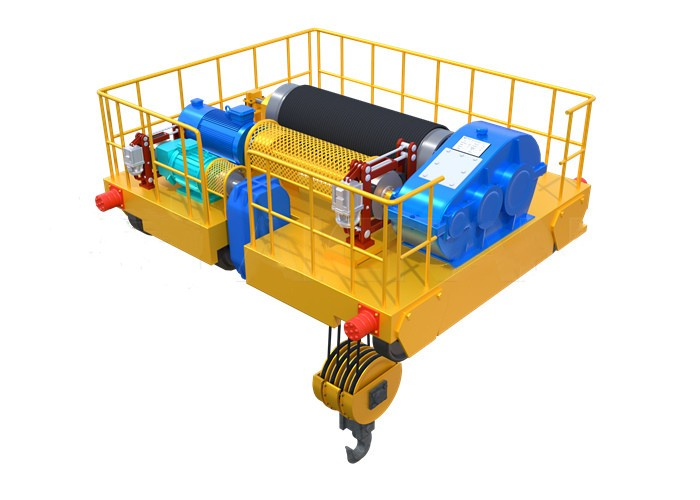
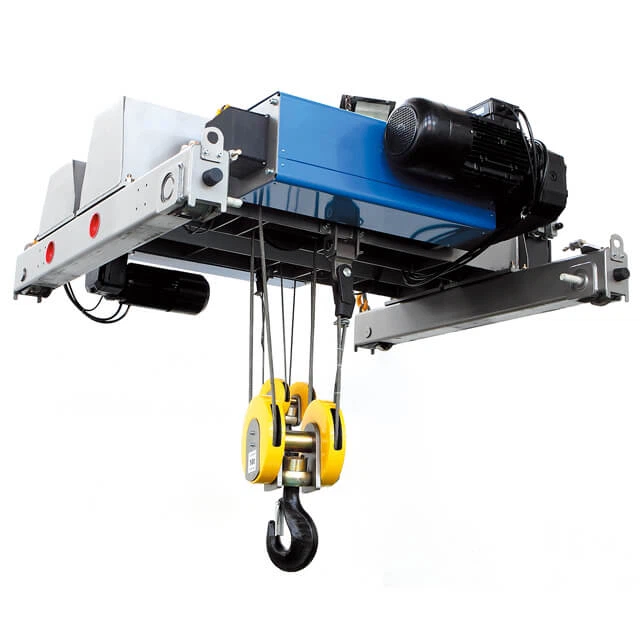
Main Hoist Unit: A premium, low-headroom, wire rope hoist mounted on the trolley. Key features include:
Dual-Speed or Variable Speed Motor: For precise load positioning.
Redundant Braking System: A primary electro-magnetic disc brake and a secondary mechanical load-holding brake.
Precision Drum: Machined drum with grooving for even rope spooling.
Rope Guide: Ensures the wire rope winds correctly onto the drum.
Auxiliary Hoist: A smaller, faster hoist mounted on the same trolley, used for lighter loads to improve work efficiency. It shares the same high-quality design principles as the main hoist.
 |
 |
Trolley Frame: A robust frame that carries the main and auxiliary hoists. It runs on rails positioned on the top of the main girders.
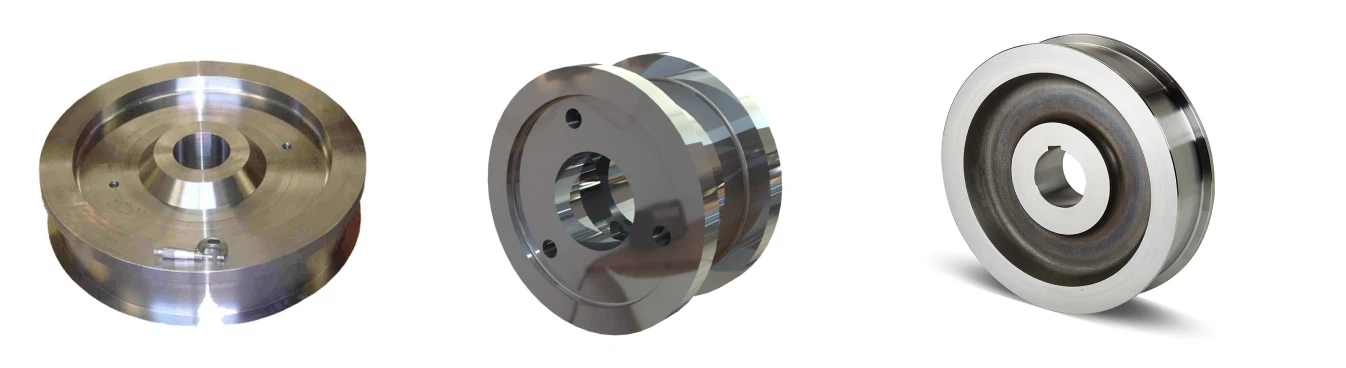
Trolley Travel Drives: Comprise motors, gearboxes, and wheels. They are often modular "bolt-on" units for easy maintenance.
Bridge Travel Drives (Long Travel): The system that moves the entire crane along the runway.
Modular Drive Units: Self-contained drive units (motor, gearbox, brake, and wheel) bolted to the end trucks. Typically, one drive unit per wheel (often 4 or 8 total).
Synchronization: The drives are electronically synchronized via the control system to prevent crabbing (skewing) of the bridge.
3. Power & Control System (The Intelligent Nerves)
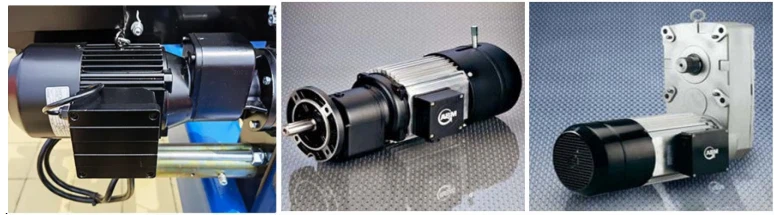
Enclosed Conductor Bar System (Busbar): A key European feature. Instead of open festoon cables, power is delivered to the crane via insulated, enclosed copper or aluminum bars housed in a protective steel or plastic casing. Collectors on the crane slide along these bars. This system is safer, more reliable, and requires less maintenance.
Variable Frequency Drives (VFDs): Installed for all three motions (Hoist, Trolley, Bridge). VFDs allow for smooth, controlled acceleration and deceleration, enabling precise load positioning and eliminating jerky movements.
Programmable Logic Controller (PLC): The crane's "brain." It integrates control of all functions, monitors safety devices, provides diagnostic information, and can interface with higher-level factory systems.
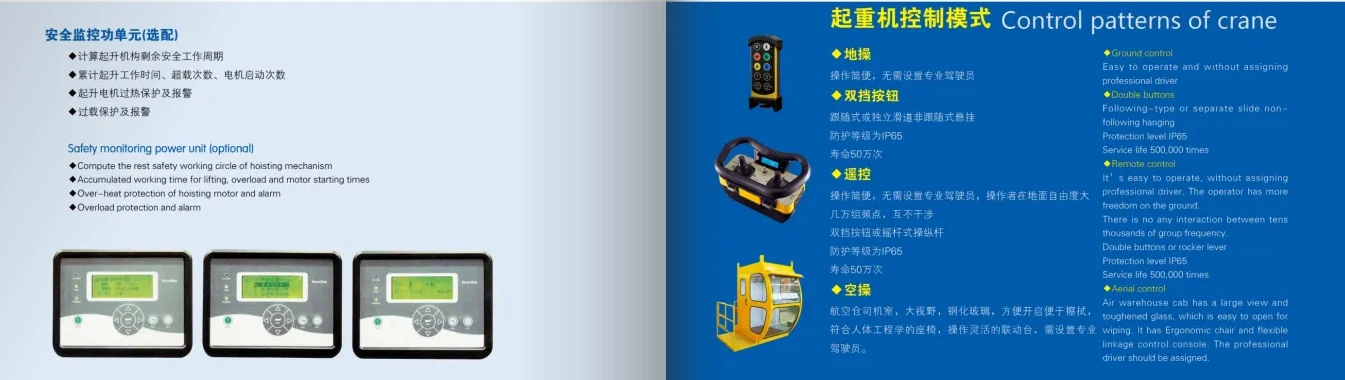
Operator Interfaces:
Ergonomic Pendant Station: A lightweight, suspended control station with joysticks and clearly labeled buttons.
Radio Remote Control: A wireless transmitter that allows the operator to control the crane from the floor.
Operator's Cab: A climate-controlled, sound-dampened cab with a panoramic view, ergonomic seats, and full instrumentation.

4. Safety & Auxiliary Systems (The Integrated Protections)
Load Moment Indicator (LMI): A critical safety device that constantly monitors the load weight and prevents the crane from being overloaded. It displays the load on a readout in the cab or on the pendant.
Limit Switches:
Hoist Upper/Lower Limit: Automatically cuts power at the travel extremes.
Trolley and Bridge Travel Limits: Prevents the trolley and crane from over-traveling.

Anti-Collision System: Uses sensors (laser, ultrasonic, or infrared) to detect obstacles or other cranes on the same runway and automatically slows or stops the crane to prevent impact.
Ancillary Devices:
Warning Devices: Rotating beacon lights and sirens that activate when the crane is in motion.
Walkways & Platforms: Full-length, non-slip walkways with handrails on the bridge for safe inspection and maintenance.
Emergency Stop Buttons: Located on the pendant, in the cab, and at key locations on the crane structure.
Sketch

Main technical

Advantages
Advantages of European Type Workshop Double Girder Bridge Crane
This crane design offers significant benefits over traditional designs, focusing on total cost of ownership, performance, and safety.
1. Maximized Productivity & Operational Efficiency
Precision Handling: Equipped with Variable Frequency Drives (VFDs) on all motions (hoist, trolley, bridge), enabling smooth acceleration and deceleration. This allows for pinpoint load placement, essential for assembly tasks, and eliminates damaging load swing.
High-Speed Operation: Designed for faster lifting and travel speeds than standard cranes, significantly reducing cycle times.
Dual Hoist System: The common configuration of a Main Hoist (for heavy loads) and an Auxiliary Hoist (for faster handling of lighter loads) provides tremendous operational flexibility and speeds up workflow.
Excellent Operator Ergonomics: Comfortable, climate-controlled cabs and intuitive radio remote controls reduce operator fatigue and increase productivity and safety.
2. Superior Technical Design & Space Optimization
Low Headroom Design: The hoist is mounted between the girders on a top-running trolley. This configuration provides the maximum possible hook height, which is a critical advantage in facilities with low ceilings, allowing you to utilize the full cubic volume of your building.
Optimized Load-Bearing Structure: The welded box girder design offers the best strength-to-weight ratio. It provides superior rigidity, minimizing deflection under load and ensuring long-term structural integrity.
Modularity & Standardization: Built with pre-engineered, modular components (like bolt-on drive units). This simplifies maintenance, reduces spare part inventory, and shortens repair times.
3. Enhanced Safety & Reliability
Integrated Safety Systems: Features like Load Moment Indicators (LMI), anti-collision systems, and comprehensive limit switches are often standard, preventing overloads and accidents.
Fail-Safe Braking: Redundant braking systems on the hoist (primary and secondary brakes) and reliable brakes on all travel motions ensure safe operation at all times.
Clean Power Delivery: The use of an enclosed conductor bar (busbar) system is safer and more reliable than open festoon cables, reducing the risk of electrical faults and cable damage.
4. Long-Term Economic Value & Low Maintenance
Reduced Total Cost of Ownership (TCO): While the initial investment is higher, the crane's high reliability, energy efficiency, and ease of maintenance lead to significantly lower costs over its entire lifespan.
Energy Efficiency: Modern motors and VFDs optimize power consumption, especially during partial-load operations and controlled start/stop cycles.
Durability: High-quality materials, superior fabrication (welded connections), and corrosion-resistant finishes ensure a long service life even in demanding environments.
Application:
Applications of European Type Workshop Double Girder Bridge Crane
This type of crane is the equipment of choice for demanding industrial applications where performance, precision, and reliability are non-negotiable.
1. Heavy Machinery and Equipment Manufacturing
Application: Assembling large excavators, cranes, agricultural equipment, and industrial presses.
Why it's Ideal: The precision control allows for the delicate placement of massive components like gears, housings, and booms. The high capacity and rigidity handle extreme weights safely.
2. Automotive Industry
Application: Stamping press lines, handling dies, and moving vehicle chassis and assemblies.
Why it's Ideal: Fast cycle times and precise positioning are crucial. The dual-hoist system is perfect for handling different sized tools and components efficiently.
3. Power Generation Sector
Application: Maintenance and assembly of turbines, generators, and large transformers in hydro, thermal, and nuclear power plants.
Why it's Ideal: The ability to make micro-movements with massive, expensive components is critical. The crane's reliability is paramount in these high-value, critical operations.
4. Aerospace Industry
Application: Handling and positioning large, delicate, and high-value aircraft components like wings, fuselage sections, and engine assemblies.
Why it's Ideal: The smooth, vibration-free movement provided by VFDs prevents damage to sensitive structures. The precision is measured in millimeters.
5. Steel Service Centers and Metal Fabrication
Application: Handling and processing heavy steel coils, plates, and structurals.
Why it's Ideal: The robust construction withstands constant use. The low headroom design maximizes storage and processing space under the crane.
6. Paper Mill and Printing Machine Manufacturing
Application: Installing and maintaining the massive rolls and machinery used in paper production and printing.
Why it's Ideal: Requires extreme precision to avoid damaging expensive, precision-ground rolls during handling.
7. Shipbuilding and Heavy Fabrication
Application: Moving and positioning large steel plates, pre-fabricated sections, and ship components.
Why it's Ideal: The combination of high capacity, long spans, and precise control makes it indispensable in modern shipyards.
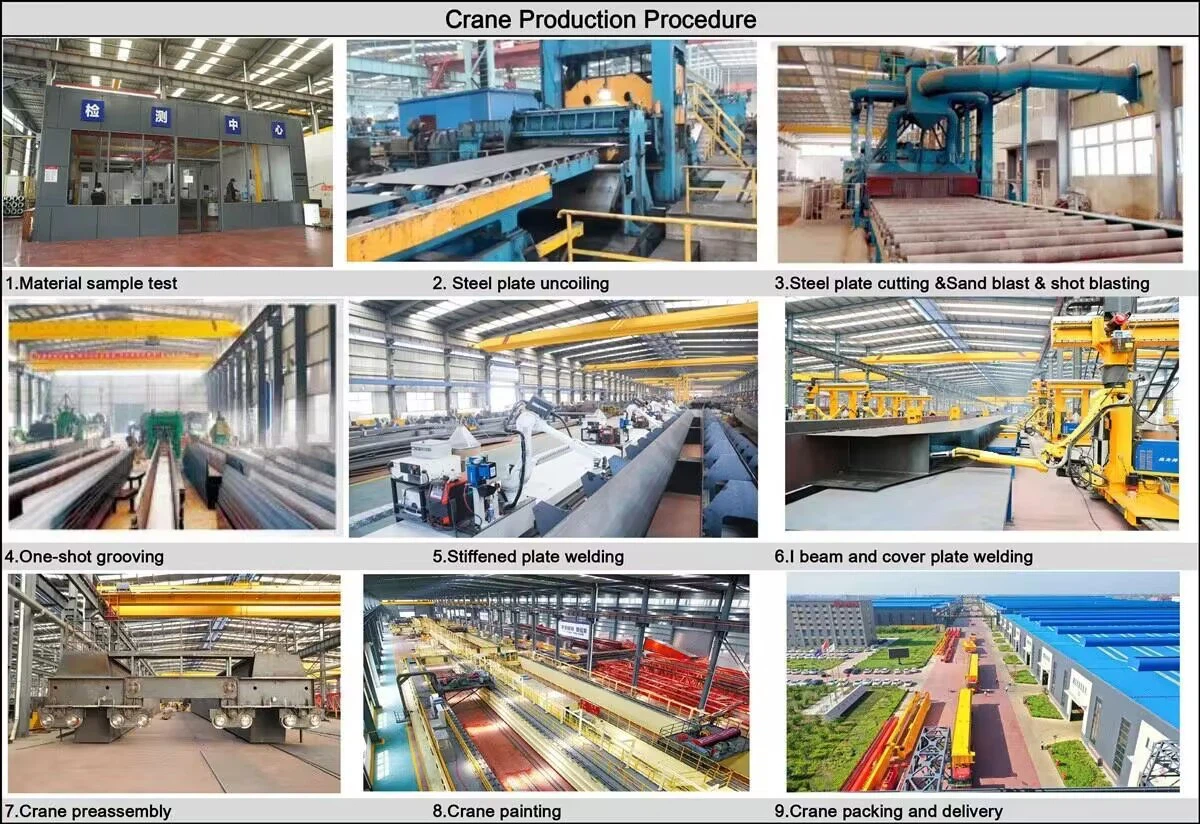
Crane production procedure
The production of a European Type Workshop Double Girder Bridge Crane is a meticulous process that blends advanced fabrication techniques with rigorous quality control. It's far more structured and standardized than the production of traditional cranes.
Here is a detailed breakdown of the typical production procedure.
Stage 1: Order & Technical Clarification
Input: Customer's specifications (capacity, span, lifting height, duty class, control mode).
Process: The engineering team reviews all requirements to ensure they are feasible and conform to standards (FEM, ISO, CMAA). Any ambiguities are clarified with the client.
Output: A finalized and approved technical specification sheet that serves as the blueprint for production.
Stage 2: Engineering & Design
This is a critical phase where the crane is virtually built.
3D Modeling: The entire crane is modeled in 3D CAD software (e.g., SolidWorks, AutoCAD Inventor). This allows for:
Interference Checks: Ensuring all components fit together perfectly.
Stress Analysis (FEA): Finite Element Analysis is performed on the main girders and end trucks to simulate load conditions, optimize material use, and ensure structural integrity.
Detailed Drawings: Production drawings for every part, assembly drawings, and overall general arrangement drawings are created.
Electrical Schematics: Control panel layouts, wiring diagrams, and cable schedules are designed.
Stage 3: Material Procurement & Preparation
Procurement: High-quality raw materials are ordered from certified suppliers. This includes:
Steel Plates: For girders and end trucks (typically S355JR grade or higher).
Profiles: Standard steel sections for walkways and supports.
Purchased Components: Hoists, motors, wheels, bearings, VFDs, PLCs, conductor bars, and other electrical components from reputable brands.
Preparation: Steel plates are cut to size using CNC plasma or laser cutting machines for high precision. Sub-components are prepped for welding.
Stage 4: Fabrication & Assembly
4.1 Main Girder Fabrication:
Panel Preparation: Cut steel plates are pressed and formed into the desired U-shaped or box-section panels.
Automatic Welding: The girder is assembled and welded using submerged arc welding (SAW) or other automatic welding techniques. This ensures deep penetration and consistent, high-strength welds.
Temporary Bracing: To prevent distortion during fabrication and handling, temporary bracings are welded on.
4.2 End Truck Fabrication:
The end frames are fabricated from steel plate, with precise machining done on the wheel mounting surfaces to ensure perfect alignment.
4.3 Trolley Frame Fabrication:
The frame that will carry the main and auxiliary hoists is built, with high precision to ensure proper alignment of the wheels that run on the girder rails.
Stage 5: Machining & Drilling
The main girders and end trucks are moved to large CNC machining centers.
The mating surfaces between the girders and end trucks are machined to ensure a perfect, flat fit for welding.
All connection holes for drive units, rail attachments, and other components are drilled with precision to ensure perfect component alignment and interchangeability.
Stage 6: Surface Treatment & Painting
Abrasive Blasting: The entire structure is shot-blasted to remove mill scale, rust, and contaminants, creating a perfect surface profile for paint adhesion.
Painting: A high-quality paint system is applied, typically:
Primer: An epoxy primer for corrosion resistance.
Intermediate Coat: A build coat for durability.
Topcoat: A polyurethane topcoat in the customer's specified color for UV resistance and a professional finish. This is often applied in a controlled, dust-free paint booth.
Stage 7: Electrical & Mechanical Assembly
Mechanical Assembly:
The girders are welded to the end trucks to form the final, rigid bridge structure.
The pre-assembled trolley frame is fitted with its wheels, drives, and the main and auxiliary hoists.
Modular drive units are bolted onto the end trucks.
Rails are installed on the girders for the trolley.
Walkways, ladders, and handrails are installed.
Electrical Assembly:
The enclosed conductor bar system is installed along the crane runway and bridge.
Control panels with PLCs and VFDs are mounted in protected enclosures.
All motors, limit switches, sensors, and the operator's cabin or pendant station are wired.
Stage 8: In-House Testing & Inspection (FAT - Factory Acceptance Test)
Before dismantling, the complete crane is assembled in the factory and tested.
Visual Inspection: Checking workmanship, paint quality, and assembly.
No-Load Test: Running all motions (hoist, trolley, bridge) to check for smooth operation, alignment, and noise levels.
Load Test: Conducting a 125% Static Load Test (the crane is lifted with a test load 25% above its rated capacity to check structural integrity) and a 110% Dynamic Load Test (the crane is operated through all motions with a 10% overload to verify performance under working conditions).
Functionality Test: Verifying all safety devices (limit switches, brakes, LMI, emergency stop) work correctly.
Stage 9: Dismantling, Packaging & Dispatch
After passing all tests, the crane is carefully disassembled into logical sections for transport (e.g., two main girders, two end trucks, trolley unit, electrical panels).
Components are professionally packaged and crated to prevent damage during shipping.
All documentation (test reports, certificates, manuals, drawings) is prepared for the customer.
Stage 10: Site Installation & Commissioning (by Certified Technicians)
The components are transported to the customer's site.
Certified technicians reassemble the crane on the prepared runway.
Final connections and adjustments are made.
A final Site Acceptance Test (SAT) is performed to ensure the crane operates perfectly in its final environment before being handed over to the client.
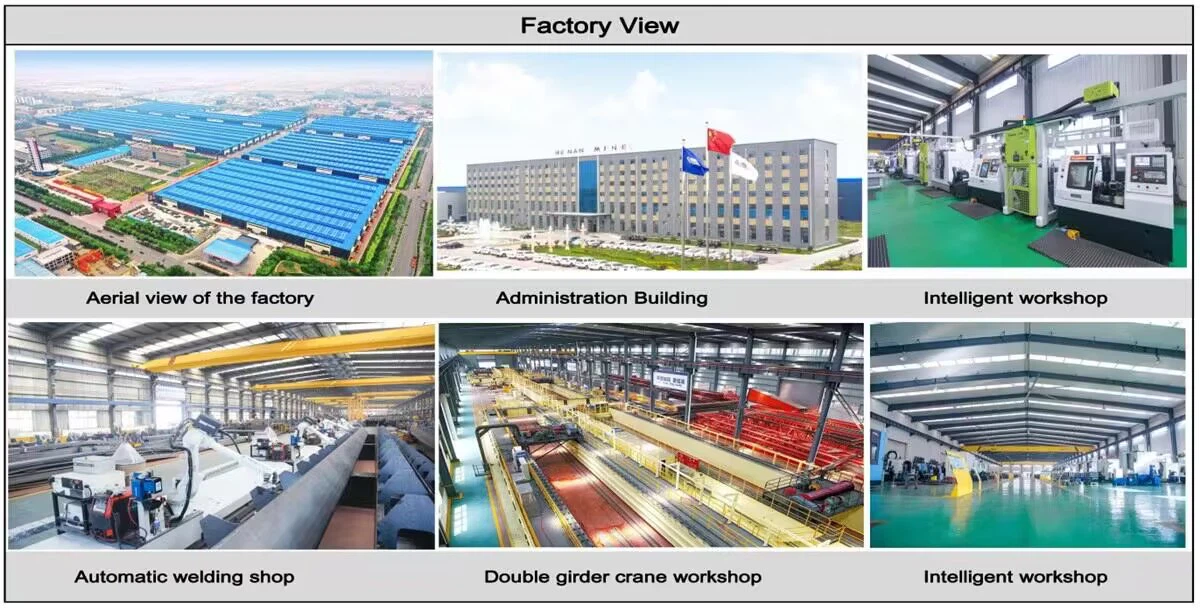
Workshop view:
The company has installed an intelligent equipment management platform, and has installed 310 sets (sets) of handling and welding robots. After the completion of the plan, there will be more than 500 sets (sets), and the equipment networking rate will reach 95%. 32 welding lines have been put into use, 50 are planned to be installed, and the automation rate of the entire product line has reached 85%.


Hot Tags: european type workshop double girder bridge crane, China european type workshop double girder bridge crane manufacturers, suppliers, factory, Double Girder Overhead Crane, Double Girder Overhead Travelling Crane
You Might Also Like


Send Inquiry