



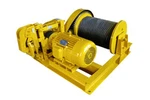




3 Ton Wire Rope Hoist
Product Overview
A 3-ton wire rope hoist is a lifting device designed to handle heavy loads up to 3 tons (or 6,000 pounds). It uses a wire rope to lift, lower, and move loads in industrial, construction, and warehouse settings. This type of hoist is known for its reliability, safety, and efficiency in lifting operations.
Key Features
Lifting Capacity:
Rated for 3 tons, making it suitable for heavy-duty lifting tasks in factories, warehouses, and construction sites.
Wire Rope Mechanism:
Equipped with a high-strength wire rope for smooth operation and secure load handling.
Ensures safety and durability, even in demanding lifting conditions.
Motor and Drive System:
Powered by a robust electric motor, the hoist operates smoothly with minimal maintenance.
The motor drives a reduction gear system that controls the lifting speed and power for efficient load handling.
Lift Height:
Customizable lift heights based on the application and required specifications.
Provides flexibility for different operational needs.
Control System:
Features a user-friendly control panel, often with options for pendant control or remote control for ease of operation.
Includes overload protection, ensuring that the hoist stops automatically if the weight exceeds its rated capacity.
Compact and Robust Design:
Designed to be compact for easy integration into various industrial settings without occupying excessive space.
Built with high-quality materials, ensuring a long lifespan and high durability.
Safety Features:
Equipped with anti-rollback mechanisms and limit switches for safe operation.
Overload protection and emergency stop functions enhance worker safety.
Versatility:
Can be mounted on overhead rails, gantry cranes, or directly to the ceiling, offering flexibility for different types of installation.
Suitable for various applications like lifting machinery, heavy parts, and materials in warehouses, factories, and construction zones.
Maintenance:
Low-maintenance design, but regular inspections of the rope, motor, and controls are recommended to ensure optimal performance.
Customization:
Available in different configurations such as single-speed, dual-speed, or variable-speed to suit specific needs.
Applications:
Factories: Moving heavy machinery, materials, or tools in production areas.
Warehouses: Efficient lifting and stacking of heavy goods.
Construction Sites: Lifting heavy construction materials and equipment.
Mining Operations: Handling loads in rugged, harsh environments.

Parts & Components
A 3-ton wire rope hoist typically consists of the following key components:
Hoist Motor: The motor provides the necessary power to lift and lower the load. It is usually an electric motor that drives the winch drum.
Brake System: The brake prevents the load from falling when the hoist motor stops. It is a critical safety feature to ensure the load stays secure.
Gearbox: The gearbox reduces the speed of the motor to provide higher torque and control over the lifting operation. It helps manage the lifting and lowering of the load efficiently.
Sheaves: These are pulleys used to guide the wire rope, ensuring smooth operation and proper alignment of the rope.
End Carriage: The end carriage moves the hoist along the beam or track, enabling horizontal movement of the hoist.
Power Supply System: This includes all the wiring, electrical components, and controllers necessary to power the hoist and its motor.

- Control Panel:The Control Panel of a 3-ton electric wire rope hoist is a crucial component that manages power distribution, motor control, safety functions, and operational commands.
- Brakes:Electromagnetic Disc Brakes: Most common type, automatically engages when power is off.
Fail-Safe Brake System: Ensures load remains in place if power is lost.
Secondary Mechanical Brake (Optional): Provides additional safety in case of primary brake failure. - Safety Features:
A 3-ton wire rope hoist typically comes with several safety features to ensure safe operation and minimize the risk of accidents. These safety features include:
Overload Protection: The hoist is equipped with an overload limit switch or electronic overload protection to prevent the hoist from lifting beyond its rated capacity. This helps prevent strain on the hoist and ensures that it operates within safe limits.
Emergency Stop Button: An emergency stop function allows the operator to immediately stop the hoist in case of an emergency, preventing further operation until the issue is resolved.
Limit Switches: Limit switches are installed to stop the hoist when it reaches the upper or lower limit of its travel, preventing damage to the hoist or load, as well as avoiding accidents from the load becoming stuck.
Brake System: A reliable and automatic brake system ensures that the hoist stops the load from descending if the power is lost or if the operator releases the controls. This is crucial for preventing the load from falling.
Anti-Sway Mechanism: Some hoists are designed with anti-sway features, such as load stabilization mechanisms, to prevent the load from swinging uncontrollably during lifting or lowering operations.
Safety Hooks: The hoist may be equipped with safety hooks that are designed to prevent accidental detachment of the load. Some hooks feature a safety latch to securely hold the load.
Automatic Lubrication System: The hoist might come with an automatic lubrication system to ensure all moving parts remain properly lubricated, reducing the risk of wear and tear that could lead to mechanical failure.
Load Holding Device: This feature ensures that the hoist holds the load securely, even in the event of a power failure, reducing the risk of accidents from falling loads.
Weatherproof and Dustproof Enclosures: For hoists used in harsh environments, weatherproof and dustproof enclosures may be provided to protect electrical components and ensure safe operation in challenging conditions.
Warning Indicators: Some hoists include visual or audible alarms to warn operators of an impending overload or a malfunction, giving them enough time to react before a failure occurs.
- Housing and Frame:
Housing:
The housing of a 3-ton wire rope hoist is typically a robust, steel or cast iron enclosure designed to protect the internal components, such as the motor, gear system, and electrical controls, from external elements like dust, dirt, moisture, and impact. It ensures that the hoist operates safely and efficiently.Material: Most hoist housings are made from high-strength steel or cast aluminum to ensure durability and resistance to wear and tear.
Design: The design of the housing often includes various openings for ventilation, access to maintenance points, and for the rope to pass through.
Protection: It shields the internal components from environmental hazards and ensures smooth operation by keeping debris away from the mechanism.
Frame:
The frame of the hoist supports the entire system, including the motor, drum, and rope. It is designed to bear the weight of the hoist while it operates under load.Material: The frame is generally constructed from welded steel or other high-strength alloys to handle heavy lifting tasks.
Design: The frame typically includes mounting points for attachment to a crane or a support structure, ensuring that the hoist can be safely and securely lifted and positioned during use.
Strength: The frame must be strong enough to withstand the forces generated when lifting heavy loads, ensuring both safety and performance under maximum load conditions.

Sketch

Advantages
A 3-ton wire rope hoist offers several advantages, making it an excellent choice for lifting heavy loads in various industrial and commercial settings. Here are the key benefits:
High Lifting Capacity: The 3-ton capacity makes it suitable for lifting moderately heavy loads, offering great versatility for warehouses, factories, and construction sites.
Durability: Wire rope hoists are designed to withstand heavy-duty applications. They are generally built with high-strength steel rope that can endure wear and tear, making them ideal for long-term use.
Smooth Lifting: Wire rope hoists offer smooth and controlled lifting, reducing the risk of damage to the load and ensuring a safer working environment.
Space Efficiency: These hoists typically have a compact design, allowing them to be installed in spaces with limited headroom while still providing excellent lifting capability.
Precision and Control: Wire rope hoists provide excellent control, allowing for precise positioning of loads, which is crucial for tasks that require accurate placement.
Versatility: They can be used in a wide range of environments, from construction sites to manufacturing plants, offering flexibility in application.
Safety Features: Many models come equipped with safety features like overload protection, limit switches, and automatic braking, helping to prevent accidents and damage.
Ease of Maintenance: Compared to other types of hoists, wire rope hoists are relatively easy to maintain, as the rope and components can be inspected and replaced as needed.
Cost-Effective: Given their longevity and reliability, a 3-ton wire rope hoist is a good investment, offering cost-effectiveness in terms of maintenance and durability over time.
Energy Efficiency: Some modern wire rope hoists are designed to be energy-efficient, reducing operational costs while providing the necessary lifting power.

Application
A 3-ton wire rope hoist is a lifting device designed to move heavy loads, typically up to 3 tons (6,000 lbs), using a steel wire rope. It is widely used in various industries and applications due to its efficiency, safety, and ability to handle substantial loads. Some common applications include:
1. Construction and Building Projects
Used to lift heavy materials such as steel beams, concrete blocks, and construction tools at construction sites.
Helps in lifting and positioning large building components during construction.
2. Industrial Manufacturing
In manufacturing plants, wire rope hoists are used to move large, heavy parts or assemblies along production lines.
They assist in lifting heavy machinery or components for assembly and installation.
3. Warehousing and Distribution
In warehouses, they are used to load and unload heavy goods from trucks or containers.
Helps in shifting bulk materials from one place to another within the warehouse.
4. Shipping and Dockyards
Used in port terminals for loading and unloading cargo from ships.
Can move containers, heavy equipment, and goods efficiently.
5. Mining
Employed for lifting heavy equipment, tools, and mined materials in underground or surface mines.
Assists in maintaining safety by lifting heavy items without manual labor.
6. Automotive Industry
Lifting and positioning car parts, engines, and vehicle frames during the assembly process.
Helps in lifting cars or other vehicles during maintenance or repair operations.
7. Oil and Gas Industry
Wire rope hoists are used for handling heavy equipment and tools in oil rigs or refineries.
It is also used to lift pipes, valves, and other large components.
8. Heavy Equipment Maintenance
In maintenance operations, these hoists help lift and move heavy machinery and parts for servicing and repairs.

Production Procedure
The production procedure for a 3-ton wire rope hoist typically involves several steps, each focusing on precision, safety, and quality. Here's a general overview of the production process:
1. Design and Engineering
Design Specifications: The hoist design is created based on customer requirements, including lifting capacity (3 tons), lifting height, speed, and other specific features.
Component Design: Detailed designs are made for individual components like the hoist motor, rope drum, gearbox, brake system, and frame.
2. Material Procurement
Steel and Other Materials: High-quality steel and other materials like alloy metals, bearings, electrical components, and ropes are sourced.
Quality Checks: Materials are inspected for compliance with specifications, ensuring they are suitable for the high load and safety requirements.
3. Fabrication and Machining
Frame Manufacturing: The main frame, often made of steel, is fabricated by cutting, welding, and assembling components.
Drum and Gearbox: The rope drum, which stores the wire rope, and the gearbox (used to drive the drum) are fabricated and machined to ensure they operate smoothly and efficiently under load.
4. Assembly
Motor Installation: The hoist motor is installed and connected to the gearbox.
Rope and Drum: The wire rope is wound onto the drum, ensuring proper tension and smooth operation.
Brake System: A reliable brake system is installed, typically using a mechanical or electromagnetic braking mechanism to ensure load safety.
Electrical Components: Wiring, control panels, limit switches, and other electrical components are installed to allow smooth operation and control.
5. Testing
Load Testing: The hoist is tested under a controlled environment to ensure it can safely lift and lower the rated load (3 tons).
Operational Testing: The hoist is tested for functionality, including checking the motor, brake system, limit switches, and electrical components for proper operation.
Safety Check: The hoist undergoes various safety checks, including ensuring the overload protection and emergency stop systems work correctly.
6. Quality Control
Final Inspection: A final inspection ensures that all components are assembled correctly and that the hoist meets the specified standards.
Certification: Some hoists may need to be certified by relevant authorities for safety and compliance with industry standards.
7. Packaging and Shipping
Packaging: The hoist is carefully packaged to prevent damage during transportation.
Shipping: Once packaged, the hoist is ready for delivery to customers or to be installed on-site.
8. Installation and Commissioning
On-Site Installation: The hoist is installed in the required location, often with the assistance of technicians from the manufacturer.
Final Commissioning: After installation, the hoist undergoes a final commissioning process to ensure it operates as intended in its actual working environment.

Workshop View


Hot Tags: 3 ton wire rope hoist, China 3 ton wire rope hoist manufacturers, suppliers, factory
You Might Also Like


Send Inquiry