







10 Ton European Style Single Girder Overhead Crane manufacturers

10 Ton European Style Single Girder Overhead Crane suppliers

10 Ton European Style Single Girder Overhead Crane factory
10 Ton European Style Single Girder Overhead Crane best
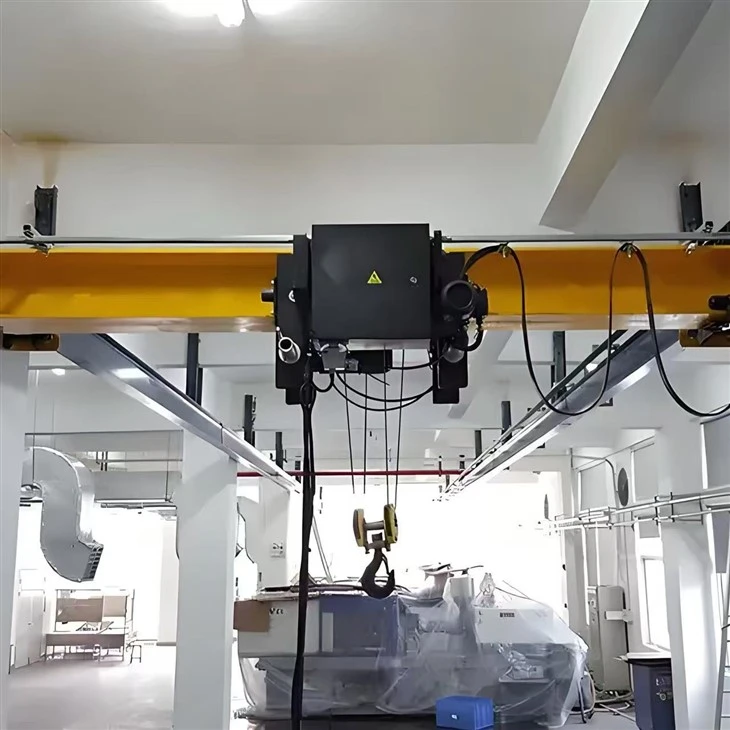
10 Ton European Style Single Girder Overhead Crane high quality
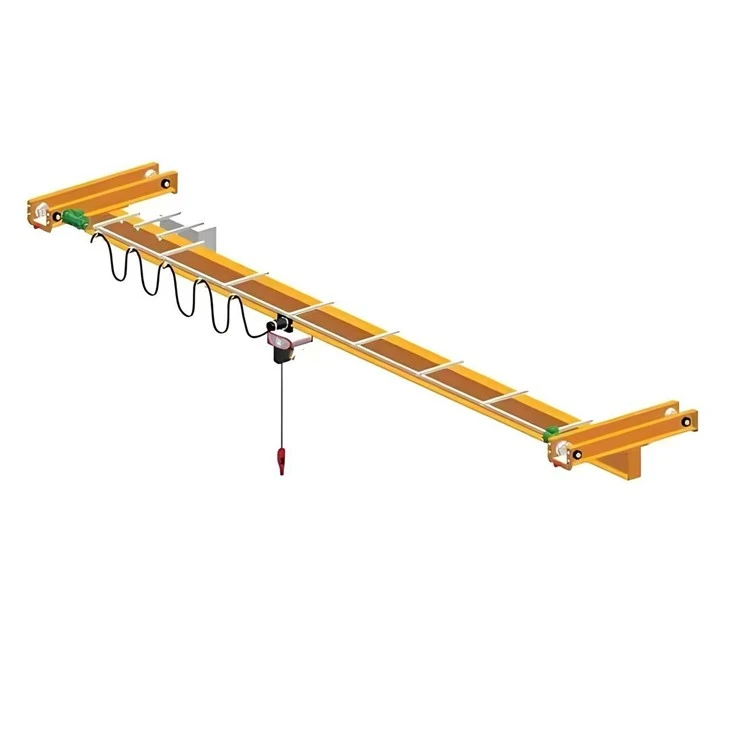
10 Ton European Style Single Girder Overhead Crane price

10 Ton European Style Single Girder Overhead Crane factory

10 Ton European Style Single Girder Overhead Crane factory

10 Ton European Style Single Girder Overhead Crane suppliers

10 Ton European Style Single Girder Overhead Crane suppliers
10 Ton European Style Single Girder Overhead Crane
Products Description
10-Ton European Specification Single Girder Overhead Crane – Premium Lifting Solution for Light & Medium Industrial Applications
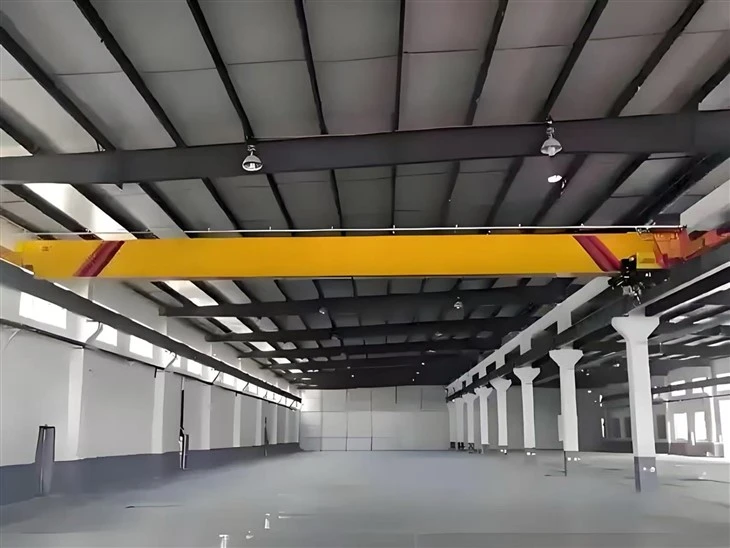
Our 10-ton European specification single girder overhead crane is a premium lifting system engineered for light and medium-duty industrial lifting tasks. It is widely deployed in modern manufacturing plants and warehouse facilities. Unlike conventional single girder overhead cranes, this model adopts European structural optimization to achieve reduced dead weight and minimized wheel pressure.
Below are the core specifications of our 10-ton European single girder overhead crane, summarized based on the R&D expertise of professional crane manufacturers.
Design & Structure
Single Girder Bridge: A one-piece optimized welded box beam spans the operating area. The streamlined construction minimizes overall weight without compromising structural rigidity.
Under-Running European Hoist: The compact European hoisting unit travels along the lower flange of the main beam. Its low-headroom design maximizes the vertical space available within your plant building.
Performance & Efficiency
Capacity & Span: Rated for a 10-ton safe working load. Customizable span options are available to suit various factory building dimensions.
Cost-Effectiveness: The lightweight construction reduces stress on building support structures and lowers costs for plant reinforcement. A complete VFD control system ensures stable movement and reduces power consumption.
Space-Saving & Low Headroom: The compact layout is ideal for factories with limited ceiling height. The refined hook travel path expands the usable vertical lifting range.
Operation & Safety
Flexible Control Options: Operators can control the crane precisely and safely via push-button pendant or wireless remote controller.
Comprehensive Safety Mechanisms: A full array of safety features - including overload protection units, emergency stop buttons, and travel limit sensors - ensures stable operation.
Superior Performance: It operates with lower noise levels and smoother hoisting motion compared to standard overhead crane models.

Pictures & Components
🏗️ Structural Components
Main Girder: As the primary load-bearing element, the main girder employs a European lightweight design philosophy featuring an optimized welded box beam structure. This delivers exceptional structural rigidity while maintaining a low overall weight.
End Carriages: These are compact European-engineered end trucks installed at both ends of the main beam. They support the entire bridge frame and are equipped with VFD long-travel driving assemblies.
European Wire Rope Hoist: This is the core hoisting unit, which travels along the lower flange of the main beam. Its low-headroom configuration maximizes the available lifting stroke.
Runway System: This consists of travelling rails and support brackets that guide crane movement. The reduced wheel pressure alleviates the load burden on factory building structures.

⚙️ Lifting Mechanism
Hoist Unit: The core component for lifting and lowering loads. A 16-ton crane typically uses an electric wire rope hoist (e.g., CD1/MD1 type) .
Hook Block: The forged steel hook assembly that attaches to the load .
Trolley Frame: The structure that carries the hoist and enables its lateral movement along the main girder .
 |
 |
Electric Wire Rope Hoist
Provides lifting and lowering functions.
Generally includes a lifting motor, gearbox, rope drum, wire rope, hook block, brake, and limit switch.
 |
 |
Motion Systems
Long Travel Drive: Motors and gearboxes on the end carriages that move the entire crane along the runway .
Trolley Drive: The motor and mechanism that moves the hoist and trolley along the main girder .
Crane Traveling Mechanism
Consists of traveling motors, gearboxes, drive wheels, shafts, and related components.
Moves the entire crane along the workshop runway.

⚡ Electrical & Control Systems
Electrical System: Includes the power supply (conductor bars or festoon system), control panel with contactors, and wiring .
Control Interface: The operator's console, which can be a pendant control, a cabin, or a radio remote control .
Safety Devices: Limit switches, overload protection, emergency stop buttons, and buffers .

Crane Traveling Mechanism
Consists of traveling motors, gearboxes, drive wheels, shafts, and related components.
Moves the entire crane along the workshop runway.

🔧 Optional Components (Customizable)
Below-the-Hook Devices: Such as electromagnets, vacuum lifters, or spreader beams for specialized loads .
Advanced Controls: Variable Frequency Drives (VFDs) for smooth operation and anti-sway systems .
Hook Block
Used to connect the crane with lifting slings or other lifting accessories.
Designed according to the rated lifting capacity.
.
Electrical Control System
Includes the control panel, contactors, relays, switches, cables, and other electrical components.
Controls lifting, trolley travel, and crane travel operations.
Control Device
Can be equipped with a pendant push-button control, wireless radio remote control, or operator cabin, depending on the project requirements.


Sketch

Safety Protection Devices
Include overload limiter, upper/lower lifting limit switches, travel limit switches, emergency stop, buffers, and other safety devices.
Runway Wheels and Rails
The crane traveling wheels run on the workshop runway rails.
The runway system provides the supporting path for longitudinal crane movement.
Main technical

Advantages
💰 Cost-Effective Lifting Solution
These European style cranes are an economical upgrade choice for several reasons. Adopting European lightweight optimized structure, they have smaller wheel load, lowering requirements for factory building reinforcement and saving construction investment. The compact design also cuts freight, installation and long-term maintenance costs compared with traditional single girder overhead cranes.
⚠️ Space-Saving And Flexible Design
A primary advantage is the ultra-low headroom design, perfectly fitting workshops with low ceilings or limited vertical space. It maximizes available lifting height and achieves the highest possible hook position. Various span and connection options allow the crane to be customized to suit different factory layouts.
⚙️ High Performance And Efficiency
The 10-ton European single girder crane features full VFD driving system for smooth operation. Lightweight construction reduces energy consumption. Variable frequency drives enable low-sway travel motions for precise load positioning, greatly improving working efficiency. It delivers low noise performance and long service life with less maintenance.
🛡️ Safety And Customization
These cranes are manufactured to meet rigorous international design standards such as FEM and ISO, ensuring high levels of safety and reliability. They can be controlled via pendant or radio remote, equipped with complete safety devices including overload limiter, emergency stop and travel limit switches. Customized spans, lifting heights and working class are available upon request.
Application
🏭 By Industry
| Industry | Specific Applications |
|---|---|
| Steel & Metal Processing | Lifting and moving steel coils, plates, pipes, and structural beams. Feeding raw materials into furnaces or rolling mills. Handling finished products in stockyards. |
| Machinery Manufacturing | Positioning heavy components (e.g., engine blocks, gearboxes, press frames) on assembly lines. Assisting with machine tool setup and maintenance. Loading/unloading heavy workpieces onto CNC machines or lathes. |
| Automotive Industry | Moving car body shells, stamping dies, and powertrain components. Servicing heavy equipment in maintenance bays. Assisting with prototype assembly. |
| Warehousing & Logistics | Loading and unloading heavy cargo from trucks or railcars. Transferring goods between storage racks and processing areas. Handling oversized or bulky items that forklifts cannot easily manage. |
| Construction Materials | Moving precast concrete elements, rebar bundles, and timber. Loading finished building materials onto delivery vehicles. |
| Chemical & Petrochemical | Lifting and positioning pipes, valves, and reactor components during plant maintenance. Handling raw material drums or bags. |
| Power Generation | Maintaining turbines, generators, and transformers. Lifting heavy spare parts in power plants. |
| Paper & Pulp Industry | Handling large paper rolls for loading, unloading, and processing in converting lines. |
| Shipbuilding & Repair | Moving smaller ship components, engine parts, and equipment within fabrication bays or repair workshops. |
| Aerospace | Assisting with maintenance and assembly of aircraft parts, such as landing gear or engine components, in hangars. |
| Foundries & Forging Shops | Transporting hot metal, molds, and castings. Positioning workpieces under forging hammers or presses. |
⚙️ By Specific Task
| Task Type | Specific Use Cases |
|---|---|
| Production Feeding | Supplying raw materials (sheets, bars, billets) to saws, presses, shears, or welding stations. |
| Assembly Support | Lifting and holding heavy subassemblies in place for bolting, welding, or riveting. |
| Die & Mold Change | Quickly swapping heavy dies, molds, or tooling in stamping presses, injection molding machines, or die-casting equipment. |
| Maintenance & Repair | Removing and replacing heavy motors, pumps, gearboxes, and other machinery parts. |
| Loading/Unloading | Moving finished goods, pallets, or containers onto and off of trucks, flatbeds, or railcars. |
| Workstation Support | Serving as a dedicated lifting aid at individual workstations where operators need frequent heavy lifts. |
| Foundry Operations | Pouring molten metal and handling castings in foundries. |
| Custom Handling | Using specialized below-the-hook devices (electromagnets, vacuum lifters, spreader beams, C-hooks) for unique loads like sheets, pipes, or drums. |
Crane Production Procedure
🏗️ Stage 1: Steel Preparation and Pretreatment
Incoming Material Inspection: Raw materials, primarily steel plates and welding consumables, are inspected to verify they meet chemical composition and mechanical strength standards according to national specifications .
Surface Pretreatment: Steel plates undergo a cleaning process. Shot blasting is used to remove rust and mill scale, achieving a surface cleanliness grade of Sa2.5. This treatment prepares the surface for primer painting .
Primer Painting: Immediately after shot blasting, a protective primer coat is applied to prevent rust formation .
🔩 Stage 2: Fabrication of Metal Structure
This stage focuses on creating the crane's main structural components (main girder, end carriages).
Marking and Cutting: Shapes and processing lines are marked on the steel plates. Plates are then cut to size using high-precision CNC plasma cutting machines .
Plate Assembly and Welding: The cut plates are assembled into components like the main girder and end carriages.
Robotic Welding: Advanced manufacturers use intelligent welding robots and automatic double-sided welding technology for the main girder .
Submerged Arc Welding: Automatic submerged-arc welding is often used for longitudinal and fillet welds to ensure high strength and consistency .
Specialized Welding Processes: For specific components like the hoist drum, processes like "pre-bending by a press machine" and "edge rolling by a three-roller plate roll" are used before welding .
Weld Inspection: Critical butt welds are inspected using radiographic and ultrasonic testing to detect any internal flaws . Some manufacturers also mandate 100% ultrasonic testing on all key welds .
Heat Treatment (Stress Relieving): Large welded structures like the trolley frame and drum are placed in a natural gas annealing furnace to relieve internal stresses. This treatment ensures machining accuracy and dimensional stability .
Leveling and Secondary Processing: After welding and stress-relieving, plates are leveled and secondary cutting is performed to achieve final dimensions .
⚙️ Stage 3: Machining and Assembly
This stage involves creating and integrating all mechanical and electrical parts.
Machining of Parts: Components like wheels, axles, and shafts are machined using processes like milling, planning, grinding, and turning. Wheels and axles are also heat-treated for wear resistance .
Component Assembly (Sub-Assembly): Individual components such as the hoist, trolley, and travel mechanisms are assembled.
Wheel Assembly: Wheel assemblies are precisely positioned and welded or bolted to the trolley sides, often using specialized fixtures to ensure alignment .
Hoist Assembly: The electric hoist, which includes the motor, gearbox, drum, and rope, is assembled and integrated onto the trolley frame .
Electrical Assembly: The control panels are assembled and wired. To make maintenance easier, all cables are often coded with numbers .
🔧 Stage 4: Pre-Delivery and Quality Control
General Assembly (Trial Erection): The main girder, end carriages, trolley, and electrical systems are assembled at the factory. This crucial step ensures all parts fit together correctly and allows for a comprehensive function test .
General Inspection: After assembly, the entire crane undergoes a full quality inspection according to relevant standards and technical requirements. This includes testing of all safety devices, such as overload protection and limit switches. A certificate of conformance is issued for qualified cranes .
Final Painting: The crane receives its final coat of paint. An epoxy zinc-rich painting system (often 120μm thick) is common for durability and corrosion resistance . The final paint is also inspected for proper thickness and finish .
Disassembly and Delivery: For transportation, the crane is partially disassembled. Key components are marked with positioning blocks to facilitate accurate re-assembly at the customer's site .
Site Erection and Acceptance: The final production step involves erecting the crane at the customer's facility and performing an on-site acceptance test to confirm safe and proper operation .

Workshop view:
The company has installed an intelligent equipment management platform, and has installed 310 sets (sets) of handling and welding robots. After the completion of the plan, there will be more than 500 sets (sets), and the equipment networking rate will reach 95%. 32 welding lines have been put into use, 50 are planned to be installed, and the automation rate of the entire product line has reached 85%.


Hot Tags: 10 ton european style single girder overhead crane, China 10 ton european style single girder overhead crane manufacturers, suppliers, factory
You Might Also Like


Send Inquiry