


Introduction
An overhead crane is a heavy-duty machine that is used to lift and move heavy loads with ease. This type of crane is often used in industrial settings, including warehouses, factories, and construction sites. While an overhead crane is sometimes called by other names, the fundamental design and function of the machine remains the same. In this article, we will explore the different names that are used to refer to an overhead crane, as well as the various types of cranes and their applications.
What is an overhead crane?
An overhead crane is a type of crane that is mounted on a beam or runway that is located above the workspace. The crane typically consists of a hoist, which is used to lift and lower the load, and a trolley, which is used to move the load horizontally along the beam. The crane is operated by a crane operator, who uses a remote control or pendant to maneuver the crane and control the load.

The different names for an overhead crane
While an overhead crane is the most commonly used term to describe this type of machine, it is called by other names depending on the region or industry. Some of the other names that are used to refer to an overhead crane include:
- Bridge crane: This is a common term used in the United States to describe an overhead crane that is mounted on a bridge-like structure. The bridge is supported by two parallel runways that are located at a high elevation.
- Gantry crane: A gantry crane is similar to a bridge crane but has two legs instead of a bridge. The legs are usually mounted on wheels or a track, allowing the crane to move along the ground. Gantry cranes are often used in shipping yards and construction sites, where they can be used to lift and move heavy containers and building materials.
- Overhead traveling crane: This is a common name used in Europe to describe an overhead crane that is used to move loads horizontally. The crane is usually mounted on a single beam and is supported by two or more runways.
- Suspended crane: A suspended crane is a type of overhead crane that is used to lift and move loads in a vertical direction. The crane is usually suspended from a ceiling or roof structure and has a hoist that can be used to lift and lower the load.
Types of overhead cranes
There are several types of overhead cranes, each designed for specific applications. Some of the most common types of overhead cranes include:
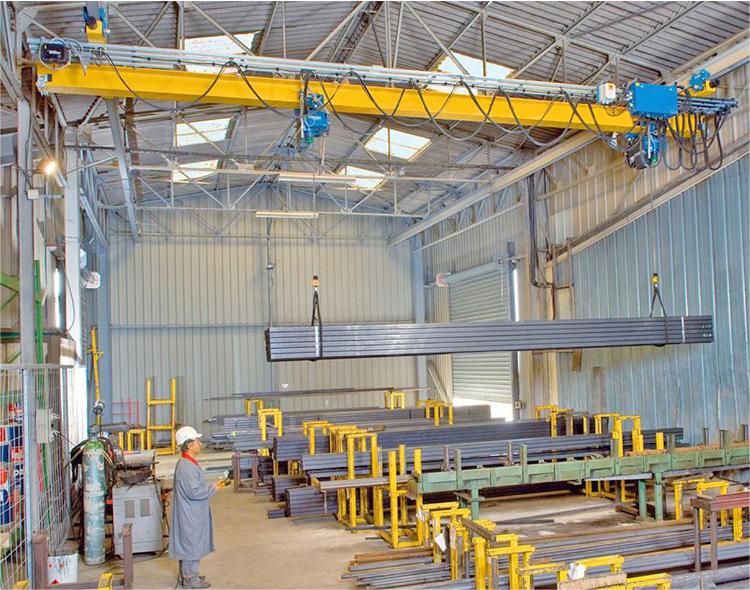
- Single girder crane: This type of crane has a single beam that supports the hoist and trolley. Single girder cranes are ideal for light or moderate loads and are commonly used in machining shops and assembly lines.
- Double girder crane: A double girder crane has two beams that support the hoist and trolley, making it ideal for heavy-duty loads. These cranes are commonly used in steel mills, foundries, and other heavy industries.
- Jib crane: A jib crane is a type of overhead crane that has a horizontal arm that extends from a mast or column. The arm can rotate up to 360 degrees, allowing the crane to reach into tight spaces and lift loads from a distance.
- Monorail crane: A monorail crane consists of a single beam that is supported by a track. The crane is equipped with a hoist and trolley, allowing it to lift and move loads along the track. Monorail cranes are commonly used in production lines and warehouses.
- Underhung crane: An underhung crane is a type of overhead crane that is suspended from a building''s roof structure. The crane is equipped with a hoist and trolley, allowing it to move loads horizontally along the building''s ceiling.

Applications of overhead cranes
Overhead cranes are used in a wide variety of applications, ranging from small manufacturing plants to large construction sites and shipping yards. Some of the most common applications of overhead cranes include:
- Manufacturing: Overhead cranes are often used in manufacturing and machining shops to move heavy loads and machine parts. They are particularly useful in industries that require precise lifting and moving of heavy equipment.
- Construction: Overhead cranes are commonly used in construction sites to lift and move heavy building materials, such as steel beams and precast concrete panels. They are also used to install equipment and machinery in high-rise buildings.
- Shipping and logistics: Overhead cranes are used in shipping yards and ports to move and load cargo containers onto ships and trucks. They are also used in warehouses and distribution centers to move and store goods.
- Mining and excavation: Overhead cranes are used in mining and excavation operations to lift and move heavy equipment and excavated materials. They are also used to install and maintain equipment in underground mines.
Conclusion
An overhead crane is a versatile and essential machine used in a wide variety of industries and applications. While it may be called by different names, the fundamental design and function of the crane remain the same. Understanding the different types of overhead cranes and their applications can help companies choose the right crane for their specific needs and maximize their productivity and efficiency.


