


What Is a Magnetic Crane?
Magnetic crane, also often referred to as a magnetic lifting crane or electromagnetic crane, is widely used in industries such as steel manufacturing, scrap recycling, and port logistics. It not only improves operational efficiency but also reduces the risks associated with manual handling, becoming an indispensable piece of equipment in the field of metal material handling. This article will provide a detailed explanation of its structure, working principle, types, maintenance, and safe use, hoping to assist you in selecting the right magnetic crane.


Magnetic Crane Parts
A magnetic crane typically consists of several parts that work together to complete material handling tasks.

Crane Body:
The main structure of the equipment, responsible for lifting, moving, and positioning loads. Many magnetic overhead cranes utilize a bridge structure to achieve efficient material transport.
Magnetic Lifting Device:
This is the core component of a lifting magnet crane, used to generate magnetic force to adhere to metal objects. Common types include electromagnets and permanent magnetic lifting devices.
Control System:
Used to operate and manage the crane's operation. It controls the crane's lifting, traversing, and the activation/deactivation of the magnetic device, ensuring safe and stable operation.
Power Supply System:
Provides electrical power to the electromagnetic lifting device and the control system, ensuring the electromagnetic crane can function properly.
Working Principle of a Magnetic Crane
Magnetic cranes primarily work by attracting ferromagnetic materials, such as iron, steel, and some iron-containing alloys. These materials have a specific internal magnetic structure that is easily magnetized under the influence of a magnetic field, thus generating a strong attractive force. For materials like aluminum, copper, some types of stainless steel, or plastics, the internal structure is not easily magnetized, and the effect of the magnetic field is very weak. A magnetic lifting crane cannot effectively pick up these materials.
Working Steps:
The crane moves the magnetic lifting device of the lifting magnet crane over the steel object.
The electromagnet or magnetic device is activated, generating a strong magnetic field.
The magnetic field causes the object to be firmly attached to the surface of the lifting device.
The crane lifts the attached object and moves it to the target location.
The magnetic device is deactivated, the magnetic field weakens or disappears, and the object is released.
Main Types of Magnetic Cranes
Mine Crane offers a wide range of magnetic cranes designed for different lifting needs, with various types available to handle steel plates, billets, scrap metal, and other ferrous materials in industrial applications.
Electromagnetic Crane
An electromagnetic crane generates a magnetic field through an electromagnet to lift metal objects. When current passes through the coil, it creates a magnetic field around the iron core, forming a strong attractive force that picks up ferromagnetic materials like steel for handling. When the power is turned off, the magnetic field disappears, and the load is automatically released.

| Category | Details |
|---|---|
| Advantages | 1. Strong magnetic force, capable of handling heavy steel materials. 2. Convenient control, can control lifting and releasing via power supply. 3. Suitable for continuous operations, improving production efficiency. 4. Applicable for handling loose metal materials like scrap steel. |
| Disadvantages | 1. Relies on electrical power; magnetic force is lost during a power outage. 2. Poses a safety risk; requires backup power or safety devices. 3. High energy consumption, consumes significant electricity during prolonged use. |
| Application Scenarios | 1. Steel production enterprises. 2. Scrap metal recycling and processing. 3. Metal loading/unloading at ports. 4. Metallurgical and machinery manufacturing industries. These industries often use large magnetic overhead cranes for steel handling. |
Permanent Magnet Crane
A permanent magnet crane uses permanent magnets to generate a magnetic field for lifting metal materials, requiring no external power source. The magnetic circuit can be altered mechanically (e.g., via a handle or control structure) to turn the magnetic force on or off.

| Category | Details |
|---|---|
| Advantages | 1. No power supply needed, energy-saving and environmentally friendly. 2. High safety; power failure does not cause load to drop. 3. Simple structure, lower maintenance costs. 4. Stable and reliable. |
| Disadvantages | 1. Relatively lower lifting force, typically suitable for small to medium-sized loads. 2. Limited adjustability of magnetic force. 3. Not suitable for handling very heavy or large steel sections. |
| Application Scenarios | 1. Machining workshops. 2. Mold manufacturing factories. 3. Handling steel plates or small steel sections. 4. Small to medium-sized manufacturing enterprises. These scenarios often use smaller lifting magnet cranes. |
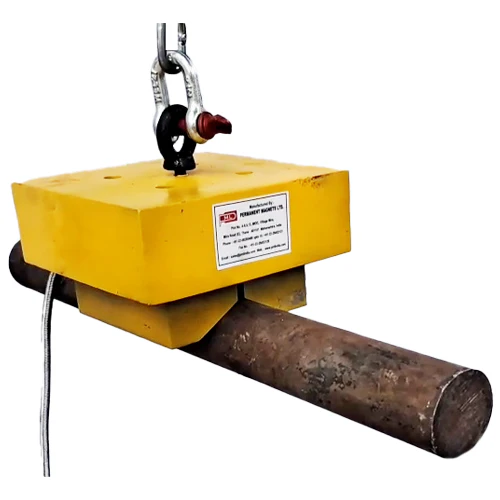
Electro-Permanent Magnetic Crane (Advanced)
An electro-permanent magnet crane combines the characteristics of electromagnetic and permanent magnet technologies. Internally, it consists of permanent magnet materials and electromagnetic coils. A short pulse of electricity changes the magnetization state of the magnets, controlling the magnetic force on or off. To activate the lift, a current pulse alters the magnetic circuit, enhancing the field to pick up the metal. To release the load, another short pulse reverses the field, weakening or canceling the magnetic force. Unlike traditional electromagnetic cranes, it requires no continuous power supply to maintain the holding force.
| Category | Details |
|---|---|
| Advantages | 1. Excellent energy efficiency: Uses power only briefly during the on/off switching, no continuous power needed. 2. High safety: Even during a sudden power outage, the magnetic force is maintained, preventing the load from dropping. 3. Stable lifting force: Provides strong and consistent magnetic force, suitable for lifting heavier steel materials. 4. High automation potential: Easily integrated with automated production lines or intelligent control systems. |
| Disadvantages | 1. Higher equipment cost: Complex structure leads to higher manufacturing and initial investment costs. 2. High technical requirements: Installation and maintenance require specialized technicians. 3. More complex repairs: Due to the relatively complex system, repair costs can be higher if issues arise. |
| Application Scenarios | 1. Steel production enterprises. 2. Handling large steel plates and steel structures. 3. Automated warehousing and logistics systems. 4. Machinery manufacturing and metal processing industries. Suitable for industrial environments with high demands for safety, efficiency, and energy conservation. |
The electro-permanent magnetic crane combines the advantages of both electromagnetic and permanent magnet technologies, offering superior performance in safety, energy efficiency, and stability. More and more companies are adopting the crane with magnet as a high-end magnetic lifting crane solution.
Advantages of Magnetic Lifting
Reduced Labor Requirements: Requires fewer personnel for handling repetitive tasks, improving overall productivity.
Fast Operation: Instantly attracts and lifts steel plates, billets, coils, or scrap metal without the need for slings or hooks.
Improved Safety: Reduces direct worker contact with heavy loads, minimizing the risk of injuries.
High Efficiency: Speeds up loading and unloading processes, especially in steel mills and scrap yards.
Precise Load Control: Electromagnets allow reliable holding and easy release of ferromagnetic materials.
Magnetic Crane vs Hook Crane
Both magnetic cranes and hook cranes are widely used lifting systems in industrial material handling, but there are significant differences in their intended purposes and applicable scenarios. Traditional hook cranes rely on mechanical devices such as hooks, chains, or slings to secure loads before lifting; they are highly versatile and can handle a wide range of materials, including machinery, containers, and irregularly shaped items.
In contrast, magnetic cranes use electromagnetic lifting magnets to directly adhere to ferromagnetic materials, eliminating the need for additional rigging and significantly improving the handling efficiency of magnetic materials such as steel plates, scrap steel, and steel billets. Hook cranes offer greater flexibility in mixed-load operations, while magnetic cranes are better suited for large-scale bulk material handling scenarios that require lower speeds, automation, and manpower.
| Feature | Magnetic Crane | Hook Crane |
|---|---|---|
| Lifting Method | Electromagnetic attraction | Mechanical hook, chain, or sling |
| Material Suitability | Ferrous materials (steel plates, scrap, billets) | Versatile, handles ferrous & non-ferrous materials, machinery, containers |
| Operation Speed | Faster, instant pick-up & release | Slower due to rigging attachment |
| Labor Requirements | Lower, automated or semi-automated | Higher, manual rigging often needed |
| Best Applications | Steel mills, scrap yards, bulk material handling | General industrial lifting, mixed-load environments |
| Flexibility | Limited to magnetic materials | High, handles a wide variety of shapes and materials |
How to Maintain?
To ensure long-term stable and safe operation, extend the equipment's service life, and reduce failures, daily maintenance and regular inspections are crucial.
1. Regularly inspect the magnetic lifting device.
2. Check the electrical system.
3. Inspect the crane's mechanical structure.
4. Keep the equipment clean.
5. Regularly lubricate key components.
6. Test the magnetic performance.
7. Establish a maintenance schedule.
Good maintenance can significantly enhance the safety and service life of a magnetic lifting crane.
Safety Precautions
Since the equipment relies on magnetic force to hold objects, strict adherence to safety regulations during use is essential to prevent accidents.
1. Inspect equipment status before use.
2. Confirm the type and weight of the material to be handled.
3. Protect against sudden power failures (especially for electromagnetic cranes).
4. Maintain a safe lifting area.
5. Operate the equipment smoothly.
6. Perform regular maintenance and servicing.
7. Ensure operators are properly trained.
Through standardized operation, the safe operation of a magnetic overhead crane can be effectively guaranteed.
Conclusion
In summary, a magnetic crane is an efficient and reliable solution for handling ferrous materials in industries such as steel mills, scrap yards, and metal processing plants. By understanding the types of magnetic cranes, their working principles, and key applications, businesses can choose the right equipment to improve productivity, safety, and operational efficiency. For customized solutions and expert guidance, contact the Mine Crane team today to find the ideal magnetic crane for your industrial needs.
FAQ
1. What is the difference between an electromagnetic crane and a permanent magnet crane?
An electromagnetic crane generates a magnetic field using electric current to lift metals; the magnetic force is controlled by the power supply, but it disappears during a power outage. A permanent magnet crane uses permanent magnets to create a magnetic field, requires no continuous power supply, offers higher safety (load won't drop during power failure), but its lifting capacity is generally slightly lower than that of an electromagnetic crane.
2. What are the main advantages of a magnetic crane?
Magnetic cranes offer several advantages: high handling efficiency, simple operation, ability to handle loose scrap metal, reduced risk from manual handling, and suitability for heavy steel transport. This makes them highly valuable in industrial production.
3. How to choose the right magnetic crane?
When selecting a magnetic crane, consider the following factors: the type of material to be handled, the weight and dimensions of the loads, the working environment, automation requirements, and equipment safety performance. Choose the appropriate type (e.g., electromagnetic, permanent magnet, or electro-permanent magnet) based on your specific application scenario.
4. What is the typical service life of a magnetic crane?
With correct usage and regular maintenance, a magnetic crane can typically last 10 to 20 years or even longer. The service life mainly depends on the frequency of use, the working environment, and the maintenance practices.
5. What is the maximum lifting capacity of a magnetic crane?
The lifting capacity depends on the crane type, the specifications of the magnetic lifting device, and the shape/thickness of the material being lifted. Generally, small magnetic cranes can lift a few hundred kilograms, while large industrial magnetic cranes can lift several tons or even tens of tons of steel.
6. Can magnetic cranes be used in automated production lines?
Yes. Modern magnetic cranes can be integrated with automation control systems, PLCs, and intelligent logistics systems to achieve automated handling and remote operation. In steel manufacturing, smart warehousing, and automated production lines, magnetic cranes have become essential automation equipment.
7. Does the magnetic force of the lifting device weaken over time?
With normal use and proper maintenance, the performance of a magnetic lifting device can generally be maintained for a long time. For electromagnetic lifting devices, the electrical system needs regular checks. For permanent magnetic lifting devices, the magnetic circuit structure and surface condition should be inspected periodically to ensure stable magnetic force.
8. What are the advantages of a magnetic crane compared to a traditional hook crane?
Compared to traditional hook cranes, magnetic cranes offer significantly higher handling efficiency. They can quickly attach to metal materials without the need for manual hooking or slinging, reducing operation time and labor costs. They also have a distinct advantage when handling loose or scrap metal materials.


