


Underground Gantry Crane for Sale: Types, TBM Integration & Buyer Selection Guide
A confined space gantry crane for sale is more than a standard lifting product-it is a project-specific tunnel lifting gantry system designed for TBM-driven excavation, segment installation, and spoil handling.
For buyers, the key decision is not just price or capacity but whether the underground lifting system crane can integrate with tunnel geometry, TBM workflow, and confined space constraints.
Key Buyer Takeaways
Underground gantry cranes are engineered as tunnel construction gantry crane systems, not general-purpose equipment
Correct selection directly impacts TBM cycle efficiency and tunnel progress speed
Buyers must evaluate lifting capacity, tunnel clearance, and system integration, not only specifications
Common purchasing mistake: underestimating TBM synchronization requirements
Best results come from early coordination between EPC, procurement, and crane manufacturer
Quick FAQs: Tunnel Gantry Crane Buyer Guide
+Which tunnel gantry crane configuration is suitable for my TBM tunnel project?
+What capacity underground construction gantry crane is required for segment lifting or spoil removal?
+How does a tunnel lifting gantry system integrate with TBM backup equipment?
+Which design (single girder, double girder, rail-mounted) is most cost-effective?
+How to avoid overdesign or undercapacity when purchasing a confined space gantry crane?
Underground Gantry Crane for Sale: What Buyers Are Actually Purchasing
When a buyer looks for an underground gantry crane for sale, they are rarely just thinking about the crane itself. In reality, they are purchasing a tunnel construction lifting system-a piece of equipment that directly affects how smooth the entire TBM workflow runs. From segment installation to muck removal, this crane becomes an integral part of the underground operation.
In practical terms, this is not just a machine you install and forget. Its design, configuration, and integration can impact tunnel logistics, safety, and overall project timeline.
Typical buyer search intent includes:
"underground gantry crane for metro tunnel project" – buyers want a crane that fits tight subway tunnels and matches TBM segment sizes.
"TBM tunnel segment lifting crane system" – looking for a system capable of moving precast segments from storage areas to the tunnel face efficiently.
"confined space gantry crane for sale" – specifically searching for cranes that operate safely in restricted tunnel cross-sections.
"rail-mounted tunnel lifting crane solution" – buyers interested in a crane that moves along rails for precise and repeated lifting operations.
+Buyer Reality and Practical Considerations
What Is an Underground Construction Gantry Crane
An underground construction gantry crane, also commonly searched as a tunnel gantry crane, underground gantry crane, or confined space gantry crane for sale, is a rail-mounted or semi-gantry lifting system specifically designed for tunnel construction environments. It is built for working conditions where space is limited, visibility is restricted, and continuous material flow is required.
In practical engineering terms, this equipment is part of a tunnel lifting gantry system used inside TBM-driven projects. It is not a general workshop crane. The structure, travel system, and hoisting arrangement are all adapted to underground geometry and TBM workflow constraints.
+How It Is Used in Industrial Projects
+What Makes It Different from Standard Gantry Cranes
+Where It Is Typically Used
+Practical Buyer Interpretation
Why Underground Gantry Cranes Are Purchased (Not Just Specified)
When buyers look for an underground gantry crane for sale, they are not simply buying a lifting device. In industrial projects, these cranes become part of the tunnel construction logistics system, supporting multiple operational functions. Choosing the right system impacts efficiency, safety, and workflow continuity in TBM-driven tunnels, metro projects, hydropower, and mining applications.
In practical terms, buyers invest in this type of crane for three main purposes:
+TBM Segment Handling
+Spoil & Muck Handling
+Underground Equipment Handling
Practical Buyer Notes
When evaluating a confined space gantry crane for sale, buyers should check:
Whether the crane handles peak segment weight and spoil load simultaneously
Integration with TBM logistics, rail, or conveyor systems
Clearance and operation in tight tunnel cross-sections
Environmental features like dust protection, low-headroom design, and humidity resistance
In industrial tunnel projects, the right underground gantry crane system keeps excavation, segment installation, and material handling running smoothly. It is not just a specification-it is a practical tool for maintaining construction speed, worker safety, and project timelines.
Underground Gantry Crane Types for Sale (Buyer-Oriented Classification)
When buyers search for a tunnel gantry crane for sale, they are usually evaluating which type best fits their tunnel geometry, lifting requirements, and TBM workflow. Each crane type has practical applications and limitations in underground construction, and choosing the right one early can prevent operational bottlenecks.
Single Girder Confined Space Gantry Crane
Single girder designs are ideal for light-duty underground lifting systems, offering a practical and cost-effective solution for smaller tunnels.
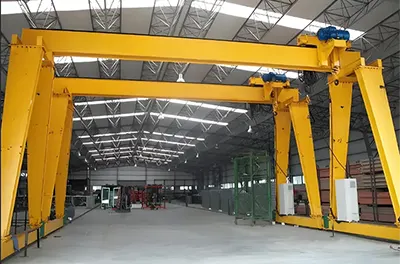 Economcial Low headroom gantry crane with hoist trolley on the top of the main girder
Best for small to medium tunnel projects where loads are moderate
Suitable for utility tunnels and auxiliary TBM support tasks
Compact design allows operation in restricted cross-sections
Lower installation and maintenance costs compared to double girder systems
Buyers often choose this type when peak loads do not exceed 10–16 tons, and high-frequency operation is not critical.
Double Girder TBM Tunnel Gantry Crane System
Double girder cranes are built for heavy-duty tunnel applications, handling larger segments and heavier equipment.
 double girder low headroom gantry crane with rubber tyred wheel travelling
Designed for segment lifting in metro, hydropower, and mining tunnels
Provides high stability and safe handling for loads between 16–50 tons
Suitable for projects where continuous TBM workflow requires reliable, repeated lifting
Often integrated with rail-mounted or semi-gantry travel for long tunnels
This type is the go-to option for buyers prioritizing strength, safety, and high lifting capacity in industrial tunnel projects.
Mobile Low Headroom Gantry Cranes
A mobile low headroom gantry crane is designed for flexibility. Instead of fixed rails, it uses a self-propelled or wheeled structure, allowing it to move as the tunnel work progresses.
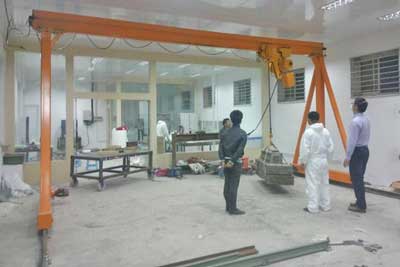 Low headroom portable gantry crane for light duty material handling
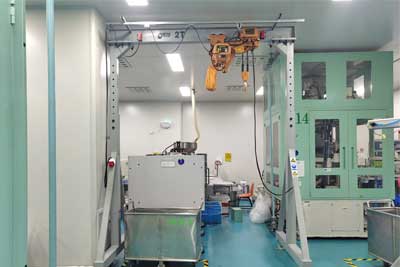 Aluminum gantry crane with low headroom chain hoist with capacity up to 10 ton for light loads and light duty material handling
This is useful in construction environments where the working face keeps shifting, and the crane must follow the excavation progress.
No fixed rail installation required
Can be relocated along tunnel sections as needed
Suitable for temporary lifting tasks and maintenance work
Works well in variable underground construction layouts
Specialized Adaptations for Underground Conditions
Underground environments are harsh. Dust, moisture, limited ventilation, and sometimes gas exposure all affect crane performance. Because of this, low headroom gantry cranes are often customized with specific adaptations depending on the project.
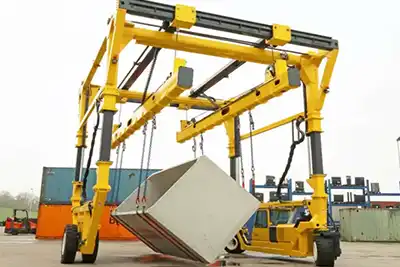 rubber tyred straddle carrier for heavy loads handling
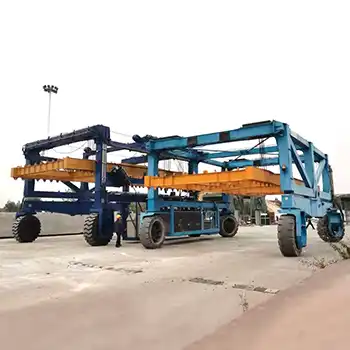 straddle carrier with low headroom design for confined space
These adaptations are not optional in many cases-they are required for safe underground crane operation.
Anti-corrosion coating for humid tunnel and mining environments
Dust-proof sealing for high particulate conditions in excavation zones
Explosion-proof hoist systems for coal mining or gas-sensitive tunnels
Compact hoist design to maximize lifting height under strict headroom limits
Typical Capacities Buyers Should Expect for Underground Gantry Cranes
When purchasing an underground gantry crane for sale, understanding recommended capacities for different tunnel applications is critical. Capacity is not just about the heaviest load-the crane must also operate reliably during continuous TBM cycles, handle spoil, and support auxiliary equipment.
Below is a practical guide to what buyers typically consider when matching tunnel gantry crane systems to project needs:
Capacity Guide by Tunnel Application
| Tunnel Application | Recommended Capacity | Buyer Use Case |
|---|---|---|
| Utility tunnels | 5–10 ton | Light materials, tools, small auxiliary equipment |
| Metro TBM tunnels | 10–16 ton | Precast segment installation, TBM workflow support |
| Standard TBM excavation | 16–32 ton | Segment handling plus spoil and muck transportation |
| Hydropower tunnels | 32–50 ton | Heavy equipment, concrete forms, and large structures |
Practical Buyer Considerations
When evaluating tunnel gantry crane capacities, buyers should focus on real-world operational requirements:
Peak vs continuous load: The crane must handle the heaviest segments and spoil plus additional safety margins
Cycle speed compatibility: For TBM tunnels, lifting speed must match the TBM advance rate to avoid bottlenecks
Environmental constraints: Dust, moisture, and low-clearance conditions can reduce effective capacity if not accounted for
Integration with underground logistics: Consider whether the crane will feed conveyor lines, rail muck systems, or TBM segment feeders
In industrial tunnel projects, selecting the right capacity goes beyond numbers on a specification sheet. The underground gantry crane system must maintain continuous operation, support material flow, and adapt to tunnel-specific constraints. Choosing a crane that is underpowered or mismatched can slow the TBM cycle, create safety hazards, and increase project costs.
TBM Integration: Critical Buying Factor for Underground Gantry Crane Selection
When evaluating a tunnel gantry crane for sale, one of the most important technical and operational checks is TBM integration. A tunnel lifting gantry system is not operated in isolation. It must work in step with the TBM excavation rhythm, segment erection cycle, and underground logistics flow.
In practical tunnel construction, especially metro and hydropower projects, the crane is part of the production line. If it does not match TBM speed and layout, even a properly sized underground construction gantry crane will not perform effectively in real conditions.
+Key Integration Points with TBM Operation
+Buyer Risk if TBM Integration Is Ignored
Underground Construction Environments: Where These Cranes Are Used
When buying an underground gantry crane for sale, it's important to understand that different tunnel environments impose very different requirements. A crane that works well in a metro subway might not be suitable for a hydropower tunnel or a mining operation. Each project type affects crane configuration, duty cycle, and protective features.
+Metro Subway Tunneling Projects
+Hydropower Diversion Tunnels
+Mining Underground Excavation Systems
+Railway Tunnel Construction and Maintenance
Practical Buyer Notes
Each environment requires different crane configurations, especially regarding:
Corrosion protection for humid or wet tunnels
Dust and particle shielding in mining or TBM projects
Duty cycles-continuous TBM operation vs intermittent material handling
Buyers must match crane type, lifting capacity, and protective features to the specific tunnel conditions rather than just the tunnel type name
In industrial projects, selecting the correct underground gantry crane system for the tunnel environment ensures safe, efficient, and uninterrupted operations, reducing downtime and maintenance needs.
What Buyers Should Evaluate Before Purchase
+Technical Selection Criteria for Tunnel Gantry Cranes
+Tunnel Diameter and Clearance Envelope
+Maximum Segment or Load Weight
+Duty Cycle Aligned with TBM Advance Speed
+Rail System Design and Installation Constraints
+Customization Level (Standard vs Engineered System)
+Installation and Commissioning Scope
+Spare Parts and Maintenance Accessibility
+Long-term Operational Cost vs Initial Price
Practical Summary for Buyers
In real tunnel projects, the right crane is not just about lifting capacity. It is about how well the system fits the tunnel, supports continuous excavation, and handles harsh underground conditions without frequent interruption. Careful evaluation of both technical and commercial factors helps ensure stable operation from installation to long-term use.
Common Buyer Mistakes When Purchasing Underground Gantry Cranes
+Selecting Capacity Based Only on Segment Weight (Not Cycle Dynamics)
+Ignoring TBM Backup Geometry Constraints
+Underestimating Corrosion and Underground Environmental Impact
+Treating It as Standard Overhead Crane Procurement
Successful tunnel crane procurement requires evaluating capacity, environmental protection, tunnel geometry, and duty cycle together. Treating it as a standard overhead crane purchase almost always leads to extra costs and project disruption.
Conclusion: Underground Gantry Crane as a Project-Driven Purchase
A tunnel gantry crane is more than just lifting equipment-it is a critical part of TBM logistics and overall underground construction workflow. Treating it as a core operational asset ensures that the crane supports project efficiency rather than becoming a bottleneck.
Key Considerations for Buyers
Match crane design with TBM workflow
Ensure the crane's capacity, duty cycle, and protection features align with the pace of tunnel boring and segment handling.
Select the correct underground gantry crane configuration
Decide between single or double girder, enclosed hoist, or dustproof and waterproof designs based on tunnel environment, load types, and space constraints.
Balance cost, safety, and operational continuity
Initial purchase price is important, but factoring in lifecycle reliability, maintenance needs, and protection against corrosion, dust, and water yields better long-term value.
Practical Project Outcomes
When selected and configured correctly, an underground gantry crane:
Improves excavation speed by keeping material handling aligned with TBM advance
Reduces downtime caused by electrical failures, corrosion, or wear
Ensures consistent, safe, and reliable operation throughout the project lifecycle
In short, buyers who consider environmental exposure, operational requirements, and long-term maintenance from the outset gain cranes that truly support efficient and safe underground construction projects.


