


Single Hook vs. Double Hook Overhead Cranes: Choosing the Right Crane for Your Evolving Lifting Needs
Introduction
Selecting the right overhead crane isn't always straightforward. The choice you make affects your operation's efficiency, safety, and budget.
This guide is aimed at buyers who are either new to overhead cranes or facing complex lifting challenges. Whether you're dealing with mixed loads or planning facility upgrades, it's important to know your options.
Understanding the key differences between single hook and double hook cranes will help you improve productivity, enhance safety, and manage costs effectively.
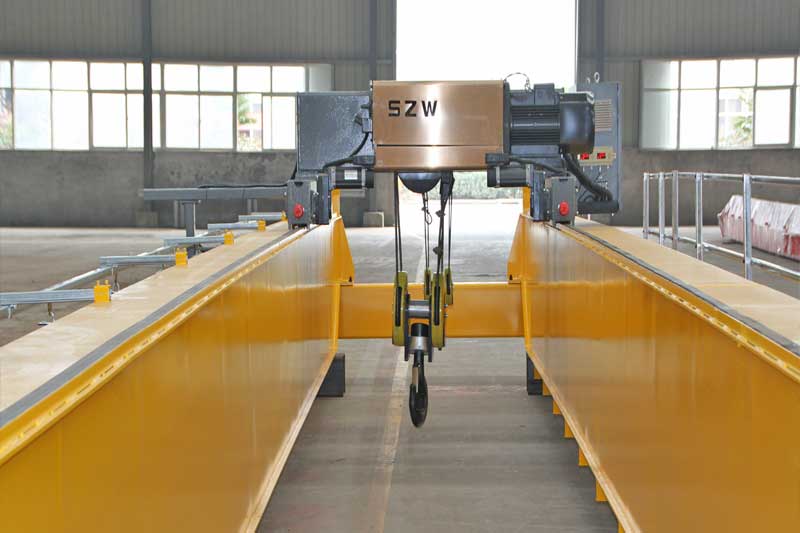
What Is a Single Hook Overhead Crane?
A single hook overhead crane is the most common type of crane you'll find in many industries. It features one main hoist with a single hook used to lift and move loads.
Typical Use Cases:
Handling uniform or single loads where only one lifting point is needed.
Common in workshops, warehouses, and manufacturing plants where tasks are straightforward.
Ideal for lifting heavy parts, equipment, or materials that don't require multiple load points.
Advantages:
Simple design means easier operation and maintenance.
Generally lower purchase and upkeep costs compared to more complex crane types.
Less mechanical complexity reduces downtime and repair needs.
Industries & Applications:
Metal fabrication shops
Automotive manufacturing
General warehousing and storage
Small to medium-sized production lines
In short, single hook cranes are perfect when you need reliable, straightforward lifting without extra bells and whistles.
Key Comparison Factors
Choosing between single hook and double hook cranes depends on several practical factors. Here's a breakdown to help you understand which fits your needs best:
Load Handling Needs
Single Hook: Works well for uniform loads or tasks requiring only one lifting point.
Double Hook: Shines when you need to handle mixed loads or lift two items simultaneously, boosting efficiency.
Operational Flexibility
Single Hook: Simple to operate, easy for basic lifting jobs.
Double Hook: Lets operators multitask-switch between heavy and light loads quickly, cutting down wait times.
Space & Installation Considerations
Single Hook: Requires less space and simpler runway designs, making it easier to fit in tight workshops.
Double Hook: Might need more complex installation, but it saves floor space by combining multiple lifting functions into one crane.
Cost & Maintenance
Single Hook: Usually cheaper upfront and easier to maintain due to simpler mechanics.
Double Hook: Higher initial investment, but increased productivity can reduce cost per lift over time.
Future Expansion & Scalability
Single Hook: Best for steady operations with predictable lifting needs.
Double Hook: Ideal for businesses planning to grow or needing flexible lifting options to handle varying loads.
These factors will help you figure out which crane type aligns better with your current and future operations.


