


According to data feedback from crane users, equipment downtime costs industrial facilities an average of $260,000 per hour. When your overhead crane malfunctions, production halts, deadlines are delayed, and costs escalate rapidly. Effective overhead crane troubleshooting involves more than just repairs, it's about minimizing downtime through system diagnostics and rapid problem resolution.
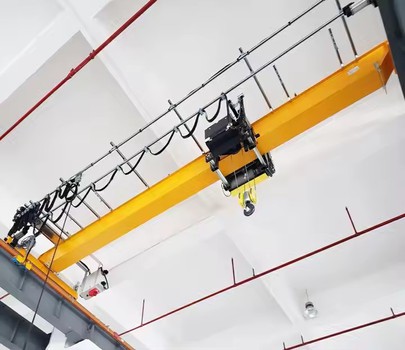
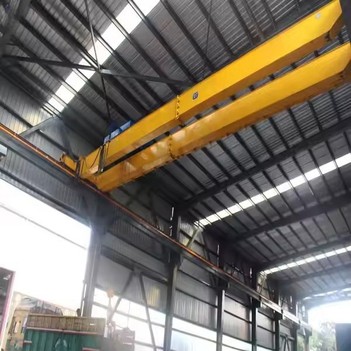
Single Girder Overhead Crane Double Beam Bridge Crane
This article provides maintenance engineers, facility managers, and crane operators with a set of professional overhead crane troubleshooting guide methods, helping users resolve the most common crane malfunctions. You will learn diagnostic techniques for quickly identifying root causes, solutions to prevent recurrence, and preventative strategies to reduce unexpected breakdowns.
Understanding the Overhead Crane Troubleshooting Framework
Overhead crane troubleshooting requires a systematic approach, rather than simply replacing parts randomly. The following content is divided into different frameworks, including problem identification, root cause analysis, and targeted intervention, to help users restore production and reduce downtime. Please continue reading.
User feedback indicates that systematic troubleshooting can reduce average repair time by up to 40% compared to trial-and-error methods. This directly translates to lower downtime costs and higher operational availability.
Electrical System Troubleshooting
Electrical faults account for approximately 45% of bridge crane failures. Understanding common electrical problems and their diagnostic indicators can help users resolve issues more quickly.
Power Supply and Distribution Issues
A complete power outage indicates a fault in the main circuit breaker, control transformer, or emergency stop circuit. Troubleshooting should begin with the power supply.
Inspect the main circuit breaker contacts for pitting, corrosion, or overheating damage. Measure the input voltage. Compare the three-phase voltages-a voltage imbalance exceeding 2% indicates a power supply problem.
A control transformer fault manifests as the main power supply still being available, but control functions being completely lost. Measure the primary and secondary voltages. If the primary voltage is normal but the secondary voltage is missing, the transformer requires replacement.
Motor and Drive System Failures
Motor failures often result from overheating, phase loss, or winding breakdown. Single-phasing is particularly destructive-the motor runs on two phases while drawing excessive current that damages windings.
Check voltage at motor terminals during operation. Use a clamp meter to measure current on all three phases. Current imbalance exceeding 10% indicates motor problems. Listen for unusual sounds-grinding indicates bearing failure, humming without rotation suggests starting issues.
Variable frequency drives provide diagnostic capabilities through error codes. Record all error codes before resetting. Common VFD failures include DC bus overvoltage from regenerative braking, overcurrent from mechanical binding, and overtemperature from inadequate cooling.
Control Circuit Malfunctions
Control circuit problems manifest as intermittent operation, unresponsive controls, or erratic crane behavior.
Begin by verifying the control voltage at the pendant station or radio receiver. If the voltage is correct but the controls don't respond, the problem lies in control devices or wiring. If voltage is absent or fluctuating, investigate the control transformer.
Test limit switches and position sensors individually. Dirty or misaligned limit switches cause erratic stops or prevent motion. Clean contact surfaces and verify proper actuation.
Mechanical System Troubleshooting
Mechanical failures account for 35% of crane failures, and they usually give obvious or audible warning signs before complete failure.
Brake System Issues
Brake failures create immediate safety concerns. Brakes may fail to engage, fail to release, or provide insufficient holding force.
Brakes that won't release typically suffer from seized pins, corroded springs, or electrical problems. Measure the voltage at the brake coil during the release command. If the voltage is correct, the problem is mechanical. Inspect all moving components for corrosion, wear, or binding.
Insufficient holding force results from worn friction surfaces, weak springs, or contaminated brake discs. Measure brake disc thickness against manufacturer specifications. Check for oil contamination-contaminated brakes require part replacement.
Hoist and Wire Rope Problems
Wire rope failures rarely occur without warning. Uneven rope wear indicates problems with drum grooving, sheave alignment, or unbalanced loading. Inspect drum grooves for wear-variation exceeding 1/16 inch indicates excessive wear requiring drum replacement.
Rope vibration during hoisting often results from unbalanced loads, damaged rope, or sheave problems. Stop operations immediately when severe vibration occurs. Inspect for kinks, broken wires, or diameter variations.
Bridge Frame and Trolley Drive Issues
Drive system problems present as excessive noise, binding, jerky motion, or failure to move.
A grinding sound during operation indicates a gear malfunction, bearing damage, or a foreign object in the drive system. The user should immediately stop the operation and perform a visual inspection. Check for missing teeth or excessive backlash in the gears.
Jerky motion suggests coupling problems, uneven brake release, or control issues. Inspect all couplings for wear or looseness. Verify brake release timing.
Operational Problem Diagnosis
Operational issues often result from improper use rather than equipment failure.
Load Handling Difficulties
Excessive load swing during travel may result from acceleration settings, rough starts, or uneven bridge wheel wear. Check acceleration ramp settings in the drive controller. Reduce acceleration if excessive swing persists.
Uneven load suspension indicates hoist reeving problems or sheave wear. Verify rope reeving follows manufacturer specifications. Inspect all sheaves for groove wear.
Performance Degradation
Reduced lift speed may result from motor problems, mechanical binding, or control system issues. Measure the no-load lifting speed and compare it to the rated capacity speed. Significant differences indicate motor or drive problems.
Decreased acceleration suggests drive parameter changes or motor deterioration. Review drive parameters and compare to commissioning records.
Preventive Troubleshooting Strategies
Vibration analysis detects developing bearing, gear, and alignment problems months before failure. Establish baseline vibration signatures for major rotating components. Thermal imaging identifies electrical connection problems and bearing failures. Users are required to perform thermal imaging inspections on electrical components every quarter.
Maintenance and repair personnel should maintain detailed troubleshooting logs for each incident, documenting symptoms, diagnostic steps, and solutions. They should also track changes in failure modes over time. Recurring failures indicate underlying systemic problems. Address root causes rather than repeatedly replacing failed parts.
Frequently Asked Questions
What tools are essential for overhead crane troubleshooting?
Essential tools include digital multimeter, clamp-on ammeter, infrared thermometer, and basic hand tools. Advanced overhead crane troubleshooting benefits from megohmmeter and vibration analyzer.
How do you troubleshoot intermittent electrical problems?
Monitor the system during operation to capture symptoms. Use data logging equipment to record voltage and current. Thermal cycling and vibration often trigger intermittent failures during testing.
What are the most common overhead crane electrical problems?
Common issues include control transformer failures, limit switch malfunctions, contactor degradation, motor starting problems, and emergency stop circuit issues.
How do you diagnose alignment problems?
Use laser alignment tools for precise measurement. Alignment problems manifest as uneven wheel wear, binding during travel, or crane skewing. Measure wheel wear patterns and rail-to-wheel spacing at multiple positions.
What causes repeated brake failures?
Repeated failures typically indicate improper adjustment, contamination, excessive duty cycle, or cooling problems.
How can you prevent wire rope failures?
Implement rigorous inspection programs. Replace the rope at prescribed intervals regardless of apparent condition. Proper lubrication and avoiding shock loading prevent premature failures.
Conclusion
Overhead crane troubleshooting requires a combination of systematic methodologies and practical experience. Regular inspections, predictive maintenance, and trend analysis can identify potential problems early, prevent downtime, extend equipment lifespan, and reduce operating costs. Minecrane is dedicated to providing you with valuable reference content.
As a professional overhead crane manufacturer and supplier in China. The Minecrane manufacturing bridge cranes can achieve higher operating efficiency and lower maintenance costs while ensuring operational safety. If you have any overhead bridge crane special requirements or need advice on selection, please feel free to contact us.


