


Explore practical guidance on overhead cranes for OTR tire and rim manufacturing and distribution. Learn about crane types, capacities (3–100 tons), applications, safety, and buyer tips to optimize efficiency and workflow in your facility.
OTR Tires and Rims: Heavy and Challenging
OTR tires and rims are far from ordinary car tires. They are designed for mining trucks, construction equipment, and other large industrial vehicles.
Weight range: From a few hundred kilograms to several tons per tire.
Size: Can reach several meters in diameter for the largest models.
Handling complexity: Tires and rims are often moved in bundles or paired together, making manual handling impractical.
Because of these factors, using the wrong lifting method can slow down operations, increase injury risks, and even damage your products.
Why Overhead Cranes Are Essential
In OTR tire and rim facilities, overhead cranes are more than just lifting tools-they're essential for daily operations.
Move tires and rims safely between production, assembly, and storage.
Reduce manual labor and the risk of accidents.
Maintain product quality by avoiding unnecessary handling or dropping.
Speed up workflow and improve overall plant efficiency.
Simply put, the right crane can make a noticeable difference in your operations without overcomplicating things.
What This Guide Offers Buyers
Selecting the right overhead crane isn't just about lifting the heaviest load. It's about fitting your facility's needs, your workflow, and your safety requirements.
Types of cranes used in OTR tire and rim manufacturing and distribution.
Capacity ranges from 3 to 100 tons and their practical applications.
Buyer considerations: plant layout, load weight, duty cycle, and safety requirements.
Supplier insights: how to choose reliable and cost-effective crane manufacturers.
Overhead Cranes in OTR Facilities
Overhead cranesare lifting systems installed above the workspace, usually running along rails attached to the ceiling or a supporting structure. They are designed to move heavy loads horizontally and vertically across a facility. Unlike forklifts or mobile cranes, overhead cranes can handle extremely heavy and bulky items in tight spaces without occupying floor space.
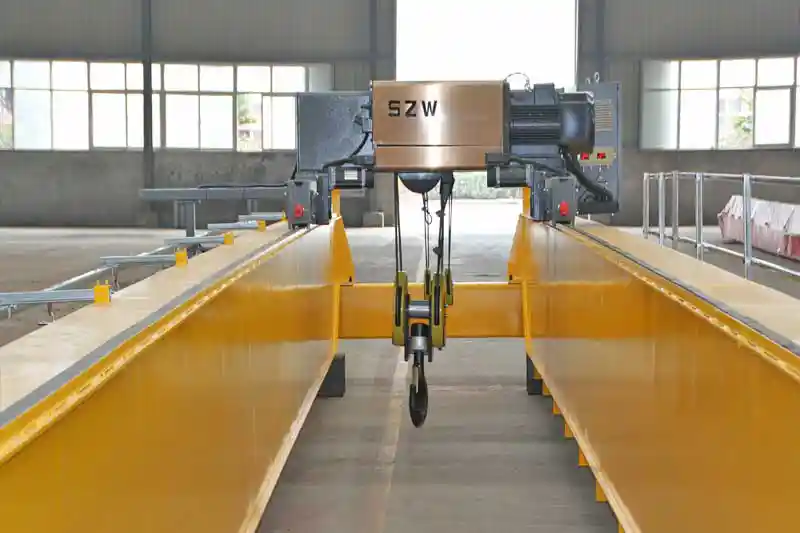
Key Features for Buyers:
Rail-mounted for stable, precise movement.
Can lift loads from a few tons to over 100 tons.
Suitable for repetitive lifting tasks with minimal manual effort.
Applications in OTR Tire and Rim Facilities
In OTR manufacturing and distribution, overhead cranes are essential at multiple stages:
Lifting raw materials: Heavy rubber, steel rims, and components are moved to production lines safely.
Assembly and curing: Tires are positioned onto molds or curing presses without manual handling.
Rim fabrication: Cranes move rims between stamping, welding, and finishing stations.
Warehouse and distribution: Pallets of tires and rims are lifted, stacked, or loaded onto trucks and containers.
By using overhead cranes, facilities can reduce bottlenecks, improve workflow, and avoid product damage.
Benefits for Buyers
For anyone managing a tire or rim facility, the right overhead crane brings more than just lifting capability.
Efficiency: Faster and smoother movement of heavy loads keeps production lines running without delays.
Safety: Minimizes manual handling and reduces the risk of injuries.
Cost-effectiveness: Less labor, fewer accidents, and reduced damage to products lower operational costs over time.
Space optimization: Overhead systems free up floor space for storage, assembly, or other equipment.
In short, an overhead crane is a practical investment that directly supports both day-to-day operations and long-term facility performance.
Types of Overhead Cranes Used in OTR Facilities
3–10 Tons
Best for: Small rims, medium-sized OTR tires, and light assemblies.
Facility zones: Localized lifting at assembly stations, inspection areas, or light storage bays.
Advantages for buyers: Lower purchase and maintenance costs, easy installation, suitable for frequent light lifts.
10–30 Tons
Best for: Large OTR tires, rim assemblies, and curing presses.
Facility zones: Main production lines, assembly areas, and warehouse pallet handling.
Advantages for buyers: Versatile, handles most standard operations, balances cost and load capacity.
30–50 Tons
Best for: Oversized mining tires, heavy machinery components, and bundled rims.
Facility zones: Heavy assembly lines, storage yards, and distribution centers handling large shipments.
Advantages for buyers: High stability, suitable for frequent heavy lifts, supports large-scale operations.
50–100 Tons
Best for: Exceptional loads, very large mining tires, or specialized manufacturing and logistics tasks.
Facility zones: Specialized manufacturing lines, high-capacity storage yards, and shipment loading docks.
Advantages for buyers: Handles the heaviest products safely, minimizes risk during complex lifts, supports high-capacity operations.
Key Factors Buyers Should Consider
Selecting the right overhead crane for your OTR tire and rim facility is not just about matching the heaviest load you handle. There are multiple factors that determine whether a crane will serve your operations efficiently, safely, and for years to come. As a buyer, you need to look beyond just lifting capacity and think about how the crane fits into your workflow, your plant layout, and your long-term growth plans.
Important Factors for Buyers:
Maximum load and material dimensions: Know the heaviest tire, rim, or bundle you will lift. This ensures the crane is not undersized for your daily operations.
Frequency and duty cycle of lifts: How often the crane will operate each day affects the type of motor, gearbox, and hoist you need. High-frequency operations require more robust equipment.
Plant layout: Consider span, headroom, aisle width, and overhead obstacles. Your crane must fit seamlessly into the existing facility structure.
Safety standards and compliance: Verify that the crane meets CE, ISO, OSHA, or other local regulations to protect workers and avoid liability.
Future expansion or increased load requirements: Anticipate growth in production or larger tire sizes to avoid needing a replacement crane shortly.
Maintenance and spare parts availability: Ensure the crane supplier can provide easy access to replacement parts and service support, minimizing downtime.
Keeping these factors in mind will help you avoid common mistakes such as buying a crane that's too small, overspending on unnecessary capacity, or dealing with frequent breakdowns. A carefully selected crane improves workflow, ensures worker safety, and reduces long-term operational costs.
For buyers, this step is crucial. Taking the time to evaluate these factors before purchase will save headaches later and ensure your facility can operate smoothly and safely for years.
Global Market Overview for Buyers
Understanding the global crane market is crucial for buyers in OTR tire and rim facilities. Choosing the right country, supplier, and technology can save time, reduce costs, and improve safety and efficiency.
Top Manufacturing Countries
Different countries excel in different aspects of crane production. Here's what buyers should know:
China
Wide range of capacities and types (3–100 tons).
Competitive pricing and customization options.
Export experience is strong, but check certifications and local service availability.
Germany
Known for precision engineering and durable, heavy-duty cranes.
High reliability for high-frequency operations.
Upfront cost is higher, but long-term maintenance is lower.
Japan
Innovative, compact crane designs.
Advanced automation features ideal for space-constrained facilities.
USA
Heavy-duty cranes with strict safety compliance.
Strong after-sales support domestically and internationally.
Italy
Premium, specialized cranes for heavy-duty applications.
Integrates well with European plant standards and automation systems.
Key Market Trends
Staying updated on industry trends helps buyers make informed decisions:
Automation: Remote operation, load monitoring, and programmable crane paths are increasingly common.
Energy efficiency: Electric hoists and regenerative drives reduce operational costs.
Modular and scalable designs: Cranes that can grow with your facility save long-term investment.
Digital monitoring: IoT-enabled systems allow predictive maintenance and minimize downtime.
Supplier Evaluation Tips
A reliable supplier is as important as the crane itself. Buyers should focus on:
Certifications: CE, ISO, OSHA, or local standards for safety and legal compliance.
Reliability: Check references, case studies, and past installations.
Customization: Ability to tailor crane specifications, controls, and automation to your facility.
After-sales support: Local technicians, spare parts availability, training, and maintenance packages.
Practical Buyer Tips
Selecting the right overhead crane is more than just picking a model that can lift your heaviest tire or rim. It's about ensuring smooth day-to-day operations, keeping workers safe, and maximizing the long-term value of your investment. Before making a decision, it's important to consider several practical aspects that directly affect performance, cost, and safety.
Key Considerations for Buyers:
Align crane type and capacity with actual operational needs: Assess the loads you handle daily, the frequency of lifting, and your plant layout to ensure the crane is suitable for real operational requirements.
Evaluate supplier credentials and service network: Look for certifications, proven installation experience, after-sales support, and local service availability. A reliable supplier is crucial for long-term crane performance.
Consider safety, ROI, and long-term operational costs: Evaluate total cost of ownership, including energy use, maintenance, and expected lifespan. Safety features such as overload protection and emergency stops are equally important.
Plan for spare parts, routine inspection, and maintenance cycles: Schedule preventive maintenance, keep critical spare parts on hand, and ensure operators are trained for safe handling.
By paying attention to these factors, buyers can make an informed choice that balances efficiency, safety, and cost. Taking a proactive approach not only reduces the risk of downtime and accidents but also ensures that the crane supports your facility's needs for years to come.
Case Studies & Applications
Real-world examples help buyers see how different overhead cranes perform in OTR tire and rim facilities. These cases demonstrate practical applications and highlight how the right crane can improve efficiency, safety, and workflow.
Example 1: Assembly Line Handling of 10–30 Ton OTR Tires
In a mid-sized tire manufacturing plant, single and double girder EOT cranes with capacities between 10 and 30 tons were installed along the main assembly line.
Tires are moved from the curing presses to inspection areas efficiently.
Cranes reduce manual handling, lowering the risk of worker injury.
The plant saw smoother workflow and faster turnaround for production cycles.
Example 2: Warehouse Storage Optimization with 20–50 Ton Gantry Cranes
A distribution center storing large OTR tires implemented 20–50 ton indoor and outdoor gantry cranes.
Cranes allowed pallets of tires and rims to be stacked and retrieved quickly.
The facility optimized storage space without narrowing aisles or reducing safety.
Handling large shipments for truck and container loading became faster and safer.
Example 3: Integration of Monorail/Hoist Systems for Repetitive Lifting
In a high-volume rim production line, monorail systems with hoists were installed to lift and transport rims along fixed paths.
Repetitive lifting tasks were automated, saving labor and reducing fatigue.
Production efficiency improved without increasing floor congestion.
Predictable, controlled movement of heavy loads reduced the risk of product damage.
These case studies show that selecting the right type and capacity of crane for each specific zone-asse
mbly, warehouse, or production line-is key to maximizing efficiency and safety.
Conclusion
Choosing the correct overhead crane is not just about lifting capacity. It impacts safety, workflow efficiency, and long-term operational costs. Buyers who carefully evaluate their facility's needs, consider future expansion, and select reliable suppliers will enjoy smoother operations and reduced downtime.
Correct crane selection ensures safe and efficient handling of tires and rims at every stage.
Consulting experienced suppliers helps buyers choose cranes that meet both current and anticipated requirements.
Planning ahead for capacity, safety, and maintenance protects your investment and keeps operations running reliably for years to come.


