


A Buyer's Guide to Anti-Corrosion Paint Systems for Ports, Steel Yards, and Power Plants.
Learn how to select durable anti-corrosion paint systems for outdoor gantry cranes in ports, steel yards, and power plants. Maximize lifespan and reduce maintenance.
Key Buyer Takeaway
Following this checklist ensures that your gantry crane's paint system is:
Engineered for long-term protection.
Maintains structural integrity.
Reduces future maintenance risks.
Preserves the value of your investment.
The Painting Quality Checklist Every Outdoor Gantry Crane Buyer Should Review
Understanding paint quality is essential for buyers of outdoor gantry cranes, especially in harsh environments like ports, steel yards, and power plants. Proper paint systems protect steel from corrosion, extend service life, and reduce maintenance costs.
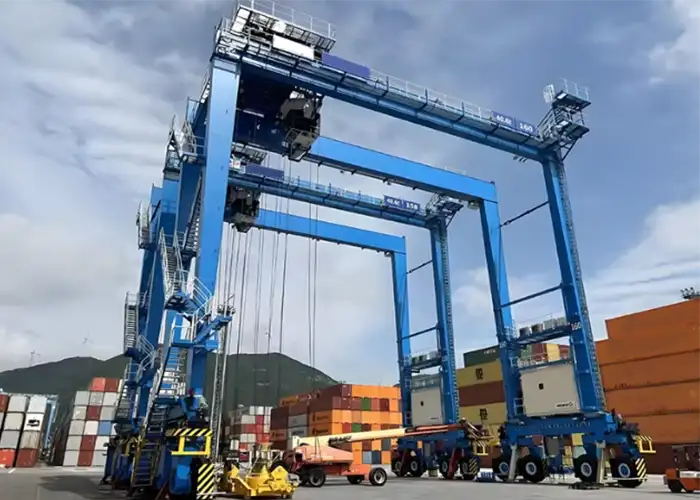
Port gantry crane - outdoor gantry crane for port for container handling
Why Paint Systems Matter for Outdoor Gantry Cranes
Outdoor gantry cranes operate in open air without protection from weather or industrial pollutants. Daily exposure to sunlight, rain, humidity, dust, and water accumulation slowly damages steel. These factors act continuously over the entire service life of the crane.
Strong sunlight that breaks down paint surfaces
Rain, humidity, and condensation on flat and hidden areas
Dust, sand, and industrial particles carried by wind
Water accumulation around rails, end beams, and lower legs
Corrosion Determines Crane Lifespan
In harsh environments, corrosion often limits crane life before structural strength does. Load ratings and steel strength are generally sufficient for decades, but corrosion spreads quickly and can cause major issues.
Salt spray in ports attacks weld seams and bolted joints
Steel dust and fumes in yards wear away protective coatings
Steam and coal dust in power plants create constant moisture exposure
Once corrosion starts under paint, it is difficult to stop without major repair work.
Paint Protects the Structure, Not Just Appearance
Paint on an outdoor gantry crane acts as a protective working layer. A properly designed paint system:
Keeps moisture and oxygen away from steel surfaces
Slows corrosion at welds, edges, and joints
Reduces frequency of inspections and repainting
Preserves the crane's structural integrity over time
Experienced buyers treat paint as part of the crane's engineering, not just a visual finish.
What Buyers Should Clearly Understand
Two cranes with the same specifications can perform very differently over time. Differences usually come from:
How well the steel was prepared before painting
Whether the coating system matches the real working environment
How much protection is applied in critical corrosion zones
Lower-cost paint systems may look acceptable at delivery but often lead to earlier corrosion, higher maintenance costs, and unplanned downtime.
Long-Term Exposure Factors
Environmental factors act continuously to damage paint and steel:
Sunlight breaks down paint surfaces
Rain, humidity, and condensation accumulate in hidden areas
Industrial dust and debris wear coatings
Water pooling around rails, end beams, and legs increases corrosion risk
Critical Corrosion Zones
Certain areas of the crane are more vulnerable and require extra protection:
Weld seams and bolted joints
Flat surfaces and corners prone to moisture accumulation
Edges and lower legs exposed to splash and dust
Why Paint Quality Impacts Service Life
High-quality paint systems directly affect service life, reliability, and long-term operating cost. Proper surface preparation, coating selection, and layer application ensure the crane withstands harsh conditions and minimizes maintenance needs over time.
Buyer Self-Assessment: Define the Actual Operating Environment of Your Gantry Crane
Before requesting quotations or comparing suppliers, buyers should take time to define the real operating environment of the gantry crane. This step is often skipped, yet it has a direct impact on paint system selection, coating life, and long-term maintenance cost.
Many problems start here. A crane described simply as "outdoor use" may operate in very different conditions depending on the site. Paint systems that work in one location can fail quickly in another.
Environmental Exposure: Marine and Coastal
Gantry cranes used in ports and coastal areas face constant exposure to salt and moisture. Even cranes several kilometers from the shoreline can be affected.
Salt spray carried by wind
Sea fog settling on steel surfaces
Chloride corrosion attacking welds, edges, and fasteners
These conditions accelerate under-coating corrosion, especially in joints and lower structural areas.
Environmental Exposure: Industrial Steel Yards
Steel yards and industrial plants create a different type of exposure that is equally aggressive.
Steel dust and mill scale that abrade paint surfaces
Chemical fumes from production processes
High temperature variation near furnaces and hot materials
In these locations, paint systems must resist both mechanical wear and chemical attack.
Environmental Exposure: Power Plants
Gantry cranes in power plants often operate in mixed conditions that combine moisture, dust, and long idle periods.
Steam and condensate forming on steel surfaces
Coal dust or ash settling into corners and joints
Persistently high humidity levels
These factors increase the risk of hidden corrosion under the paint film.
Operating and Maintenance Patterns
How the crane is used also affects corrosion risk.
Continuous daily operation versus intermittent outdoor use
Long idle periods where moisture remains on the structure
Seasonal shutdowns with limited inspection or cleaning
Maintenance access is equally important:
Is the crane easy to inspect regularly?
Can repainting or touch-up be done without major shutdowns?
Limited access and infrequent maintenance increase the importance of a robust, long-life paint system.
Buyer Takeaway
For gantry crane painting in ports, steel yards, and power plants, there is no single "standard outdoor solution." Buyers who clearly define their environmental and operating conditions are far more likely to specify a paint system that performs reliably over the crane's full service life.
How Corrosion Typically Starts on Outdoor Gantry Cranes
Corrosion on outdoor gantry cranes rarely appears all at once or in obvious locations. It usually starts in small, predictable areas where coatings are weakest and exposure is highest. Understanding these corrosion mechanisms helps buyers judge whether a paint system is truly suitable for harsh environments.
Common Corrosion Initiation Points: Welds and Heat-Affected Zones
Welding changes the steel's surface structure, and coatings tend to thin along weld beads. Small defects in these areas allow moisture to penetrate early.
Welding alters steel surface structure
Coatings thinner along weld beads
Moisture penetrates through small defects
Sharp Edges, Cut Profiles, and Flange Corners
Paint naturally pulls back from sharp edges during application, leaving thinner coverage that corrodes faster.
Paint pulls back from sharp edges
Film thickness often lower than flat surfaces
Edge corrosion visible before other damage
Bolted Joints and Overlapping Plates
Gaps in bolted joints trap moisture, dust, and salts, while coatings are stressed by tightening and thermal movement.
Gaps trap moisture, dust, and salts
Coatings stressed during tightening and thermal cycles
Corrosion starts hidden between mating surfaces
End Beams, Rail Interfaces, and Wheel Splash Zones
These areas are constantly exposed to water, dirt, and debris, with mechanical wear from crane travel increasing risk.
Constant exposure to water, dirt, debris
Mechanical wear from crane movement
Frequent impact and abrasion
Why Harsh Environments Accelerate Coating Failure
Even small coating defects can lead to rapid corrosion in harsh environments.
Chloride penetration: Salt particles migrate through microscopic coating pores, starting corrosion beneath the paint film
Abrasive dust erosion: Steel dust, sand, and ash gradually wear down topcoats, reducing protection
Thermal cycling: Daily temperature changes create micro-cracks, allowing moisture under the coating
Buyer's Guide: Verifying Paint Systems for Outdoor Gantry Cranes
Before approving an outdoor gantry crane purchase, it is essential for buyers to ensure that the paint system is fully specified, suitable for the environment, and properly documented. This guide provides a practical checklist to prevent costly mistakes and ensure long-term durability.
1. Surface Preparation
Objective: Ensure maximum adhesion and removal of contaminants.
☐ Shot blasting to Sa 2.5 (or higher) is specified.
☐ All mill scale, rust, oils, and other contaminants will be fully removed.
2. Coating System Specification
Objective: Confirm a complete, compatible anti-corrosion system.
☐ Primer, intermediate coat, and topcoat are clearly defined.
☐ Each layer's functional purpose and compatibility are verified.
3. Dry Film Thickness (DFT) and Critical Area Protection
Objective: Ensure sufficient protection in high-wear areas.
☐ Total DFT is specified, measured, and documented.
☐ Additional stripe coatings or thickness reinforcement for welds, edges, bolted joints, and high-wear zones are included.
4. Environmental Suitability
Objective: Verify the coating system can withstand specific operating conditions.
☐ Paint system is designed for marine, steel yard, or power plant environments.
☐ Coating materials meet corrosion and UV resistance requirements.
5. Inspection and Quality Assurance
Objective: Maintain documentation and verify quality at all stages.
☐ Wet and dry film thickness measurements are recorded.
☐ Defects, curing intervals, and paint batch traceability are documented.
6. Transport and On-Site Touch-Up
Objective: Ensure protection during delivery and installation.
☐ Procedures for repairing scratches or chips during transport and installation are approved.
☐ Compatible touch-up materials and methods are specified.
Final Takeaway for Procurement and Engineering Teams
For outdoor gantry cranes operating in harsh environments, the paint system is not just a cosmetic detail-it is a core engineering specification that directly affects the crane's durability and performance.
Why Paint Systems Matter
A properly selected and applied coating system protects:
Structural steel integrity: Prevents corrosion that can weaken beams, welds, and joints
Operational safety: Reduces the risk of failures that could cause downtime or accidents
Long-term asset value: Maintains the crane's functionality, resale value, and reduces maintenance costs
Key Buyer Insight:
Smart procurement and engineering teams treat paint systems with the same rigor as capacity, span, and duty class. Evaluating surface preparation, coating layers, thickness, and environmental suitability ensures that the crane performs reliably throughout its full service life.
In short, the right paint system is a long-term investment in safety, efficiency, and cost savings.


