


In crane procurement, "new" and "used" cranes are not simply about age-they are fundamentally different solutions in terms of technical condition, risk, and management. Their suitability depends on how well the equipment matches the application scenario, not the equipment itself. The main advantage of used cranes is cost. For similar specifications, used cranes are typically 40% to 60% cheaper than new cranes, making them highly attractive for projects with tight budgets or deadlines. However, used cranes often lack technical transparency, remaining service life, operational predictability, and after-sales support, requiring more thorough inspection and maintenance. This article compares new and used cranes from an engineering and operational perspective, focusing on four aspects: budget, safety and technical requirements, service life, and after-sales support, providing guidance for different types of projects and businesses.
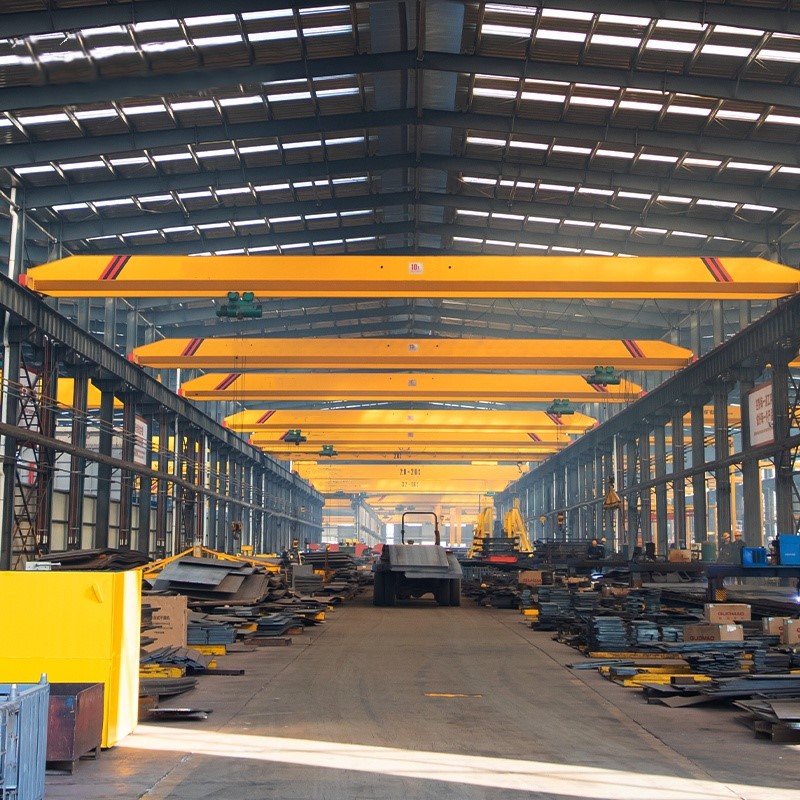
Quick Comparison: New vs. Used Overhead Cranes
Decision Factors: New Overhead Cranes vs. Used Overhead Cranes
Upfront Price: New overhead cranes have a higher initial investment, while used cranes have a 40-60% lower purchase price.
Long-Term Costs: The former is predictable and stable, while the latter, in the long run, is similar due to higher maintenance costs.
Safety and Technical Condition: The former has completely transparent technology and its design lifecycle starts from scratch. The latter's condition depends on past usage; uncertainty is higher.
Service Life: The former has a full design life (typically 15-20 years). Over 10 years. The latter has a remaining service life.
Maintenance and Support: The former offers comprehensive support from the manufacturer, and spare parts are readily available. The latter depends on the model year and source; parts availability may vary.
Most Suitable Projects: The former is for long-term, safety-critical, continuous operation; the latter for short-term, temporary, low-risk applications.
Management Requirements: The former requires standard operation and maintenance; the latter requires enhanced inspection, monitoring, and management.
Safety and Technical Condition: The new bridge crane has a high degree of technical transparency.
The crane is designed according to clearly defined operating conditions and work cycles, and fatigue life calculations have been completed during the design phase. The initial service life of structural components such as beams, end beams, and welded joints is zero. The hoisting mechanism, brakes, and safety devices are all factory tested before delivery, therefore their performance limits and operating conditions are clearly defined. Used bridge cranes Heavy machinery is not inherently unsafe; the main challenge lies in the uncertainty of its past usage. Even after inspection and testing, it's impossible to fully recreate the actual loads, lifting frequencies, impact conditions, and maintenance quality during its previous service life. Therefore, safety assessments rely more on the depth of inspection, engineering judgment, and the buyer's ability to manage uncertainty.
From a practical engineering perspective: For low-risk applications, if the load is stable and the company has appropriate inspection, monitoring, and maintenance procedures, the safety risks of used cranes can be effectively controlled.
For safety-critical or continuous production applications, such as heavy handling or processes where downtime and accidents would have serious consequences, buyers typically prefer new cranes because their technical condition is clearer and uncertainty is lower.
Life Cycle: Design Life vs. Remaining Life Bridge Cranes The lifespan of a crane is a key factor in purchasing decisions, especially when comparing new and used equipment. The main difference isn't whether a crane can still operate, but how much of its service life remains. New bridge cranes are delivered with their full design life. Under normal operating conditions and proper maintenance, a typical bridge crane has a design life of 15-20 years or longer, depending on its operating condition and frequency of use. This makes new cranes suitable for long-term projects, permanent installations, and operations with stable or growing production demands. In contrast, used bridge cranes have already consumed a portion of their service life. Even if the crane is still in good working condition, its remaining service life is shorter, and the remaining lifespan largely depends on its previous use, maintenance, and loading methods. For example, previous use under high-intensity conditions... Cranes operating under multi-shift conditions may have a much shorter remaining lifespan than those used intermittently.
Maintenance and Support: Service, Spare Parts, and Support
Newer cranes typically come with a complete manufacturer support system, including equipment drawings, technical specifications, spare parts lists, and standardized maintenance procedures. Key components such as motors, gearboxes, brakes, and control systems have clear model classifications and well-established maintenance, upgrade, and technical support processes. The after-sales service capabilities of used cranes largely depend on their origin and year of manufacture. If certain models are discontinued, the system has undergone multiple modifications, or uses non-standard configurations, spare parts or technical support may be difficult to obtain. Failure of any critical component can lead to unpredictable downtime, directly impacting production continuity.
Conclusion: High requirements for operational continuity and rapid response. → New cranes offer greater assurance. Mature internal maintenance capabilities and spare parts channels. → Used cranes may be feasible.
Selection Summary: How to Make the Right Choice From an engineering perspective, choosing between a new and a used crane essentially reflects usage strategy and risk appetite: Used cranes are suitable for applications with limited budgets, clear service cycles, and manageable risks.
New cranes are more suitable for long-term operation, high safety requirements, and critical production tasks.
A reasonable crane procurement decision should be based on a comprehensive assessment of operating conditions, workload, safety requirements, and maintenance capabilities, not just price. Only when the equipment is highly matched to the application scenario can the crane continuously create value throughout its entire life cycle.


