


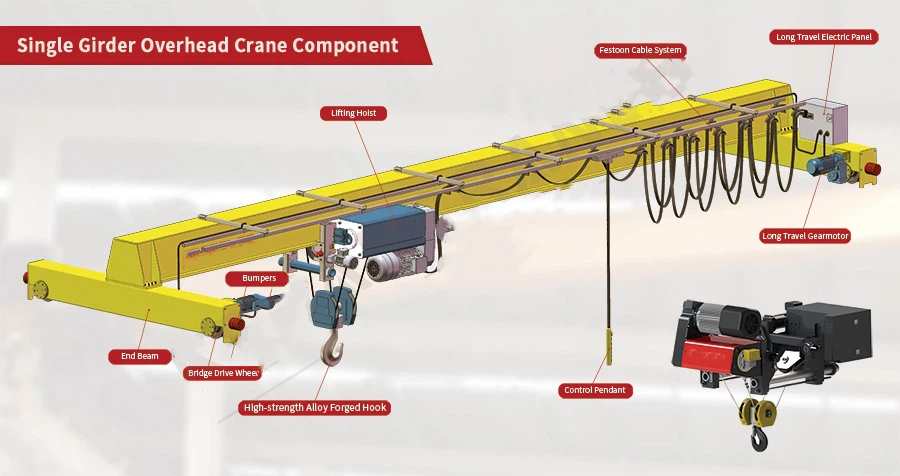
Bridge: The horizontal structure that spans the width of the work area and supports the other components of the crane.
Runway Rails: The tracks or rails on which the bridge moves. They are usually mounted on the building's structure.
Hoist: The device responsible for lifting and lowering the load. It typically consists of a motor, a drum, and a hook or other lifting mechanism.
Trolley: The part that travels along the bridge and supports the hoist. It can move the hoist horizontally across the bridge.
Crane wheels: Crane wheels are an important component that facilitates the movement of the crane along the runway beam. These wheels are usually made of durable materials such as cast iron or steel to withstand heavy loads and provide stability. Smooth and precise movement of the crane wheels is essential for efficient load transportation and positioning.
Crane gearbox: The crane gearbox is responsible for transmitting power from the motor to the wheels or other moving parts of the crane. It consists of gears and shafts that convert the rotational motion of the motor into the speed and torque required for the operation of the crane. The gearbox ensures smooth and controlled movement of the crane, thereby achieving precise load handling.
Crane motor: The crane motor serves as the powerhouse of the bridge crane and provides the necessary energy for its operation. The motors used in cranes are usually electric motors, which are characterized by high efficiency, reliability and precise control. The motor converts electrical energy into mechanical energy, allowing the crane to perform lifting, lowering and horizontal movement tasks.
Crane brake: The crane brake is a critical safety component that ensures controlled stopping and holding of the load. It is designed to prevent the crane from moving unexpectedly when the motor is not actively driving. The brake system can be electromechanical or hydraulic, providing the necessary friction to stop the movement of the crane and hold it firmly in place.
Hook: A crane hook is an essential component of the lifting mechanism, providing a secure attachment point for the load. Hooks are usually forged from high-strength alloy steel to withstand heavy loads. They are designed with a safety latch or locking mechanism to prevent accidental release of the load. The shape and size of the hook may vary depending on the application and type of load the crane is handling.
Pendant Controller: A pendant controller is a handheld device used to operate an overhead crane. It has buttons and switches that control the movement of the bridge, crane, and trolley. The pendant controller is connected to the crane via wires or radio signals, providing the operator with convenient and intuitive control of the crane's functions.
Festoon System: Another important component of an overhead crane is the suspension system. This system consists of cables or hoses that provide power and control signals to the crane. The suspension system is suspended from the bridge and trolley, allowing the crane to move without tangling or damaging electrical or pneumatic connections. It ensures a continuous and reliable power supply to the crane during operation.
Bumpers: Bumpers are important safety devices installed on the end trucks of overhead cranes. Their purpose is to absorb impact and prevent damage to the crane and surrounding structures. When the crane reaches the end of the runway, the buffer helps to cushion the crane's movement, minimizing the risk of collision and providing additional protection for the crane and the facility.
Limit Switches: Limit switches are electrical devices that establish boundaries and prevent the crane from exceeding its intended range. These switches are located at the end of the runway and control the movement of the bridge and trolley, ensuring that they stop at the desired position. Limit switches enhance safety by preventing over travel, preventing accidents and protecting the crane from potential damage.
Load Block: The load block is a critical component of the bridge crane. It serves as an attachment point for the load and is connected to the hoist by a wire rope. The load block may include a hook, shackle or other mechanism for securely securing the load. Proper load block design and inspection is essential to ensure the crane's lifting capacity and to keep the load and personnel involved safe.
Safety Devices: To ensure safe crane operation, bridge cranes are equipped with a variety of safety devices. These devices may include emergency stop buttons, overload protection systems, anti-collision devices, and audible or visual warning systems. Each safety device plays a vital role in preventing accidents, protecting personnel, and protecting the crane and its surroundings.
Control Panel: The control panel is a centralized hub that houses the electrical components and control switches used to operate the overhead crane. It provides the operator with a convenient location to control the crane's movements, monitor safety features, and troubleshoot any potential problems. A well-designed control panel increases operational efficiency and allows for intuitive, precise control of the crane's functions.


