


Industrial Sectors in Uzbekistan That Drive Demand for Overhead & Gantry Cranes
A Buyer's Guide to Matching Crane Type, Capacity, and Duty to Real Industrial Needs
Uzbekistan's Industrial Structure Matters to Crane Buyers
When buyers search for overhead cranes in Uzbekistanor gantry cranes for industrial use, many problems begin long before the crane is delivered. Early failures, higher-than-expected costs, and daily operating issues usually come down to one thing: the crane was not selected based on the real working conditions of the industry.
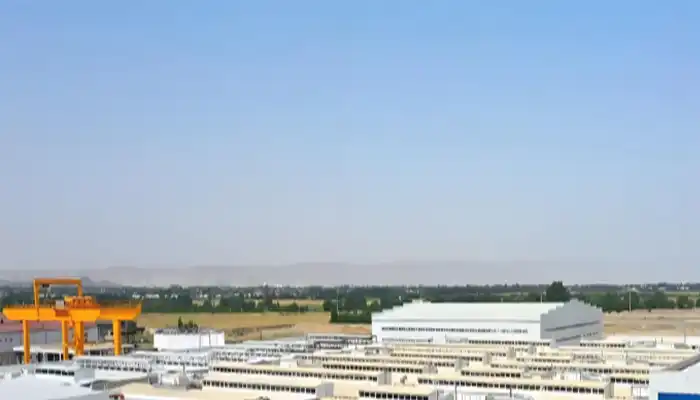
Why crane selection problems start before installation
In Uzbekistan, a crane used in a steel plant works in a completely different way than a crane used in a machinery workshop or warehouse. Heat, dust, load frequency, and operating hours all change how the crane behaves.
When buyers treat all applications as the same and focus only on lifting capacity, the result is often a crane that looks right on paper but struggles in real operation.
Common mistakes crane buyers make in Uzbekistan
Most crane problems can be traced back to a few common buying decisions.
Under-specifying the crane: leads to fast wear, frequent breakdowns, and short service life.
Over-specifying the crane: increases purchase cost, power consumption, and maintenance expenses.
Ignoring the environment: causes corrosion, electrical faults, and safety risks.
These issues usually appear after commissioning, when changes are expensive and disruptive.
Load characteristics: static vs dynamic loads
Not all loads behave the same, even at the same rated tonnage.
Static loads: common in workshops and warehouses, with slow and steady lifting.
Dynamic loads: typical in mining and metallurgy, with frequent movement, impact, and load swing.
Dynamic loads place much higher stress on crane structures, hoists, and drive systems, which is why heavier-duty designs are required in these industries.
Duty cycle: how often the crane really works
In many Uzbek industrial plants, duty cycle is more important than lifting capacity.
Occasional use: short daily operation in machinery workshops and assembly plants.
Continuous use: multi-shift operation in steel mills, cement plants, and power stations.
A crane lifting 10 tons occasionally and a crane lifting 10 tons all day are not the same machine. Duty class must reflect real operating hours.
Working environment and its impact on crane life
The environment where the crane operates directly affects maintenance needs and service life.
Indoor: clean factory halls with controlled conditions.
Outdoor: material yards and logistics centers exposed to weather.
Harsh environments: dust, heat, vibration, or corrosive conditions.
Environment influences steel protection, electrical system design, lubrication, and inspection frequency.
Pillar industries vs supporting industries
A simple way to narrow down crane specifications is to identify whether your industry is a pillar industry or a supporting industry.
Pillar industries include mining, metallurgy, energy, and cement production. These require:
Higher duty class
Stronger structures
Long service life under continuous operation
Supporting industries such as machinery manufacturing and warehousing usually need:
Single girder or light-duty overhead cranes
Lower operating cost
Simpler maintenance
Buyer takeaway: industry first, crane second
Once you clearly define which industrial category your operation belongs to, most crane parameters become much easier to decide.
In practice, knowing your industry already determines about 60% of the correct crane specification, including structure type, duty class, and budget range.
This approach reduces risk, controls long-term costs, and leads to a crane that works reliably in real operating conditions.
Pillar Industrial Sectors in Uzbekistan
Some crane applications allow tolerance. Mining and metallurgy do not. In Uzbekistan, these industries involve heavy loads, harsh conditions, and continuous operation, which makes crane specification a high-risk decision. A wrong choice here affects safety, uptime, and long-term cost.
Mining & Metallurgy – The Most Demanding Crane Use Cases
In mining and metallurgical plants across Uzbekistan, cranes are part of the production backbone. They are not standby equipment. They operate every day, often across multiple shifts, and any failure quickly affects output, safety, and maintenance cost.
Industries and buyers this section applies to
This section is written for buyers who operate in heavy industrial environments where crane performance directly affects production continuity.
Steel mills and rolling plants
Smelters and foundries
Mining companies and concentrators
EPC contractors working on metallurgical projects
In these operations, crane selection is a technical decision, not a standard purchase.
Typical loads and real working conditions
Cranes in mining and metallurgy handle loads that are heavy, hot, and often uneven. The listed tonnage alone does not reflect the real stress placed on the crane.
Steel billets, slabs, and blooms
Ladles and high-temperature materials
Large mechanical parts and maintenance equipment
Heat, dust, impact forces, and frequent lifting cycles increase fatigue on structures, hoists, and drive systems far beyond light industrial applications.
Why double girder overhead cranes are commonly used
Double girder overhead cranes are widely used in steel and metallurgical plants because they are designed for sustained heavy-duty operation.
Better load distribution across the bridge structure
Higher fatigue resistance under continuous duty
More stable lifting for heavy and hot materials
These features help maintain accuracy and reduce long-term structural fatigue.
Why gantry cranes are used in yards and outdoor areas
Gantry cranes are commonly used in outdoor slab yards and billet storage areas where building-mounted runway beams are not practical.
Suitable for outdoor steel storage and transfer yards
No need for building columns or runway beams
Good coverage for large working areas
In metallurgical plants, gantry cranes are chosen for layout flexibility and durability, not just lifting height.
Common mistakes buyers make in metallurgical projects
Even experienced buyers can underestimate the demands of metallurgical environments.
Selecting the correct capacity but choosing a duty class that is too low
Applying standard workshop crane designs to high-heat or dusty environments
Ignoring shock loads and impact during lifting and lowering
These mistakes usually become visible after commissioning, when design changes are expensive and operational downtime is hard to avoid.
Practical crane selection logic for mining and metallurgy
Successful crane selection in this sector follows a few clear technical rules.
Capacity: typically 20 to 50+ tons, depending on material size and process
Duty class: A6 to A8 for frequent and continuous operation
Working area: indoor production halls or outdoor material yards
Aligning these three factors prevents early failure and keeps long-term operating costs under control.
Key takeaway for crane buyers in heavy industry
In mining and metallurgy, cranes should be selected based on duty, environment, and real operating hours-not just rated tonnage.
Getting these basics right protects safety, reduces downtime, and ensures the crane remains reliable throughout its service life.
Energy & Power Generation – Reliability Over Price
In power plants and energy facilities across Uzbekistan, cranes are not used to support production flow. They support maintenance. That difference matters. When a crane fails here, turbines stay offline, transformers cannot be replaced, and the entire facility may stop operating.
Who this crane application is for
This section applies to buyers responsible for keeping power and energy systems running safely and continuously.
Thermal and combined-cycle power plant owners
Hydropower station operators
Grid and substation contractors
Maintenance teams managing critical equipment uptime
In these projects, crane failure is not an inconvenience. It is an operational risk.
Typical crane applications in power facilities
Cranes in energy and power generation are used for lifting heavy components, often during scheduled shutdowns or emergency repairs.
Turbine hall overhead cranes: used for lifting turbines, rotors, generators, and other large components during installation and major maintenance.
Transformer yard gantry cranes: used outdoors for moving transformers, switchgear, and high-voltage electrical equipment.
These lifts require accuracy, stability, and predictable performance every time.
Precision requirements in power plant lifting
Unlike raw material handling, power plant lifting often involves expensive and sensitive components.
Smooth starting and stopping to avoid load swing
Accurate positioning in tight turbine halls
Controlled lifting speed for heavy but delicate equipment
Poor control can damage components worth far more than the crane itself.
Why redundancy matters more than price
In energy facilities, crane systems are often specified with redundancy to reduce risk.
Backup limit switches and safety devices
Redundant braking systems for hoists
Reliable electrical components with stable performance
These features increase upfront cost, but they prevent long outages and unplanned shutdowns.
Indoor vs outdoor crane considerations
Energy projects often use both indoor and outdoor cranes, each with different design needs.
Indoor turbine hall cranes: focus on precision, low vibration, and smooth motion.
Outdoor transformer yard gantry cranes: require weather protection, corrosion resistance, and stable travel on uneven ground.
Treating both environments the same usually leads to higher maintenance and shorter service life.
Common buyer mistakes in energy projects
Problems in power plant crane projects usually come from trying to reduce cost in the wrong areas.
Choosing general-purpose cranes instead of maintenance-focused designs
Ignoring long idle periods followed by heavy, critical lifts
Underestimating outdoor environmental impact on electrical systems
These issues often surface during emergencies, when crane performance matters most.
Key takeaway for power and energy crane buyers
In energy and power generation, cranes should be selected based on reliability, precision, and long-term stability-not lowest purchase price.
A well-specified crane reduces risk, protects expensive equipment, and supports safe maintenance throughout the plant's operating life.
Cement, Precast & Construction Materials – Indoor vs Outdoor Decisions
In cement plants, precast yards, and concrete factories across Uzbekistan, cranes are part of the production rhythm. They move raw materials, molds, and finished products every day. When the crane layout does not match the environment, operations slow down and maintenance problems appear quickly.
Who this section is written for
This section applies to buyers responsible for crane selection in building-material production environments where dust, weather, and repetitive handling are daily realities.
Cement manufacturing plants
Precast concrete yards
Concrete product factories and batching plants
In these facilities, crane performance directly affects output speed and product flow.
Typical crane roles in cement and precast plants
Cranes in this sector are used for repetitive lifting tasks rather than occasional heavy lifts. The design must support steady, reliable movement throughout the shift.
Handling raw materials and finished concrete products
Lifting and positioning precast molds
Transferring components between production stages
Poor crane selection often leads to bottlenecks in production lines.
Indoor overhead cranes: where they work best
Indoor overhead cranes are commonly used inside production halls and enclosed workshops. They provide controlled lifting and predictable movement.
Suitable for mold preparation and assembly areas
Protected from direct weather exposure
Easier to maintain stable lifting accuracy
These cranes are often selected for higher precision and cleaner operating environments.
Outdoor gantry cranes: yard and storage solutions
Outdoor gantry cranes are widely used in precast yards and open storage areas where overhead runway beams are not available.
Ideal for handling finished precast elements
Suitable for batching areas and outdoor storage zones
Flexible coverage for large working areas
These cranes must be designed for weather exposure and uneven ground conditions.
Capacity range and real lifting needs
Most cranes in cement and precast facilities fall within a mid-range capacity, but duty and frequency still matter.
Typical capacity: 5 to 50 tons
Higher capacities for large molds and heavy precast elements
Lower capacities for repetitive internal transfers
Selecting capacity without considering lifting frequency often leads to premature wear.
Key buyer considerations in dusty and outdoor environments
Cement and concrete operations create challenging environments for crane components.
Dust protection: reduces abrasion on mechanical parts and electrical failures
Corrosion resistance: critical for cranes exposed to rain and moisture
Mold handling efficiency: smooth lifting and proper hook or spreader design
Addressing these points during selection helps reduce maintenance downtime.
Buyer takeaway for cement and precast facilities
In cement and construction material plants, the main decision is not just capacity, but whether the crane layout matches indoor or outdoor reality.
Choosing the right crane type improves handling speed, protects equipment, and keeps production moving without unnecessary stops.
Typical Industrial Sectors With Stable, Cost-Sensitive Crane Demand
Not every industry in Uzbekistan needs heavy-duty cranes running around the clock. Many sectors have steady, predictable lifting needs and operate under tighter budgets. In these cases, the focus shifts to practical design, reasonable cost, and easy maintenance.
Why these industries are cost-sensitive but stable
These industries use cranes daily, but usually for moderate loads and controlled indoor or semi-outdoor work. Budgets matter, but reliability still cannot be ignored.
Consistent lifting demand throughout the year
Lower duty cycles compared to steel or energy plants
High demand for simple, proven crane designs
Workshop cranes and light-duty overhead cranes dominate this segment.
Machinery manufacturing & equipment assembly
Machinery factories and assembly workshops rely on cranes to move parts smoothly between workstations. The goal is steady workflow, not extreme lifting.
Who this applies to:
Factory owners and workshop managers
Procurement teams handling production halls
Plants with repetitive indoor lifting tasks
Workshop lifting needs and crane choice
Lifting tasks in machinery workshops are frequent but controlled. Loads are usually predictable and handled indoors.
Moving machine parts and sub-assemblies
Handling tools and fixtures across the shop floor
Operating under stable indoor conditions
Single girder overhead cranes are widely used because they balance cost, simple installation, and sufficient lifting capacity.
Typical crane specifications for machinery workshops
Capacity: 3 to 10 tons
Span & lifting height: matched to workshop layout
Duty cycle: light to medium, depending on shift length
Over-sizing the crane here often adds cost without improving performance.
Buyer focus in machinery manufacturing
Cost vs performance: meet real needs without overspending
Ease of maintenance: simple designs reduce downtime
Adaptability: allow for layout changes or future expansion
Automotive & transport equipment manufacturing
In automotive and transport equipment plants, cranes are selected for precision, not raw lifting power.
Who this applies to:
Vehicle assembly plants
Repair and overhaul workshops
Maintenance facilities for transport equipment
Common crane types in automotive workshops
Overhead cranes: for moving engines, frames, and heavy assemblies across the workshop
Jib cranes: installed at workstations for accurate part positioning
These cranes focus on controlled movement and operator safety.
Buyer priorities in automotive applications
Smooth control: reduce swing and positioning errors
Safety: protect both operators and components
Ergonomics: improve workflow and reduce fatigue
Precision matters more than maximum lifting capacity.
Logistics, warehousing & dry ports
Logistics centers and dry ports rely on cranes to keep goods moving efficiently. Layout and flexibility are often more important than crane size.
Who this applies to:
Logistics operators
Warehouse managers
Dry port developers and investors
Crane selection in logistics environments
Gantry cranes: preferred for outdoor yards and container handling
Overhead cranes: used indoors for steel, palletized cargo, and equipment
Loads may include containers, steel coils, or mixed cargo with varying weights.
Buyer priorities in logistics and dry ports
Yard layout: align crane travel with cargo flow
Mobility: allow repositioning as operations change
Future expansion: plan for higher throughput
Good planning at the selection stage prevents costly adjustments later.
How Buyers in Uzbekistan Should Match Crane Type to Their Industry
Choosing a crane is not about picking a number from a catalog. The right decision comes from understanding how the crane will actually work in your plant, day after day. Environment, duty, and future plans all matter more than most buyers expect.
Why industry-specific matching matters
Two cranes with the same lifting capacity can perform very differently in real use. The difference usually comes down to where and how the crane is used.
Buyers in Uzbekistan who match crane type to industry conditions see fewer breakdowns, lower maintenance costs, and longer service life.
Indoor vs outdoor: what really changes in crane design
Indoor cranes
Operate in controlled temperature and humidity
Lower corrosion risk and simpler protection requirements
Commonly single girder or double girder overhead cranes
Outdoor cranes
Exposed to rain, dust, wind, and temperature changes
Require corrosion-resistant materials and weatherproof electrical systems
Gantry cranes or reinforced double girder overhead cranes are typical
Environment directly influences structural design, component selection, and long-term maintenance planning.
Load weight vs duty class: why tons alone mislead buyers
Lifting capacity tells only part of the story. Two cranes lifting the same weight may experience very different wear.
Duty class considers:
How often the crane lifts during each shift
Impact and shock loads during lifting and lowering
Continuous versus intermittent operation
Ignoring duty class often leads to cranes wearing out far sooner than expected.
When a gantry crane is the better choice
Overhead cranes are not always the most practical option. In some layouts, gantry cranes solve problems that overhead systems cannot.
Large outdoor yards without building runway beams
Need for flexible movement across multiple storage areas
Handling oversized or irregular loads
In these situations, gantry cranes provide coverage and flexibility that overhead cranes struggle to match.
Planning for future expansion
Many crane problems appear not because the crane was wrong on day one, but because the plant outgrew it.
Plan for possible growth in production or storage area
Extra span or lifting height can avoid future structural changes
Modular crane designs allow upgrades without full replacement
Thinking ahead during selection often saves significant cost later.
Buyer takeaway: how to make the right crane decision
Matching crane type to environment, duty level, and future plans is more important than choosing by tonnage alone.
Buyers who take this approach achieve safer operation, better reliability, and lower total cost over the crane's lifetime.


