


How to Determine Travel and Lifting Speeds:
The speed of trolleys and cranes depends upon the length of the runway or the size of the area covered. Generally, faster speeds are used for longer runways. Short runways will run at slower speeds. If floor areas are crowded or congested, then slower speeds will probably be desirable. The slower the speed, the more accurately loads can be positioned. Maximum flexibility is gained with variable speed cranes. The fast speeds are used for long runs and the slower speeds for positioning. Single speed hoists are the most popular in light capacity and meet most requirements at substantial savings. Two speed hoists are most common at five ton and heavier. The following is a guide to speed selection. If in doubt, order the slower speed. Operators seldom complain about speeds being too slow. Speeds which are too fast can create problems.
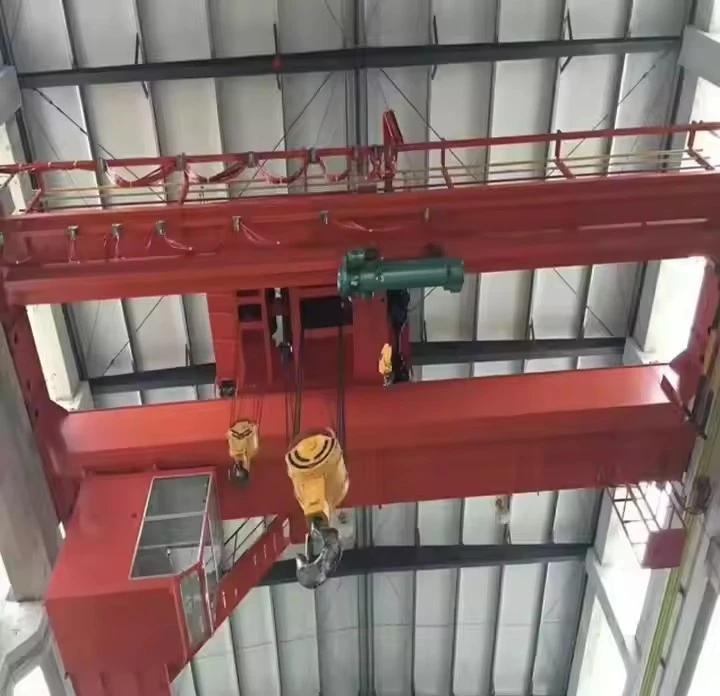
Hoist Lifting Speeds:
Lifting speeds are largely determined by the application and use. Average speed is generally between 10 and 26 fpm. Speeds under 10 fpm are usually not practical except in special cases. For some continuous uses, speeds faster than 26 fpm may be desirable.
Most hoist motors are rated for 15 minute continuous operation. By dividing length of lift by lifting speed in feet per minute, you can determine if you have exceeded this rating. If there is any doubt, contact CraneTec.
On two speed hoists, the slow speed is generally one-fourth the hoist main speed. Hoist creep speeds are generally one-tenth the main hoist speed and variable speed hoists generally start at one-tenth and are variable to full speed.
Trolley Speeds:
The convenience of the operator and smoothness of travel are the principal factors in selection of the motorized trolley speed. For spans up to 60', 65 FPM, is generally recommended. For longer spans, 80 fpm may be more efficient. The average walking speed is about 100 fpm.
Bridge Cranes:
The length of the runway, type of load carried and operator convenience are the important factors in speed selection. For floor operated cranes and runways up to 100′, one hundred fpm will usually be recommended. For runs over 200′, one hundred and thirty fpm may be more satisfactory. Cab operated crane speeds can range from 160 fpm to 350 fpm. The specific operating conditions will determine which speed is best. On two speed cranes and trolleys, slow speed is generally one-half the main speed. Multiple speed cranes generally have approximately equal speed steps.
Chain or Wire Rope Electronic Hoists:
Electric chain hoists are effective and efficient. They are available up to five tons capacity and larger. Wire rope hoists are available with an extensive variety of speeds and other options. In either type, both lift safely, and operate with similar ease and efficiency.
Wire rope hoists are more expensive because a wide grooved drum and larger housing to support the drum is required. Multiple and fast speeds or high production operations will usually require the selection of a wire rope hoist.
Chain type hoists are generally smaller and provide closer side clearances. They also permit a wider angle of pull than wire rope.
As a lifting medium, link chain is superior to wire rope. It is more flexible and much easier to inspect for wear or abuse. If it has been overloaded, it can be inspected for possible stretch and replaced before failure occurs. Wire rope can fray from the inside out and separate without warning. Link chain also gives a true vertical lift since it does not move from side to side as cable does. Generally, link chain will offer longer life than cable.
Electric link chain hoists are available up to 10 ton capacity in a limited selection of speeds.
Chains seldom require replacing while wire rope cables should be replaced periodically and are easily subjected to damage, crushing, fraying, weld burns, etc.


