


Introduction
An electric hoist is a mechanical device used to lift and lower heavy loads using an electric power source. It typically consists of a motor-driven mechanism that is connected to a drum or a wheel around which a cable or chain is wound. The load is attached to the end of the cable or chain, and when the motor is activated, it either winds up the cable or chain to lift the load or releases it to lower the load.
Electric hoists are commonly used in various industries, construction sites, warehouses, and workshops where lifting and moving heavy objects are required. They are preferred for their efficiency, precision, and ease of use compared to manual hoists. Electric hoists come in various capacities to handle different load sizes, and they can be mounted on a fixed structure, such as a beam or a gantry, or attached to a movable trolley for increased mobility.
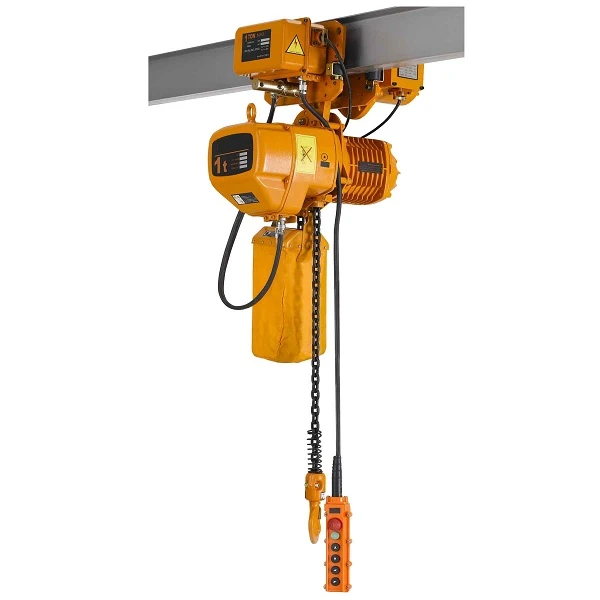
There are several types of electric hoists designed to meet specific lifting requirements and applications. The main types include:
Wire Rope Hoists:Use a wire rope as the lifting medium.Suitable for heavy-duty applications and larger lifting capacities.Commonly used in industries such as construction, manufacturing, and mining.


Chain Hoists:Utilize a chain as the lifting medium.Available in various capacities, with both electric and manual versions.Ideal for lifting loads in smaller to medium-sized applications.
Electric wire rope hoist:An electric wire rope hoist is a type of lifting equipment that uses a wire rope as its lifting medium.

Electric hoist structure
The structure of an electric hoist can vary based on its design, capacity, and intended use, but here are the fundamental components commonly found in electric hoists:
1. Motor:
- The core of the electric hoist, the motor provides the power needed for lifting and lowering operations.
- Motors can be electrically powered and come in various types and capacities.

2. Gearbox (Reducer):
- The motor is often connected to a gearbox or reducer, which helps control the speed and torque of the hoist.
- The gearbox is crucial for achieving the desired lifting performance and ensuring smooth operation.

3. Drum:
- The drum is a cylindrical component around which the lifting medium (wire rope or chain) is wound.
- As the motor operates, the drum rotates, causing the lifting medium to either wind up or unwind, lifting or lowering the load.
4. Lifting Medium (Wire Rope or Chain):
- Electric hoists use either a wire rope or chain as the lifting medium, depending on the design and application.
- Wire ropes are commonly used for heavier loads, while chains are suitable for various applications.

5. Hook or Lifting Attachment:
- The load is attached to the hoist via a hook or other lifting attachment.
- Different hooks and attachments may be used based on the type and shape of the load being lifted.

6. Controls:
- Electric hoists come with control systems that allow operators to manage the lifting, lowering, and sometimes horizontal movement of the load.
- Controls can be pendant-operated (hand-held pendant control) or remote-controlled, providing flexibility and safety for the operator.

7. Brakes:
- Braking systems are essential for ensuring the hoist stops promptly when required.
- Hoists may have mechanical brakes or electromagnetic brakes to control and secure the load.

8. Limit Switches:
- Limit switches are incorporated to prevent overtravel of the load in both upward and downward directions.
- These switches enhance safety by limiting the hoist's movement within predefined parameters.

The specific configuration and features of an electric hoist may vary based on the manufacturer and the intended application. Electric hoists are versatile tools used in various industries for lifting and moving heavy loads, offering efficiency, precision, and safety in material handling operations.
How to choose electric hoist?
Choosing the right electric hoist involves considering various factors to ensure that it meets the specific requirements of your lifting application.
1.Choose based on usage requirements: Familiarize yourself with the usage environment, load capacity, lifting height, trolley movement, lifting speed, voltage, etc.
2.Pick the electric hoist type based on requirements: Tailor your selection to your specific needs, whether opting for a single-function electric hoist or a composite electric hoist, and considering factors such as standard electric hoists or explosion-proof models.
3.Decide according to the operational level: The operational level refers to the electric hoist's load capacity and frequency of use. ISO work levels range from M3 to M8, while corresponding FEM work levels range from 1BM to 5M. A higher work level signifies superior quality and durability of the electric hoist and its components.


