


Most Important Takeaway
The Diesel Straddle Carrier is a practical heavy-duty container handling solution for ports and logistics yards that need continuous operation, strong lifting capacity, and independence from charging infrastructure.
Key Takeaways
Designed for continuous container handling in 24/7 port and yard operations
Works without charging systems, suitable for infrastructure-limited sites
Combines diesel engine power with hydraulic drive for stable heavy lifting
Flexible yard mobility with no rail or fixed runway requirements
Widely used in ports, steel plants, and industrial logistics yards
FAQ – Diesel Straddle Carrier
The following FAQ explains diesel straddle carrier applications, performance, selection, and operational considerations in real port and logistics environments.
+What is a diesel straddle carrier and how does it work in real port operations?
+Where is a diesel straddle carrier most suitable in port and logistics applications?
+What key features affect performance and reliability in daily operation?
+What technical parameters should be checked when selecting a model?
+What optional configurations help improve efficiency and reduce operating cost?
Diesel Straddle Carrier
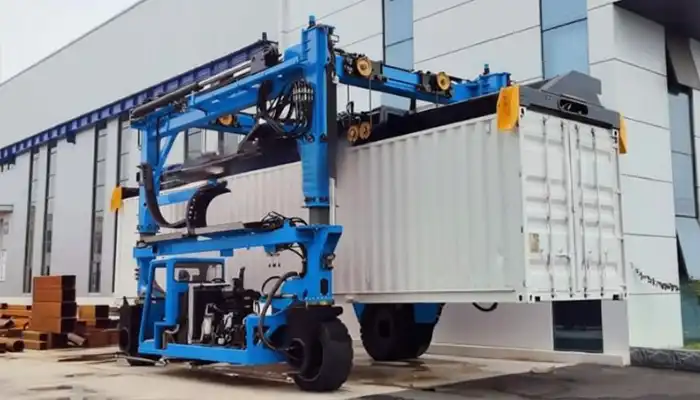
Introduction to Diesel Straddle Carrier
This section explains what a diesel straddle carrier is, how it works in real operations, and why it is widely used in ports, logistics yards, and industrial container handling environments.
+What a Diesel Straddle Carrier Is in Real Operation
+Role in Modern Container Handling Systems
+Why Diesel Power Is Still Used in Heavy-Duty Yard Equipment
+Diesel vs Electric vs Hybrid Straddle Carriers (Practical View)
+Typical Working Environments and Operating Conditions
Working Principle and System Structure
This section explains how a diesel straddle carrier operates in real working conditions, including its power system, hydraulic drive, structural design, and control modes used in daily port and yard operations.
+How the Diesel Straddle Carrier Works in Operation
+Diesel Engine as the Main Power Source
+Hydraulic Drive System for Movement and Lifting
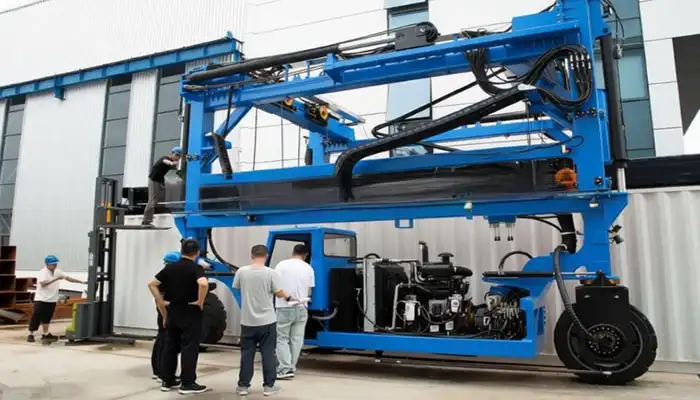
+Straddle Frame Structure for Container Handling
+Spreader System for Container and Cargo Handling
+Cabin and Remote Control Operation Modes
Key Advantages in Port and Yard Operations
In real port terminals and logistics yards, equipment is judged by one simple point-whether it can keep working under pressure. The Diesel Straddle Carrier is widely used because it supports continuous container flow without complicated infrastructure. It is built for daily operation, not occasional lifting tasks.
Below are the key practical advantages that matter in actual container handling projects.
Continuous operation for multi-shift container yard work
Strong load stability for heavy container transport
Flexible movement without rail or fixed infrastructure
Reduced civil engineering and installation cost requirements
Suitable for high-frequency container transfer operations
These advantages directly affect how smoothly a yard runs. In practice, it means fewer interruptions, simpler layout planning, and more flexible container movement between storage and dispatch areas. It is often chosen where operational continuity is more important than system complexity.
Core Features of Diesel Straddle Carrier
In real port terminals, container yards, and industrial logistics operations, a diesel straddle carrier for container handling is judged by how well it performs under continuous working pressure. It is not only about lifting capacity, but also about structural stability, control precision, and long-term reliability in heavy-duty straddle carrier operations.
These features are designed for high-frequency container transport in ports and logistics yards, where equipment must run through multi-shift cycles with minimal interruption.
FEM-based structural design for load safety and fatigue resistance in heavy-duty container straddle carrier operations
Use of premium hydraulic and electrical components for reliable diesel straddle carrier performance in port logistics systems
Advanced control system for smooth and precise container handling in straddle carrier yard operations
Multi-mode steering system for narrow and complex container yard layouts in port terminal logistics handling
Compact turning radius design for efficient yard space utilization in container stacking and transfer operations
Fuel-based operation with optimized energy efficiency system for long-hour diesel straddle carrier working cycles
In practical use, these engineering features directly support container lifting, stacking, and transport operations in port terminals and industrial logistics yards. The result is more stable movement under full load, better maneuverability in tight container storage areas, and more consistent performance during continuous straddle carrier operations in real working environments.
Diesel Straddle Carrier Parameters
| Model | DSC-35T | DSC-60T | DSC-80T | |
| Capacity | 35t | 60t | 80t | |
| Length×Width×Height | 9200×5100×5500mm/7110×5100×6100mm | 9250×5700×6350mm | 12500×6000×6350mm | |
| Effective Inner Width | 3100mm | 3750mm | 3750mm | |
| Wheel Base | 6010mm | 6600mm | 7400mm | |
| Level 2 Lift Height | N/A |1550mm | 1750mm | 1750mm | |
| Max.Lifting Height(Below spreader) | 4600mm|6150mm | 6300mm | 6300mm | |
| Min.Ground Clearance | 230mm | 310mm | 310mm | |
| Tire Qty | 4 | 4 | 8 | |
| Deadweight(not contain spreader) | 19T|21T | 35T | 45T | |
| Weichai Engine-China StageII | 103KW | 129KW | 176KW | |
| Closed Travel Pump | Hytek/Danfoss/PMP | |||
| Empty-load max.speed | 115m/min | 80m/min | 80m/min | |
| Full-load max.speed | 80m/min | 50m/min | 50m/min | |
| Turning Radius | 6950mm | 8900mm | 13000mm | |
| No-load/full-load Gradeability | 6%/3% | |||
| Control mode | Cab(remote control optional) | |||
| Tires | solid tire | |||
| Lifting Tools | Chain+Lock/Automatic Spreader | Oversized LoadSpreader | ||
| Remarks Theengine can be optionally equippedwith National IV,and optional accessorybrand | ||||
Technical Parameters and Model Selection Guide
When choosing a diesel straddle carrier for container handling, the technical parameters are not just reference data. In real port container operations, logistics yards, and industrial material handling, they directly determine how well the equipment fits daily working conditions and container flow requirements.
Different yards have different operational needs. Some focus on tight-space flexibility, some require higher lifting capacity, and others prioritize long-hour continuous operation. That is why proper model selection is critical.
+Capacity Options (35t / 60t / 80t)
+Size and Structural Differences
+Working Speed (Loaded and Empty)
+Wheels and Ground Adaptability
+Lifting Height and Spreader Options
+Engine Power and Hydraulic System
+Final Note for Model Selection
Diesel Straddle Carrier Application
The diesel straddle carrier for container handling is mainly used in environments where work is continuous, heavy, and cannot depend on charging systems or fixed rail equipment. In real industrial projects, it is chosen because it can move freely in the yard, handle full containers, and keep running for long shifts with simple refueling.
Below are the most common real-world applications where diesel straddle carriers are widely used in port logistics and industrial material handling systems.
+Port Terminals – Container Loading, Unloading, and Yard Stacking
+Logistics Yards – Container Transfer Between Storage Zones
+Steel Plants and Manufacturing Yards – Heavy Cargo Handling
+Bulk Material Storage and Industrial Logistics Operations
+Remote Sites Without Electrical Charging Infrastructure
+Temporary or Rapidly Expanding Container Yards
Across all these scenarios, the diesel straddle carrier is chosen for one main reason: it keeps container operations moving without interruption. In real port logistics and industrial container handling systems, it works as a flexible and reliable machine that adapts to different yard conditions, load requirements, and working schedules.
Diesel Straddle Carrier Optional Configurations and Custom Solutions
In real diesel straddle carrier for container handling projects, not every yard works the same way. Some ports handle high-volume container flow, some deal with heavy industrial cargo, and some operate in remote locations. Because of this, the machine is often customized based on real working conditions, not a fixed standard setup.
These optional configurations are used to improve port container handling efficiency, reduce downtime, and adapt the straddle carrier to different logistics yard requirements.
+Remote Control System for Flexible Container Handling
+Heavy-Duty and Oversized Spreader for Special Cargo
+Premium Engine and Hydraulic System Upgrade
+Fast Refueling System for Reduced Downtime
+Fuel Efficiency Optimization Package
+Operator Cabin Comfort System for Long Working Hours
Diesel Straddle Carrier Maintenance and Operational Management
In real diesel straddle carrier for container handling operations, performance is not only about design or power. Long-term stability depends on daily maintenance and proper operational management. In ports, logistics yards, and industrial sites, equipment usually runs in multi-shift cycles, so small checks done regularly help avoid bigger downtime later.
This section focuses on practical maintenance routines used in container yard operations and heavy-duty straddle carrier applications, not theory.
+Diesel Engine Inspection and Scheduled Servicing
+Hydraulic Oil Level and Pressure Monitoring
+Tire Wear Control Under Heavy-Load Conditions
+Structural Weld Inspection for Long-Term Use
+Control System Calibration and Diagnostics Checks
Diesel Straddle Carrier Selection Considerations and Buying Guidance
In real diesel straddle carrier for container handling projects, selection is not just about choosing a higher tonnage or a bigger machine. It is about matching the equipment with actual working conditions in port terminals, logistics yards, and industrial material handling operations. A well-matched machine runs smoothly every day. A wrong selection usually shows problems in fuel cost, yard efficiency, or downtime.
Below are the key practical points used in real buying decisions.
+Matching Capacity with Container Flow Volume
+Choosing Model Based on Yard Size and Layout
+Evaluating Fuel Efficiency and Long-Term Operating Cost
+Selecting Control System Based on Operator Skill Level
+Considering Maintenance Support and Spare Parts Availability
Choosing the right diesel straddle carrier for container yard operations is always a balance between capacity, yard conditions, fuel cost, and maintenance support. In real port and logistics projects, the best equipment is not the biggest one, but the one that fits the actual working flow and keeps daily container handling stable and efficient.
Send Us An Inquiry
Diesel straddle carriers remain a practical solution for high-intensity container handling where continuous operation, strong lifting capability, and infrastructure independence are required. In real port and logistics environments, they are valued for stable performance and operational flexibility rather than complexity.
For projects involving port expansion, yard optimization, or industrial material handling, selecting the right configuration directly affects long-term efficiency and operating cost.
Send us an inquiry to get a tailored diesel straddle carrier solution based on your container handling capacity, yard layout, and operational requirements.


