


Customized TBM Gantry Crane Solutions for Tunnel Projects
Customized TBM gantry cranes are essential for tunnel projects with non-standard shaft dimensions, restricted underground space, deep lifting requirements, and specialized TBM material handling operations, where standard gantry crane designs cannot safely or efficiently meet project demands.
Key Takeaways
Customized TBM gantry cranes improve underground construction efficiency and operational safety.
Span customization from 18m to 36m is critical for matching tunnel portal and shaft layouts.
High lifting heights up to 50m+ require special hoisting system engineering and structural reinforcement.
Low headroom and confined-space crane designs are essential for TBM tunnel environments.
Proper crane selection depends on tunnel geometry, segment weight, lifting frequency, and future project expansion.
Modular and relocatable gantry crane structures reduce installation time and improve reuse across tunnel sections.
Intelligent control systems, anti-sway technology, and remote operation improve precision and safety in underground lifting operations.
Environmental protection features such as dust-proof electrical systems and anti-corrosion coatings are critical in harsh tunnel conditions.
Questions Solved in This Guide (Short Answers)
+What is a customized TBM gantry crane?
+Why are standard gantry cranes unsuitable for many tunnel projects?
+How to choose the correct gantry crane span for TBM tunnel construction?
+What lifting height is required for deep shaft operations?
+How to select the right crane capacity for tunnel segment handling?
+Which gantry crane design is suitable for confined underground construction sites?
+What safety and environmental protections are necessary for underground gantry cranes?
+How can tunnel projects reduce installation difficulties and crane relocation costs?
+What information should buyers prepare before requesting a TBM gantry crane quotation?
+How to avoid overdesign or undercapacity in tunnel crane selection?
Hot Sale Types of Gantry Cranes for Different Applications
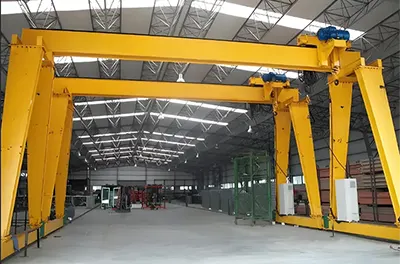 Economcial Low headroom gantry crane with hoist trolley on the top of the main girder
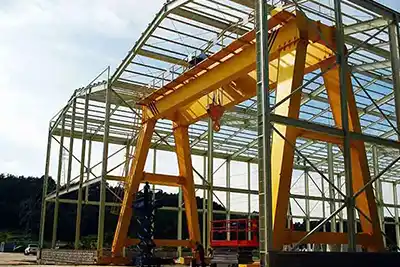 double girder low headroom gantry crane with rail travelling
 double girder low headroom gantry crane with rubber tyred wheel travelling
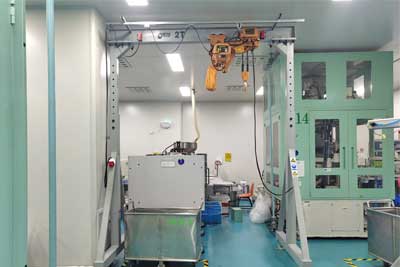 Aluminum gantry crane with low headroom chain hoist with capacity up to 10 ton for light loads and light duty material handling
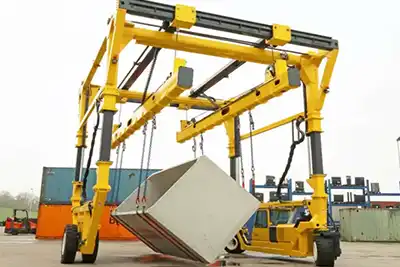 rubber tyred straddle carrier for heavy loads handling
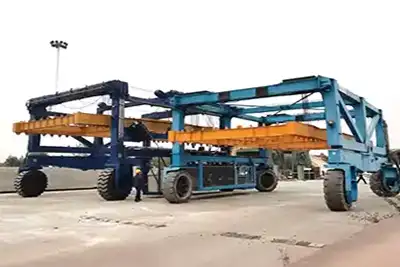 straddle carrier with low headroom design for confined space
Customized TBM Gantry Crane Engineering Solutions for Non-Standard Tunnel Conditions
+Why Customized TBM Gantry Cranes Are Critical in Modern Tunnel Construction
+Typical Applications of Customized Tunnel Gantry Cranes
+Typical Crane Specifications Used in Tunnel Projects
Customized TBM Gantry Crane Systems
Customized TBM gantry cranes are specially engineered lifting systems designed for tunnel boring machine (TBM) construction projects. Unlike standard industrial gantry cranes, these cranes are built around the actual tunnel environment, shaft dimensions, underground working space, and material handling process.
In tunnel construction, the crane is often one of the most important pieces of equipment on site. It supports segment handling, shaft lifting, equipment installation, spoil transportation, and TBM maintenance operations. If the crane design does not match the project conditions, tunnel construction efficiency can drop quickly.
That is why many contractors now use customized tunnel gantry crane systems instead of standard overhead lifting equipment.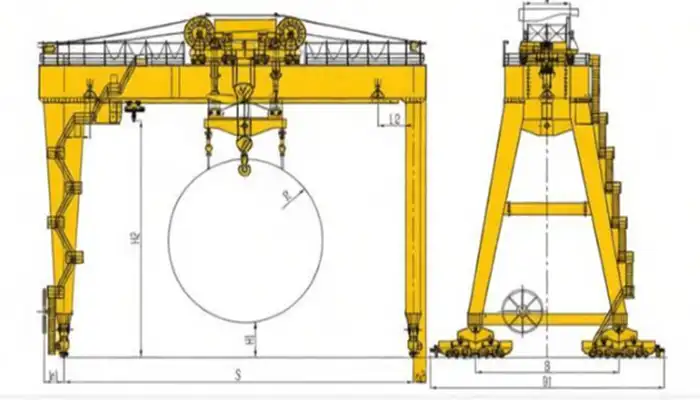
+What Is a Customized TBM Gantry Crane?
+Definition and Working Principles
Difference Between Standard Gantry Cranes and Tunnel-Specific Designs
At first glance, a tunnel gantry crane may look similar to a standard industrial gantry crane. However, the engineering requirements are very different.
Standard gantry cranes are usually designed for:
Factories
Warehouses
Outdoor storage yards
Open construction sites
Tunnel construction environments create additional challenges that require customized engineering.
+Standard Gantry Crane Limitations in Tunnel Projects
+Features of Tunnel-Specific Gantry Crane Designs
+Rail-Mounted Gantry Crane Systems for Underground Construction
Typical Tunnel Construction Environments Requiring Customized Crane Solutions
Tunnel construction environments are very different from normal industrial lifting sites. Space is restricted, underground conditions are harsh, and lifting operations are often continuous.
Because of this, customized crane engineering becomes necessary.
+Narrow Tunnel Portals
+Deep Shaft Construction
+Low-Clearance Underground Areas
+Slurry and Muddy Environments
+High-Humidity and Corrosive Underground Conditions
Why Standard Gantry Cranes Are Not Suitable for Many TBM Projects
At first glance, a standard gantry crane may appear capable of handling tunnel construction work. The lifting capacity may look sufficient on paper, and the crane may even be commonly used in factories or outdoor construction sites. However, TBM tunnel projects create very different operating conditions.
Underground tunnel construction involves restricted space, deep shaft lifting, continuous heavy-duty operation, and complicated material handling paths. In these environments, standard gantry crane designs often create operational limitations, installation difficulties, and long-term maintenance problems.
That is why many contractors choose customized TBM gantry cranes designed specifically for underground construction conditions.
Space Limitations in Underground Tunnel Construction
Space is one of the biggest challenges in tunnel projects.
Unlike open industrial workshops or outdoor storage yards, TBM construction sites usually have very limited operating space. Every area inside the shaft or tunnel portal may already be occupied by equipment, material transport systems, ventilation ducts, or temporary support structures.
A crane that works well above ground may become difficult to operate underground.
+Restricted Installation Areas
+Limited Hook Approach Space
+Conflicts with TBM Backup Systems and Conveyors
Non-Standard Shaft and Tunnel Geometry
Tunnel construction sites rarely follow perfect standard dimensions.
Shaft layouts, runway alignment, and underground foundation conditions often vary from project to project. Standard gantry crane dimensions may not match the actual construction geometry.
Customized crane engineering becomes necessary to ensure safe operation and proper load distribution.
+Irregular Shaft Dimensions
+Offset Runway Layouts
+Uneven Foundation Conditions
Heavy and Specialized Tunnel Loads
Tunnel projects involve many types of heavy and irregular loads that standard gantry cranes are not designed to handle efficiently.
The challenge is not only load weight, but also load shape, lifting frequency, positioning accuracy, and underground operating conditions.
+Precast Concrete Tunnel Segments
+TBM Spare Parts and Cutterhead Components
+Steel Reinforcement Cages
+Oversized Construction Equipment
Continuous Heavy-Duty Tunnel Operations
Tunnel construction is not occasional lifting work. In many TBM projects, the crane operates continuously for long periods every day.
This creates much higher operational demands compared with standard industrial lifting applications.
+High-Frequency Lifting Cycles
+Demanding Duty Classifications
+Increased Fatigue Loading on Crane Structures
Customized Span Engineering for TBM Gantry Cranes
Span design is one of the most important engineering factors in a TBM gantry crane project. In tunnel construction, the crane span directly affects lifting coverage, shaft accessibility, transportation clearance, structural stability, and overall construction efficiency.
A gantry crane with the wrong span may still lift the required load, but daily operation can become difficult and inefficient. In some projects, poor span selection creates traffic conflicts, restricted lifting zones, or unstable load distribution across the crane structure.
That is why customized span engineering is widely used in modern tunnel gantry crane systems.
Unlike standard industrial gantry cranes, tunnel cranes are usually designed around the actual shaft dimensions and underground construction layout.
+Why Span Selection Is Critical in Tunnel Projects
+Relationship Between Tunnel Width and Crane Span
+Material Transportation Lane Clearance
+Vehicle and Conveyor Integration
Typical Customized Span Ranges in TBM Gantry Cranes
In TBM tunnel construction, crane span is not a fixed parameter. It is adjusted according to shaft geometry, material flow layout, underground traffic space, and construction method. A correct span selection directly affects lifting efficiency, equipment clearance, and safe movement inside the tunnel working zone.
Different tunnel projects use different span configurations. The most commonly applied ranges are 18m, 22–26m, and 30–36m spans, each serving different construction scales and operational needs.
18m Span Gantry Cranes
18m span gantry cranes are widely used in compact tunnel construction environments where working space is limited and the shaft opening is relatively small.
These cranes are commonly selected for:
Small tunnel shafts
Utility tunnel projects
Compact metro access shafts
Maintenance lifting operations
In these applications, the main requirement is not wide coverage, but stable and safe lifting within a confined area.
Because the span is relatively short, the crane structure is generally more compact. This makes it easier to install and operate in restricted underground conditions.
+Advantages of 18m Span Tunnel Gantry Cranes
+Limitations of 18m Span Design
+Compact Tunnel Entrances
+Small Shaft Construction
+Practical Selection Considerations
22m–26m Span Gantry Crane Configurations
The 22m to 26m span range is one of the most widely used configurations in medium-scale TBM tunnel projects. It is often selected when the project requires a balance between lifting flexibility, structural performance, and overall investment cost.
This span range is commonly used in:
Medium metro tunnel projects
Railway tunnel construction
TBM launch and retrieval shafts
Underground station construction zones
In these environments, the crane must support continuous lifting operations while still fitting within a controlled construction layout.
+Practical Application Areas
+Preferred Crane Configuration
+Medium Metro and Railway Tunnel Projects
+Operational Balance in Real Projects
+Balanced Lifting Coverage and Cost Efficiency
30m–36m Heavy-Duty Tunnel Gantry Cranes
When tunnel projects become larger and more complex, wider span gantry cranes are required. The 30m–36m span range is typically used in large-scale infrastructure projects where shaft dimensions, load sizes, and operational requirements exceed medium project limits.
These cranes are usually heavy-duty double girder systems designed for continuous and demanding operation.
+Large TBM Launch Shafts and Infrastructure Projects
+Operational Demands in Large Projects
+Wide Shaft Material Handling Challenges
+Engineering Challenges in Large Span Cranes
+Structural Design Solutions
Structural Engineering Considerations in TBM Gantry Crane Design
Span selection in TBM gantry cranes is not only about how wide the crane can cover a tunnel shaft. It directly affects structural behavior, long-term durability, and operational safety under real tunnel construction conditions.
As span increases, the crane structure is subjected to higher bending moments, more complex load paths, and stronger dynamic forces during lifting and travel operations. Because of this, structural engineering becomes a key part of tunnel crane design rather than a secondary consideration.
Deflection Control
Deflection refers to the elastic bending of the crane girder when it is subjected to load. In tunnel gantry cranes, this becomes more noticeable as span length increases and lifting loads become heavier.
Large-span cranes naturally experience higher deflection, especially during:
Full-load lifting operations
Long-distance trolley movement
Segment installation work
Deep shaft lowering and lifting cycles
Even small deflection at the girder level can affect the precision of load positioning at the hook level, particularly in deep tunnel shafts.
+Impact of Excessive Deflection
+Engineering Solutions for Deflection Control
Stability Optimization
Stability in tunnel gantry cranes refers to the ability of the crane structure to remain balanced and controlled during lifting, travel, and load positioning operations.
In tunnel environments, cranes must operate under continuous working cycles, often in confined and complex layouts.
+Stability Challenges in Wide Span Cranes
+Engineering Methods for Stability Improvement
Load Distribution
Proper load distribution is essential for both crane structural integrity and rail system durability.
In TBM tunnel projects, cranes frequently handle heavy and repetitive loads such as tunnel segments, muck buckets, and TBM components.
If load distribution is not properly engineered, long-term operational problems may occur.
+Consequences of Poor Load Distribution
+Customized Load Distribution Design
Wind Resistance for Outdoor Portal Sections
In many tunnel construction projects, gantry cranes operate near tunnel entrances or portal zones where part of the crane is exposed to outdoor environmental conditions.
Unlike fully enclosed underground areas, these portal sections are subject to wind loads that can influence crane stability.
+Effects of Wind on Tunnel Gantry Cranes
+Engineering Measures for Wind Safety
Summary
Structural engineering in TBM gantry crane design is directly linked to span selection and real-world tunnel operating conditions.
Key considerations include:
Controlling deflection to maintain lifting precision
Optimizing stability under dynamic and continuous operation
Ensuring even load distribution across structure and runway
Enhancing wind resistance for outdoor portal environments
Together, these factors determine whether a tunnel gantry crane can operate reliably under the demanding conditions of modern TBM construction projects.
High Lifting Height Design for Deep Shaft Operations
Deep shaft TBM construction pushes gantry crane systems into operating conditions that are very different from normal industrial lifting. When lifting heights reach 30m, 40m, and especially 50m or more, the crane must manage not only heavier loads but also longer suspension distances, slower response behavior, and higher dynamic instability.
In these environments, high lifting height design becomes a core engineering requirement rather than an optional feature. The crane must ensure safe vertical transport between surface level and underground working zones, often in continuous operation cycles.
Why Deep Shaft Lifting Requires Specialized Engineering
Deep shaft lifting introduces a combination of mechanical, structural, and control challenges that standard gantry cranes are not originally designed to handle.
Unlike short-distance lifting in factories or open yards, tunnel shafts require long vertical travel inside confined spaces with limited visibility and complex underground conditions.
+Vertical Transportation Challenges
+Long Lifting Cycle Requirements
+Increased Sway Risks
Typical High-Lift Applications
High lifting height gantry cranes are essential in deep shaft and underground tunnel construction projects where vertical transport is continuous and mission-critical.
+Deep Tunnel Shaft Construction
+Segment Lowering Operations
+Spoil Bucket Lifting
+Underground Equipment Installation
Key High-Lift Engineering Features
To ensure safe and stable operation under deep shaft conditions, TBM gantry cranes incorporate several specialized engineering systems.
+Large-Capacity Wire Rope Drums
+Dual Braking Systems
+Anti-Sway Technology
+Encoder Positioning Systems
+Variable Frequency Drive Control
Safety Requirements for 50m+ Lifting Heights
When lifting heights exceed 50 meters, additional safety systems are required to ensure stable and reliable operation under high-risk conditions.
+Emergency Braking Systems
+Overload Protection
+Real-Time Monitoring Systems
+Redundant Lifting Safety Mechanisms
Summary
High lifting height design in TBM gantry cranes is a combination of mechanical strength, control precision, and safety redundancy.
As lifting height increases toward and beyond 50 meters, engineering focus shifts toward:
Controlling load sway during long vertical travel
Ensuring smooth and precise lifting cycles
Maintaining structural stability under dynamic load conditions
Providing multiple layers of operational safety
These factors are essential for safe and efficient deep shaft tunnel construction in modern TBM projects.
Structural Customization for Confined Tunnel Conditions
Tunnel construction environments rarely provide ideal space conditions. In TBM projects, cranes must operate inside narrow shafts, low-clearance portals, and congested underground working zones. Standard gantry crane structures often become too large, too rigid in layout, or too difficult to install.
For this reason, structural customization becomes a core requirement. Tunnel gantry cranes are designed not only for lifting capacity, but also for adaptability to confined geometry, restricted access, and phased construction conditions.
Low Headroom Tunnel Gantry Crane Designs
Low headroom gantry cranes are specifically developed for tunnel environments where vertical space is limited. These conditions are common at tunnel portals, shaft entrances, and underground working chambers where multiple systems are installed in a tight layout.
The main objective of low headroom design is simple: maximize usable hook height while minimizing structural height.
+Reduced Crane Height Configurations
+Compact Trolley Arrangements
+Maximized Hook Travel
Narrow Portal Gantry Crane Structures
Tunnel portal areas are often the most restricted zones in the entire TBM construction site. These areas must accommodate crane operation, vehicle access, material storage, and TBM support systems simultaneously.
Narrow portal gantry crane structures are designed specifically to operate in these constrained layouts.
+Slim Gantry Leg Designs
+Offset Trolley Systems
+Reduced Wheelbase Engineering
+Reinforced Heavy-Duty Structural Design
+Fatigue-Resistant Girder Structures
+Finite Element Analysis Optimization
+Heavy-Duty Shaft Lifting Reinforcement
Modular and Relocatable Crane Structures
Tunnel construction projects are often divided into multiple stages, with cranes needing to be moved, reinstalled, or adjusted as excavation progresses.
This makes modular design an important feature in modern TBM gantry crane systems.
+Bolted Structural Connections
+Simplified Transportation
+Fast Underground Assembly and Dismantling
Summary
Structural customization in confined tunnel environments is not just about adapting crane size. It is about balancing space constraints, heavy lifting demands, and long-term operational reliability.
Key engineering directions include:
Low headroom design for maximum hook height in limited vertical space
Narrow portal structures for congested tunnel entrances
Reinforced heavy-duty frameworks for continuous TBM operation
Modular structures for flexible installation and relocation
Together, these design strategies ensure that tunnel gantry cranes can operate effectively in the highly constrained and demanding conditions of modern TBM construction projects.
Customized Hoisting and Lifting Attachments
In TBM tunnel construction, the gantry crane is only part of the lifting system. The actual performance and safety of lifting operations depend heavily on the hoisting attachments used between the hook and the load.
Because tunnel materials are rarely uniform, and because lifting conditions vary from segment installation to TBM maintenance, customized lifting attachments are essential. These systems ensure stable load control, precise positioning, and safe handling under confined underground conditions.
Tunnel Segment Lifting Systems
Tunnel segments are one of the most frequently handled loads in TBM construction. They are heavy, precast concrete components that must be lifted repeatedly and positioned with high accuracy inside the tunnel lining ring.
Standard hooks are not suitable for this type of work. Instead, specialized segment lifting systems are used to improve grip stability and alignment precision.
+Segment Clamps
+Adjustable Lifting Beams
+Vacuum Lifting Systems
TBM Component Handling Equipment
TBM machines include large and complex components that require specialized lifting solutions during installation, maintenance, and disassembly.
These components are often irregular in shape, heavy, and difficult to balance using standard lifting hooks.
+Multi-Hook Spreader Beams
+Rotating Lifting Tools
+Maintenance Lifting Frames
Muck Bucket and Material Cage Handling
Spoil removal and material transport are continuous processes in TBM tunnel construction. Muck buckets and material cages are used to move excavated soil, rock, and construction materials between underground and surface levels.
Because these loads are frequently lifted and lowered, safety and speed are both critical.
+Quick-Release Hook Systems
+Automatic Locking Mechanisms
+Anti-Drop Safety Protection
Summary
Customized hoisting and lifting attachments play a direct role in determining the efficiency and safety of TBM gantry crane operations.
Different tunnel construction tasks require different attachment systems:
Segment handling relies on clamps, beams, and vacuum systems for precision and surface protection
TBM component handling requires spreader beams, rotating tools, and maintenance frames for complex heavy lifting
Muck bucket and material transport systems depend on quick-release hooks, automatic locking, and anti-drop safety devices for continuous operation
Together, these specialized lifting attachments ensure that TBM gantry cranes can adapt to the varied and demanding lifting requirements of modern tunnel construction projects.
Intelligent Automation and Safety Systems in TBM Gantry Cranes
Modern TBM gantry cranes are no longer purely mechanical lifting equipment. In current tunnel construction projects, especially metro, railway, and hydropower tunnels, cranes are increasingly integrated with intelligent control, automation systems, and real-time safety monitoring technologies.
These systems are designed to improve operational precision, reduce human error, and enhance safety in complex underground environments where visibility, space, and access are limited.
Remote Operation Tunnel Gantry Cranes
Remote operation technology allows operators to control the crane from a safe distance instead of staying inside high-risk tunnel or shaft zones.
This is especially important in deep shaft construction and confined underground environments.
+Wireless Control Systems
+Cabin-Free Operation
+Improved Operator Visibility and Safety
Automated Positioning Technology
Precision positioning is critical in TBM tunnel construction, especially during segment installation and underground equipment placement.
Automation systems help improve accuracy and reduce manual adjustment time.
+Laser-Assisted Positioning
+Precision Segment Placement
+Anti-Sway Automation
Real-Time Monitoring and Diagnostics
Modern TBM gantry cranes are equipped with advanced monitoring systems that provide continuous operational feedback and fault detection capabilities.
These systems improve reliability and allow predictive maintenance planning.
+PLC-Based Control Systems
+Load Monitoring Systems
+Fault Diagnosis Systems
+CCTV Monitoring Integration
Summary
Intelligent automation and safety systems are now a core part of TBM gantry crane engineering.
Key developments include:
Remote operation systems that reduce operator exposure in hazardous zones
Automated positioning technologies that improve accuracy in segment installation
Real-time monitoring and diagnostics that enhance operational reliability
Together, these systems transform tunnel gantry cranes from basic lifting equipment into integrated intelligent systems that support safer, more controlled, and more efficient TBM tunnel construction operations.
Environmental Protection and Anti-Corrosion Design
TBM tunnel construction environments are rarely clean or stable. Unlike surface industrial sites, tunnel shafts and underground chambers often involve high humidity, groundwater exposure, dust from excavation, slurry conditions, and chemical corrosion from soil and rock composition.
These environmental factors continuously affect crane performance, electrical reliability, and structural durability. For this reason, environmental protection and anti-corrosion design are essential parts of customized TBM gantry crane engineering, especially for long-duration metro, railway, and hydropower tunnel projects.
Dust-Proof Electrical Systems
Tunnel construction generates fine dust particles from excavation, segment handling, and concrete operations. This dust can easily enter electrical components and cause overheating, short circuits, or control failures if not properly protected.
To maintain stable performance, TBM gantry cranes use dust-proof electrical protection systems designed for harsh underground environments.
+IP55 and IP65 Electrical Protection
+Sealed Control Cabinets
+Enclosed Cable Systems
Summary
Dust-proof electrical systems are essential in TBM gantry cranes to ensure reliable operation in dusty, wet, and confined tunnel environments. By using high-rated enclosures, sealed control cabinets, and enclosed cable systems, cranes can maintain stable performance, extend equipment life, and reduce downtime due to electrical failures.
Corrosion-Resistant Tunnel Crane Structures
Corrosion is a long-term challenge in underground construction environments, especially in tunnels with groundwater, high humidity, or chemically active soil conditions.
Without proper protection, structural steel components may degrade over time, reducing both safety and service life.
+Epoxy Coating Systems
+Galvanized Structural Components
+Stainless Steel Accessories
Summary
Corrosion-resistant design in TBM gantry cranes is critical to maintain structural integrity and long-term operational reliability. By combining epoxy coatings, galvanized components, and stainless steel accessories, cranes are protected against moisture, chemical exposure, and abrasive conditions commonly encountered in underground tunnel projects.
High-Humidity Underground Protection
One of the most persistent environmental challenges in TBM tunnel construction is high humidity. Underground spaces often contain moisture from groundwater seepage, ventilation condensation, and temperature variation.
If not properly managed, humidity can affect both electrical and mechanical systems.
+Anti-Condensation Systems
+Moisture-Resistant Motors
+Ventilation-Compatible Electrical Systems
Summary
Environmental protection and anti-corrosion design are essential for ensuring long-term performance of TBM gantry cranes in underground tunnel construction.
Key engineering strategies include:
Dust-proof electrical systems with IP55/IP65 protection
Sealed control cabinets and enclosed cable routing for reliability
Epoxy coating, galvanization, and stainless steel components for corrosion resistance
Anti-condensation and moisture-resistant systems for high-humidity environments
Together, these measures ensure that tunnel gantry cranes can maintain stable, safe, and continuous operation even under the demanding environmental conditions of modern TBM construction projects.
Rail and Runway Engineering for Tunnel Gantry Cranes
Rail and runway systems are the structural backbone of TBM gantry crane operation. While the crane itself performs lifting and travel functions, the runway system determines how stable, accurate, and safe that movement will be in real tunnel conditions.
In TBM projects, runway engineering is rarely standard. It must adapt to tunnel geometry, ground settlement, shaft constraints, and phased construction progress. A poorly designed rail system can directly affect crane alignment, wheel wear, lifting precision, and long-term structural safety.
Customized Rail Gauge Design
Rail gauge refers to the distance between the two crane rails. In tunnel gantry crane systems, this dimension is not fixed and must be designed according to tunnel shaft width, load distribution requirements, and structural foundation conditions.
Unlike standard industrial yards, tunnel environments often have irregular layouts and limited installation space.
+Matching Tunnel Foundation Limitations
+Runway Alignment Engineering
+Rail Tolerance Requirements
Temporary and Permanent Runway Systems
Tunnel construction often progresses in phases. Because of this, runway systems must support both temporary installation during construction and potential permanent use in long-term infrastructure.
+Portable Rail Solutions
+Adjustable Runway Systems
+Future Expansion Compatibility
Uneven Foundation Adaptation
One of the most challenging aspects of tunnel runway engineering is dealing with uneven or unstable foundations.
Unlike factory floors, tunnel ground conditions are often affected by excavation, groundwater, and soil settlement, requiring specialized engineering solutions for crane runways.
+Settlement Compensation
+Adjustable Support Structures
+Temporary Civil Foundation Integration
+Summary
How to Select the Right Customized TBM Gantry Crane
Selecting a TBM gantry crane is not a standard procurement decision. It is a technical matching process between tunnel construction conditions and crane engineering limits. If the selection is too conservative, cost increases without operational benefit. If it is undersized, lifting safety and construction efficiency will be affected throughout the project lifecycle.
A proper selection must consider lifting capacity, span, lifting height, duty classification, and actual tunnel workflow. These parameters must be evaluated together, not in isolation.
Key Technical Parameters Buyers Must Confirm
Before finalizing a customized TBM gantry crane design, several core parameters must be clearly defined based on real tunnel conditions and construction requirements.
+Lifting Capacity
+Span
+Lifting Height
+Duty Classification
+Power Supply
Load Analysis for Tunnel Projects
Accurate load analysis is the foundation of safe crane selection. In TBM projects, loads are not always uniform, and different lifting tasks may require specific handling configurations.
+Maximum Load Weight
+Load Dimensions
+Lifting Frequency
+Future Capacity Allowance
Choosing Between Single Girder and Double Girder Designs
Selecting between single girder and double girder gantry cranes directly impacts cost, performance, and operational capabilities in TBM tunnel projects.
+Cost Comparison
+Structural Stability
+Maintenance Accessibility
+Heavy-Duty Operation Suitability
Avoiding Overdesign and Undercapacity
Imbalance between crane design specifications and actual operational needs is a frequent challenge in TBM projects.
+Matching Crane Design to Actual Tunnel Operations
+Balancing Investment and Productivity
+Lifecycle Operating Cost Considerations
+Summary
Typical Applications Across Tunnel Industries
Customized TBM gantry cranes are not limited to a single construction type. Their design flexibility allows them to be applied across multiple tunnel industries where underground lifting, deep shaft handling, and continuous material flow are required.
Although the core principle remains the same-safe and controlled lifting in confined environments-the operational conditions vary significantly between metro, railway, hydropower, and utility tunnel projects. Each application introduces different load types, construction methods, and environmental challenges.
Metro Tunnel Construction Projects
Metro tunnel construction is a prime application for TBM gantry cranes, where underground space is limited and precision lifting is critical.
+Urban Underground Transit Systems
+Confined City Construction Conditions
Railway Tunnel Engineering
Railway tunnel projects involve long-distance underground construction through mountains or remote terrain, requiring heavy-duty gantry cranes with extended spans and high lifting capacity.
+Long-Distance Tunnel Projects
+Mountain Excavation Environments
Hydropower Tunnel Construction
Hydropower tunnels present some of the most demanding scenarios for TBM gantry cranes, requiring extreme lifting heights, high humidity protection, and continuous heavy-duty operation.
+Deep Vertical Shaft Handling
+High-Moisture Underground Conditions
Utility and Pipeline Tunnel Projects
Utility tunnels support essential infrastructure systems such as water supply, power transmission, gas pipelines, and communication networks. Compared to large metro or railway projects, they are generally smaller in scale but require highly flexible and efficient lifting solutions.
+Water Transfer Tunnels
+Cable and Utility Corridor Construction
Summary
TBM gantry cranes are applied across multiple tunnel construction sectors, each with distinct operational requirements and engineering constraints.
Metro tunnels: high-frequency lifting in dense urban underground environments
Railway tunnels: long-distance, heavy-duty lifting in mountainous and remote terrain
Hydropower tunnels: deep shaft, high-moisture, and high-lift demanding operations
Utility tunnels: flexible, compact, and cost-efficient lifting for infrastructure installation
Despite these differences, all applications depend on the same core requirement: safe, stable, and precisely controlled lifting in confined underground conditions.
This versatility makes customized TBM gantry crane systems a critical component in modern tunnel construction engineering worldwide.
Information Required for Customized TBM Gantry Crane Quotations
Providing an accurate quotation for a customized TBM gantry crane is not possible without clear engineering and site information. Unlike standard lifting equipment, tunnel gantry cranes are designed based on real construction conditions, TBM configuration, and underground workflow requirements.
To ensure a correct technical proposal and cost estimate, buyers need to provide structured project data covering project background, crane specifications, site conditions, and material handling requirements.
Basic Project Information
The first step in any quotation process is understanding the overall tunnel project background. This helps define the working environment and determines whether the crane will be used in metro, railway, hydropower, or utility tunnel construction.
+Tunnel Type
+TBM Model
+Project Location
Required Crane Technical Specifications
Clear technical requirements help ensure that the crane design matches actual construction needs without overdesign or undercapacity.
+Capacity
+Span
+Lifting Height
+Working Duty
Site Condition Information
Site conditions have a direct impact on structural design, electrical protection, and long-term crane performance.
+Underground or Outdoor Installation
+Dust and Humidity Conditions
+Wind Conditions
+Foundation Limitations
Material Handling Requirements
Material handling information defines how the crane will be used during actual tunnel construction operations.
+Segment Specifications
+Maximum Lifting Loads
+Special Lifting Attachments Required
+Summary
Conclusion
Why Customized TBM Gantry Crane Engineering Matters
Improves tunnel construction efficiency
Enhances lifting safety in confined underground environments
Reduces downtime and operational risks
Optimizes long-term project investment
Final Recommendations for Tunnel Project Buyers
Prioritize project-specific engineering instead of standard crane selection
Confirm tunnel dimensions, shaft depth, and material handling workflow early
Evaluate future relocation and reuse requirements before finalizing crane configuration
Work with experienced gantry crane manufacturers capable of delivering customized tunnel lifting solutions


