


Custom Bridge Crane Specifications to Operational Needs. Optimize operations by aligning precise bridge crane specs with specific industrial requirements for enhanced efficiency & productivity. Design bridge crane for you!
Maximizing Efficiency: Matching Bridge Crane Specifications to Operational Needs:
Both the capacity and specifications of bridge cranes is crucial for optimizing operational efficiency in various industrial applications. Bridge cranes, with their diverse designs, offer tailored solutions for lifting and transporting loads within specific capacity ranges. This article explores the different types and designs of bridge cranes, emphasizing how these variations impact specifications and performance.
Bridge cranes, also known as overhead cranes, consist of parallel runways with a traveling bridge spanning the gap. The hoist, the lifting component, moves along the bridge, allowing for horizontal and vertical load movement. These cranes are pivotal in manufacturing, assembly lines, and material handling due to their ability to move heavy loads with precision and control.
Crane capacity, defined as the maximum weight a crane can safely lift, directly influences key specifications such as span (distance between runways), lift height (vertical distance the load can be raised), speed (hoisting and traveling), and duty cycle (frequency and duration of use). Different crane designs, even within the same capacity range, can offer varying specifications tailored to specific operational needs.
Bridge Cranes by Capacity, Design, and Specifications:
1 to 5 Ton Bridge Cranes:
Typical Applications: Light manufacturing, small workshops, assembly lines.
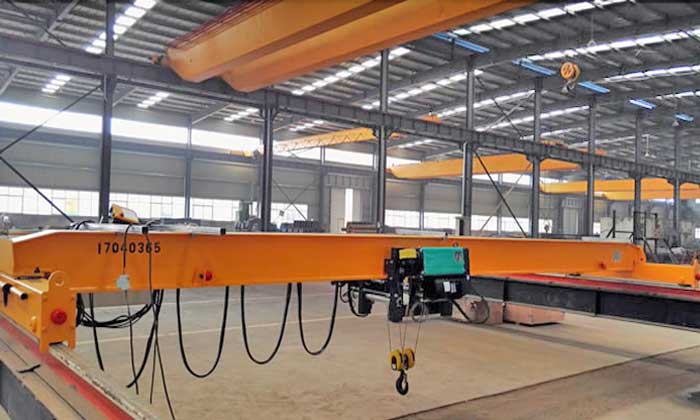
Single Girder Bridge Cranes:
Span: 20 to 60 feet.
Lift Height: 10 to 20 feet.
Speed: 20 to 50 feet per minute (FPM).
Duty Cycle: Light to moderate.
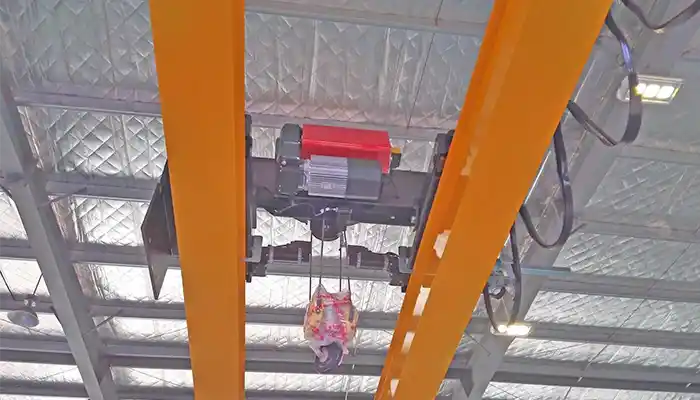
Double Girder Bridge Cranes:
Span: 30 to 100 feet.
Lift Height: 20 to 30 feet.
Speed: 30 to 60 FPM.
Duty Cycle: Moderate to heavy.
Underhung Bridge Cranes:
Span: 10 to 30 feet (limited by ceiling structure).
Lift Height: 10 to 15 feet.
Speed: 20 to 40 FPM.
Duty Cycle: Light to moderate.
6 to 20 Ton Bridge Cranes:
Typical Applications: Medium-sized facilities, heavier manufacturing processes, larger assembly lines.
Single Girder Bridge Cranes:
Span: 30 to 80 feet.
Lift Height: 20 to 30 feet.
Speed: 20 to 50 FPM.
Duty Cycle: Moderate.
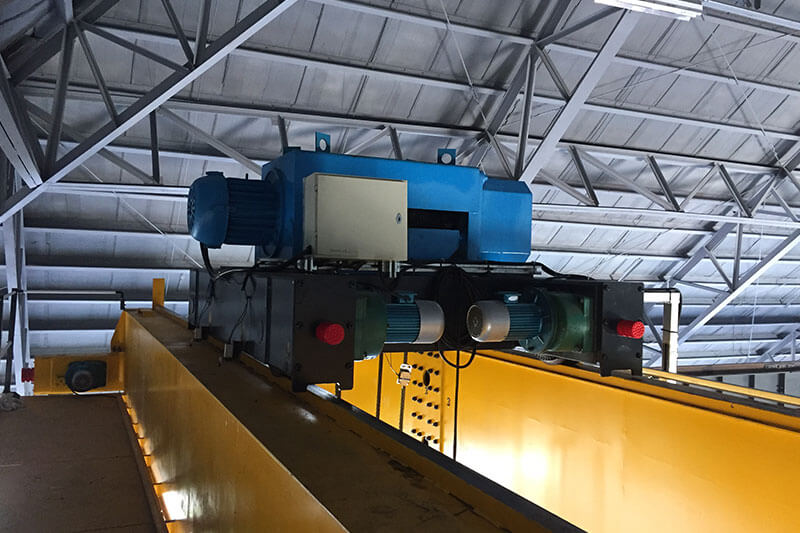 20 ton double girder bridge crane
Double Girder Bridge Cranes:
Span: 40 to 100 feet.
Lift Height: 25 to 35 feet.
Speed: 30 to 70 FPM.
Duty Cycle: Heavy.
25 to 50 Ton Bridge Cranes:
Typical Applications: Large-scale manufacturing, construction sites, heavy equipment handling.
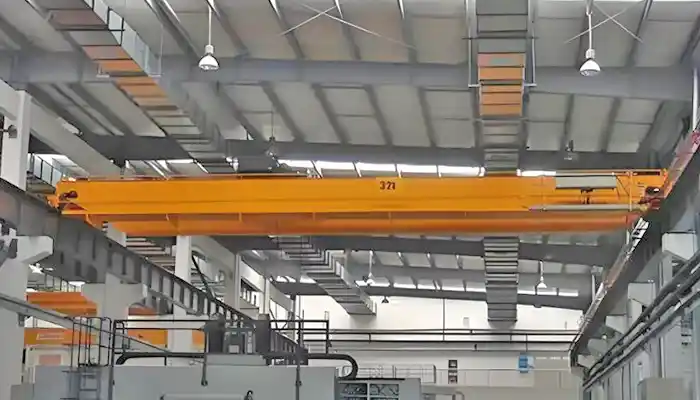 32 ton bridge crane
Double Girder Bridge Cranes:
Span: 50 to 120 feet.
Lift Height: 30 to 50 feet.
Speed: 40 to 90 FPM.
Duty Cycle: Heavy.
100 Ton Bridge Cranes and Beyond:
Typical Applications: Extremely heavy lifting in industries such as shipbuilding, steel mills, major construction projects.
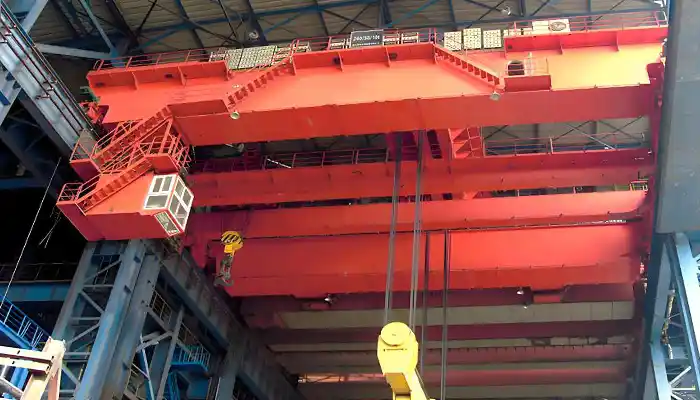
Double Girder Bridge Cranes:
Span: Up to 200 feet.
Lift Height: 50 to 100 feet.
Speed: 50 to 120 FPM.
Duty Cycle: Continuous.
Factors to Consider When Evaluating Specifications:
When selecting a bridge crane, several critical factors must be considered to ensure that the crane meets the operational needs efficiently and safely. These factors include load capacity, span and lift height, hoisting and travel speed, duty cycle, and environmental conditions. Here is a more detailed look at each of these factors:
Load Capacity:
Definition: The maximum weight that a crane can safely lift and transport.
Considerations:
Peak Loads: Ensure the crane can handle the heaviest load it will encounter, including any potential future increases in load requirements.
Safety Margins: Factor in a safety margin above the expected maximum load to account for any unforeseen circumstances.
Distribution of Load: Consider how the load will be distributed. Uneven loads can place additional stress on the crane and its components.
Regulations and Standards: Adhere to industry regulations and standards for load capacity to ensure safety and compliance.
Span and Lift Height:
Span:
Definition: The horizontal distance between the runways of the bridge crane.
Workspace Dimensions: Ensure the span matches the dimensions of the workspace. A span that is too short or too long can limit the crane's effectiveness.
Structural Considerations: Ensure the building structure can support the crane's span, especially for long spans that may require additional support.
Lift Height:
Definition: The vertical distance the crane can lift the load from the ground.
Operational Requirements: Match the lift height to the operational requirements, ensuring it can accommodate the tallest items or highest lifts needed.
Obstructions: Account for any potential obstructions within the lift path, such as beams, pipes, or other equipment.
Hoisting and Travel Speed:
Hoisting Speed:
Definition: The speed at which the crane can lift and lower the load.
Efficiency: Faster hoisting speeds can improve productivity but must be balanced with safety considerations.
Precision: For delicate or precise operations, slower speeds may be necessary to ensure careful handling of the load.
Travel Speed:
Definition: The speed at which the crane moves horizontally along the runways and the hoist moves along the bridge.
Workflow Integration: Ensure travel speed aligns with the workflow speed to avoid bottlenecks.
Safety: Higher speeds require additional safety measures to prevent accidents or collisions.
Duty Cycle:
Definition: The frequency and duration of the crane's use, often expressed as a percentage of operation time over a specific period.
Usage Patterns:
Light Duty: For occasional or intermittent use, typically with long idle periods between uses.
Medium Duty: For regular use with moderate frequency and duration.
Heavy Duty: For continuous or near-continuous use with minimal idle time.
Component Selection: The duty cycle affects the selection of components, such as motors and brakes, which need to withstand the expected operational demands.
Environmental Conditions:
Indoor vs. Outdoor Use:
Indoor Cranes: Typically shielded from weather elements but may face challenges like limited space or specific facility layouts.
Outdoor Cranes: Must withstand weather conditions, including rain, wind, and temperature variations, requiring robust and weather-resistant components.
Temperature:
Extreme Cold: May require heaters or insulated components to prevent freezing and ensure smooth operation.
Extreme Heat: May require cooling systems or heat-resistant materials to prevent overheating and ensure longevity.
Humidity:
High Humidity: Can cause corrosion and rust, necessitating corrosion-resistant materials and regular maintenance.
Dust and Debris: In dusty environments, additional filtration and sealing may be required to protect the crane's moving parts and electrical components.
Chemical Exposure: In environments with chemical exposure, materials resistant to specific chemicals and additional protective coatings may be necessary.
By thoroughly evaluating these factors, businesses can ensure that the selected bridge crane not only meets their immediate operational needs but also provides long-term reliability and safety in their specific working environment.
Matching Specifications to Operational Needs:
Choosing the right bridge crane involves aligning its specifications with the specific requirements of the operation it will serve. This ensures that the crane performs optimally, safely, and efficiently. Below are detailed considerations and examples of how to match crane specifications to operational needs.
Electric hoist trolley for double girder bridge crane for sale Philippines
Crane type: Double girder bridge crane with electric hoist trolley European style
Crane capacity: 35t/5 ton
Crane span: 49m
Crane lifting height: 10m
Crane power supply: 400V60HZ/3Phase
Project location: Philippines
Crane Type: Open Winch Double Girder Overhead Crane
Crane Capacity: 45 Ton
Crane Span: 22.785 m
Crane Lifting Height: 15 m
Crane Power Supply: 415V50HZ3P
Crane Control: Joystick Remote Control


