


Why Overhead Cranes Matter in Fire Pump Production
If you walk into a fire pump workshop, one of the first things you'll notice is the constant movement of materials-brass rods stacked neatly on one side, aluminum bars waiting to be cut, and semi-finished parts lined up for machining or assembly. These aren't light items, and moving them by hand isn't just tiring-it slows down the whole process. That's where an overhead crane comes in. It takes on the heavy lifting, keeps things moving smoothly, and makes the workplace safer for everyone.
Handling Brass and Aluminum the Right Way
Brass and aluminum are the metals of choice for valves and pump components, but they're not as tough as steel. A small dent or scratch during lifting might not look serious, but it can affect machining accuracy and even cause rejection later in assembly. Using an overhead crane gives you better control:
Lifting is smoother and steadier.
Proper tools-like coated hooks or fabric slings-protect the surface.
Less manual handling means less risk of accidental damage.
Why 5 Tons Hits the Sweet Spot
Now, why talk about 5 ton overhead cranes in particular? Because they're just the right size for the job. Most brass or aluminum loads in pump workshops fall between a few hundred kilos and about 3–4 tons. A 5 ton crane covers this comfortably without being oversized.
Here's what makes 5 tons so practical:
Right for the load – easily handles bundled raw materials and finished parts.
Workshop-friendly – fits well in buildings with medium ceiling heights.
Budget-wise – no need to spend on bigger equipment that won't be used to its full capacity.
Think of a 5 ton overhead crane as the workshop's helping hand. It's strong enough for brass and aluminum handling, gentle enough to protect delicate surfaces, and compact enough to fit into most fire pump production spaces. In short, it's a reliable, everyday tool that keeps the workflow steady and safe.
Industry Requirements: Fire Pump Production Needs
Brass and Aluminum in Everyday Pump Manufacturing
In most fire pump workshops, brass and aluminum are the go-to materials. Brass is often used for valves because it handles water pressure well and doesn't rust easily. Aluminum, on the other hand, is lighter and easy to machine, making it a good choice for pump housings and other parts that need both strength and precision.
You'll often see:
Brass rods being cut and machined into valve bodies and fittings.
Aluminum bars or billets turned into housings, impellers, and pump covers.
Both metals working together to keep pumps durable, reliable, and efficient.
Why Gentle Handling Matters
The catch is that brass and aluminum aren't as tough as steel. They scratch easily, and a small dent can throw off machining accuracy or even ruin a sealing surface. In pump production, that means wasted material, extra time, and sometimes a rejected part. That's why lifting and moving need to be controlled, steady, and protective of the material surface.
With an overhead crane, this becomes easier because:
Loads are lifted smoothly instead of dragged or pushed.
Protective hooks, slings, or clamps can be used to avoid surface damage.
Materials arrive at the machine or assembly point in the same condition they were stored.
The Trouble With Manual Handling
Many small workshops start out using forklifts, pallet trucks, or just a few workers to move brass and aluminum. It works for lighter pieces, but once bundles weigh a ton or more, the system starts to break down. Workers get tired, safety risks go up, and moving materials becomes a slow job.
By comparison, an overhead crane can:
Reach across the entire workshop without obstacles.
Move bundles directly to the cutting, machining, or assembly area.
Save time by reducing the number of people needed for each lift.
Keep the whole process safer and more predictable.
Brass and aluminum are at the heart of fire pump production, but they need careful handling. Relying on manual methods often creates more problems than it solves. A 5 ton overhead crane gives workshops a simple, reliable way to move these metals without damaging them or slowing down production.
Why Choose a 5 Ton Overhead Crane
In fire pump production, most of the materials you handle-brass rods, aluminum bars, and semi-finished components-don't weigh as much as steel bundles, but they can still add up fast. A 5 ton overhead crane hits the sweet spot: strong enough to lift heavy bundles, but not oversized for everyday workshop use.
Can handle bundled brass or aluminum up to 3–4 tons comfortably.
Supports semi-finished parts and assemblies without overloading.
Leaves room for occasional heavier lifts without needing a bigger, more expensive crane.
Fits Perfectly in Workshop Spaces
Space is always tight in a pump workshop. Machinery, storage racks, and workstations compete for every square meter. A 5 ton single girder crane is compact, so it can fit in workshops with medium ceilings and narrower aisles.
It doesn't crowd the floor, leaving enough room for workers and machines.
Works well in low- to medium-height buildings.
Reduces the need for structural modifications.
Moves across the workshop without blocking machines or storage areas.
A Good Balance of Cost and Performance
Larger cranes cost more to buy, install, and maintain-even if you don't fully use their capacity. The 5 ton crane keeps costs reasonable while still offering strong performance and flexibility. It's easy to operate, reduces labor needs, and adapts to multiple tasks across the workshop.
Lower purchase and maintenance costs compared to heavier cranes.
Flexible enough for lifting raw materials, semi-finished parts, and assemblies.
Smooth controls help prevent damage to delicate brass and aluminum surfaces.
A 5 ton overhead crane isn't overkill-it's practical. It's strong enough for everyday handling of brass and aluminum, compact enough for tight workshops, and cost-effective enough to make sense for most fire pump manufacturers. In short, it just works.
Key Crane Types for Non-Ferrous Metal Handling
Single Girder Overhead Cranes (5 Ton)
Single girder overhead cranes are the most common choice for fire pump workshops handling brass and aluminum. They're simple, economical, and compact, which makes them ideal for small to medium-sized workshops. Despite their simplicity, they're reliable and handle everyday lifting tasks with ease.
Perfect for lifting raw materials, semi-finished parts, and smaller assemblies.
Easy to install in workshops with limited space.
Lower maintenance compared to more complex cranes.
Low Headroom Electric Hoist Cranes
Some workshops have limited ceiling height, making standard cranes impractical. Low headroom electric hoist cranes are designed to maximize lifting capacity while taking up minimal vertical space. This allows you to move materials without raising the workshop roof or reducing headroom for operators.
Ideal for compact production areas.
Allows full lifting capacity even in low-height buildings.
Smooth, precise operation for delicate brass and aluminum parts.
Workstation Bridge Cranes 2Ton
Workstation bridge cranes are smaller, flexible cranes designed for frequent movement of parts within a specific area. They're great for assembly lines or machining stations where materials need to move quickly from one point to another. These cranes give operators full control without slowing down production.
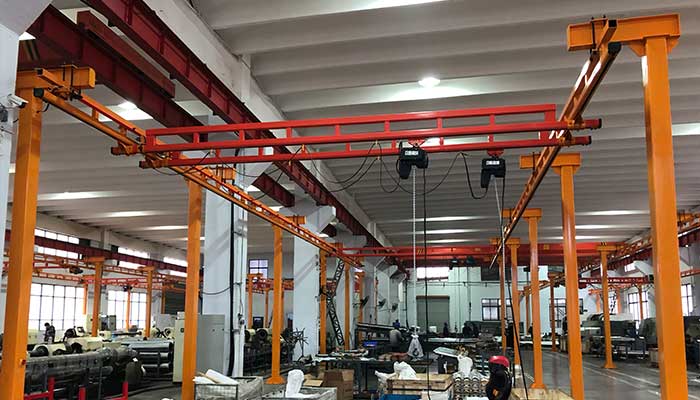
workstation bridge crane
Efficient for short-distance, repeated lifts.
Can be installed over specific workstations or sections of the workshop.
Reduces manual labor while improving safety and precision.
Choosing the right crane type depends on your workshop size, ceiling height, and workflow needs. Single girder cranes are great all-rounders, low headroom cranes solve height limitations, and workstation bridge cranes give flexibility for frequent lifts. Together, they cover most handling needs for brass and aluminum in fire pump production.
Typical Applications in Fire Pump Workshops
Material Receiving Area
The first stop for brass rods, aluminum bars, or semi-finished parts is usually the receiving area. Trucks drop off heavy bundles that need to be moved quickly and safely into the workshop. A 5 ton overhead crane makes this process much easier, lifting directly from the truck and placing the material where it's needed without relying on forklifts or manual labor.
Unload bundles of brass rods and aluminum bars safely.
Move materials to storage or prep areas efficiently.
Reduce the risk of damage during handling.
Cutting and Machining Section
Once the materials are in the workshop, they need to go to the cutting or machining stations. Brass and aluminum can be heavy and awkward to move by hand, and dropping even a small piece can ruin the batch. The crane provides precise control, so operators can position rods and bars exactly where they're needed.
Transport semi-finished rods and bars to lathes or milling machines.
Position materials steadily to avoid scratches or dents.
Handle different batch sizes without extra effort.
Assembly Line
After machining, components need to reach the assembly line for valves and pumps. A crane makes it simple to lift delicate, machined parts and deliver them straight to the workstation. Smooth operation prevents damage and keeps production moving at a steady pace.
Move machined brass and aluminum parts to assembly stations.
Minimize manual handling to protect surface finish.
Ensure consistent delivery for uninterrupted assembly workflow.
Storage and Packing
Finally, finished components must be stacked, stored, or loaded for shipment. This stage requires careful handling because the parts are often finished and ready for use. The crane can lift and organize items efficiently, making sure everything stays in perfect condition.
Stack and store finished components safely.
Load bundles or individual parts for transport.
Keep the workshop organized while reducing labor needs.
From unloading trucks to delivering finished components, a 5 ton overhead crane touches nearly every step of the fire pump production process. It makes handling brass and aluminum safer, faster, and more precise, ensuring smooth workflow and reducing material damage along the way.
Special Handling Considerations
Surface Protection
Brass and aluminum are softer metals, which means even a small scratch or dent can cause problems down the line. Whether it's a rod, bar, or semi-finished part, keeping surfaces intact is crucial for machining accuracy and final assembly. Using the right crane and handling techniques ensures that every piece arrives at its destination in perfect condition.
Avoid dragging or dropping materials.
Use padding or protective coatings on hooks and slings.
Inspect parts for scratches or marks before and after lifting.
Lifting Attachments
Not all hooks or slings are created equal. For delicate non-ferrous metals, you need attachments that protect the material while providing secure lifts. Soft slings, coated hooks, and non-magnetic grabs are ideal options that prevent damage without compromising safety.
Soft slings: Wrap around rods or bars without leaving marks.
Coated hooks: Protect surfaces during lifting and lowering.
Non-magnetic grabs: Useful when handling parts sensitive to magnetism or finishing processes.
Safety Measures
Fire pump workshops often have machining areas where dust, metal shavings, or sparks can be present. Ensuring safety around cranes is essential, both for workers and the material. Incorporating dust collection or spark-proof hoists helps minimize risks.
Maintain clear pathways and proper lighting around the crane.
Use spark-proof or electrically safe equipment near machining areas.
Train operators to handle loads carefully and follow safety protocols.
Precision Handling
Delicate parts need careful positioning, and cranes with smooth, controllable movement make this possible. Even small misalignments can create assembly or machining issues, so precise control is key.
Smooth start and stop motions for accurate placement.
Adjustable hoist speed for delicate operations.
Ability to lift and lower steadily to avoid sudden jolts.
Handling brass and aluminum isn't just about lifting weight-it's about handling it carefully. Surface protection, the right attachments, safety precautions, and precise crane operation all work together to ensure materials move efficiently and arrive ready for the next step in production.


