


32 Ton RTG Gantry Crane Lightweight Design Case (690 Steel Solution)
Most Important Takeaway
This 32 ton RTG gantry crane (32 ton gantry crane / 32 ton RTG crane solution) achieves high lifting performance with significantly reduced self-weight through 690MPa high-strength steel and structural optimization, making it suitable for weak ground and strict wheel load limitation projects.
Key Takeaways
32 ton RTG gantry crane self-weight reduced to 117 tons
Meets strict 130-ton wheel load limitation requirement
Uses 690MPa high-strength steel instead of conventional 355MPa steel
Maintains stable performance as a 32 ton gantry crane under harsh site conditions
Provides a cost-effective alternative to imported RTG crane systems
Suitable for soft soil, underground water, and complex foundation projects
RTG Crane Problems Solved Here
This 32 ton RTG crane solution directly addresses real engineering and procurement concerns:
How to control wheel load for a 32 ton RTG gantry crane on weak ground?
Can a 32 ton gantry crane be lightweight without reducing lifting capacity?
Is high-strength steel safe for RTG crane structural design?
How to reduce total cost compared to imported RTG crane systems?
What RTG gantry crane design works in soft soil or unstable foundation areas?
Project Background
This project is a 32 ton RTG gantry crane designed for a construction site where ground conditions are not very stable. It is not a simple open yard. The soil layer changes in different areas, and there is underground water flow, with possible sinkholes in some zones. So the crane design cannot follow a standard layout.
The customer was not only asking for lifting capacity. The focus was more on how the crane behaves on the ground. That part matters more here.
Site has soft soil layers and uneven bearing capacity
Underground water flow affects long-term foundation stability
Some areas have potential sinkholes that limit load concentration
Crane must move safely while fully loaded in outdoor conditions
Main Technical Constraints
When we started the design of this 32 ton gantry crane / 32 ton RTG crane, three clear limits were set. These limits basically shaped the whole structure from the beginning.
First, wheel load control was strict. The ground could not accept high pressure in certain zones, so the total force coming down from the crane had to stay within a safe range.
Second, the total self-weight of the crane was capped. It could not go beyond 130 tons. This is not a theoretical number. It comes directly from site soil calculation and foundation checking.
Third, even with these restrictions, the crane still had to lift 32 tons smoothly during outdoor operation. No reduction in working capacity was allowed.
Wheel load must stay within soil bearing limit
Total crane self-weight must not exceed 130 tons
Stable 32 ton lifting capacity required under full outdoor exposure
Operation includes travel, lifting, and positioning in uneven ground zones
Engineering Consideration at Early Stage
At the early stage, we focused on balancing weight and structure. If the crane is too heavy, the ground becomes a problem. If it is too light without proper design, lifting stability is affected.
So the design direction was set around a simple idea: reduce unnecessary structural weight while keeping load paths clear and strong.
This is where material selection and structural layout were adjusted together, not separately.
Structural weight distribution checked section by section
Load transfer path simplified to avoid redundant steel usage
Material selection planned based on stress levels, not uniform replacement
Outdoor working condition considered from the beginning, not added later
The goal was straightforward. Keep the crane stable, but do not overload the ground.
Engineering Solution
Lightweight RTG Gantry Crane Structural Design
For this 32 ton RTG gantry crane / 32 ton gantry crane, the first step was not to change the capacity, but to rework how the structure carries the load. The idea was simple in wording, but careful in execution.
We reviewed each main beam, support section, and connection point. Some parts were carrying more steel than needed, not because of strength demand, but because of old design habits.
So the structure was adjusted to reduce those redundant sections while keeping the full load path clear.
Main beam structure redesigned with optimized load flow
Unnecessary reinforcement plates reduced step by step
Connection zones checked for real stress instead of assumed load
Overall structure kept stable under full 32 ton lifting condition
The result is a cleaner structure that still meets safety requirements, but does not carry extra weight that the site does not allow.
690MPa High-Strength Steel Application
A key change in this 32 ton RTG crane design was the material upgrade. Instead of using only conventional steel, selected structural parts were switched to 690MPa high-strength steel.
This was not applied everywhere. It was applied where stress is concentrated and where weight reduction matters most.
Higher strength-to-weight ratio compared to 355MPa steel
Reduced steel usage while keeping same load capacity
Better response under repeated lifting and travel cycles
More stable performance under uneven outdoor loading
In practice, this allowed the structure to become lighter without reducing its ability to carry 32 tons safely. The difference shows up most clearly when the crane is moving under load, not just standing still.
Wheel Load Optimization for RTG Operation
After structural and material adjustments, the next focus was wheel load control. This is the part that connects directly with the site condition.
Because the ground includes weak soil and underground water influence, pressure distribution had to be carefully controlled. The final design balanced total weight and wheel spacing.
Final crane weight controlled at 117 tons, below the 130-ton limit
Wheel load distributed evenly across travel system
Designed to reduce local ground pressure during movement
Stable operation maintained even on weaker soil sections
This means the crane is not only able to lift 32 tons, but also move with that load in a controlled and predictable way.
Engineering Value for Industrial Projects
This 32 ton RTG gantry crane solution / 32 ton gantry crane is not designed for a single type of site. It is mainly used where ground conditions and lifting demand need to be balanced at the same time. In many projects, the crane itself is not the hardest part-the foundation and wheel load control usually decide whether the plan can be executed.
In practice, this type of RTG gantry crane is commonly used in construction environments where mobility and load capacity must work together.
Bridge construction and large infrastructure beam lifting
Soft soil or reclaimed land construction areas
Outdoor installation work with heavy components
Sites that require mobile lifting with strict ground pressure limits
In these situations, a traditional heavy crane often increases foundation cost or limits movement flexibility. A lighter RTG structure helps reduce that pressure on the ground side, while still keeping full lifting capacity at 32 tons.
The key point is not only lifting weight, but how the crane behaves when it travels under load. That is where this design approach makes practical sense in real site planning.
In many projects, this type of engineering allows the user to reduce foundation reinforcement work, shorten preparation time, and still keep stable lifting performance during daily operation.
Conclusion
This 32 ton RTG gantry crane / 32 ton RTG crane solution proves that advanced engineering design and 690MPa high-strength steel can significantly reduce self-weight while maintaining full lifting capacity. By optimizing structure and material selection, the crane achieves lower wheel load, higher site adaptability, and lower project cost-making it a strong alternative to expensive imported RTG systems for complex construction environments.
6 Types of Hot Sale RTG Gantry Cranes
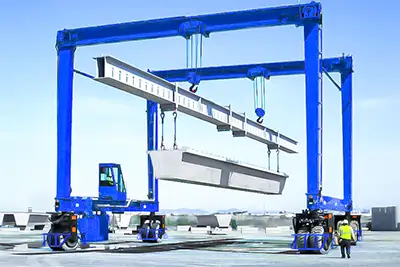 Industrial Rubber Tyred Gantry Crane 5 Ton to 900 Ton
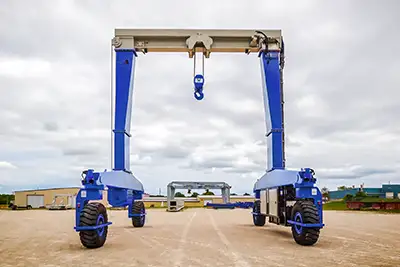 Single Beam Rubber Tyred Gantry Crane
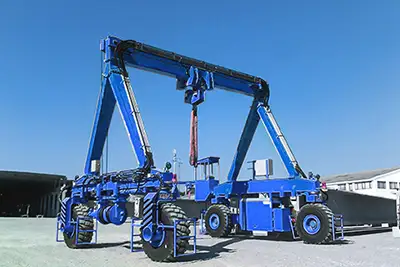 Single Beam Rubber Tyred Gantry Crane - A Frame 1 Ton to 20 Ton
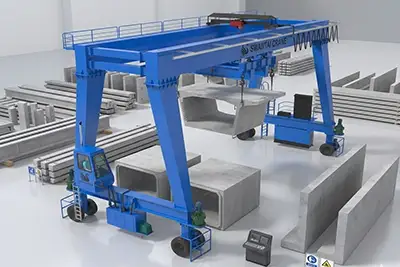 Double Girder Rubber Tyred Gantry Crane A Frame- 5 Ton to 80 Ton, Tailored Up to 320 Ton
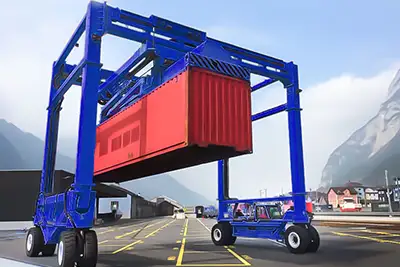 Rubber Tyred Straddle Carrier Crane 30 Ton to 50 Ton
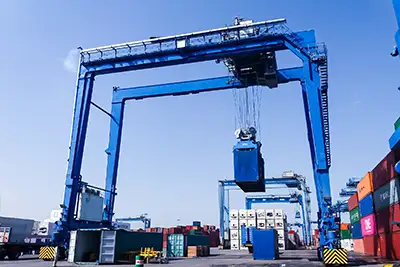 RTG Container Crane System - Double Girder U Frame


