










Trussed Type Electric Hoist Gantry Crane
Products Description
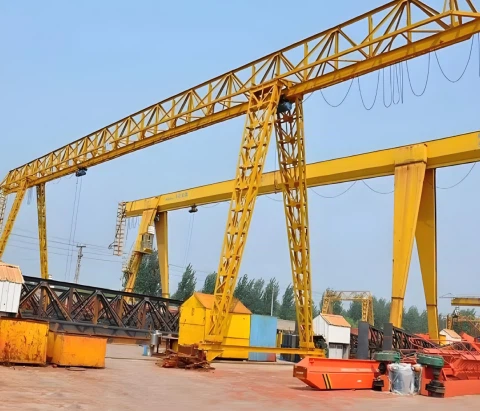
A Trussed-Type Electric Hoist Gantry Crane is a robust and efficient lifting solution designed for heavy-duty industrial applications. This type of gantry crane is equipped with an electric hoist and uses a trussed structure for the supporting framework, offering superior stability and load-bearing capacity.
The crane adopts a trussed frame design, which consists of a series of cross-beams and braces to form a sturdy structure. This design allows for excellent load distribution and higher lifting capacities, making it ideal for heavy-duty tasks.The trussed design is also more lightweight compared to solid structures, offering the same strength but reducing material costs and weight.
The crane is equipped with a high-performance electric hoist that ensures smooth and precise lifting operations.The electric hoist can be configured to lift a wide range of loads, from light to very heavy, depending on the capacity of the crane.
The trussed gantry crane is engineered to handle heavy loads, typically ranging from 5 tons to 500 tons, depending on the model.It is commonly used in industries such as construction, shipbuilding, manufacturing, and heavy equipment maintenance.
The design of the trussed-type gantry crane allows for adjustable height and width, enabling it to work in various environments and applications, from smaller workshops to large outdoor industrial sites.The adjustable width of the crane's legs allows it to move across different spans, offering flexibility in usage.
The trussed structure enhances the crane's stability during operation, reducing sway and vibrations when lifting or moving heavy loads.Its stability makes it ideal for working in areas with challenging environments, such as windy outdoor conditions or confined spaces.Built with high-quality steel and advanced engineering techniques, the trussed gantry crane offers long-term durability and resilience under demanding operational conditions.
The structure is resistant to wear, corrosion, and deformation, which increases its service life.
Core Components:PLC, Bearing, Gearbox, Motor, Gear
Condition:New
Warranty:1 Year
Weight (KG):500 kg
Feature:Gantry Crane
Color:Customized
Capacity:1-20t
Type:Single Girder
Power supply:110V/220V/230V/380V/440V
Control Method:Ground Control+ Remote Control (customized)
Lifting mechanism:Eliectric Hoist
Work Duty:A3-A4
Pictures & Components
1.Main beam
The main beam of a trussed-type electric hoist gantry crane is a critical component that supports the load and provides structural stability to the crane. It is typically designed as a truss, which is a framework of interconnected elements that form a rigid structure. This design offers several advantages, including high strength-to-weight ratio and efficiency in material use.
The trussed main beam usually consists of steel beams arranged in a triangular or other geometric configuration to resist bending and shear forces.The truss design reduces the weight of the crane while maintaining the necessary load-bearing capacity.
The main beam is often constructed from high-strength steel (e.g., Q235, Q345) to provide durability and resistance to heavy loads and environmental conditions.Sometimes, high-tensile steel is used to reduce the weight of the beam while still offering the strength required for heavy-duty applications.
The main beam must be designed to carry the full weight of the crane, as well as any dynamic loads resulting from the operation of the electric hoist.The capacity is influenced by factors such as the length of the span, the crane's lifting capacity, and the type of materials being lifted.
The span of the trussed beam can vary depending on the size of the crane and the area in which it is used (indoor vs outdoor applications).The beam can be a single-span or double-span design depending on the layout and the lifting requirements.The trussed design of the main beam ensures that the structure can withstand torsional and bending forces, especially when the crane is used for heavy lifting or in demanding environments.The stability is also enhanced by the arrangement of the truss elements, which are designed to distribute the weight evenly across the beam.

Lifting System
A lifting system of a trussed type electric hoist gantry crane typically refers to the specific arrangement used for lifting heavy loads using a gantry crane, where the crane itself has a trussed structure to provide strength and stability.
Trussed Type: The gantry crane features a trussed frame, which is a framework of interconnected elements that form a rigid structure. This design is often used in gantry cranes to reduce the amount of material needed, while still providing high strength and stability to support heavy lifting operations.The frame is typically made from steel or other high-strength materials to withstand the heavy loads and stress encountered during operations.The trussed structure may consist of horizontal beams (main girders) and vertical and diagonal braces to form a triangular pattern. This geometry helps distribute the load evenly and reduces the overall weight of the crane compared to a solid frame design.
Hoisting Mechanism: The electric hoist is the primary lifting device, which is mounted on the gantry crane. The hoist includes:
Motor: Provides the power to lift or lower the load.
Drum or Chain: The hoist drum (for wire rope) or chain (for chain hoists) is used to raise and lower the load.
Lift Mechanism: The hoist has a hook or other attachment mechanism for lifting loads. The hook may be movable along the gantry beam.
Electric Drive: The hoist is powered by electricity, with the drive system controlling the movement of the hook along the vertical (lifting/lowering) and horizontal (travel) directions.

3.End carriage
The end carriage of a trussed-type electric hoist gantry crane plays a crucial role in supporting the entire crane structure and enabling it to move along the runway. In the context of a trussed-type design, the end carriage is typically composed of a framework that uses trusses (diagonal and vertical beams) for added strength and reduced weight. This structure is especially beneficial for cranes in industries where lifting heavy loads and working in outdoor environments is common.
The end carriage is made of steel or other high-strength materials, utilizing a truss system that provides excellent load-bearing capacity while maintaining a lightweight frame.The trusses usually have diagonal supports that enhance stability and prevent deflection under heavy loads.Mounted on the end carriage are the wheels that enable the gantry crane to move along the runway (typically rails mounted on the ground).These wheels are usually equipped with bearings and are designed to handle the load and stresses imposed by the crane's motion.
The end carriage must be able to bear the full weight of the hoist and load, distributing it evenly across the crane structure.
Depending on the crane's rated load capacity, the end carriage is designed to handle different weight classes.The electric hoist is often mounted or integrated into the end carriage, or it may be connected via a trolley mechanism. This depends on the crane's design and application.The hoist typically runs along the beam, and its movement is synchronized with the movement of the end carriage.
End carriage helps to maintain alignment and ensures the hoist moves smoothly along the gantry beam. Proper alignment reduces wear on components and extends the crane's service life.Many end carriages are designed with adjustable features to allow for fine-tuning of wheel positions, ensuring proper alignment with the runway rail.The end carriage is built for durability and long service life, often with anti-corrosive coatings or materials for protection against the elements, particularly in outdoor installations.It is also designed to include features such as limit switches to prevent overtravel or other safety mechanisms to protect both the crane and operators.

4.Crane travelling mechanism
1) Operation principle
When the operator activates the travel command, the control system sends a signal to the motor that drives the traveling mechanism. The motor activates the gearboxes, which transmit power to the wheels.As the motor turns the wheels, the crane gantry structure moves along the rail system. The wheels roll along the rails, guided by the fixed track.The speed of the crane's movement is regulated by adjusting the motor speed or controlling the gearbox. The crane can move in both directions (forward and backward) depending on the requirements.The gantry crane's traveling mechanism allows it to move over a large area, positioning the hoist and trolley precisely to lift, transport, and position heavy loads. The hoist moves vertically along the gantry structure, while the trolley (with the load) moves horizontally along the crane's girder.To stop the crane or to hold it in place, the operator can engage the brakes, which are integrated into the system. These electromagnetic brakes are automatically activated to prevent unintended movement.
2) Functional characteristics
The crane traveling mechanism of a trussed-type electric hoist gantry crane plays a crucial role in the movement of the crane along the gantry structure. This mechanism ensures that the crane can move horizontally across the span of the work area, such as a workshop or an outdoor site.
Movement of the Gantry Crane:The traveling mechanism allows the gantry crane to move along its rails or tracks, which are typically installed on the ground or on elevated structures.The crane can move in a longitudinal direction along the rails, covering the entire span of the work area.
Structural Components:The crane traveling mechanism typically has a set of wheels that run along the rails or tracks. These wheels are designed to support the crane's weight and provide smooth motion.The trussed-type gantry crane has a rigid frame made of steel or other high-strength materials. This frame provides structural support and houses the traveling mechanism.The movement of the crane is powered by electric motors driving the wheels. These motors may be located on either side of the crane or integrated into the frame, depending on the design.The rails or tracks provide the path along which the crane moves. Proper alignment and maintenance of the rail system are critical to ensuring smooth and efficient crane operation.
Travel Motors and Controls:The crane is equipped with electric motors that drive the wheels, enabling the crane to move. These motors are typically connected to the wheels through reduction gears.The crane's movement is controlled by an operator via a control panel or remote control. The operator can control the speed and direction of movement (forward or reverse), as well as start/stop the crane. Modern cranes may be equipped with variable frequency drives (VFD) or other electronic control systems that allow for precise control of the crane's travel speed.
5.Trolley travelling mechanism
1) Structural composition
Trolley Frame:The trolley frame is the main structure that supports the hoist and any associated components (like motors, pulleys, etc.). In a trussed-type gantry crane, the trolley frame is designed using a truss structure, which is a lightweight yet strong arrangement of beams. This frame ensures that the hoist can travel along the crane's track while minimizing weight and maximizing strength.
Travel Wheels:The trolley is mounted on a set of travel wheels that run along the rail or beam of the gantry crane. These wheels allow the trolley to move horizontally across the length of the crane.
Electric Motor and Gearbox:The electric motor drives the trolley travel mechanism, providing the necessary power to move the trolley along the crane's beam.
Motor: A three-phase electric motor is commonly used for the trolley traveling mechanism. The motor is mounted on the trolley frame or on a dedicated platform near the frame.
Gearbox: The motor is connected to a gearbox to reduce the motor speed and increase torque, allowing for controlled movement of the trolley. The gearbox typically connects to the travel wheels through a shaft.
Electric or Mechanical Brakes: Electric brakes are often used for precise control, while mechanical brakes may be used for safety in case of power loss.
Rail Installation: The rails are precisely aligned and fixed on the gantry structure to ensure proper travel and minimize wear on the wheels.
2) Functional characteristics
Horizontal Movement (Traveling):The primary function of the trolley traveling mechanism is to provide horizontal movement of the electric hoist along the crane's gantry beam. This movement can be either manual or powered (electric) depending on the design of the crane.It enables the hoist to move the load across the span of the crane to pick up or place materials at different points.
Load Positioning:The trolley mechanism allows for precise load positioning. As the hoist moves along the gantry beam, it helps in accurately aligning the hoist with the load to be lifted or placed.It also ensures the crane can cover the full span of the working area, making it versatile for different lifting tasks.
Smooth and Efficient Operation:The mechanism includes track rollers or wheels, which run on a rail or track system mounted on the crane structure. These are designed to minimize friction and ensure smooth motion during trolley travel.The use of electric motors (often with variable speed control) ensures the trolley can operate at different speeds and stop at precise positions.
Load Distribution and Stability:The trussed design of the crane, combined with the trolley mechanism, helps distribute the load evenly and ensures stability during operation. The trolley is typically designed with robust support structures to prevent any sway or instability when carrying loads.
Safety and Control:The trolley traveling mechanism is equipped with various safety features such as limit switches, brakes, and overload protection. These ensure that the trolley does not travel beyond safe operational limits and that it can stop quickly in case of an emergency.
6.Crane wheel
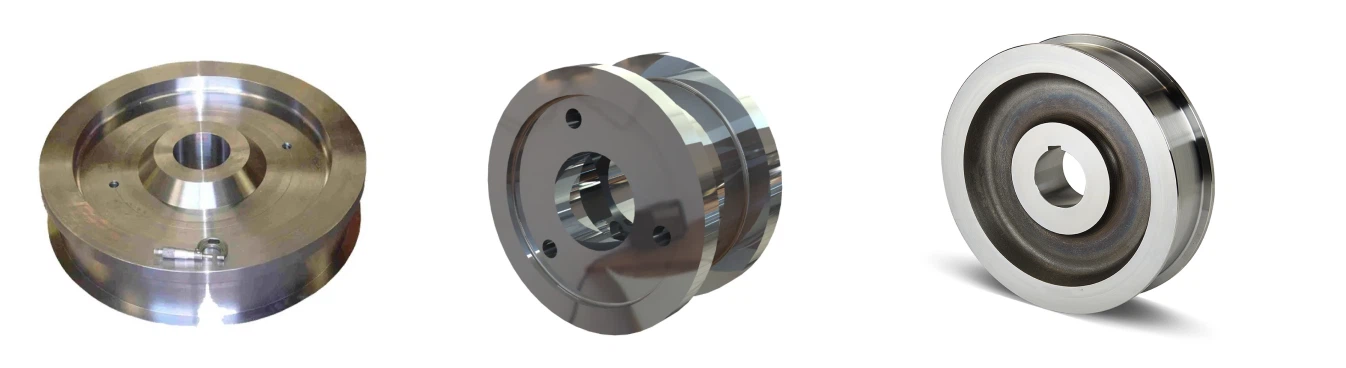
A crane wheel on a trussed-type electric hoist gantry crane is a crucial component of the crane's mobility system, allowing it to move along the runway or rail system. The design of the wheel and its associated components ensure the crane can bear the load, maintain stability, and operate smoothly.Typically made from high-strength steel, these wheels are designed to withstand heavy loads and resist wear over time.
They are usually cast or forged to achieve the necessary strength and durability.A trussed frame is a structural system that uses a network of beams (or members) connected in a triangular pattern to form a rigid structure. In this type of crane, the wheel assemblies are mounted on the trussed legs, providing a stable base.
The trussed design helps reduce the overall weight of the crane while maintaining strength and stability.
Wheel Design:Crane wheels are designed to be treaded to run along a rail system. The treads of the wheels ensure traction and stability during crane movements.They typically feature grooves to match the rails on which they run.
Load Capacity:
The wheels are designed to handle the dynamic loads exerted by both the crane's dead weight and the additional load it is lifting or carrying.The load-bearing capacity of the wheels should be sufficient for the intended lifting capacity of the crane.
Bearings (often roller or ball bearings) are used in the wheel axle to reduce friction and allow for smooth rotation.Bearings are also designed for high load conditions and to minimize wear during continuous movement of the crane.The axles that connect the wheels to the crane frame are designed to transmit the load from the wheels to the rest of the structure.The housing or casing that contains the axles is reinforced to ensure the crane's stability and minimize any wobbling or misalignment.
The crane wheels are designed to match the specific rail profile that the crane will operate on. Rail profiles vary, so the wheels need to ensure a stable connection with the rail system, ensuring safe movement and load handling.
7.Crane Hook
Main features of hooks
1) Material: Hooks are usually made of high-strength steel to ensure their strength and toughness under high loads. Common materials include carbon steel or alloy steel, which can withstand large tensile and impact forces.
2) Shape design: The shape of the hook is generally "C" or "U" to firmly hang the load while preventing the load from slipping. The depth and width of the hook should be considered during the design to accommodate materials of different shapes and sizes.
3) Safety device: The hook is usually equipped with an anti-unhooking device, such as a safety buckle or locking device, to ensure that the load will not accidentally fall off during the lifting process.
4) Load capacity: The design of the hook needs to take into account the rated lifting weight of the crane, and there will usually be corresponding markings to ensure that its load capacity is not exceeded during use.

Motor
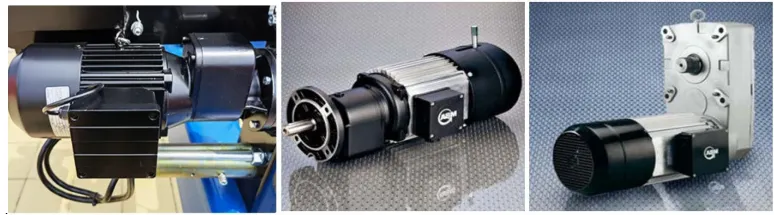
The motor of a trussed type electric hoist gantry crane is a crucial component that drives the hoist mechanism, enabling it to lift and move heavy loads.
Type of Motor:
AC Motors (Alternating Current): These are commonly used in gantry cranes. They can be of the squirrel cage induction type or synchronous motors. They provide reliable performance and are efficient for heavy-duty operations.
DC Motors (Direct Current): These are less common due to maintenance requirements but can provide better speed control, especially for precise operations.
Motor Features:
Explosion-proof: In hazardous environments, motors may need to be explosion-proof or flame-proof, especially if operating in environments where flammable gases or dust may be present.
Brake Motor: A motor with an integrated brake is commonly used to hold the hoist in position once the load has been lifted. This brake prevents the load from falling due to motor stoppage.
Variable Frequency Drive (VFD): A VFD is often used to control motor speed. This allows for smooth acceleration and deceleration, which helps in load control, energy saving, and reducing mechanical stress.

.
Sound and light alarm system & limit switch
1) Sound and light alarm system
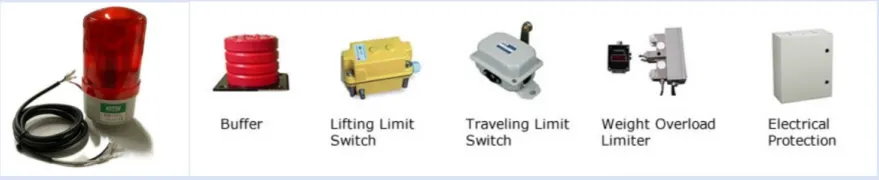
The sound and light alarm system for a trussed-type electric hoist gantry crane is an essential safety feature that helps to alert personnel to potential hazards or operational conditions that require attention. This system typically combines visual and audible signals to ensure that operators, as well as people working in or near the crane's operational area, are promptly warned about various situations.
Sound Alarm (Audible Warning):The sound alarm typically consists of a loudspeaker or siren that emits a distinctive sound when triggered.
Light Alarm (Visual Warning):The light alarm consists of signal lights (typically LED lights or rotating beacons) that provide a visual indication of the crane's status. These can include:
Red Light: Indicates a dangerous or emergency condition, such as an overload or malfunction.
Yellow/Amber Light: Signals caution or a warning, such as when the crane is moving or lifting.
Green Light: Indicates that the crane is in a safe operating condition, and the area is clear.
2) Limit switch
A limit switch in the context of a trussed-type electric hoist gantry crane serves an important safety and control function. It helps ensure the crane's hoist travels within the safe range of motion, preventing potential damage to the hoist, crane, or surrounding structures.
Purpose and Function
Over-travel protection: The limit switch stops the hoist from moving beyond its designated travel distance, either up or down, by cutting off the power or triggering an alarm if the hoist reaches the upper or lower limit.
Safety: It ensures that the crane doesn't exceed the physical limits of its movement, preventing damage to the motor, cable, or other components.
Automatic operation: It can also be used to automate stopping or reversing the hoist when it reaches a set position.
Types of Limit Switches
Mechanical Limit Switches:These are activated by a physical contact when the hoist reaches the maximum or minimum position.They often consist of a lever or roller that physically interacts with the mechanism as it travels.
Electronic Limit Switches:These are often used for more precise control.They use sensors, such as proximity sensors or encoders, to detect the position of the hoist and send signals to stop or reverse the movement.
10.Safety Devices
1. Overload Protection Device
Purpose: Prevents the crane from lifting a load that exceeds its rated capacity.
Function: The overload protection system typically includes sensors that monitor the load weight. If the load exceeds the crane's capacity, the system activates an alarm and prevents further movement until the load is reduced.
2. Limit Switches
Purpose: To prevent over-travel or collision with obstacles at the end of the travel range.
Function: Limit switches are installed at the ends of the trolley or crane's travel path to cut off power if the crane reaches the maximum position, preventing damage or accidents.
3. Anti-Sway Device
Purpose: To reduce the swinging motion of the load during lifting or moving.
Function: Anti-sway systems help stabilize the load and reduce excessive oscillation, improving load control and operator safety.
4. Emergency Stop Button
Purpose: Provides an immediate way to stop the crane in case of an emergency.
Function: The emergency stop button is easily accessible and cuts off power to the crane, halting all movements and reducing the risk of accidents.
5. Overheat Protection
Purpose: To prevent the crane's motors or electrical systems from overheating.
Function: This safety device automatically shuts down or reduces power if the system's temperature exceeds a safe limit, protecting the components from damage.
6. Crane Collision Prevention System
Purpose: Prevents the crane from colliding with other cranes or obstacles in the work area.
Function: This system uses sensors to monitor the proximity of other objects or equipment. If an impending collision is detected, the system automatically adjusts the crane's path or triggers an alarm.
7. Overwind and Overdrop Protection
Purpose: To prevent the hook from traveling too far upward (overwind) or downward (overdrop).
Function: These systems stop the hoist when the hook reaches its maximum or minimum travel limits, ensuring safe operation.
11.Control Mode
1. Cabin Control Mode
Description: The operator controls the crane from a cabin mounted on the crane's frame, often located on a platform above or alongside the crane.
Features:The cabin provides a clear view of the lifting area.The operator can control all crane movements such as hoisting, trolley movement, gantry movement, and braking from inside the cabin.Usually equipped with joysticks, push buttons, or other control mechanisms.
Use Case: Large cranes or cranes operating in complex or expansive environments.
2. Radio Remote Control Mode
Description: This mode uses wireless communication to control the crane from a distance. The operator uses a handheld remote device.
Features:Increases the mobility of the operator and allows them to control the crane while moving around the workspace.Provides flexibility, especially in environments with limited space or where the operator needs to be close to the load.May feature emergency stop buttons for added safety.
Use Case: When cranes are used in open areas or when the operator needs to maintain a safe distance from the load.
3. Pendant Control Mode
Description: A control pendant is connected to the crane with a cable, allowing the operator to control the crane while standing at ground level near the hoisting area.
Features:The pendant typically includes buttons for all crane movements and emergency stop functionality.It provides greater flexibility than cabin control while maintaining control from the ground.Use Case: Common in smaller cranes or where an operator needs to be near the crane but not inside the cabin.
4. Automatic Control Mode
Description: The crane operates automatically based on pre-programmed parameters, usually for repetitive tasks.
Features:Reduces human intervention, often used in fully automated or semi-automated industrial facilities.The crane moves along predefined paths, with specific positions for loading and unloading.Sensors or other safety systems are integrated to monitor the crane's environment.
Use Case: Used in highly automated or controlled environments like warehouses or manufacturing plants where repetitive lifting tasks are needed.
5. Manual Control Mode
Description: The operator has full manual control over all movements of the crane, either from the cabin, pendant, or radio remote.
Features:Full flexibility and control for the operator.Typically includes fine-tuning capabilities, which may be important for precise load positioning.
Use Case: Suitable for tasks requiring a high level of operator skill and control, such as precise lifting or in situations where the load may need to be adjusted in real-time.
12.Sketch
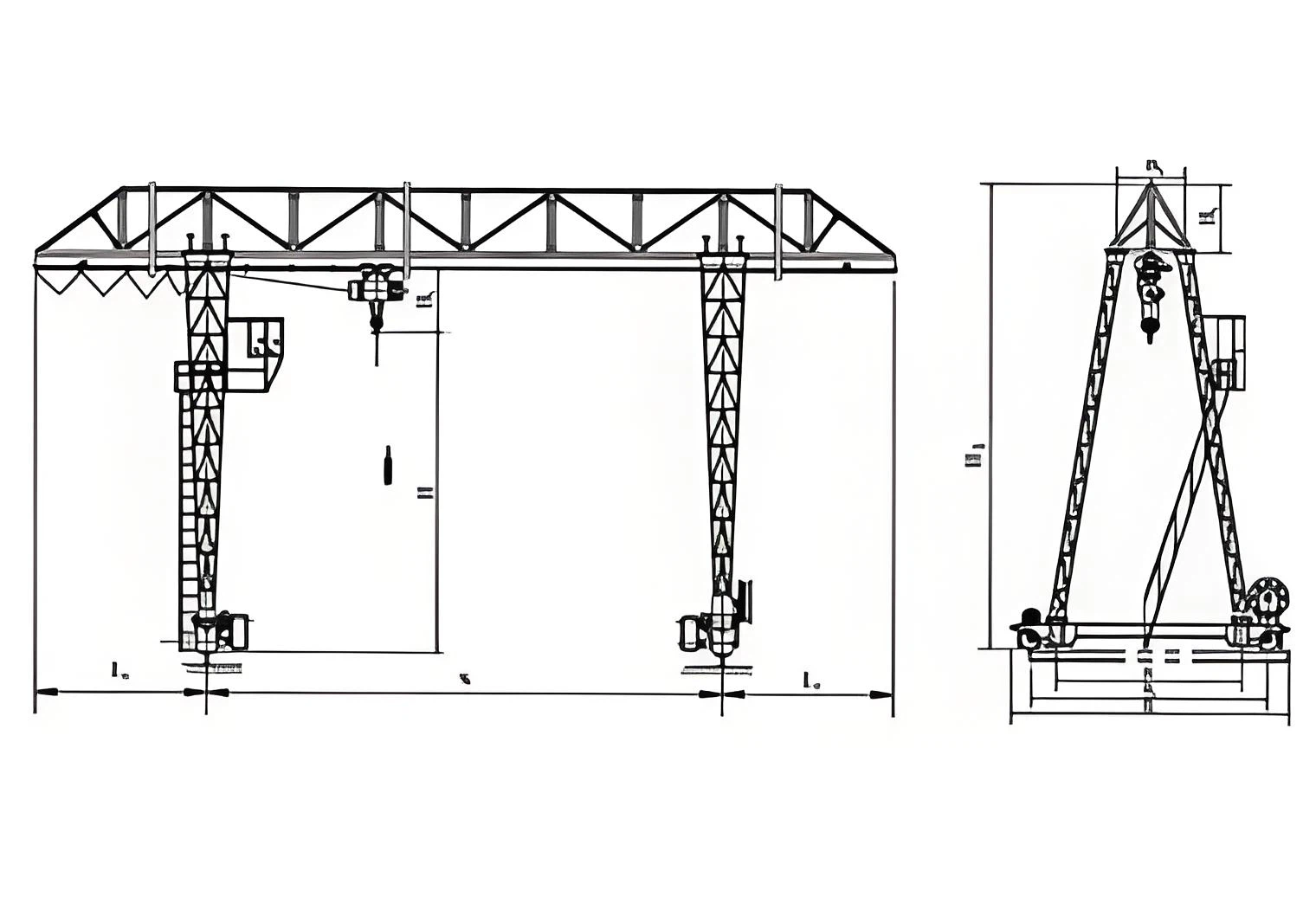
Main technical

Advantages
Lightweight and High Strength
The truss design combines strength with reduced material weight, making it easier to transport, install, and operate.It can handle heavy loads without adding unnecessary bulk to the crane structure.
Wind Resistance
The open-frame design of the truss provides excellent wind resistance, making it ideal for outdoor use, especially in areas prone to strong winds.
Cost-Effectiveness
The reduced weight and material usage compared to solid steel structures result in lower production and transportation costs.Maintenance costs are also reduced due to its simple structure.
Flexibility in Application
The crane is suitable for a variety of applications, including lifting goods in construction sites, factories, shipyards, and storage yards.Its customizable design allows it to be tailored to specific project requirements.
Easy Installation and Dismantling
The modular truss structure is easier to assemble and disassemble, saving time during installation or relocation.
Portability
Many trussed gantry cranes are designed for mobility, making them suitable for tasks that require movement across a job site or between locations.
Durability
Trussed designs are highly durable and resistant to deformation under load, ensuring a long service life even in demanding environments.
Enhanced Stability
The trussed design provides greater stability during operation by evenly distributing stress and load across the structure.
Customizable Heights and Spans
Trussed gantry cranes can be adapted to different heights and spans to meet specific lifting needs, offering versatility in various industries.
Application
1. Shipbuilding Industry
Purpose: Used for the movement of large ship parts, steel plates, and hulls during the construction or maintenance of ships.
Functionality: Its high lifting capacity and wide span make it ideal for handling large components that need to be moved over long distances in shipyards.
2. Construction and Heavy Machinery
Purpose: For lifting and transporting construction materials like steel beams, precast concrete components, and other heavy structures.
Functionality: A trussed gantry crane can operate in outdoor environments, where the need for lifting and moving materials from one location to another is frequent.
3. Railway Industry
Purpose: Used in railway yards or repair workshops to move heavy railway components, including rail tracks, locomotives, and carriage parts.
Functionality: Its ability to move over long spans and provide significant lifting capacity makes it ideal for railway maintenance, assembly, and repair.
4. Steel and Metal Industries
Purpose: For moving steel billets, coils, or large metal structures within steel plants or metal fabrication shops.
Functionality: The gantry crane is capable of handling high-temperature, heavy materials safely and efficiently in environments where the handling of large metal pieces is common.
5. Warehousing and Logistics
Purpose: Used in large warehouses and distribution centers for the transportation of heavy and bulky goods.
Functionality: It can be installed on outdoor tracks, allowing the crane to move materials within the yard, across loading docks, or between warehouse buildings.
6. Port and Dock Operations
Purpose: In ports, these cranes can load and unload heavy containers or cargo from ships to trucks or storage areas.
Functionality: The trussed gantry crane's ability to cover large spans makes it ideal for port and dock environments where space and lifting height are critical.
Crane production procedure
1. Design and Engineering: The first step involves designing the crane based on customer requirements, including load capacity, span, lifting height, and operational environment.Detailed design of the crane frame, including the trussed structure, support beams, cross members, and legs.Specifications for key components such as the electric hoist, wheels, motors, control systems, electrical systems, and safety features are determined.Once the design is finalized, the design team ensures that it complies with industry standards (like ISO, ASME, or IEC) and obtains the necessary approvals.
2. Procurement of Materials: High-strength steel is selected for the main crane frame, trusses, and other load-bearing parts. This may include steel plates, beams, and profiles.Electric hoists, motors, and controllers are ordered based on the specifications in the design.
Other Components: Wheels, ropes, gearboxes, brakes, and other mechanical parts are procured.
3. Fabrication of Structural Components: Raw steel materials are cut into the necessary shapes and lengths using cutting machines, laser cutters, or water jets.The steel components are welded together to form the trussed structure, including the main girder, legs, and cross members. This is done using manual or automated welding methods.The welded frame is checked for any weaknesses or imperfections, and reinforcements are added as needed.
4. Assembly of Mechanical Systems: The electric hoist is assembled, including the motor, gearbox, and lifting mechanism. This step ensures smooth operation and adherence to load specifications.The crane trolley (or carriage) that moves along the girder is assembled, ensuring that it runs smoothly and can carry the load capacity specified in the design.Wheels are mounted onto the gantry legs and the trolley for smooth and stable movement.The electrical control system, including the wiring for the hoist, trolley, and safety systems, is installed. This includes all sensors, limit switches, and communication systems for controlling the crane.
5. Installation of Safety Features: The braking system, including both the main and emergency brakes, is installed and tested for proper function.This may include overload protection, limit switches, anti-sway systems, and safety sensors.Warning lights, horns, and other signaling devices are integrated into the crane for operational safety.
6. Testing and Quality Control: Before final assembly, individual components such as the hoist, motor, and control systems are tested independently to ensure they function correctly.After the crane is fully assembled, a comprehensive load test is performed. The crane is tested under various load conditions to verify stability, functionality, and safety.Based on the test results, adjustments may be made to the crane's settings (e.g., hoist speed, trolley movement, and braking systems).A final inspection is conducted, checking for any defects, missing components, or other issues.
7. Painting and Finishing: The steel structure is cleaned, and rust-preventative coatings are applied if necessary.The crane is painted with protective coatings, which can include primer and finishing coats. The paint helps prevent corrosion and ensures a polished, professional appearance.Other aesthetic or functional finishes (such as anti-slip coatings) may be applied to the crane, especially in areas that will be frequently accessed by operators or maintenance personnel.
8. Delivery and Installation: Once fully assembled and tested, the crane is disassembled into parts (if necessary) for shipping. It's packed securely to prevent damage during transit. The crane is transported to the customer's location and assembled on-site. This may require the use of cranes, forklifts, and other heavy lifting equipment to position and assemble the structure. The crane is tested again on-site to ensure that it works under operational conditions. Any necessary adjustments or calibrations are made.
Workshop view:
The company has installed an intelligent equipment management platform, and has installed 310 sets (sets) of handling and welding robots. After the completion of the plan, there will be more than 500 sets (sets), and the equipment networking rate will reach 95%. 32 welding lines have been put into use, 50 are planned to be installed, and the automation rate of the entire product line has reached 85%.



Hot Tags: trussed type electric hoist gantry crane, China trussed type electric hoist gantry crane manufacturers, suppliers, factory
Previous
Trussed Gantry CraneYou Might Also Like


Send Inquiry