










MH 5 Ton Single Beam Gantry Crane
Products Description
Why Choose a Single Beam Over a Double Beam?
Lower Cost – More economical for light to medium-duty lifting.
Lighter Weight – Easier to transport and install.
Faster Assembly – Simpler structure reduces setup time.
Sufficient for 5-Ton Loads – Single beam design is adequate for this capacity.
Key Features:
Capacity: 5 metric tons (5,000 kg)
Type: Single girder (single beam) design
Structure: Gantry-style (self-supporting with legs, no overhead runway required)
Mobility: Can be fixed or equipped with wheels for movement
Power Supply: Electric (wired pendant control or radio remote) or manual (chain hoist)
Types of 5-Ton Single Beam Gantry Cranes:
Fixed Height: Stationary with no height adjustment.
Adjustable Height: Telescopic legs for varying workspace needs.
Mobile Gantry: Equipped with casters for easy relocation.
Semi-Gantry: One leg runs on a rail while the other is supported by a structure.
Place of Origin:Henan, China
Warranty:2 years
Weight (KG):60000 kg
Video outgoing-inspection:Provided
Machinery Test Report:Provided
Application:warehouses,factory and other place
Crane type:box type gantry crane
Travelling speed:20m/min
Lifting mechanism:Electric Hoist
Control method:Ground Control+ Remote Control (customized)
Working duty:A5
Working Temperature:-20~+40℃
Industrial voltage:380V50HZ3Phanse or other
Color:Customised
Customization:Accepted

Pictures & Components
A 5-ton single beam gantry crane consists of several key components that work together to ensure safe and efficient lifting operations. Below is a detailed breakdown of its main parts:
1. Main Girder (Single Beam)
Function: The primary load-bearing structure that supports the hoist and trolley.
Material: Typically made of welded steel (box-type or I-beam construction).
Design: Optimized for rigidity and strength to handle 5-ton loads.
2. End Carriages (Legs/Support Frames)
Function: Provide vertical support and stability to the crane.
Types:
Fixed legs (stationary, no height adjustment).
Adjustable legs (telescopic for varying workspace heights).
Mobile legs (fitted with wheels for portability).
Wheel Options:
Fixed wheels (straight-line movement).
Swivel casters (for maneuverability).
Motorized travel (electric-powered movement).


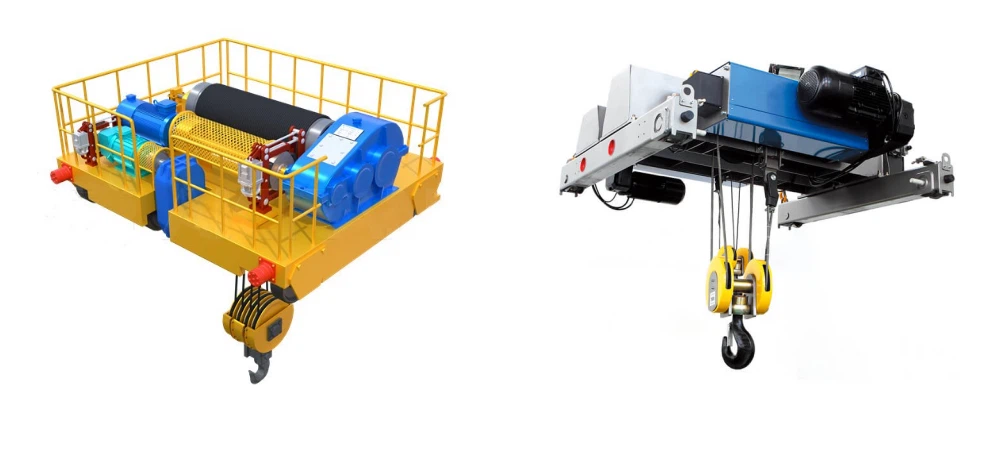
3. Hoist & Trolley
Hoist Types:
Electric Chain Hoist (common for lighter-duty, cost-effective lifting).
Wire Rope Hoist (for smoother, heavier-duty lifting).
Trolley:
Moves horizontally along the girder to position loads.
Can be manual push or motorized (electric travel).

4. Control System
Pendant Control (Wired):
Hanging control box with buttons for lifting, lowering, and trolley movement.
Wireless Remote Control:
Allows operator mobility and safer long-distance operation.
Variable Speed Control (Optional):
For precise load handling.

5. Runway & Rail System (Optional)
For Mobile Gantries:
Track rails guide wheel movement for straight-line travel.
For Semi-Gantry Cranes:
One side runs on a rail, while the other is supported by a building structure.

6. Electrical Components
Power Supply:
220V/380V/415V (depends on regional standards).
Limit Switches:
Prevents over-travel of the hoist and trolley.
Overload Protection:
Safety mechanism to prevent lifting beyond 5-ton capacity.
Braking System:
Ensures safe stopping of hoist and trolley movements.
.
7. Safety Features
Emergency Stop Button – Instantly cuts power in case of danger.
Anti-Collision Device – For multiple cranes operating in the same area.
Warning Lights & Alarms – Signals during crane movement.
Load Limiter – Prevents overloading beyond rated capacity.

8. Optional Accessories
Spreader Beam – For balanced lifting of long/wide loads.
Magnetic Lifter – For handling steel plates or scrap metal.
Crane Scales – Weighs loads while lifting.
Weatherproof Cover – For outdoor use (corrosion-resistant coating).

Sketch

Main technical

Advantages
Cost-Effective
Lower initial cost compared to double girder or overhead bridge cranes.
Minimal installation expenses (no need for runway beams or reinforced structures).
Easy to Install & Relocate
Can be assembled quickly without complex foundations.
Mobile versions (with wheels) allow repositioning as needed.
Space-Saving Design
Does not require permanent overhead support structures.
Ideal for workshops with limited ceiling height.
Versatile & Customizable
Adjustable span and height options available.
Can be paired with electric, manual, or pneumatic hoists.
Durable & Low Maintenance
Robust steel construction for long-term use.
Fewer moving parts than double girder cranes, reducing wear.
Safe & Reliable
Equipped with overload protection, limit switches, and emergency brakes.
Stable lifting performance with minimal sway.
Energy Efficient
Electric hoists consume less power compared to larger cranes.
Manual options (chain hoists) require no electricity.
Application:
Applications of a 5-Ton Single Beam Gantry Crane
1. Manufacturing & Workshops
Lifting heavy machinery, molds, and equipment.
Assembly line operations in automotive and aerospace industries.
2. Warehousing & Logistics
Loading/unloading pallets, containers, and heavy goods.
Stacking and organizing inventory in storage facilities.
3. Construction & Infrastructure
Moving steel beams, concrete blocks, and construction materials.
Assisting in prefabricated structure assembly.
4. Shipbuilding & Ports
Handling ship components, engines, and cargo containers.
Maintenance and repair operations in dry docks.
5. Metalworking & Foundries
Transporting raw metal bars, castings, and fabricated parts.
Positioning heavy workpieces for machining or welding.
6. Power Plants & Heavy Industries
Maintenance of turbines, generators, and large mechanical parts.
Lifting transformers and other electrical equipment.
7. Railway & Automotive Repair
Engine and transmission removal/installation.
Lifting rail components during maintenance.
8. Agriculture & Mining
Moving heavy farm equipment and bulk materials.
Maintenance of mining machinery in rugged environments.
Crane production procedure
The production procedure for a single beam traveling gantry crane involves several key stages, from design and material procurement to assembly, testing, and final delivery. Below is a step-by-step outline of the typical manufacturing process:
1. Design & Engineering
Customer Requirements Analysis: Determine lifting capacity, span, lifting height, duty cycle, and operating environment.
Structural Design:
Design the main girder (single box or I-beam structure).
Design end carriages (legs/wheels) and runway beams.
Select hoist/trolley type (electric or manual).
Load & Stress Calculations: Ensure compliance with standards (ISO, FEM, DIN, or ASME).
Electrical & Control System Design: Choose motors, brakes, limit switches, and control panels.
2. Material Procurement
Steel Plates & Profiles: High-quality Q235B/Q345B steel for main girders and supports.
Mechanical Components: Wheels, axles, bearings, gears, and couplings.
Electrical Components: Motors, cables, control panels, and safety devices.
3. Fabrication of Main Components
A. Main Girder Fabrication
Cutting: CNC plasma/oxy-fuel cutting for precision.
Welding: Automated submerged arc welding (SAW) for strong seams.
Straightening & Inspection: Ensure proper camber (pre-bend) and check for defects (UT/RT testing).
B. End Carriages & Legs
Frame Assembly: Welded steel construction with reinforced bracing.
Wheel & Bearing Installation: Machined wheels for smooth travel.
C. Hoist & Trolley
Pre-assembled Hoist: Electric chain hoist or wire rope hoist.
Trolley Frame: Fabricated to accommodate hoist movement.
4. Surface Treatment & Painting
Shot Blasting: Removes rust and improves paint adhesion.
Primer & Paint: Anti-corrosion coatings (epoxy + polyurethane).
5. Assembly
Girder & End Carriage Joining: Bolt or weld the main beam to legs.
Hoist/Trolley Installation: Mounted on the girder.
Electrical Wiring: Connect motors, controls, and safety devices.
6. Testing & Quality Control
Dimensional Inspection: Verify span, height, and alignment.
Load Testing:
Static Load Test: 125% of SWL (Safe Working Load).
Dynamic Load Test: 110% of SWL with operational checks.
Functional Tests: Travel, lifting, braking, and limit switch verification.
7. Disassembly & Packaging
For Shipment: Crane may be disassembled into modules (girder, legs, hoist).
Protective Packaging: Waterproof wrapping for sea transport.
8. Installation & Commissioning (On-Site)
Runway Preparation: Ensure level rails or ground support.
Reassembly: Bolt components together.
Final Testing: Operational checks under load.
9. Documentation & Delivery
Manual & Certificates: Include load test reports, CE/ISO certifications.
Training: Operator and maintenance guidance.

Workshop view:
The company has installed an intelligent equipment management platform, and has installed 310 sets (sets) of handling and welding robots. After the completion of the plan, there will be more than 500 sets (sets), and the equipment networking rate will reach 95%. 32 welding lines have been put into use, 50 are planned to be installed, and the automation rate of the entire product line has reached 85%.


Hot Tags: mh 5 ton single beam gantry crane, China mh 5 ton single beam gantry crane manufacturers, suppliers, factory, Gantry Crane, Electric Hoist Single Girder Gantry Crane, Single Girder Gantry Crane
You Might Also Like


Send Inquiry