










Electric Mobile Single Girder Gantry Crane
Products Description
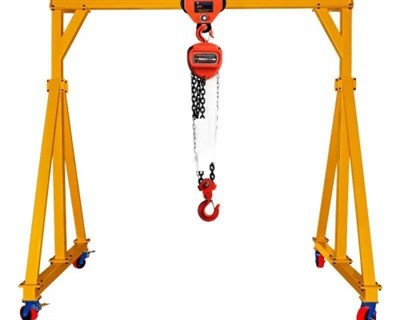
An electric mobile single girder gantry crane is a type of crane designed to handle heavy loads while providing mobility across a wide range of industrial applications. This crane features a single girder design, which makes it lighter and more cost-effective than double girder gantry cranes. The addition of electric power for movement and operation enhances performance, especially in large outdoor environments like shipyards, warehouses, and construction sites.
Place of Origin:Henan, China
Warranty:2 years
Weight (KG):60000 kg
Video outgoing-inspection:Provided
Machinery Test Report:Provided
Application:warehouses,factory and other place
Crane type:box type gantry crane
Travelling speed:20m/min
Lifting mechanism:Electric Hoist
Control method:Ground Control+ Remote Control (customized)
Working duty:A5
Working Temperature:-20~+40℃
Industrial voltage:380V50HZ3Phanse or other
Color:Customised
Customization:Accepted

Pictures & Components
1.Main beam
1)Single Girder Configuration:
The single girder design means there is one primary horizontal beam (the main beam) running across the crane's span, with the hoist and trolley moving along it.
This design is lighter and more cost-effective than a double girder crane, but still provides the necessary strength for lifting moderate loads (up to 10 tons or more).
2)I-Beam or Box Beam:
The main beam can be made of either an I-beam or a box girder, depending on the load requirements and design specifications.
I-beam: Typically used for cranes with lower lifting capacities, it is lighter but still strong enough to handle the load.
Box Girder: Used in cases where the crane will handle larger loads or for more rigid structural support, it offers greater strength and can handle more complex lifting operations.
2.Lifting System
Electric Power:Provides a clean, efficient, and precise lifting mechanism compared to manual or hydraulic systems.
Smooth Operation:Variable frequency drives (VFD) allow for smooth starts, stops, and speed control during lifting and lowering.
Safety Features:Overload protection, limit switches, and emergency stops ensure safe operation and prevent accidents.
Reliability:The electric hoist provides long-lasting reliability with low maintenance compared to hydraulic or pneumatic systems.
Flexibility:The trolley system allows precise horizontal movement of the load, increasing operational flexibility.


3.End carriage
Purpose and Function
The end carriage serves the following primary functions:
Supports the Main Beam: The end carriage connects the main girder (beam) to the crane's gantry legs, providing structural support and stability to the crane.
Movement Mechanism: It houses the wheels and drive mechanism that allow the crane to move along the tracks or rails in a horizontal direction, positioning the crane over the desired work area.
Weight Distribution: The end carriage helps to evenly distribute the crane's load and weight, reducing wear on the rails and ensuring smooth movement.


4.Crane travelling mechanism
The primary function of the crane traveling mechanism is to allow the gantry crane to move along a set of rails or tracks. This horizontal movement enables the crane to cover the entire span of its designated work area, positioning the hoist and load in the correct location for operations.
Tracks: The crane runs on rails or tracks installed on the ground or elevated on supporting structures. These tracks guide the crane and ensure it remains in alignment during movement.
Traveling: The crane's movement is achieved by a drive system that controls the motion of the end carriages, which are the key elements of the traveling mechanism.
5.Trolley travelling mechanism
Purpose and Function
The trolley traveling mechanism is essential for:
Horizontal Movement: Allowing the trolley to travel along the main girder, carrying the hoist over the entire span of the crane.
Load Positioning: Enabling precise positioning of the load by moving the hoist across the span, whether it's lifting, lowering, or transferring materials.
Efficiency: Enhancing the efficiency of material handling by enabling the hoist to reach various points across the crane's working area.
6.Crane wheel
Purpose and Function
Support and Mobility: The wheels bear the weight of the crane and its load, providing the necessary support to ensure smooth and efficient movement along the tracks (for the gantry) or the main girder (for the trolley).
Movement Control: The wheels allow for precise movement and stability, ensuring the crane travels smoothly without derailing or causing misalignment.

7.Crane Hook
Load Attachment: The hook serves as the attachment point for lifting loads. It is designed to hold a wide variety of objects securely during lifting and moving operations.
Load Handling: It allows for easy and safe attachment and detachment of the load, and is essential for precise load positioning while the crane operates.
Safety: The hook is designed with features to minimize the risk of load slippage or hook failure during operation, ensuring safe handling of heavy or cumbersome materials.

8.Motor
Power Source: The motor provides the necessary power for the crane's operation, driving the hoisting mechanism, the trolley movement, and the gantry movement along the track.
Movement Control: The motor is responsible for controlling the crane's speed and direction. It enables precise control over the movement of the crane for loading and unloading operations.
Lifting: It drives the winch or hoist to raise and lower loads, ensuring safe and reliable lifting operations.

.
9.Sound and light alarm system & limit switch
1)Sound and Light Alarm System
Warning Signals: The sound and light alarm system is used to provide audible and visual signals during crane operation, alerting operators and nearby personnel of potential hazards or operational changes.
Enhanced Safety: By providing immediate warnings of movement or approaching danger zones, the system helps prevent accidents such as crane collisions, overloading, or equipment malfunction.
Indication of Crane Status: The alarm system can indicate different operational states, such as when the crane is starting, nearing its lifting capacity, or about to enter a restricted zone.
2)Limit Switch
The limit switch is a safety device that ensures the crane does not exceed its safe operating limits during movement. It prevents overtravel, ensuring that the crane's motions are constrained to a defined area or range.
Protection Against Overtravel: The limit switch can cut off power or stop the crane's movement if it reaches a predefined position or distance.
Prevention of Mechanical Damage: Limit switches are crucial in preventing damage to the crane or its components by stopping movement before the crane reaches critical positions, such as the end of the rail, overloading points, or motor stress limits.

10.Safety Devices
1)Overload Protection Device
Purpose: Prevents the crane from lifting loads that exceed its rated capacity, avoiding damage to the crane's lifting mechanism and ensuring safety during operation.
2)Anti-Sway System
Purpose: Reduces the swaying or swinging of the load during movement, improving control and precision during lifting and traveling operations.
3)Emergency Stop Button
Purpose: Provides an immediate shutdown of the crane in case of an emergency, ensuring the crane stops quickly to avoid accidents or further damage.
4)Limit Switches
Purpose: Prevents the crane from exceeding its safe operating limits by automatically stopping motion when certain pre-set positions are reached.
5)Crane Weight Indicator
Purpose: Displays the current load weight being lifted by the crane, providing real-time information to the operator.
11.Control Mode
1)Pendant Control (Wired Control)
Description:
The pendant control is a wired control system connected to the crane via a cable. The operator uses a handheld pendant (similar to a remote) to control the crane's movements.
This system typically involves buttons or joysticks for controlling the hoisting, traveling, and trolley movements.
2)Wireless Remote Control (Radio Control)
Description:
The wireless remote control system allows the operator to control the crane without being physically attached to the crane via cables. The operator uses a radio frequency (RF) remote control to send signals to the crane's control system.
3)Cabin Control (Operator's Cabin)
Description:
The operator's cabin is an enclosed or open cabin located on the crane itself. The operator is stationed in the cabin and uses joysticks, buttons, or pedals to control the crane's operations. This is typically used for larger, more complex gantry cranes.
4)Automatic/Intelligent Control (Automated or Semi-Automated Control)
Description:
Automated control systems utilize advanced software, sensors, and control algorithms to operate the crane with minimal human intervention. These systems can be used for specific tasks or in semi-automatic mode, where certain movements are automated but the operator can override them if needed.

Sketch

Main technical

Advantages
1. High Mobility and Flexibility
Advantage:
The electric mobile single girder gantry crane is designed to move easily along its track, which allows it to be used across different areas within a facility. The crane is self-propelled and can be positioned precisely where lifting is required, making it ideal for handling materials in large outdoor yards, factories, warehouses, or construction sites.
It can operate on rails or rubber-tired systems, offering flexibility depending on the application.
Benefits:
Flexible positioning without the need for reinstallation.
Can be used across various sections of a factory or yard.
Increased productivity as it can cover large areas efficiently.
2. Space-Efficient Design
Advantage:
The single girder design reduces the overall height and weight of the crane while still providing a high lifting capacity (up to 7.5 tons or more). This makes it a space-saving solution compared to larger, more complex cranes.
The crane's structure is less bulky and can navigate through tight spaces where larger cranes might not fit.
Benefits:
Ideal for environments with limited headroom or confined spaces.
Efficient use of available workspace, maximizing the crane's lifting capacity without taking up much room.
3. Cost-Effective
Advantage:
The electric mobile single girder gantry crane is relatively affordable compared to more complex cranes like double girder gantry cranes. Its simple yet effective design makes it an attractive option for companies with budget constraints but still requiring efficient lifting equipment.
Lower installation and maintenance costs due to the simpler mechanical components and fewer moving parts.
Benefits:
Reduced initial cost compared to more advanced systems.
Lower operating costs due to its energy-efficient electric motor system.
Affordable maintenance as compared to more complex cranes.
4. Easy Operation and Control
Advantage:
Electric mobile single girder gantry cranes are designed to be easy to operate, even for operators with minimal training. Control options such as pendant control, wireless remote control, or operator cabin controls allow operators to manage the crane efficiently and with precision.
The crane can be easily maneuvered for fine positioning, especially with the use of a trolley travel mechanism and gantry movement system.
Benefits:
User-friendly control systems increase efficiency and reduce operator errors.
Multiple control options provide flexibility based on the operator's preference or specific task requirements.
Improved safety due to easy access to emergency stop functions.
5. Enhanced Safety Features
Advantage:
The crane is equipped with several safety devices to ensure safe operation, such as overload protection, limit switches, brake systems, sound and light alarms, and anti-sway systems.
These features help minimize the risks of accidents, overloading, and equipment damage, ensuring that operations are carried out safely.
Benefits:
Reduced risk of accidents and damage to both crane and materials.
Increased safety for operators and personnel in the work area.
Compliance with safety regulations and industry standards.
6. Easy Installation and Maintenance
Advantage:
The electric mobile single girder gantry crane is relatively simple to install and doesn't require the complex infrastructure needed for larger cranes.
The maintenance of the crane is also straightforward, with fewer components and easier access to critical parts.
Benefits:
Shorter installation times, allowing quicker setup for projects or operations.
Lower maintenance costs due to the simplicity of the design.
Quick troubleshooting and repair because of accessible components and standard electrical systems.
7. Energy-Efficient Operation
Advantage:
The crane is equipped with an electric motor, which is more energy-efficient compared to older systems that use diesel or hydraulic power.
Electric motors provide smooth, quiet, and energy-efficient operations, reducing energy consumption and lowering operational costs.
Benefits:
Lower energy bills due to efficient electric motor usage.
Environmentally friendly compared to fuel-driven cranes, as electric models produce fewer emissions.
Longer lifespan of electrical components due to reduced wear and tear.
Application:
1. Shipping and Port Operations
Application:
Loading and unloading containers: These cranes are often used in shipping yards and ports for loading and unloading containers from ships to trucks or trains.
Handling cargo: Ideal for lifting and moving heavy cargo, such as steel coils, timber, or construction materials.
Stacking and organizing materials: In large container yards or storage areas, these cranes can be used to stack containers or organize materials efficiently.
Benefits:
High mobility: Can move across large open spaces, making it ideal for use in shipping yards.
Flexible handling: Capable of lifting a variety of goods, from containers to loose materials.
Durable design: Built to withstand the harsh outdoor environment of ports and shipping yards.
2. Manufacturing and Assembly Lines
Application:
Lifting heavy components: Electric mobile single girder gantry cranes are used in manufacturing plants for moving heavy machinery, components, or assemblies between workstations.
Assembly line support: Used to lift parts or equipment in factories, especially in automobile manufacturing or electronics production.
Handling raw materials: These cranes are also used for lifting raw materials (e.g., metals, plastics) for further processing.
Benefits:
Increased productivity: Can quickly move heavy items, helping to streamline the manufacturing process.
Improved ergonomics: Reduces manual lifting and heavy labor, improving safety and worker efficiency.
Versatile for different materials: Can be adapted for various products and tasks in the factory environment.
3. Construction Sites
Application:
Material handling: Used for lifting and positioning construction materials like steel beams, cement blocks, or prefabricated components on construction sites.
Lifting heavy equipment: Electric mobile gantry cranes can be used to move construction machinery and tools.
Construction site logistics: Ideal for managing materials in areas where fixed cranes cannot easily operate.
Benefits:
Flexibility on-site: Can be moved easily across the construction site, increasing efficiency in material handling.
Ideal for confined spaces: Works well in sites with limited space where other cranes may not fit.
Cost-effective for temporary setups: Provides a budget-friendly solution for lifting on construction sites where cranes need to be mobile.
4. Warehouses and Storage Facilities
Application:
Material handling: Used for lifting palletized goods, bulk items, or other heavy materials in warehouse storage areas.
Inventory management: Can help organize and manage stock by moving goods to designated storage areas.
Loading/unloading trucks: These cranes can be used to load and unload heavy items from trucks or transport vehicles in warehouse yards.
Benefits:
Space efficiency: Can move materials in narrow aisles or tight storage areas.
Increased organization: Helps organize materials in large storage facilities by efficiently moving goods.
Cost-effective: Less expensive than installing multiple stationary overhead cranes in a large warehouse.
5. Steel Mills and Foundries
Application:
Lifting heavy metal products: Used for handling heavy items such as steel beams, steel coils, ingots, or cast metal parts in steel mills and foundries.
Foundry operations: Often used in casting and pouring operations where heavy metal molds or metal components need to be moved.
Hot metal handling: These cranes are capable of handling hot or molten metal in environments with extreme temperatures.
Benefits:
High load capacity: Can handle the heavy weights of steel and metal products.
Designed for harsh environments: Built to withstand the high heat and harsh conditions in steel mills and foundries.
Precision lifting: Can handle delicate tasks such as moving large steel coils or ingots with high precision.
Crane production procedure
1. Design and Planning Stage
Objective:
Develop a comprehensive design and plan for the electric mobile single girder gantry crane based on customer requirements, load capacity, span, lifting height, and other specifications.
Process:
Requirement analysis: Understand the lifting needs, environmental conditions, and other technical requirements from the client.
Design drafting: Engineers create detailed designs using CAD (Computer-Aided Design) software. This includes designing the main girder, lifting system, end carriage, wheels, motors, and other components.
Approval and revisions: The design is reviewed for compliance with industry standards, safety regulations, and customer preferences. Any necessary changes are made.
2. Material Selection
Objective:
Choose the appropriate materials for each part of the crane to ensure durability, strength, and optimal performance.
Process:
Structural materials: Steel, typically Q235, Q345, or high-strength alloys, is chosen for the main girder, supporting frame, and other structural components.
Electrical components: High-quality motors, control panels, wires, and limit switches are selected based on the operational voltage and load requirements.
Safety components: Materials for brakes, limit switches, and alarm systems are chosen for reliability and safety.
3. Fabrication of Components
Objective:
Manufacture and prepare all individual components that make up the crane, such as the main beam, trolley, wheels, and end carriages.
Process:
Cutting and shaping: Steel plates are cut, welded, and formed to create the main girder and other structural parts.
Welding: The components are welded together using high-quality welding techniques to ensure strength and durability.
Machining: Critical parts like wheels, bearings, and shaft components are machined to precise tolerances.
Component manufacturing: Sub-assemblies like the trolley, hoist mechanism, and end carriage are fabricated and pre-assembled.
4. Assembling the Main Structure
Objective:
Assemble the core structure of the crane, including the main girder, end carriages, and lifting system.
Process:
Main girder assembly: The main girder is assembled by joining the welded steel sections, ensuring precise alignment for smooth operation.
End carriage assembly: The end carriages (which hold the wheels and allow the crane to travel) are attached to each end of the main girder.
Trolley assembly: The trolley system is mounted on the main girder and connected to the lifting mechanism.
Lifting system installation: The hoist (electric winch or chain hoist) and hook are installed on the trolley.
5. Electrical System Installation
Objective:
Install all the electrical components necessary for the crane to operate, such as the motors, control systems, and wiring.
Process:
Motor installation: The electric motors for the crane's lifting mechanism, traveling system, and trolley movement are installed in the appropriate places.
Wiring and controls: Electrical wiring is installed to connect the motors to the control panel and other electrical systems.
Control system setup: The control panel, remote controls, and limit switches are connected to allow operators to safely and efficiently control the crane's movements.
6. Installation of Safety Features
Objective:
Equip the crane with all necessary safety systems to ensure safe operation during lifting, travel, and stopping.
Process:
Limit switches: Install limit switches on both the lifting mechanism and the traveling system to prevent over-travel and overload.
Braking system: Install brake systems on the wheels and hoist to ensure the crane stops safely and securely.
Sound and light alarms: Attach sound and light alarms to alert operators to any potential hazards or abnormal operating conditions.
Overload protection: Ensure that the crane has built-in overload protection devices to prevent lifting beyond its rated capacity.
7. Testing and Quality Control
Objective:
Ensure that the electric mobile single girder gantry crane operates safely and meets performance standards.
Process:
Static load test: The crane is tested with a static load to check its strength and integrity.
Dynamic test: The crane is tested under working conditions to ensure smooth operation of the lifting system, traveling mechanism, and trolley system.
Safety feature check: All safety systems, including limit switches, brakes, and alarms, are tested to ensure they function correctly.
Performance evaluation: The crane is evaluated for its lifting speed, travel speed, smoothness of operation, and overall reliability.
8. Final Assembly and Painting
Objective:
Complete the final assembly, perform finishing tasks, and prepare the crane for delivery.
Process:
Final checks: The crane is given a final inspection to ensure everything is functioning properly.
Painting: The crane is painted with protective coatings to prevent rust and corrosion, especially for outdoor use. Common coatings include epoxy primer and polyurethane topcoat.
Installation of accessories: Any additional accessories such as rails, hooks, or lifting slings are installed.
Final inspection: A thorough quality control check is conducted to ensure that all components meet industry standards.
9. Packaging and Shipping
Objective:
Prepare the crane for transportation to the customer site.
Process:
Disassembly (if necessary): Some cranes may be partially disassembled for easier shipping.
Packaging: The crane components are carefully packaged and secured for transportation.
Shipping: The crane is shipped via truck, rail, or ship to the customer's location.
10. Installation and Commissioning (at the Customer Site)
Objective:
Assemble and install the crane on-site, ensuring proper operation before handover to the client.
Process:
On-site assembly: The crane is reassembled, with final checks for alignment, connection, and operation.
Commissioning: The crane undergoes on-site testing to ensure all features are functioning correctly.
Operator training: Training is provided for the customer's operators to ensure safe and efficient use of the crane.
Handover: The crane is officially handed over to the customer after successful installation and testing.

Workshop view:
The company has installed an intelligent equipment management platform, and has installed 310 sets (sets) of handling and welding robots. After the completion of the plan, there will be more than 500 sets (sets), and the equipment networking rate will reach 95%. 32 welding lines have been put into use, 50 are planned to be installed, and the automation rate of the entire product line has reached 85%.


Hot Tags: electric mobile single girder gantry crane, China electric mobile single girder gantry crane manufacturers, suppliers, factory, Electric Hoist Single Girder Gantry Crane, Single Girder Gantry Crane, Gantry Crane
You Might Also Like




Send Inquiry