










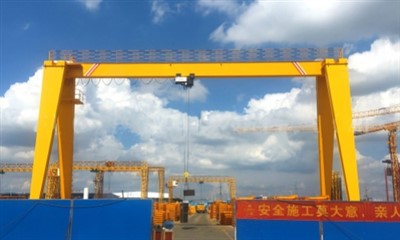
Customized Electric Motor Driven Single Girder Gantry Crane
Products Description
1)Electric Motor Driven: The crane is powered by an electric motor, which provides efficient and reliable operation. The motor drives the hoist, trolley, and sometimes even the gantry's movement.
2)Single Girder: This design uses a single horizontal beam (girder) as the main structural support, making it a lightweight and cost-effective solution for many lifting applications. It is particularly useful for lifting medium to light loads.
3)Gantry Structure: Unlike overhead cranes, which run along fixed rails in a building, a gantry crane is mounted on a wheeled structure, allowing it to move across the floor of a warehouse or factory. It can be either single or double girder.
4)Customization: These cranes can be tailored to meet specific requirements, such as:
5)Load Capacity: Can be designed to lift varying weights, from a few tons to several hundred tons.
Span: The distance between the rails can be adjusted based on the required working area.
Height: The crane's lifting height can be customized to suit the specific project or workspace.
Speed: The hoisting and traveling speeds can be adjusted depending on operational needs.
6)Applications: Commonly used in warehouses, construction sites, docks, and outdoor yards where loads need to be lifted and transported over a short distance.
Place of Origin:Henan, China
Warranty:2 years
Weight (KG):60000 kg
Video outgoing-inspection:Provided
Machinery Test Report:Provided
Application:warehouses,factory and other place
Crane type:box type gantry crane
Travelling speed:20m/min
Lifting mechanism:Electric Hoist
Control method:Ground Control+ Remote Control (customized)
Working duty:A5
Working Temperature:-20~+40℃
Industrial voltage:380V50HZ3Phanse or other
Color:Customised
Customization:Accepted

Pictures & Components
1.Main beam
1)Single Girder Design:
The crane consists of one main horizontal beam (girder) supported by two legs, which allows for a more compact and cost-effective design compared to a double girder crane.
The girder is typically made from steel or other durable materials to ensure structural integrity.
2)Electric Motor Driven:
The crane's movement is powered by an electric motor, which provides smooth and efficient operation.
The electric motor typically drives the trolley and hoist, allowing the crane to lift, lower, and move loads along the beam.

2.Lifting System
1)Hoist
The hoist is the primary lifting device that handles the load.
2)Electric Motor
The electric motor provides the power needed to drive the hoist, trolley, and gantry crane movement.
3)Trolley System
The hoist is mounted on a trolley that moves along the single girder beam.
The trolley is powered by an electric motor and allows the load to be moved horizontally across the span of the crane.
4)Control System
A wireless or pendant control system is used to operate the crane and lifting system. The control system enables the crane operator to control:
Lifting and lowering motions of the hoist.
Movement of the hoist along the girder beam.
Trolley movement.
Safety Features: The control system may include features like emergency stop buttons, overload warning indicators, and other safety interlocks.


3.End carriage
1)The end carriage is responsible for supporting the main beam (girder) and allows the entire crane structure to move along a fixed track or rail system.
2)It consists of two end carriages (one on each side of the girder) that run along the rails mounted on the ground or overhead structure.
3)The end carriage ensures smooth movement by guiding the crane's horizontal travel and supports the entire crane system's weight.


4.Crane travelling mechanism
The crane traveling mechanism of a Customized Electric Motor Driven Single Girder Gantry Crane is a key component that enables the crane to move along the horizontal direction (typically along rails or tracks) within a defined working area. This mechanism is essential for moving the entire crane structure, including the main girder (beam), hoist, and trolley, across the work site to lift and transport loads efficiently.
5.Trolley travelling mechanism
1)Trolley Frame
The trolley frame is the main structural component that holds all the other components of the trolley system together. It is mounted on the girder beam and moves along its length.
Typically made of high-strength steel or other durable materials to support the hoist and the load, the frame is designed to be both lightweight and strong enough to handle heavy loads.
2)Electric Motor
The electric motor is responsible for powering the trolley traveling mechanism. The motor drives the wheels, causing the trolley to move horizontally along the girder beam.
The motor may be equipped with a Variable Frequency Drive (VFD), which allows for smooth and adjustable speed control, enabling precise control over the trolley's movement.
Dual motor systems are often used in larger cranes or cranes with higher load capacities. In this setup, motors are installed on both sides of the trolley to allow for synchronized movement and greater stability.
6.Crane wheel
1)Wheel Design and Structure
Wheel Diameter: The size and diameter of the wheels depend on the crane's design and the type of track system it operates on. Larger wheels can support higher load capacities, but they also require sturdier rails and track systems.
2)Wheel Material:
Most crane wheels are made from high-quality steel or alloy steel, providing strength and durability for handling heavy loads and resisting wear from prolonged use.
Rubber-coated wheels can be used for quieter operations or for cranes that are operating in environments where noise reduction is important.
Special alloy or hardened steel is often used for heavy-duty applications, such as lifting heavy materials in shipyards, ports, or steel mills.
3)Wheel Axle and Bearings
The wheels are mounted on axles, which are shafts that rotate along with the wheels. These axles transfer the torque from the motor and gearbox to the wheels.
Bearings: High-performance roller bearings or ball bearings are mounted on the axles to reduce friction and ensure smooth rotation of the wheels. Properly maintained bearings ensure minimal wear, which extends the lifespan of the crane's wheel system.

7.Crane Hook
1)Size and Shape: The hook can be designed in different sizes and shapes to accommodate various lifting applications.
2)Load Capacity: Adjust the hook's lifting capacity according to your operational needs.
3)Material: The hook can be made from various materials like forged steel or alloy steel, depending on the load capacity and environmental conditions.
4)Motor Type: You can choose between different electric motor specifications to match the desired lifting speed, load, and power requirements.
5)Control System: You can integrate manual or automatic control systems, depending on your preferences.
6)Paint and Coating: Customized coating for the hook to resist corrosion, especially for outdoor or marine applications.

8.Motor
1)Motor Type:
AC Motors: Most common for gantry cranes, offering high efficiency and reliability.
DC Motors: Suitable for precise speed control applications, especially in small cranes or low-speed applications.
Variable Frequency Drives (VFD): Allows for variable speed control, optimizing performance based on load and operational conditions.
2)Power and Torque:
The motor's power is customized based on the required lifting capacity of the crane. Higher capacity cranes demand larger motors.
The torque provided by the motor should match the load requirements and the crane's movement speed.
3)Load Capacity and Speed:
Motors can be tailored to provide the appropriate lifting speed (slow for heavy loads, fast for lighter ones).
Crane motor speeds are adjustable to optimize the crane's operation depending on the type of material being moved or the application.

.
Sound and light alarm system & limit switch
1)Sound and Light Alarm System
The sound and light alarm system is designed to alert operators and personnel to various crane operating conditions, such as the crane moving, the load being lifted or lowered, or an emergency situation. It can be integrated into the crane control system for real-time feedback.
2)Limit Switch System
A limit switch is an essential safety feature in a gantry crane. It prevents the crane from exceeding its designated operational limits, helping to protect the crane structure, motor, and load. Limit switches automatically stop or reverse the crane's movements once it reaches predefined limits.

10.Safety Devices
1)Overload Protection System
The overload protection system is one of the most critical safety devices for a gantry crane. It ensures that the crane does not lift loads exceeding its designed capacity, preventing potential damage to the crane and ensuring safe lifting operations.
2)Anti-Collision System
The anti-collision system prevents the gantry crane from colliding with other cranes, structures, or equipment. This is particularly important in areas with multiple cranes or dense operation spaces.
3)Emergency Stop System
The emergency stop system is essential for immediately halting the crane's operation in case of an emergency. This system helps prevent accidents or damage by quickly stopping the crane when necessary.
4)Limit Switches
Limit switches are crucial for preventing the crane from exceeding its safe operational limits. They stop the crane from moving beyond a specific range, thus avoiding damage to the crane, equipment, or structure.
5)Safety Locking Mechanism
A safety locking mechanism is used to prevent accidental movement of the crane or its components, especially during maintenance or when the crane is idle.
11.Control Mode
1)Manual Control Mode
This is the most basic and widely used control mode for gantry cranes, where the operator has full control over all crane movements using control buttons, joysticks, or levers.
2)Wireless Remote Control Mode
This mode enables the operator to control the crane from a distance, improving safety by allowing the operator to avoid hazardous areas or work in more convenient locations.
3)Cab Control Mode
In this mode, the operator controls the crane from a fixed cabin located on the crane itself. This mode is common for large gantry cranes operating in harsh environments, such as ports or shipyards.
4)Automated or Semi-Automated Control Mode
This control mode involves the automation of certain crane functions, reducing the need for manual intervention. The level of automation can range from semi-automatic (operator intervention is still required) to fully automatic (no human involvement in routine operations).
5)Dual Control Mode (Manual + Automatic)
In this hybrid mode, the crane can be operated manually or automatically depending on the situation, giving operators the flexibility to switch between control methods.

Sketch

Main technical

Advantages
1. Cost-Effective Design
Compared to double girder gantry cranes, the single girder structure reduces material usage and fabrication costs, making it more affordable while still offering excellent lifting capacity for medium-duty applications.
2. Customization Flexibility
Can be fully customized based on specific operational needs, including span length, lifting height, control mode, safety devices, and special working conditions (e.g., outdoor or indoor environments).
Tailored solutions for industries like manufacturing, logistics, shipyards, construction sites, and warehouses.
3. Compact and Lightweight Structure
The single girder design ensures a lighter overall structure, making it easier to install and relocate if needed.
Reduces the load on runway beams or supporting structures.
4. Energy Efficiency
Electric motor-driven systems are more energy-efficient compared to hydraulic or diesel-powered alternatives.
Can be equipped with energy-saving motors and VFD (Variable Frequency Drive) to reduce energy consumption.
5. Simple and Low-Maintenance Operation
Fewer mechanical components compared to double girder cranes result in easier maintenance and reduced downtime.
Easy access to parts like motors, wheels, and hoisting mechanisms.
6. Enhanced Safety Features
Equipped with modern safety devices such as overload protection, anti-collision sensors, emergency stop systems, and limit switches.
Can include advanced anti-sway systems and automated safety alerts.
7. Smooth and Precise Lifting Operations
Electric motor and hoisting system provide smooth start and stop functions.
Optional inverter control for variable speed hoisting and trolley/gantry travel for better load positioning.
Application:
1. Warehousing and Logistics Centers
Loading & Unloading: Used to load and unload cargo, pallets, and containers from trucks and trailers.
Material Handling: Moves goods efficiently within storage yards or indoor warehouses, improving workflow and productivity.
Indoor & Outdoor Applications: Suitable for both indoor racking areas and outdoor loading zones.
2. Manufacturing and Assembly Lines
Parts Assembly: Used to lift and position parts or heavy components in automotive, machinery, or equipment assembly lines.
Production Support: Assists in moving raw materials or semi-finished goods between workstations.
Tool & Die Handling: Moves large molds, dies, or production tools within industrial workshops.
3. Construction Sites
Material Transport: Lifts steel beams, concrete blocks, and construction materials on-site.
Structural Assembly: Assists in the installation of structural steel frames, pre-fabricated sections, and other heavy construction components.
Temporary Setup: Can be used as a mobile crane solution in temporary construction areas thanks to its ease of relocation.
4. Steel Yards and Metal Fabrication Plants
Handling Steel Plates & Coils: Lifts and transports heavy steel plates, pipes, and metal coils.
Loading Cutting/Processing Machines: Positions raw materials into CNC machines, plasma cutters, or welding stations.
5. Shipbuilding and Marine Yards
Ship Component Assembly: Lifts ship sections, engines, and marine equipment during the shipbuilding process.
Dockside Handling: Moves parts and machinery on docks and near waterfronts, often in conjunction with forklifts and transport trucks.
Container Handling: For small to medium-sized containerized cargo in ports and terminals.
6. Power Plants
Maintenance Tasks: Lifts heavy turbines, generators, and other power plant equipment during maintenance and repair.
Installation Work: Assists in installing electrical equipment or large structural components within power generation facilities.
Crane production procedure
1. Requirement Analysis & Technical Design
Client Consultation: Understand the customer's specific needs (load capacity, span, lifting height, working environment, control system, safety features).
Site Assessment: Evaluate the installation site, environmental conditions, and any special constraints.
Engineering Design:
Develop detailed 3D CAD drawings and structural calculations for the girder, end carriages, trolley, hoist, and electric systems.
Customize components such as motors, brakes, control panels, and safety devices based on project specifications.
Ensure compliance with international standards (ISO, FEM, CMAA, etc.).
2. Material Procurement
Steel Structure Materials: Source high-quality steel plates, beams, and profiles (Q235B/Q355B or equivalent) for the girder and frame.
Electrical & Mechanical Components: Purchase motors, gearboxes, brakes, hoists, control panels, limit switches, cables, and other electrical components from approved suppliers.
Specialty Items: Order additional customized parts (e.g., explosion-proof motors, stainless steel components, or corrosion-resistant finishes if needed).
3. Steel Structure Fabrication
Cutting: Use CNC cutting machines or laser cutters to process steel plates and profiles according to design specifications.
Beveling: Perform edge preparation for welding using beveling machines.
Welding:
Weld the main girder, end carriages, and other structural components according to certified welding procedures.
Conduct weld inspections (visual inspection, ultrasonic or X-ray testing if required).
Straightening: Use hydraulic presses to ensure the girder and frame are straight and dimensionally accurate.
Machining: Machine key connection points (e.g., wheel bases, trolley rails) for precise assembly.
4. Surface Treatment
Sandblasting/Shot Blasting: Remove rust, scale, and surface impurities from the steel structure to achieve SA2.5 or better surface grade.
Painting/Coating:
Apply primer and finishing coats based on the environmental working conditions (e.g., marine-grade paint for outdoor cranes).
Optional: Apply anti-corrosion, anti-static, or explosion-proof coatings depending on the client's requirements.
5. Component Assembly
Hoist & Trolley Assembly:
Assemble the electric hoist and trolley system, including motors, gear reducers, wire ropes or chains, and hook blocks.
Pre-install limit switches, brakes, and cable reels.
End Carriage Assembly:
Install traveling wheels, bearings, buffers, and drives onto the end carriages.
Electrical Wiring:
Pre-wire key components (e.g., hoist motor, trolley motor) in accordance with the electrical layout.
Install control systems, power supply cables, festoon systems, or cable carriers.
6. Pre-Assembly & Trial Fitting
Pre-assemble the girder, end carriages, hoist, trolley, and electrical system at the factory to ensure proper fit and alignment.
Conduct tolerance checks on critical dimensions (e.g., span, wheelbase, and diagonal measurements).
7. Factory Testing (Pre-Delivery Inspection)
Mechanical Testing: Perform no-load and partial-load tests on hoisting, trolley travel, and crane travel systems to verify smooth and reliable operation.
Electrical Testing: Verify proper functioning of motors, control panels, limit switches, alarms, and safety devices.
Safety Inspection:
Overload protection testing.
Emergency stop and brake system verification.
Check for proper function of sound and light alarms.
Note: A third-party inspection can be arranged if required by the client.
8. Disassembly & Packaging
Disassemble major components (girder, trolley, hoist, end carriages) for transport.
Protect all surfaces with anti-corrosion oil or protective wraps.
Use reinforced wooden crates or steel frames for sensitive components like motors, control systems, and electrical parts.
9. Delivery & Logistics
Organize transportation (by truck, rail, or sea) to the customer's site.
Provide detailed installation manuals, electrical diagrams, and operation guides along with the shipment.

Workshop view:
The company has installed an intelligent equipment management platform, and has installed 310 sets (sets) of handling and welding robots. After the completion of the plan, there will be more than 500 sets (sets), and the equipment networking rate will reach 95%. 32 welding lines have been put into use, 50 are planned to be installed, and the automation rate of the entire product line has reached 85%.


Hot Tags: customized electric motor driven single girder gantry crane, China customized electric motor driven single girder gantry crane manufacturers, suppliers, factory, Grab Overhead Crane, Double Girder Overhead Crane, Rolling Mill Overhead Crane, Single Girder Overhead Crane, Single Girder Overhead Crane Company, Bridge Crane
You Might Also Like




Send Inquiry