










Rtg Mobile Container Gantry Cranes
Products Description
What is a Mobile Container Gantry Crane?
A Mobile Container Gantry Crane is a self-propelled, portainer-style gantry crane designed for the stacking, loading, and unloading of shipping containers in port terminals, intermodal yards, and logistics centers. Its key characteristic is mobility, allowing it to move freely across the yard to service different stacks and transfer lanes.
The most prevalent type is the Rubber-Tired Gantry Crane (RTG), which runs on rubber tires, giving it the flexibility that rail-mounted systems lack.
Key Advantages
High Mobility and Flexibility: Can be easily driven from one stack to another and to different areas of the terminal, adapting to changing operational needs.
High Stacking Density: Can stack containers 5 to 7 high and 6 to 8+ rows wide, maximizing the utilization of valuable yard space.
Versatility in Operations: Can be used for stacking in the yard, loading/unloading trucks and railcars, and transferring containers to and from Straddle Carriers.
Relatively Lower Infrastructure Cost: Compared to a Rail-Mounted Gantry (RMG) system, an RTG system requires a reinforced concrete pavement but not the extensive rail network and foundations.
Comparison: RTG vs. RMG (Rail-Mounted Gantry)
| Feature | Rubber-Tired Gantry (RTG) | Rail-Mounted Gantry (RMG) |
|---|---|---|
| Mobility | High (can move anywhere in the yard) | Low (confined to a fixed rail track) |
| Flexibility | High (can be redeployed) | Low (fixed infrastructure) |
| Precision & Speed | Good | Very High |
| Stacking Density | High | Very High (can stack narrower and higher) |
| Operating Cost | High (fuel, tires) | Lower (electric power, no tires) |
| Environmental Impact | Higher (if diesel) | Lower (typically all-electric) |
| Infrastructure Cost | Lower (pavement) | Higher (rails & heavy foundation) |
Conclusion: The Mobile Container Gantry Crane (RTG) is the workhorse of the modern container terminal. Its unparalleled flexibility and mobility make it the ideal solution for terminals with dynamic operations and varying container flow. The industry trend is moving towards electrification (ERTG) and automation to enhance its efficiency and reduce its environmental footprint.
Lifting Capacity 320 tons
Span (Width) 3 - 12 meters (adjustable)
Lifting Height 3 - 10 meters
Working Class A3-A5 (light to medium duty)
Hoisting Speed 0.5 - 8 m/min (variable)
Main Beam Type Single/double girder (box-type)
Power Supply 220V/380V 3-phase or manual
Control Mode Pendant control/wireless remote
Hoist Type Electric chain hoist/wire rope hoist
Travel Drive Manual push or motorized
Corrosion Protection Hot-dip galvanized or marine-grade paint
Wind Resistance Up to Beaufort scale 6 (for outdoor use)
Operating Temp -20°C to +50°C

Pictures & Components
Here is a detailed breakdown of the components of an RTG (Rubber-Tyred Gantry) Mobile Container Gantry Crane.
1. Structural Framework
Portal Frame & Legs: The main structural element that spans the container stacks. It consists of two vertical legs connected by one or two overhead girders. The frame is designed to withstand heavy loads and dynamic forces.
Main Girder (Bridge Beam): The primary horizontal beam connecting the legs. It supports the trolley and hoist system. For wider spans, a double-girder design is often used for added strength.
Bracing Systems: Diagonal and horizontal braces that provide structural stability and resistance to twisting and wind loads.

2. Lifting & Handling System
Container Spreader: The specialized attachment that handles containers.
Telescopic Mechanism: Adjusts to different container lengths (20ft, 40ft, 45ft).
Twistlocks: Rotating locks that engage with the corner castings of containers.
Spreadler Frame: The main structure of the spreader, often with hydraulic systems for telescoping and twistlock operation.
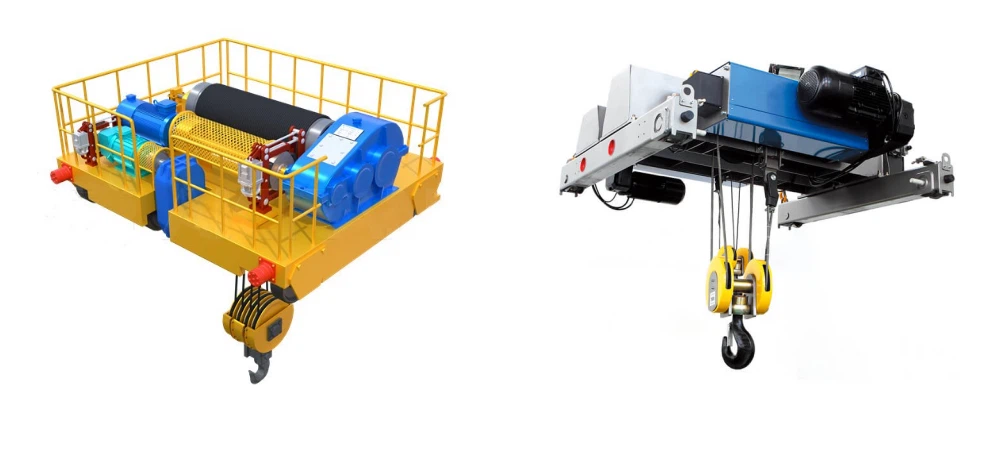
Hoist Machinery:
Hoist Motors: Powerful electric motors that drive the lifting operation.
Wire Ropes & Sheaves: High-strength steel cables and pulley systems.
Drums: Large spools that wind and unwind the wire ropes.
Brakes: Multiple braking systems including service brakes, emergency brakes, and holding brakes.

Trolley System:
Trolley Frame: The structure that carries the hoist machinery.
Trolley Drive Motors: Motors that move the trolley along the bridge girder.
Trolley Wheels & Rails: Components that guide and support the trolley's movement.
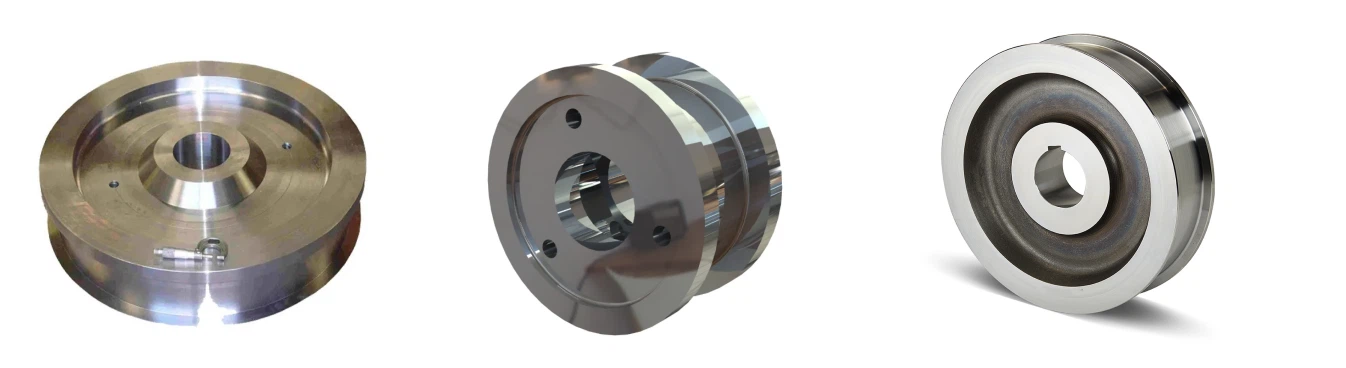
3. Power & Mobility Systems
Power Generation System:
Diesel Generator Set: Typically a large diesel engine coupled with a generator (for conventional RTGs).
Electric Power System: For E-RTGs, including cable reels, conductor bars, or battery systems.
Tire Groups:
Tire Configurations: Typically 4, 8, or 16 tires arranged in bogie groups.
Tires & Rims: Specialized high-pressure, high-load capacity tires.
Suspension Systems: Hydraulic or mechanical systems that distribute weight evenly across all tires.
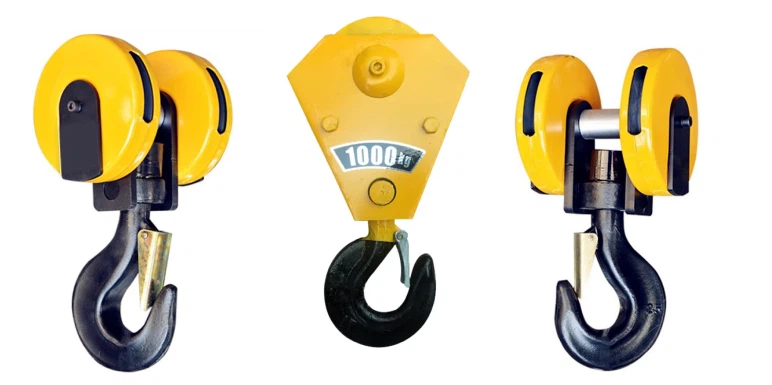
Steering System:
Hydraulic Steering Cylinders: Control the angle of the wheel bogies.
Steering Modes: Multiple modes including:
90° Steering: For crossing between container blocks
Crab Steering: Diagonal movement
Articulated Steering: For tight turns
Travel Drives:
Travel Motors: Electric or hydraulic motors that drive the wheels.
Transmissions & Axles: Power transmission components.

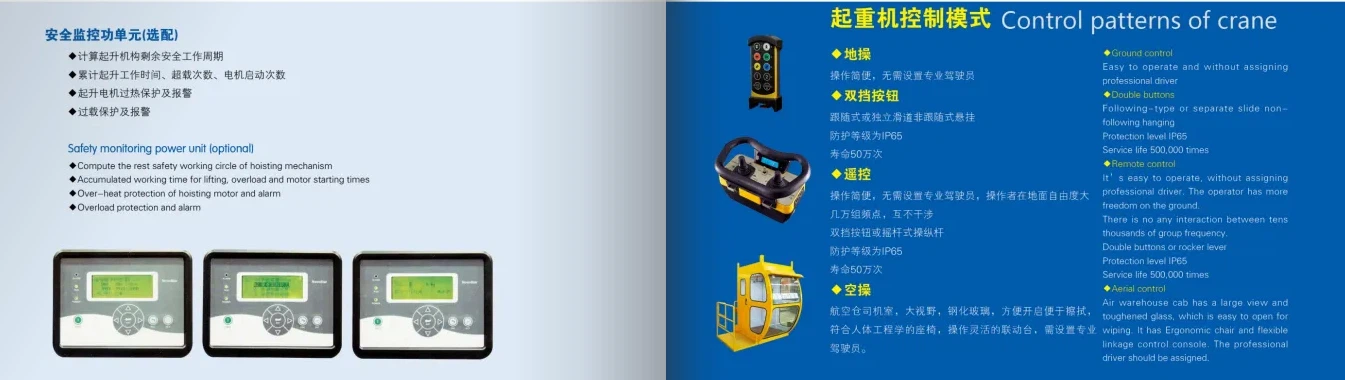
4. Control & Safety Systems
Operator Cab:
Ergonomic Controls: Joysticks, switches, and displays.
Climate Control: Air conditioning and heating.
Visibility: Large windows for optimal view of operations.
Control & Automation Systems:
Programmable Logic Controller (PLC): The main computer that controls all crane functions.
Variable Frequency Drives (VFDs): For smooth control of all motions.
Container Positioning System: Automated systems for precise container handling.
Remote Control Capability: For semi-automated or fully automated operations.

Safety Devices:
Anti-Collision Systems: Laser or radar-based systems to prevent collisions with other equipment.
Load Moment Indicator (LMI): Monitors load weight and crane stability.
Limit Switches: For hoist, trolley, and gantry limits.
Emergency Stop Systems: Multiple emergency stop buttons throughout the crane.
Wind Speed Indicators: Monitor wind conditions and can trigger automatic shutdown.
Tire Pressure Monitoring: Ensures proper tire inflation and load distribution.

5. Additional Systems
Lighting: High-intensity lights for night operations.
Fire Suppression: Automatic fire detection and extinguishing systems, particularly in the engine compartment.
Lubrication Systems: Automatic lubrication for wire ropes, bearings, and other moving parts.
Communication Systems: Radios and intercoms for coordination with ground personnel.
SKETCH
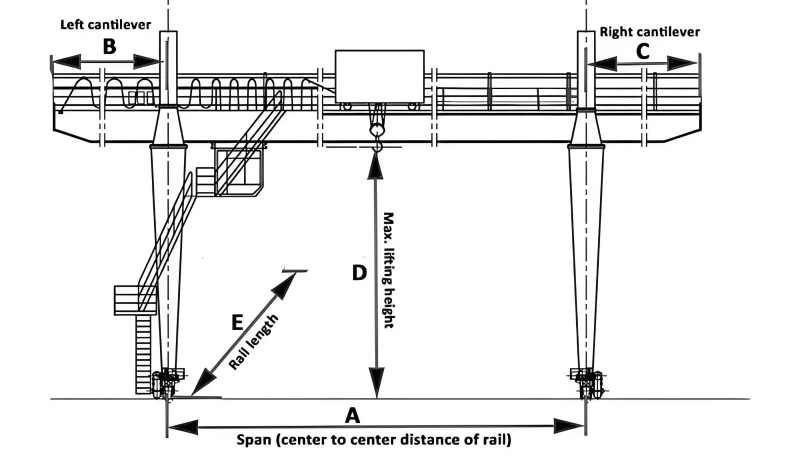
Main technical
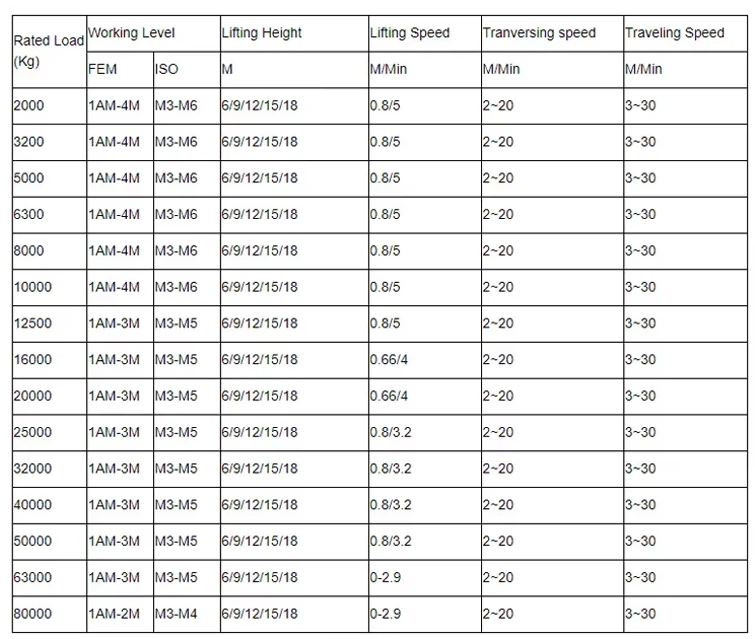
Advantages
Advantages of RTG Mobile Container Gantry Cranes
RTGs offer a unique combination of mobility and stacking density that makes them indispensable in modern container terminals.
1. Unmatched Mobility and Flexibility
Free Movement: Rubber tires allow the crane to travel anywhere in the container yard without being confined to fixed tracks. This enables operators to easily redeploy cranes to areas with high workload or changing operational needs.
Multiple Steering Modes: Features like 90-degree steering, crab steering, and diagonal steering provide exceptional maneuverability for navigating between container stacks and aligning with trucks and equipment.
2. High Storage Density
High Stacking: RTGs can typically stack containers 5 to 7 high, making efficient use of vertical space.
Wide Spanning: They are designed to span 6 to 8 container rows plus a truck lane (referred to as "6+1" or "7+1" configuration), maximizing ground space utilization.
3. Versatile Operational Capabilities
Multiple Functions: A single RTG can perform various tasks, including stacking in the yard, loading and unloading trucks, and transferring containers to and from other equipment like straddle carriers.
Truck and Rail Service: They can efficiently service both road trucks and, in many terminal layouts, rail cars.
4. Progressive Technology Integration
Electrification (E-RTG): Modern RTGs can be connected to the electrical grid, significantly reducing diesel fuel consumption, emissions, and noise pollution.
Automation Ready: RTGs are increasingly being automated or semi-automated, allowing for remote operation from a control center, which improves safety and can optimize performance.
5. Cost-Effective Infrastructure
Lower Initial Infrastructure Cost: Compared to Rail-Mounted Gantry (RMG) systems, RTGs require a reinforced concrete pavement but not the extensive and costly rail network and deep-pile foundations.
Application
Applications of RTG Mobile Container Gantry Cranes
RTGs are the workhorses of container terminals and are critical to global supply chain logistics.
1. Container Stacking and Storage (Primary Function)
Yard Organization: RTGs are primarily used for organizing and storing containers in dense blocks within the terminal yard. They create structured stacks that are easily accessible for subsequent retrieval.
2. Truck Loading and Unloading
Gate Operations: They directly service external trucks that arrive to pick up import containers or drop off export containers, facilitating the land-side interface of the terminal.
3. Transfer Operations
Equipment Interface: RTGs work in conjunction with other terminal equipment. They receive containers from and transfer containers to straddle carriers or empty container handlers for movement around the terminal.
4. Rail Terminal Operations
Intermodal Transfer: In terminals with an integrated rail yard, RTGs are used to load containers onto and unload them from rail cars, connecting sea transport with land-based rail networks.
5. Container Freight Station (CFS) Operations
Cargo Consolidation/Deconsolidation: RTGs can be used to handle containers at stations where goods are packed into (stuffed) or removed from (stripped) containers.
Crane production process
The production process for an RTG (Rubber-Tyred Gantry) Mobile Container Gantry Crane is a complex undertaking that involves heavy steel fabrication, precise assembly of sophisticated systems, and rigorous testing. It's a project-based manufacturing process for a multi-million dollar piece of capital equipment.
Here is a detailed breakdown of the production process.
Stage 1: Design & Engineering
This is the foundational stage where the crane is conceived and specified.
Client Specification Review: Detailed analysis of the terminal's requirements: stacking dimensions (e.g., "6+1", "7+1"), lifting capacity (typically under spreader), lifting height, duty cycle, and power preference (Diesel, Electric ERTG, Hybrid).
Conceptual & Detailed Design:
Structural Analysis: Using Finite Element Analysis (FEA) to model the entire portal structure (legs, girder, bracing) for stress, deflection, stability, and fatigue under dynamic loads and wind forces.
Mechanical Design: Designing the hoist mechanism, trolley system, complex steering bogies, and tire load distribution.
Electrical & Control Design: Creating schematics for the power system (generator set or electric drive), PLC controls, VFDs, and advanced automation/positioning systems.
Bill of Materials (BOM) Creation: A comprehensive list of all raw materials and purchased components (engines, generators, motors, PLCs, VFDs, wire rope, tires, brakes).
Stage 2: Material Procurement & Preparation
Procurement: Sourcing certified high-tensile steel plates and sections. Ordering long-lead, high-value components from specialized global suppliers (e.g., Cummins or Caterpillar for engines, Siemens or ABB for drives and PLCs, Pirelli or Michelin for special tires).
Material Preparation: Steel plates are shot-blasted and primed. They are then cut to size using CNC plasma or flame cutting machines for precision.
Stage 3: Structural Fabrication & Assembly
This is where the crane's massive skeleton takes shape.
Component Fabrication:
Legs & Girder: The legs and main girder are fabricated from steel plate into large box sections. This involves CNC cutting, fitting in jigs, and welding.
Bogies & End Frames: The structures that house the wheels, axles, and steering mechanisms are fabricated.
Welding & Stress Relieving:
Automated Welding: Critical welds on the main girders and legs are performed using Submerged Arc Welding (SAW) for deep penetration and high strength. All welders are certified, and critical welds are often inspected via ultrasound.
Stress Relieving: Large fabricated assemblies like the main girder are heat-treated in a massive furnace to relieve internal stresses from welding, preventing future distortion.
Machining: Key mating surfaces, such as the connections between the girder and legs and the mounting points for the trolley rails, are machined to ensure perfect alignment.
Stage 4: Mechanical & Powertrain Installation
Structural Assembly: The legs are connected to the main girder to form the complete portal frame. This is often done in a large assembly bay.
Powertrain Installation:
The diesel engine and generator set are installed in their designated enclosure on the crane's platform.
For E-RTGs, the cable reel or conductor bar collection system is installed.
Drivetrain & Steering Assembly:
The wheel bogies, complete with axles, travel motors, and the complex hydraulic steering cylinders, are installed onto the legs.
Trolley and Hoist Installation:
The trolley frame is assembled, and the hoist machinery (motors, gearboxes, drums, sheaves) is mounted and aligned on it.
The trolley rails are installed on the main girder, and the trolley is placed on them.
Stage 5: Electrical & Control System Installation
Cable Pulling: Hundreds of meters of power and control cables are run through conduits across the entire crane structure.
Panel & Component Installation: The main control panels (housing PLCs, VFDs, and protection devices), operator's cab, and all sensors (limit switches, anti-sway, wind anemometers) are installed and wired.
Software & Configuration: The control software is loaded onto the PLCs. The VFDs are configured, and the complex control algorithms for hoisting, trolley travel, and gantry steering are programmed and tuned.
Stage 6: Pre-Delivery Testing & Inspection (FAT)
The fully assembled crane undergoes rigorous testing at the factory.
No-Load Tests: All functions are operated without a load: hoist, trolley travel, gantry travel, and all steering modes.
Load Testing:
Static Load Test: A test load of 125% of the rated capacity is lifted and held to verify structural integrity and brake holding capacity.
Dynamic Load Test: A test load of 110% of the rated capacity is lifted and moved through all operational motions to simulate real-world conditions.
Safety System Tests: All safety devices are tested, including emergency stops, limit switches, load moment indicator (LMI), anti-collision systems, and wind speed monitors.
Performance Verification: The crane's lifting speed, positioning accuracy, and steering functionality are verified against the design specifications.
Stage 7: Dismantling, Painting & Packaging
Dismantling: The crane is carefully disassembled into major modules for shipping (e.g., legs, girder sections, trolley, generator set). All connections are clearly marked.
Final Painting: A high-performance, weather-resistant paint system is applied, often in the customer's specified colors.
Packaging: Components are securely packaged. Machined surfaces and electrical components are protected from corrosion and impact damage during transit.
Stage 8: Site Erection & Commissioning (SAT)
Site Erection: The manufacturer's erection team reassembles the crane at the customer's terminal using large mobile cranes.
Final Connections & Checks: All mechanical, electrical, and hydraulic connections are finalized. Alignments are verified.
Site Acceptance Test (SAT): The crane undergoes final performance and safety tests in its actual operating environment with the customer present. Operator and maintenance training is conducted.

Workshop view:
The company has installed an intelligent equipment management platform, and has installed 310 sets (sets) of handling and welding robots. After the completion of the plan, there will be more than 500 sets (sets), and the equipment networking rate will reach 95%. 32 welding lines have been put into use, 50 are planned to be installed, and the automation rate of the entire product line has reached 85%.



Hot Tags: rtg mobile container gantry cranes, China rtg mobile container gantry cranes manufacturers, suppliers, factory
You Might Also Like


Send Inquiry