










Rmg Rail Mounted Container Gantry Crane
Products Description
What is an RMG Crane?
An RMG Crane is a large gantry crane used for stacking shipping containers in a yard that moves on fixed rails. This rail system defines the crane's working area, making it ideal for highly automated, high-volume terminals with a predictable layout.
Key Characteristics
Fixed Path on Rails: This is the defining feature. The crane moves back and forth along a set of parallel steel rails embedded in the yard. This allows for extremely precise and automated movement.
Gantry Structure: Similar to an RTG, it has a tall steel frame that spans the container stacks. However, RMGs are often larger and can handle wider spans and greater stacking heights.
Power Source: Almost exclusively Electric. They are powered by a conductor system (like busbars or festoon systems) running along the rail track, resulting in zero local emissions.
High Degree of Automation: RMGs are the technology of choice for automated container terminals. Their fixed path makes them perfectly suited for computer-controlled operation.
Stacking Capacity: Typically, RMGs can stack higher and wider than RTGs-commonly 1-over-7 or even 1-over-8 high, and can span more container rows.
RMG vs. RTG: A Direct Comparison Recap
| Feature | RMG (Rail-Mounted Gantry) | RTG (Rubber-Tyred Gantry) |
|---|---|---|
| Mobility | Fixed. Moves only on fixed rails. | High. Moves on rubber tires within the yard. |
| Flexibility/Layout | Inflexible. Fixed layout, difficult to change. | Flexible. Yard layout can be changed; cranes can be redeployed. |
| Power Source | Electric (via conductor rail/busbar). | Diesel-Electric (common) or Electric (with cable reel). |
| Automation | Excellent. Ideal for full automation. | Good. Possible, but more complex due to tire alignment. |
| Stacking Height/Density | Higher. Typically 1-over-7 or more. | Slightly Lower. Typically 1-over-5 or 1-over-6. |
| Operating Cost | Lower (electric power, less maintenance on wheels/rails). | Higher (fuel costs, tire and engine maintenance). |
| Environmental Impact | Zero emissions at point of use. | Emissions if diesel-powered. |
| Initial Cost | Higher (due to rail infrastructure). | Lower (requires only reinforced pavement). |
| Ideal For | High-volume, dedicated, automated terminals with a long-term fixed layout. | Multi-purpose terminals, smaller ports, yards requiring flexibility. |
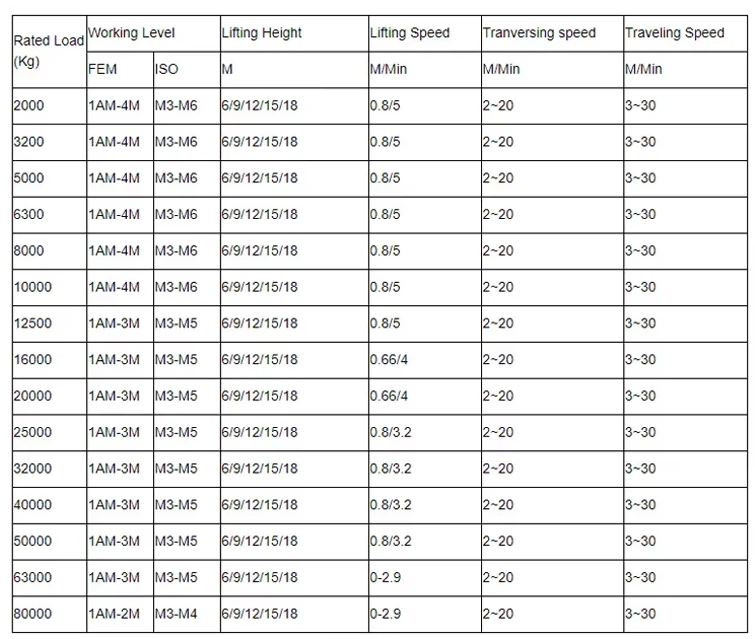
Lifting Capacity 320 tons
Span (Width) 3 - 12 meters (adjustable)
Lifting Height 3 - 10 meters
Working Class A3-A5 (light to medium duty)
Hoisting Speed 0.5 - 8 m/min (variable)
Main Beam Type Single/double girder (box-type)
Power Supply 220V/380V 3-phase or manual
Control Mode Pendant control/wireless remote
Hoist Type Electric chain hoist/wire rope hoist
Travel Drive Manual push or motorized
Corrosion Protection Hot-dip galvanized or marine-grade paint
Wind Resistance Up to Beaufort scale 6 (for outdoor use)
Operating Temp -20°C to +50°C

Pictures & Components
Building on the previous overview, here is a detailed breakdown of the key components of an RMG (Rail-Mounted Gantry) Container Gantry Crane.
These components work together to allow the crane to move precisely along its rails, lift massive containers, and stack them with pinpoint accuracy, often in an automated or remotely controlled environment.
The components can be grouped into several major systems:
1. Structural System
This is the crane's skeleton, designed to withstand heavy loads and dynamic forces.
Gantry Legs: The two vertical structures that support the entire crane. They are designed to handle the compressive loads of the hoisted container and the horizontal forces from crane movement.
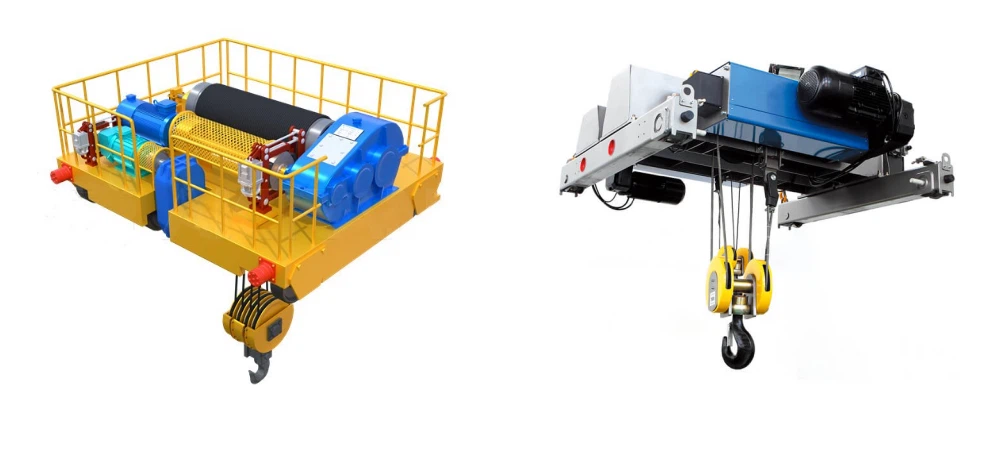
Main Girder (or Boom): The primary horizontal beam that connects the top of the two gantry legs. It must be rigid to support the trolley and spreader without excessive deflection. It can be a single "box girder" or a double girder design.
End Carriages: The robust assemblies at the base of each leg that house the wheels, drives, and buffers. They are the component that actually sits on and moves along the rails.

2. Motion and Drive System
This system provides all the movement capabilities.
Rail Track & Foundation: The heavy-duty steel rails installed on a massive concrete foundation. This is the fixed path that defines the crane's working area and provides a stable, level surface for precise movement.
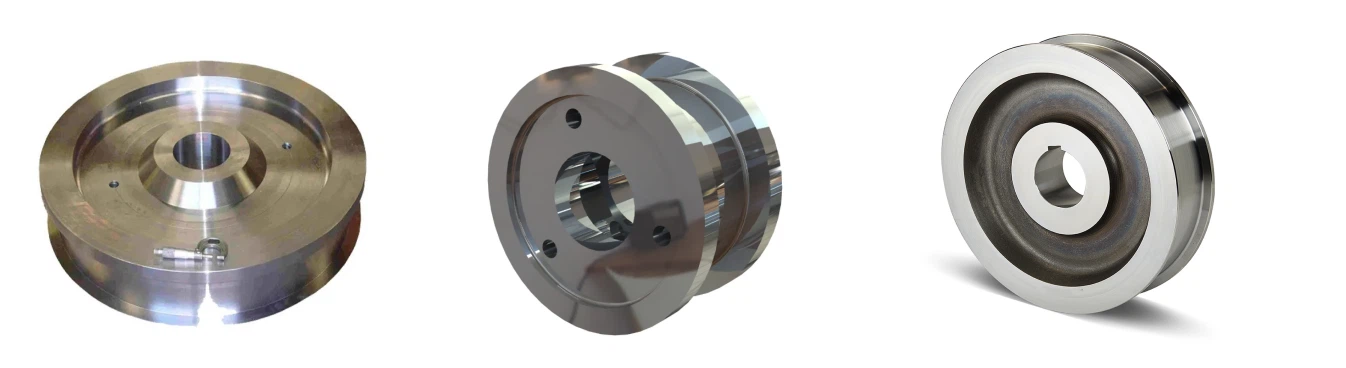
Travel Wheels & Drives: Located within the end carriages. Multiple wheels are grouped into "bogies." The travel drives (electric motors with gearboxes) power these wheels to move the entire crane forward and backward along the rails.
Trolley: The frame that carries the hoisting machinery and moves side-to-side (traverses) along the main girder.
Trolley Drive: The motor and gear system that moves the trolley along the girder rails.
Hoisting Mechanism: The heart of the lifting function. It consists of:
Hoist Motor: A powerful electric motor that provides the lifting force.
Hoist Drum: A large, grooved steel drum around which the wire ropes are wound.
Wire Ropes: High-strength steel cables that run from the drum, over sheaves (pulleys), and down to the spreader.
Sheaves: Pulleys that guide the wire ropes and provide mechanical advantage.
3. Lifting and Spreading System
This is the interface between the crane and the container.
Spreader (or Spreadering Beam): The device that physically locks onto the container. It is a complex piece of engineering itself, containing:
Twistlocks: Hydraulically or electrically operated rotating locks that engage into the standard corner castings of a shipping container.
Spreader Frame: An adjustable frame that can extend or retract to handle different container lengths (e.g., 20ft, 40ft, 45ft).
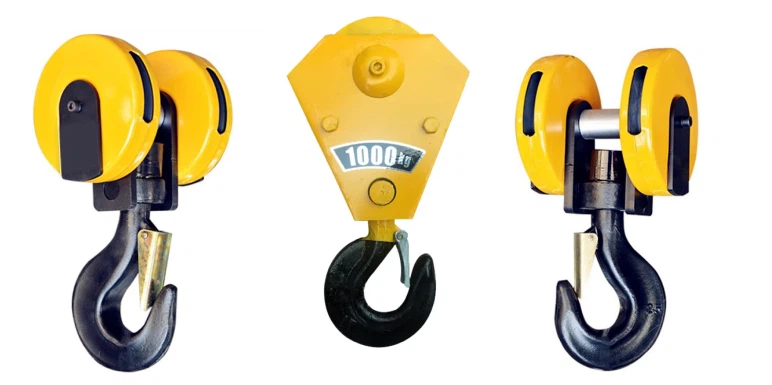
Lifting Frame / Headblock: The assembly that connects the wire ropes to the spreader, often incorporating a system of sheaves.

4. Power and Electrical System
The crane's nervous system and energy source.
Conductor System (Busbar / Festoon): The method of delivering electricity to the crane along its entire travel length. A rigid busbar with collector shoes is most common for RMGs, providing a reliable, high-power connection without cables dragging on the ground.
Main Control Panels / VVVF Drives: Cabinets containing the programmable logic controllers (PLCs), variable voltage variable frequency (VVVF) drives, and other electronics that control all crane movements with precision and smoothness.
Generator Set (Optional): Some RMGs may have a small diesel generator for limited "emergency" movement in case of a power failure, allowing them to clear a critical path.

5. Safety and Control System
Essential for protecting personnel, equipment, and the cargo.
Anti-Collision System: Sensors (laser, radar) that prevent the crane from colliding with other cranes in the same aisle or with objects at the end of its travel.
Auto-Steering System (For Trolley & Crane): Ensures the trolley and spreader are perfectly aligned over the container stack. This is critical for automation.
Limit Switches & Buffers: Physical and sensor-based switches that prevent the crane and trolley from moving beyond their safe operational limits. Large rubber or hydraulic buffers at the end of the rails absorb impact.

Weighing System: Often integrated into the hoisting system to measure the weight of each container being lifted.
Container Position Detection System: Uses lasers or cameras to automatically detect the position and orientation of a container on the ground or on a truck, guiding the spreader for accurate landing.
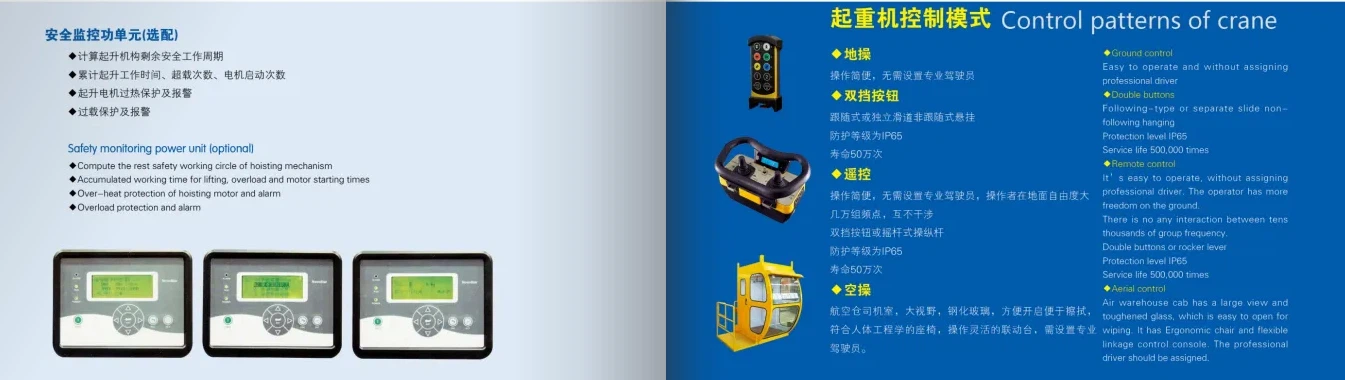
Remote Control Station or Operator's Cab: In a modern automated terminal, the crane is controlled by an operator from a remote center. In semi-automated or manned terminals, an operator's cab is mounted on the trolley or the crane structure, providing a direct view of the operations.
SKETCH
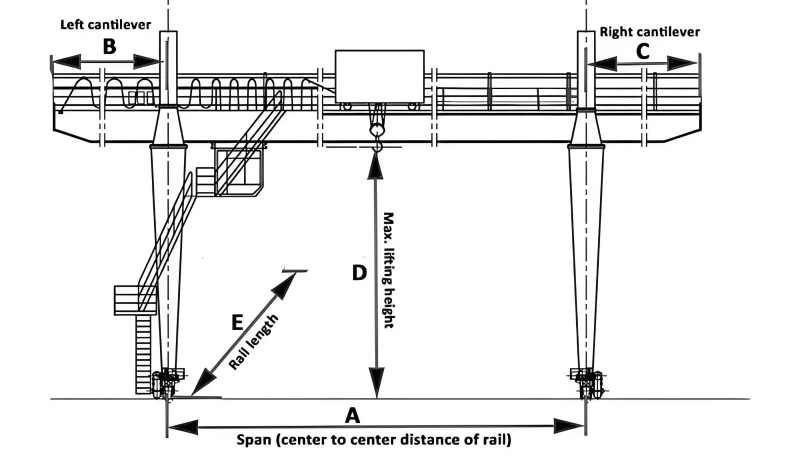
Main technical
Advantages
Advantages of RMG Cranes
RMGs offer a compelling set of benefits, particularly for terminals focused on high throughput, efficiency, and automation.
1. Superior Operational Efficiency & Higher Productivity
Higher Speeds: RMGs are typically designed for faster hoisting, trolley, and gantry travel speeds compared to RTGs. Their fixed path and direct electric power allow for more aggressive acceleration and deceleration.
Continuous Operation: Being all-electric, they face no downtime for refueling and can operate 24/7 with minimal interruptions.
Faster Cycle Times: The combination of speed and precision leads to quicker container pick-up and drop-off cycles, increasing the number of moves per hour.
2. Ideal for Automation & Digitalization
Predictable Path: The fixed rail system eliminates the variables of ground conditions and tire alignment, making it perfectly suited for computer control. This is their single greatest advantage in modern terminal design.
High Precision: Automated positioning systems can control the crane's movement along the rails and the trolley's movement along the girder with millimeter-level accuracy, enabling unmanned operation.
Integration with Terminal Software: They seamlessly integrate with Terminal Operating Systems (TOS) and Equipment Control Systems (ECS) to become a fully synchronized component in an automated logistics chain.
3. Lower Lifetime Operating Costs (OPEX)
Energy Efficiency: Electric power is significantly cheaper and more efficient than diesel. Regenerative drives can even feed energy back into the grid when lowering a container.
Reduced Maintenance: Steel wheels on steel rails have far less friction and wear than rubber tires on asphalt. There are no tires to replace, no diesel engines to maintain, and less stress on the entire structure.
Longer Lifespan: The controlled operating environment and reduced vibration lead to less structural fatigue and a longer operational life for the crane.
4. Enhanced Safety
Separation of Man and Machine: In fully automated RMG blocks, personnel are excluded from the stacking area, eliminating the risk of accidents from moving equipment, falling containers, or human error.
Built-in Safety Systems: Automated anti-collision, wind-speed monitoring, and container sway prevention systems are standard and highly effective due to the fixed operating parameters.
5. Greater Stacking Density & Better Land Utilization
Higher Stacking: RMGs can stack containers 1-over-7 or even 1-over-8 high (7 or 8 containers on the ground, plus one on top). This maximizes the storage capacity of a given plot of land.
Wider Spans: They can be designed to span more container rows and a traffic lane, further optimizing the use of terminal space.
6. Environmental Sustainability
Zero Local Emissions: As all-electric machines, they produce no exhaust fumes, diesel particulates, or greenhouse gas emissions at the point of use, contributing to cleaner air in and around the port.
Noise Reduction: Electric operation is much quieter than diesel-powered equipment, reducing noise pollution for neighboring communities.
Energy Recovery: The ability to use regenerative braking improves overall energy efficiency.
Application
Applications of RMG Cranes
The specific advantages of RMGs make them the ideal solution for well-defined terminal scenarios.
1. High-Volume, Automated Container Terminals (The Primary Application)
This is the classic application for RMGs. Terminals designed from the ground up for automation, such as APM Terminals Maasvlakte II (Rotterdam) or CTB in Qingdao, use RMGs in their stacking yards. The cranes work in concert with Automated Guided Vehicles (AGVs) or automated lifting vehicles to create a highly efficient, 24/7 flow of containers with minimal human intervention.
2. Intermodal Rail Terminals
RMGs are perfectly suited for moving containers directly between seaport vessels and trains (or between different trains).
Direct Transfer: They can lift a container from a truck or stack and place it directly onto a railroad flatcar with precision.
Efficient Land Use: Their high-density stacking is valuable in the often-constrained spaces of rail yards.
3. Dedicated Container Storage and Freight Stations
Long-Term Storage Yards: For facilities that store containers for extended periods, the high stacking density and low operating cost of RMGs are major benefits.
Distribution Centers: Large logistics hubs and distribution parks serving major retailers or manufacturers use RMGs to manage their container flows efficiently.
4. Terminals with Limited Land Availability
When a port cannot easily expand its footprint, the only way to increase capacity is to stack higher and denser. RMGs provide this capability more effectively than any other rubber-tired alternative.
5. Environmentally Sensitive Locations
Ports located near urban centers or in regions with strict air quality regulations (like California or the EU) are increasingly adopting all-electric RMGs to meet their sustainability goals and comply with environmental laws.
Crane production process
The production process of an RMG (Rail-Mounted Gantry) Crane is a complex feat of heavy engineering, involving meticulous planning, advanced fabrication, and precise assembly. It's typically carried out by specialized heavy machinery manufacturers in large, dedicated facilities.
Here is a detailed breakdown of the production process, from concept to commissioning.
Phase 1: Design & Engineering (The Digital Blueprint)
This is the most critical phase, where the crane is born digitally before any steel is cut.
Conceptual & Detailed Design:
Client Requirements: Engineers work with the client (the port terminal) to define specifications: lifting capacity (e.g., 40-50 tons under spreader), span width, stacking height (1-over-7), lifting speed, and degree of automation.
Structural Analysis: Using Finite Element Analysis (FEA), engineers simulate the stresses, strains, and deflections on the entire structure (girders, legs) under various load conditions to ensure integrity and safety.
Mechanical & Electrical Design: Detailed designs are created for all systems: hoist and trolley gearboxes, wire rope reeving, drive motors, and the complete electrical schematics for power and control.
Automation & Control Systems Design:
For modern RMGs, this is paramount. Software for the Programmable Logic Controllers (PLCs), anti-collision systems, auto-steering, and container positioning is developed and simulated.
Procurement of Long-Lead Items:
While fabrication begins, the company orders specialized components with long manufacturing lead times, such as:
Hoist and travel motors
Gearboxes
PLCs and VVVF drives (Siemens, ABB, etc.)
Specialized steel grades
Wire ropes and sheaves
Phase 2: Fabrication & Manufacturing (The Physical Build)
This phase transforms raw steel and components into the crane's major parts. It happens in a large, covered fabrication shop.
Steel Preparation & Cutting:
Large steel plates and sections (beams) are delivered to the factory.
They are cleaned (shot blasted) and then cut to precise shapes using computer-controlled methods like Plasma Cutting or Oxy-Fuel Cutting.
Sub-Assembly Fabrication:
Cut plates are welded together to form smaller components. For example:
Box Girders: Steel plates are welded into large, hollow rectangular sections for the main girder and legs.
End Carriages: The complex structures that house the wheels and drives are fabricated.
Trolley Frame: The structure that will carry the hoisting machinery is built.
Major Assembly & Welding:
Sub-assemblies are brought together in large jigs and fixtures to ensure dimensional accuracy.
The Main Girder is assembled in sections (if it's very long) or as a single piece.
The Gantry Legs are fully assembled.
This stage involves extensive welding, often performed automatically by robotic welding machines for consistency and quality. Highly skilled welders perform critical manual welds.
Post-Weld Treatment & Quality Control:
Stress Relieving: Critical welded structures like the main girder are heated in a large furnace to relieve internal stresses created during welding, preventing distortion and cracking.
Non-Destructive Testing (NDT): Every critical weld is inspected using methods like Ultrasonic Testing (UT) or Radiographic Testing (X-rays) to find any hidden defects.
Dimensional Checks: The entire structure is laser-scanned to ensure it meets the design tolerances.
Surface Preparation & Painting:
The entire steel structure is shot-blasted to remove rust and mill scale, creating a perfect surface for paint adhesion.
It is then painted with multiple layers of high-performance, corrosion-resistant paint, often in a controlled environment to ensure a flawless finish. This is crucial for the harsh, salty port environment.
Phase 3: Pre-Assembly & Factory Acceptance Testing (FAT)
Before shipment, the crane is partially assembled at the factory to verify its function.
Erection in the Factory Yard:
The gantry legs and main girder are bolted or welded together on a test track to form the complete gantry structure.
The trolley, hoist machinery, and cab (if any) are installed.
Electrical Installation:
Electricians run thousands of meters of cable, connecting motors, sensors, and control panels.
Factory Acceptance Testing (FAT):
The client visits the factory to witness a series of rigorous tests:
No-Load Tests: All movements (crane travel, trolley travel, hoisting) are tested without a load to check for smooth operation, speed, and brake function.
Load Tests: This is the critical test. A Static Load Test is performed with a test weight (typically 25% above the rated capacity) lifted and held to check structural integrity. A Dynamic Load Test is performed at the rated capacity to test all functions under working conditions.
Safety System Tests: All limit switches, emergency stops, and alarms are tested.
Phase 4: Dismantling, Shipping & Site Erection
Dismantling & Logistics:
After passing FAT, the crane is carefully dismantled into transportable sections. The main girder is cut into segments, legs are separated, etc.
These massive components are loaded onto specialized ocean-going heavy-lift vessels for transport to the port.
Site Preparation:
While the crane is being built, the client's site is prepared: the heavy concrete foundation is poured, and the long, parallel rail tracks are installed with extreme precision.
Site Erection:
A team of specialized erection engineers and heavy crane operators from the manufacturer travels to the port.
Using large mobile cranes, they reassemble the RMG on its permanent rails, following a reverse sequence of the dismantling process.
All mechanical and electrical connections are remade.
Phase 5: Commissioning & Site Acceptance Testing (SAT)
Final Checks and Calibration:
The entire system is powered up.
Crucially, all automation systems are calibrated: the laser positioning systems for the spreader, the anti-collision sensors, and the auto-steering are fine-tuned to the actual site conditions.
Site Acceptance Testing (SAT):
A final round of testing, often more comprehensive than the FAT, is performed with the client to prove the crane performs to specification in its real environment.
Once signed off, the crane is handed over to the client, and operator training begins.

Workshop view:
The company has installed an intelligent equipment management platform, and has installed 310 sets (sets) of handling and welding robots. After the completion of the plan, there will be more than 500 sets (sets), and the equipment networking rate will reach 95%. 32 welding lines have been put into use, 50 are planned to be installed, and the automation rate of the entire product line has reached 85%.




Hot Tags: rmg rail mounted container gantry crane, China rmg rail mounted container gantry crane manufacturers, suppliers, factory
You Might Also Like


Send Inquiry