










Mz Type Grab Gantry Crane
Products Description
Key Features of MZ Type Grab Gantry Crane:
Double-Girder Structure – Provides high stability and lifting capacity.
Grab Bucket Mechanism – Designed for efficient loading and unloading of bulk materials.
High Lifting Capacity – Typically ranges from 5 tons to 50 tons or more.
Wide Span – Can cover large working areas (up to 35 meters or more).
Flexible Movement – Travels on rails for precise material handling.
Slewing Mechanism (Optional) – Some models include a rotating grab for better positioning.
Electric Hoist or Winch System – Ensures smooth and reliable operation.
Warranty :1 Year
Weight (KG):35000 kg
Feature:Gantry Crane
Application:Railway Station/Sea Port/Yard/Subway
Rated Lifting Moment:Different
Material: Q235/Q345
Working Temperature:-40~40 ℃
Legs space:Bigger than normal
Control:Cabin control
Electrical parts:Schneider
Power Source:380~480V, 50hz/60hz
Power supply:M5~M8 (ISO)
Main electrical parts:Schneider Brand
Crane feature:High Efficiency

Pictures & Components
The MZ type grab gantry crane consists of several key components that work together to ensure efficient bulk material handling. Below is a detailed breakdown of its main parts:
1. Main Bridge (Gantry Girder)
Double-Girder Structure: Provides high strength and stability.
Box or Truss Design: Depending on the load capacity and span.
End Carriages: Support the girders and house the wheels for movement.
 |
 |
2. Grab Bucket Mechanism
Grab Bucket (Clamshell Type): Used for grabbing and releasing bulk materials.
Rope-Operated Grab: Uses wire ropes for opening/closing.
Motorized Grab: Electrically operated for better control.
Hoisting & Closing Ropes/Winches: Control the grab's movement.
 |
 |
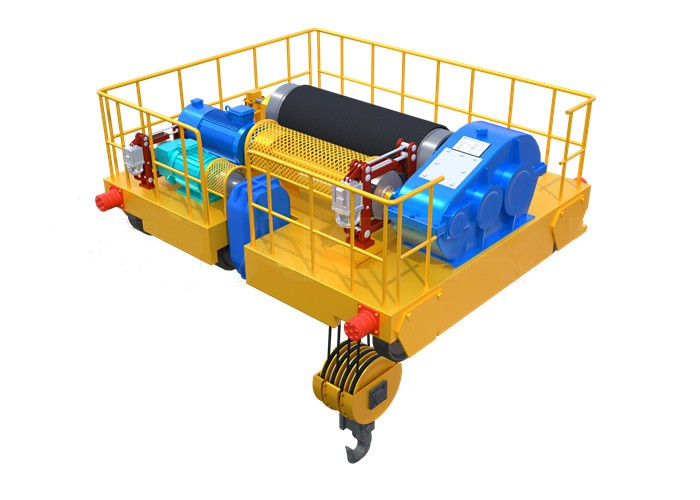
3. Hoisting Mechanism
Electric Hoist or Winch System: Lifts and lowers the grab bucket.
Drum or Rope System: Ensures smooth lifting and lowering operations.
Braking System: Prevents accidental drops.

4. Trolley & Travel Mechanism
Trolley Frame: Moves along the bridge girder.
Travel Motors & Wheels: Allow horizontal movement (cross-travel).
Buffers & Limit Switches: Prevent over-travel.

5. Gantry Travel Mechanism
Travel Wheels & Rails: Enable the entire crane to move along the runway.
Drive Motors & Gearboxes: Provide power for longitudinal movement.
Rail Clamps: Secure the crane when not in use.

6. Electrical & Control System
Control Panel/Pendant/Remote: Operator interface for crane control.
Cabin (Optional): For an operator to control from an elevated position.
Frequency Inverters (Optional): Allow smooth speed regulation.
Safety Devices: Overload protection, emergency stop, and anti-collision systems.
.
7. Support Structure (Legs & Portal Frame)
Fixed or Adjustable Legs: Depending on rail alignment.
Stiffeners & Bracing: Enhance structural integrity.

8. Auxiliary Components
Cable Reel (For Power Supply): Ensures continuous power during movement.
Dustproof & Weatherproofing (For Harsh Environments).
Lubrication System: For smooth operation of moving parts.

SKETCH

Main technical

Advantages
The MZ type grab gantry crane is widely used in industries requiring efficient bulk material handling due to its unique features and benefits:
1. High Efficiency & Productivity
Fast Loading/Unloading: The grab bucket allows quick scooping and releasing of bulk materials.
Continuous Operation: Ideal for ports, stockyards, and power plants where rapid material transfer is needed.
2. Strong Lifting Capacity & Stability
Double-Girder Design: Provides higher strength compared to single-girder cranes.
Heavy-Duty Performance: Can handle loads from 5 tons up to 50+ tons, depending on model.
3. Wide Coverage & Flexibility
Large Span (Up to 35m or more): Covers extensive working areas like storage yards and ship holds.
Longitudinal & Cross Travel: Moves along rails and trolley for precise positioning.
4. Versatile Material Handling
Suitable for Various Bulk Materials: Coal, ore, grain, sand, cement, etc.
Adaptable Grab Types: Can use different grabs (rope-operated, motorized, or hydraulic) based on material type.
5. Automation & Control Options
Remote Control & Semi-Automatic Operation: Reduces labor costs and improves safety.
Programmable Logic Controller (PLC): Enables advanced automation for precise movements.
6. Durability & Low Maintenance
Robust Construction: Designed for harsh environments (ports, steel plants, etc.).
Corrosion-Resistant Coatings: Extends lifespan in humid or marine conditions.
7. Safety Features
Overload Protection: Prevents crane damage from excessive loads.
Anti-Collision & Limit Switches: Ensures safe operation in congested areas.
Application:
1. Ports & Terminals
Ship Loading/Unloading: Efficiently transfers coal, iron ore, grain, and other bulk cargo.
Stockyard Management: Used for stacking and reclaiming materials in open storage areas.
2. Power Plants
Coal Handling: Moves coal from storage to boilers or conveyor systems.
Ash Disposal: Transports fly ash and slag for disposal or recycling.
3. Steel & Metallurgical Plants
Raw Material Handling: Transports iron ore, coke, limestone, and scrap metal.
Blast Furnace Charging: Assists in feeding raw materials into furnaces.
4. Grain & Food Processing
Silos & Warehouses: Handles wheat, rice, soybeans, and other grains.
Feed Mills: Moves bulk animal feed ingredients.
5. Construction & Cement Industry
Sand & Gravel Handling: Used in concrete batching plants.
Cement Clinker Transport: Moves clinker between storage and processing units.
6. Waste Management & Recycling
Scrap Handling: Lifts and sorts metal scrap in recycling yards.
Solid Waste Processing: Used in waste-to-energy plants.
Crane production procedure
1. Design and Planning
Demand Analysis: According to customer needs and usage scenarios, a detailed demand analysis is carried out to determine the specifications, load, span, lifting height, etc. of the crane.
Engineering Design: Engineers use CAD and other design software to carry out detailed design, including structural, mechanical, electrical and other aspects to ensure that the design meets relevant standards and specifications.
2. Material Procurement
Material Selection: Select appropriate steel, motors, control systems and other components according to design requirements.
Supplier Screening: Screen suppliers of materials and components to ensure the quality and reliability of materials.
3. Processing and Manufacturing
Cutting and Forming: Cut, weld, bend and other processes on steel to form main beams, end beams and other structural components.
Machining: Precision machining of key components, such as turning, milling, drilling, etc., to ensure that the size and accuracy meet the design requirements.
Surface Treatment: Spray, galvanize or rust-proof metal parts to enhance corrosion resistance and aesthetics.
4. Assembly
Component Assembly: Assemble the main beam, end beam, trolley, lifting mechanism and other components to form a complete crane structure.
Installation of electrical system: Install electrical equipment such as motors, control cabinets, sensors, limit switches, etc. to ensure the normal operation of the electrical system.
5. Debugging and testing
Preliminary debugging: Carry out preliminary debugging of the crane to check the coordination and operation of each component.
Load test: Carry out load test to ensure the safety and stability of the crane under rated load, and test the functions of safety devices such as overload protection and limit switches.
Performance test: Test the performance indicators of the crane such as lifting speed, running speed, braking effect, etc. to ensure that they meet the design requirements.
6. Quality inspection
Quality inspection: Carry out a comprehensive quality inspection of the crane, including appearance, size, performance, etc., to ensure compliance with relevant standards.
Safety assessment: Carry out safety assessment to ensure the normal operation of all safety devices and systems.
7. Delivery and installation
Packaging and transportation: Pack qualified cranes and prepare them for transportation to the customer site.
On-site installation: Carry out on-site installation according to customer requirements, including basic production and equipment debugging.
Training and handover: Train operators to ensure that they master the operation methods and safety precautions of the equipment and complete the handover work.


Workshop view
Material Inspection
Quality Inspection: Strict quality inspection is carried out on the purchased raw materials to ensure that they meet the design requirements and national standards.
Material Storage: Qualified materials are stored according to classification to prevent corrosion or damage.
Cutting and Forming
Steel Cutting: Use plasma cutting, laser cutting or flame cutting and other technologies to cut the steel according to the size of the design drawing.
Forming Processing: Form the steel plate through bending, rolling, welding and other processes to manufacture the main beam, end beam and other structural parts.
Welding
Component Welding: The cut and formed steel parts are welded into the main structures such as the main beam, end beam and trolley. The welding process needs to be strictly controlled to ensure the structural strength and welding quality.
Weld Inspection: Use non-destructive testing technology (such as ultrasonic testing, radiographic testing) to inspect the welds to ensure that there are no cracks or other defects.
Machining
Precision Machining: Precision machining is performed on the key components of the crane, such as wheel sets, bearing seats, pulleys, etc., to ensure their dimensional accuracy and surface quality.
Assembly of the whole machine
General assembly: On the basis of pre-assembly, the overall assembly of the crane is carried out, including the final installation of the main beam, end beam, lifting mechanism, walking mechanism, etc.
Commissioning and testing
Under dynamic conditions, the operating performance of the crane is tested, including the testing of lifting, walking, steering and other functions. The overall size of the assembled bridge crane is checked to ensure that all dimensions meet the design requirements.
Spraying and anti-corrosion treatment
Surface treatment Rust removal: Rust removal on the surface of the crane, common methods include sandblasting, pickling, etc. Primer spraying: Spray anti-corrosion primer on the treated surface to prevent metal oxidation and corrosion. Topcoat spraying Color spraying: Spray topcoat according to customer requirements or industry standards to give the crane a protective and decorative effect. Marking: After spraying, mark the crane's identification information in accordance with the specifications, such as model, rated load, etc.
Factory and installation
Packaging and transportation
Packaging protection: Protectively package the key components of the crane to prevent damage during transportation. Transportation arrangement: According to the equipment size and transportation conditions, select a suitable transportation method to transport the crane to the customer's site.
Acceptance and delivery
Customer acceptance
On-site acceptance: The customer conducts on-site acceptance of the crane according to the contract requirements and technical specifications to check the performance and quality of the equipment.
Problem rectification: If any problems are found, the manufacturer needs to rectify them in time to ensure that the equipment fully meets the customer's requirements. Delivery and use Operation training: The manufacturer usually trains the customer's operators to ensure that they can operate the crane correctly and safely.


Hot Tags: mz type grab gantry crane, China mz type grab gantry crane manufacturers, suppliers, factory
You Might Also Like



Send Inquiry