










MGH Gantry Crane
Products Description
What is an MGH Gantry Crane?
An MGH Gantry Crane is a self-supporting, floor-mounted overhead crane. Unlike bridge cranes that run on elevated runways attached to a building, a gantry crane travels on wheels along rails or tracks embedded in or laid on the workshop floor. It has a fixed or adjustable span supported by legs (either one or two, depending on type). It is a versatile solution for outdoor applications or buildings where installing a runway structure is impossible or too costly.
Why Choose an MGH Gantry Crane? Advantages
No Building Dependency: Does not transfer loads to the building structure. Ideal for old buildings, temporary sites, or outdoor yards.
Cost-Effective Installation: Often lower initial cost than a top-running bridge crane, as it requires no heavy runway beams and columns.
Maximum Floor Coverage: Can serve a large rectangular area without obstructions. Can be designed with cantilevers to extend reach beyond the legs.
Mobility & Flexibility: Can be relocated if needed (though not easily). Some designs allow for transfer cars to move gantries between parallel tracks.
High Capacity & Span: Engineered for very heavy loads (100+ tons) and wide spans (up to 50m+ for large gantries).
Disadvantages & Considerations
Consumes Floor Space: The legs and runway take up valuable floor/ground area that could be used for storage or traffic.
Ground Requirements: Requires a very level, stable, and load-bearing foundation for the rails. Ground settlement can cause major alignment issues.
Lower Lifting Height: Lifting height is limited by the leg height, whereas bridge cranes can use the full building height up to the roof.
Slower Travel Speeds: Generally moves slower than bridge cranes due to stability concerns and larger moving mass.
Maintenance Access: Components like the end trucks are at ground level but can be harder to access than a centralized workshop crane.
Comparison: MGH Gantry vs. Top-Running Bridge Crane
| Feature | MGH Gantry Crane | Top-Running Bridge Crane |
|---|---|---|
| Support Structure | Self-supporting legs on floor | Supported by building columns/runway |
| Floor Space | Uses floor space for legs/runway | Uses overhead space only |
| Installation Cost | Lower (no building steel) | Higher (requires reinforced runway) |
| Lifting Height | Limited by leg height | Maximizes building height |
| Ideal For | Outdoor yards, weak buildings, clear spans | Indoor factories with strong structure, high lifts |
| Mobility | Can be relocated (difficult) | Fixed location |
Lifting Capacity 320 tons
Span (Width) 3 - 12 meters (adjustable)
Lifting Height 3 - 10 meters
Working Class A3-A5 (light to medium duty)
Hoisting Speed 0.5 - 8 m/min (variable)
Main Beam Type Single/double girder (box-type)
Power Supply 220V/380V 3-phase or manual
Control Mode Pendant control/wireless remote
Hoist Type Electric chain hoist/wire rope hoist
Travel Drive Manual push or motorized
Corrosion Protection Hot-dip galvanized or marine-grade paint
Wind Resistance Up to Beaufort scale 6 (for outdoor use)
Operating Temp -20°C to +50°C

Pictures & Components
The MGH Gantry Crane is a double-girder gantry crane equipped with an electric hoist trolley, designed for medium to heavy-duty lifting operations in factories, warehouses, and outdoor yards. Its structure combines the advantages of double-girder strength and hoist trolley efficiency.
1. Double Box Main Girders
Two welded box-type girders forming the bridge structure
High rigidity and excellent load-bearing capacity
Designed with camber to reduce deflection
Rail mounted on the top or inside for hoist trolley travel
2. Gantry Legs (Support Structure)
Rigid steel legs supporting the main girders
Can be A-frame or rigid leg + flexible leg design
Transfer loads directly to ground rails or concrete foundation
Equipped with maintenance ladders and platforms (optional)
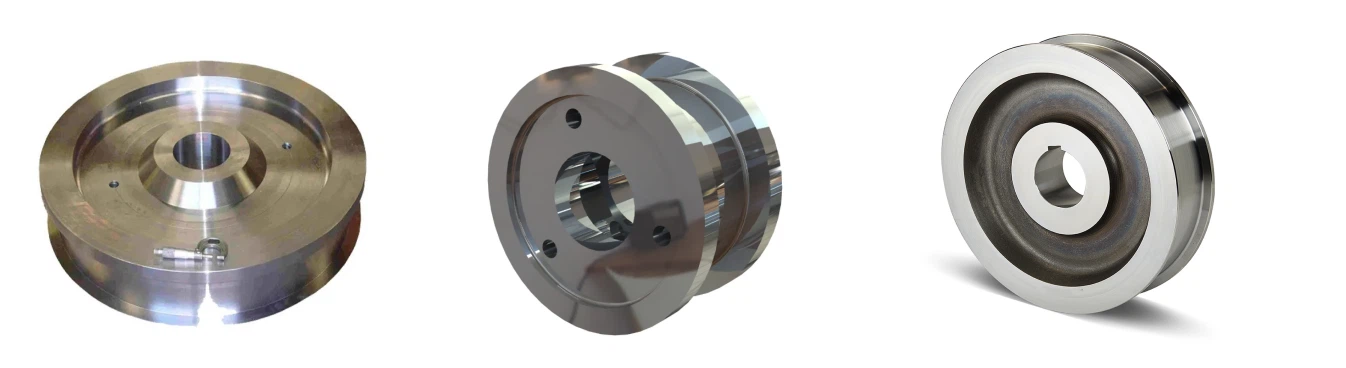
3. End Carriages / Ground Traveling Mechanism
End beams connected to gantry legs
Forged or cast-steel wheels with bearings
Travel motors, reducers, and brakes
Enable smooth long-distance crane travel on ground rails

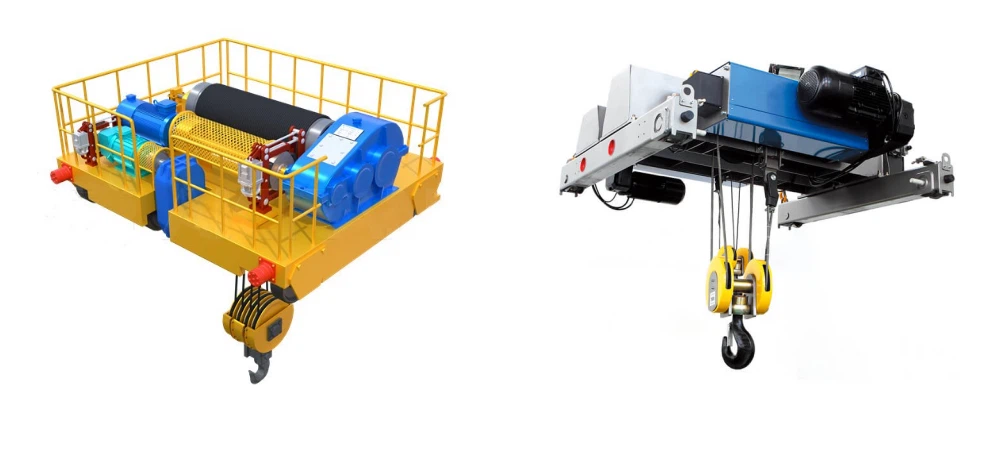
4. Electric Hoist Trolley
The core lifting unit mounted between the double girders.
Includes:
Electric wire rope hoist (CD / MD / European hoist type)
Hoist motor and reducer
Wire rope drum and shaft
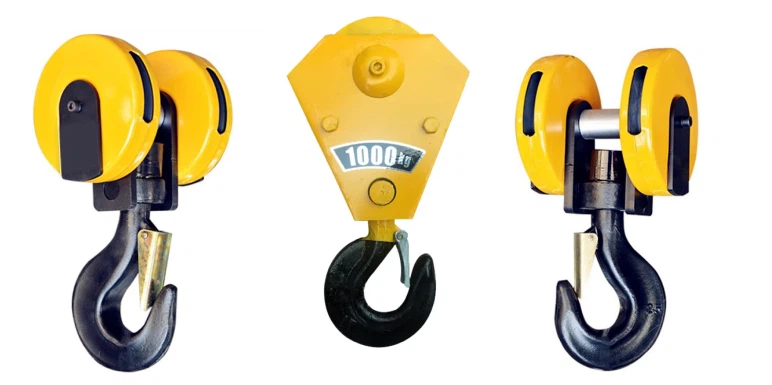
Hook block and pulley system
Trolley traveling motor and gearbox
Brake system
5. Crane Traveling Mechanism
Driving motors and reducers for crane movement
Couplings, shafts, and wheel assemblies
Frequency inverter (VFD) optional for smooth acceleration
6. Electrical Control System
Main electrical control cabinet
Power distribution and protection devices
Wiring for hoist, trolley, and crane travel
Optional PLC control and frequency conversion
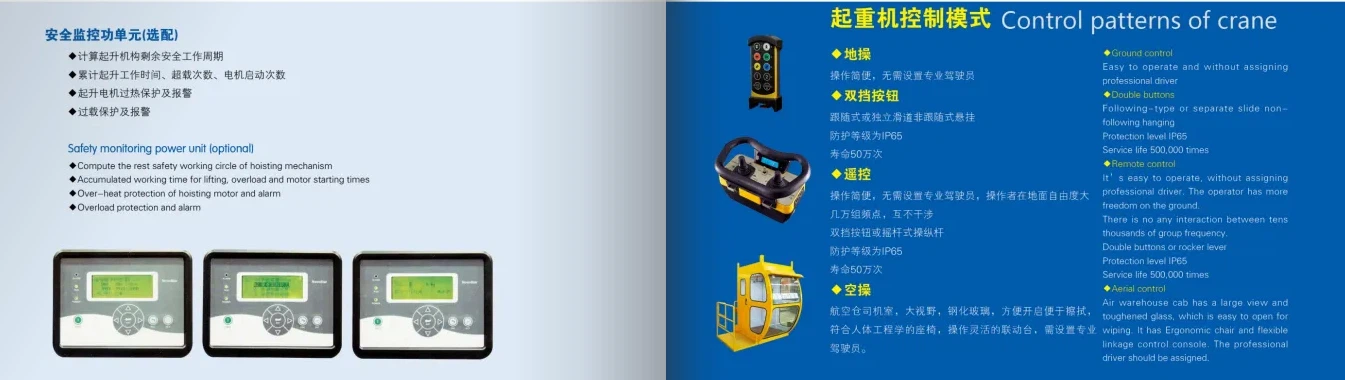
7. Control Devices
Pendant control
Wireless remote control
Operator cabin (optional for higher capacity models)
8. Power Supply System
Cable festoon system
Conductor bar (busbar) system
Main isolator and grounding system


9. Safety Protection Devices
Overload limiter
Lifting height limit switch
Trolley and crane travel limit switches
Emergency stop button
Rail sweeper and buffer
Anti-collision device (optional)
Wind alarm and rail clamp (for outdoor use)

10. Auxiliary & Optional Components
Walkways and handrails
Maintenance platforms
Anti-sway control system
Lighting system
Weatherproof covers for motors and hoist
SKETCH
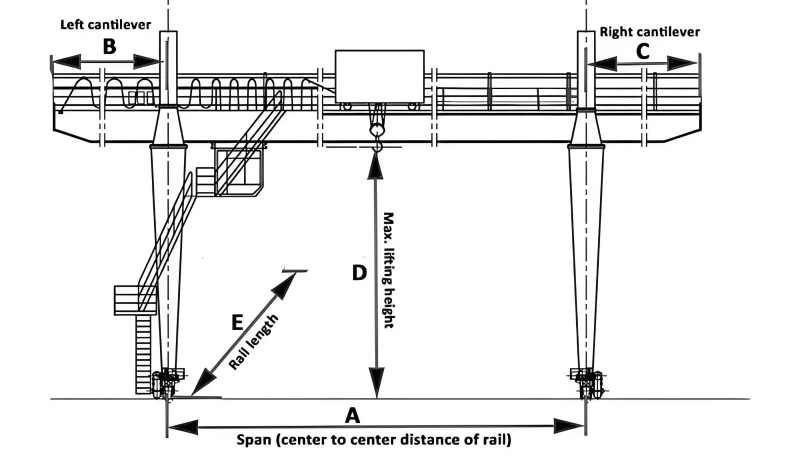
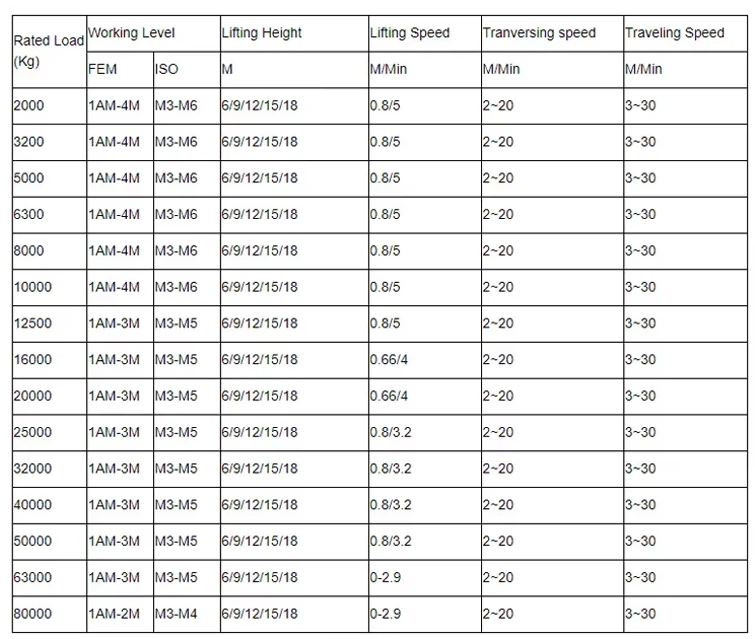
Main technical
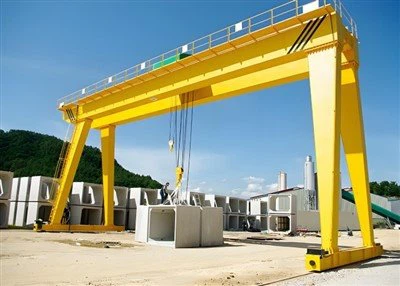
Advantages
Advantages of MGH Gantry Crane
1. High Load Capacity & Structural Strength
Double-girder box structure provides excellent rigidity and stability.
Suitable for medium to heavy lifting operations.
2. Greater Lifting Height
Electric hoist trolley runs between the double girders, maximizing lifting height.
Ideal for workshops and yards with limited headroom.
3. Stable & Smooth Operation
Reduced deflection and vibration compared to single-girder gantry cranes.
Smooth lifting and traveling performance improves safety and efficiency.
4. Cost-Effective Double Girder Solution
Uses an electric hoist trolley instead of a winch trolley.
Lower cost and lighter weight than traditional heavy-duty gantry cranes.
5. Flexible Design & Customization
Span, lifting height, travel speed, and control method can be customized.
Can be designed with rigid leg + flexible leg for thermal expansion.
6. Easy Installation & Maintenance
Modular structure simplifies transportation and installation.
Easy access to hoist and electrical components reduces maintenance time.
7. Multiple Control Options
Pendant control
Wireless remote control
Operator cabin (optional for higher capacities)
8. High Safety Standards
Equipped with overload protection, limit switches, emergency stop, rail sweepers, and buffers.
Optional wind alarms and rail clamps for outdoor use.
Application
Applications of MGH Gantry Crane
The MGH gantry crane is suitable for indoor and outdoor material handling, especially where overhead runway beams are not available.
1. Factories & Manufacturing Plants
Handling machinery parts, molds, and heavy components
Assembly and maintenance operations
2. Warehouses & Logistics Centers
Loading and unloading heavy goods
Efficient material transfer in storage yards
3. Steel & Metal Processing
Handling steel plates, coils, pipes, and profiles
Fabrication and processing workshops
4. Construction & Infrastructure Projects
Lifting precast beams, concrete components, and building materials
Bridge, tunnel, and equipment installation projects
5. Outdoor Storage Yards
Material handling in open yards where buildings are not suitable
Ideal for ports, freight yards, and equipment storage areas
6. Power Plants & Equipment Maintenance
Installation and maintenance of generators, transformers, and heavy equipment
7. Railway & Shipyard Auxiliary Operations
Handling components, tools, and maintenance equipment
Loading and unloading tasks in repair areas
Crane production process
The MGH Gantry Crane is a double-girder gantry crane with electric hoist trolley, manufactured under strict quality-control standards to ensure high strength, stable performance, and long service life.
1. Raw Material Selection & Inspection
High-quality structural steel (Q235B / Q345B) selected
Verification of material certificates and specifications
Ultrasonic testing for internal defects
Shot blasting or surface cleaning before fabrication
2. CNC Cutting & Plate Preparation
CNC plasma or laser cutting of girder plates, stiffeners, and diaphragms
Precision beveling of welding edges
All components marked for traceability and assembly accuracy
3. Double Girder Fabrication
3.1 Girder Assembly
Box-type girder formed with web plates, flange plates, and diaphragms
Assembly using special jigs to ensure dimensional accuracy
3.2 Automatic Welding
Submerged arc welding or CO₂ gas-shielded welding for main seams
Uniform weld quality with deep penetration
3.3 Stress Relief & Straightening
Vibration or heat stress relief treatment
Mechanical straightening to correct camber and deflection
3.4 Non-Destructive Testing
Ultrasonic testing (UT)
Magnetic particle testing (MT)
Visual inspection of weld seams
4. Gantry Leg & End Carriage Manufacturing
Welding of gantry legs (rigid and flexible leg structures)
CNC machining of wheel mounting surfaces
Installation of wheels, bearings, shafts
Assembly of motors, reducers, and brakes
Alignment and travel accuracy checks
5. Electric Hoist Trolley Assembly
Assembly of electric wire rope hoist (CD / MD / European type)
Installation of:
Hoist motor and reducer
Wire rope drum
Hook block and pulley system
Assembly of trolley traveling mechanism
Brake and safety device installation
6. Electrical System Production
Assembly of electrical control cabinet
Installation of contactors, relays, PLC, VFD (optional)
Wiring of power, control, and signal circuits
Installation of:
Overload limiter
Limit switches
Emergency stop system
Electrical testing and insulation resistance checks
7. Surface Treatment & Painting
7.1 Shot Blasting
All steel structures blasted to Sa2.5 standard
7.2 Painting System
Epoxy zinc-rich primer
Epoxy intermediate coating
Polyurethane topcoat
Total paint thickness customized according to environment
8. Pre-Assembly & Factory Testing
Assembly of girders, gantry legs, end carriages, and hoist trolley
Installation of power supply system (busbar or festoon cable)
No-load test for lifting and traveling
Static load test (125% rated load)
Dynamic load test (110% rated load)
Safety device function testing
9. Packing & Transportation
Electrical parts packed in wooden cases
Hoist trolley protected with steel frame
Girders and legs wrapped with waterproof materials
Shipment by container or bulk cargo
10. On-Site Installation & Commissioning
Installation of ground rails and crane structure
Assembly of hoist trolley and electrical wiring
Rail alignment and calibration
Final load testing and commissioning
Operator training and safety instruction
11. Final Inspection & Acceptance
Performance inspection and documentation
Issuance of quality certificates and manuals
Warranty and after-sales support provided

Workshop view:
The company has installed an intelligent equipment management platform, and has installed 310 sets (sets) of handling and welding robots. After the completion of the plan, there will be more than 500 sets (sets), and the equipment networking rate will reach 95%. 32 welding lines have been put into use, 50 are planned to be installed, and the automation rate of the entire product line has reached 85%.




Hot Tags: mgh gantry crane, China mgh gantry crane manufacturers, suppliers, factory
You Might Also Like


Send Inquiry