










50t Container Double Girder Gantry Crane
Products Description
Key Characteristics
Double Girder Design: Two robust box girders form the main bridge, offering superior strength, minimal deflection, and high hook height compared to single girder designs.
Freestanding Legs: Supported by legs that run on a ground-level rail system or (less commonly) on rubber tires for mobility.
Top-Running Trolley: The hoist trolley runs on rails on top of the main girders, maximizing the hook height to allow for stacking multiple container layers high.
Spreaders: Uses a specialized spreader attachment that locks onto the container's four corner castings. Spreaders are often telescopic to handle 20ft, 40ft, and 45ft containers.
High Capacity: Designed to handle loaded containers, with capacities typically ranging from 30 to 50 tons (and higher for some applications).
Comparison: Rail-Mounted (RMG) vs. Rubber-Tired (RTG)
| Feature | Rail-Mounted Gantry (RMG) | Rubber-Tired Gantry (RTG) |
|---|---|---|
| Mobility | Fixed to rails, precise path | Highly mobile on rubber tires |
| Infrastructure | Requires fixed rail foundation | Requires only a paved surface |
| Stacking Density | Very High (narrow aisles, wide spans) | High |
| Precision & Automation | Excellent, ideal for full automation | Good, but requires skilled operation |
| Environmental Impact | Electric, low noise & emissions | Typically diesel-powered, higher emissions |
| Cost | Higher infrastructure cost | Lower infrastructure, higher operating cost |
Lifting Capacity 320 tons
Span (Width) 3 - 12 meters (adjustable)
Lifting Height 3 - 10 meters
Working Class A3-A5 (light to medium duty)
Hoisting Speed 0.5 - 8 m/min (variable)
Main Beam Type Single/double girder (box-type)
Power Supply 220V/380V 3-phase or manual
Control Mode Pendant control/wireless remote
Hoist Type Electric chain hoist/wire rope hoist
Travel Drive Manual push or motorized
Corrosion Protection Hot-dip galvanized or marine-grade paint
Wind Resistance Up to Beaufort scale 6 (for outdoor use)
Operating Temp -20°C to +50°C

Pictures & Components
This is a highly complex machine designed for the severe-duty cycle of continuously lifting and moving heavy shipping containers. Its components are built for immense strength, precision, and reliability.
The components can be categorized into five main systems:
1. Structural System
This is the crane's skeleton, designed to withstand tremendous loads and environmental forces.
Main Girders (2): The primary horizontal beams that form the bridge. They are fabricated as welded box girders for maximum strength and rigidity, which is critical to prevent deflection when lifting a loaded container at the far end of the span.

Legs (2 or 4): The vertical support structures. A typical configuration has two legs, but very large cranes may have four (one at each corner). They provide the clearance needed to stack containers high and straddle trucks, trains, or other equipment.
Diagonal & Horizontal Braces: Steel bracing between the legs and the girders. These are essential for absorbing lateral forces, such as wind load and the side-pull forces experienced when moving a container, ensuring overall stability.
2. Hoisting and Trolley System
The system responsible for the actual lifting, lowering, and cross-travel of the container.
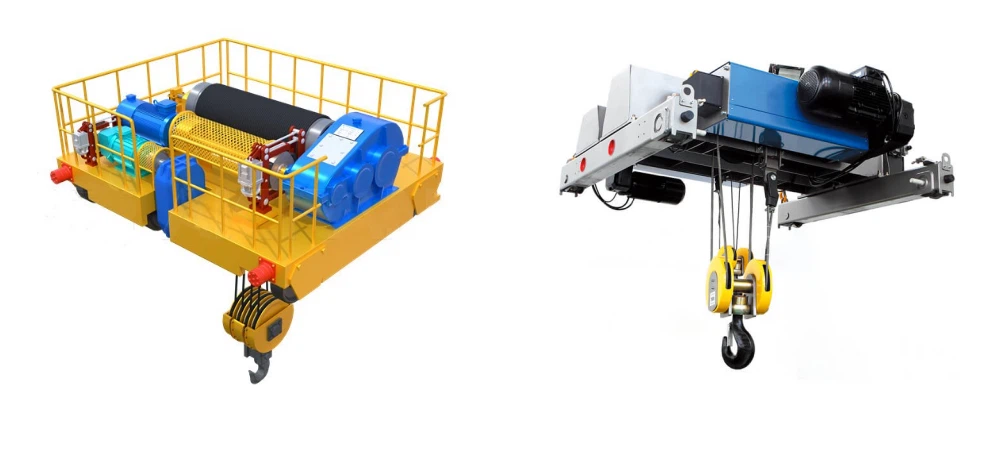
Hoist Trolley: A heavy-duty frame that runs on rails mounted on the top of the main girders. This "top-running" design provides the highest possible lift height.
Main Hoist Unit: Mounted on the trolley, this is a powerful winch system consisting of:
Hoist Motor(s): High-torque, electric motors.
Hoist Reducer (Gearbox): A multi-stage, precision gearbox that converts high motor speed into powerful, low-speed torque for lifting.
Drum(s): Large steel cylinders around which the wire ropes are spooled.
Wire Ropes: High-strength, non-rotating steel ropes. There are typically 4 or 8 ropes for container handling.
Brakes: Primary and secondary fail-safe brakes (usually disc type) that automatically engage to hold the load.

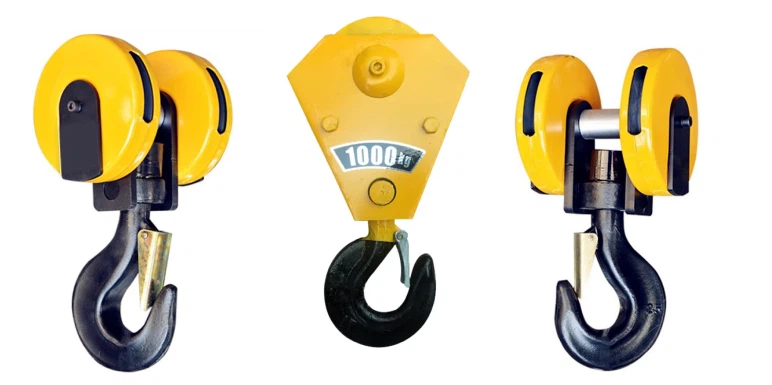
Spreader: The specialized below-the-hook device for container handling. This is the "intelligent" part of the system.
Twistlocks: Hydraulically or electrically operated pins that extend and retract to engage the corner castings of a shipping container.
Telescopic Mechanism: Allows the spreader to adjust its length to handle 20ft, 40ft, and 45ft containers.
Guidance System: Features guides (funnels) and sensors to help align the spreader with the container automatically.
Weighing System: Often includes built-in sensors to measure the weight of the container.
3. Gantry Travel System (Crane Propulsion)
This system moves the entire crane along the runway.
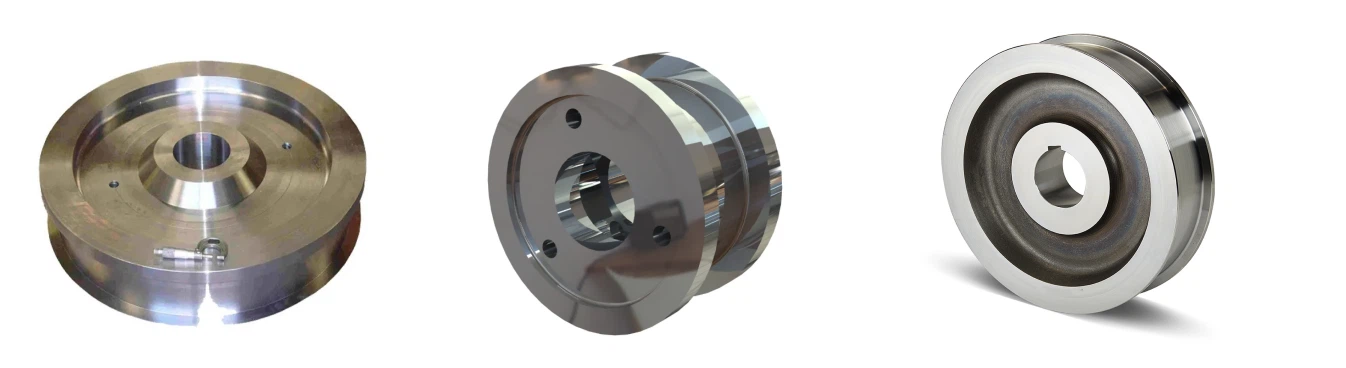
End Trucks: The assemblies at the bottom of each leg that contain the travel wheels, axles, bearings, and drive machinery.
Travel Wheels: Multiple large, forged steel wheels per end truck to distribute the crane's enormous weight onto the rails.
Gantry Drive Motors: Powerful electric motors that provide the torque to move the massive crane structure.
Gantry Reducers (Gearboxes): Reduce the motor speed to the required wheel speed.
Gantry Brakes: Spring-set brakes to stop and hold the crane in position.
4. Rail and Runway System
The fixed infrastructure that guides and supports the crane.
Runway Rails: Extremely heavy-duty steel rails (e.g., QU100, QU120 standards) that are precisely aligned and grouted into a massive concrete foundation. This foundation is critical for handling the dynamic loads and ensuring smooth travel.
Rail Clips and Baseplates: Secure the rail to the concrete foundation beam.

5. Electrical and Control System
The nerve center that powers and commands all crane functions, often with a high degree of automation.
Power Supply:
Conductor Bar (Enclosed Track) System: The most common and reliable method for rail-mounted gantries (RMGs). An electrified rail system runs parallel to the crane runway, and collectors on the crane draw power from it.
Cable Reel: A motorized drum that pays out and retracts a heavy power cable as the crane moves (more common for Rubber-Tired Gantries - RTGs).
Diesel Generator: For RTGs, a large onboard diesel engine generates electricity to power all drives.

Control Panel / Cabinet: Houses the intelligent control systems:
Variable Frequency Drives (VFDs): For smooth, controlled acceleration and deceleration of all motions (hoist, trolley, gantry). This is essential for precise positioning and preventing container swing.
Programmable Logic Controller (PLC): The "brain" of the crane. It manages all control logic, safety interlocks, and automated sequences.
Operator Interface:
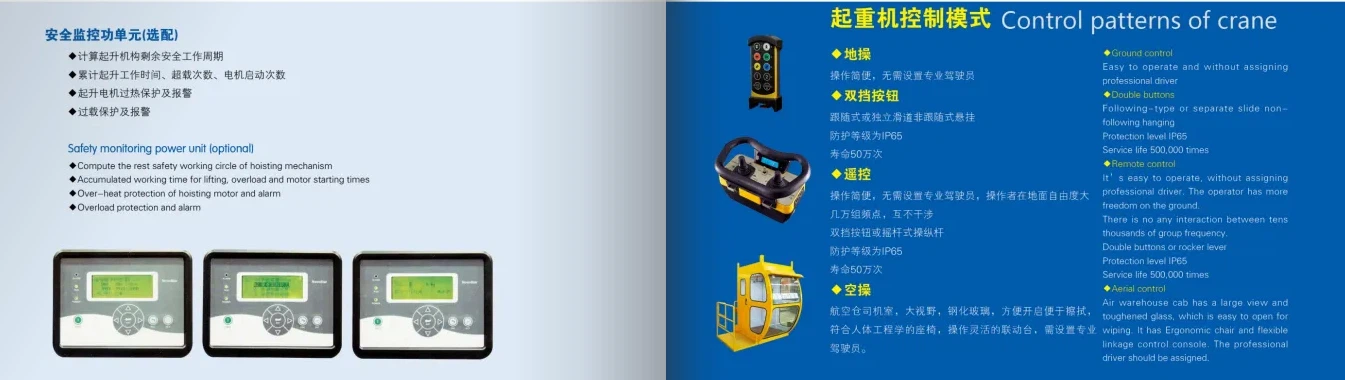
Radio Remote Control: Standard for modern cranes, giving the operator mobility and the best view of the container and its landing point.
Operator's Cab: Can be mounted on the crane, offering a panoramic view of the stacking area.

Sensors and Safety Devices:
Load Moment Indicator (LMI): Monitors the load weight to prevent overload.
Anti-Sway System: Uses algorithms and VFD control to minimize container swing during movement.
Anti-Collision System: Uses laser or radar sensors to detect obstacles and other cranes, automatically stopping movement to prevent accidents.
Anemometer: Measures wind speed and can automatically slow or stop operations if limits are exceeded.
Limit Switches: Prevent the trolley and hoist from over-traveling.
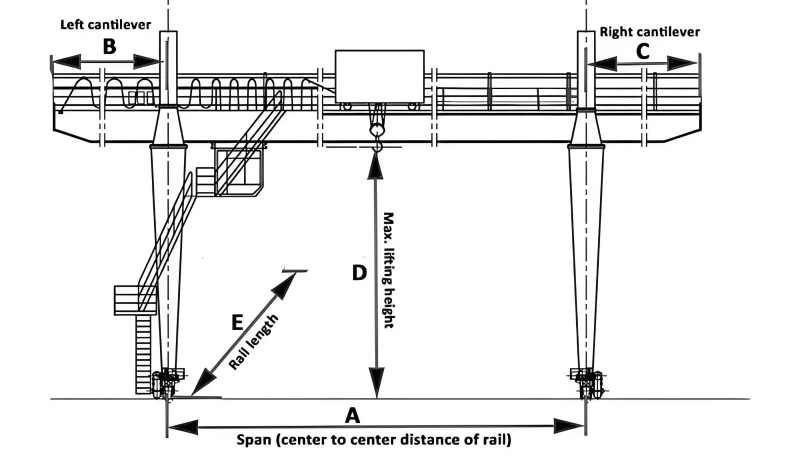
SKETCH
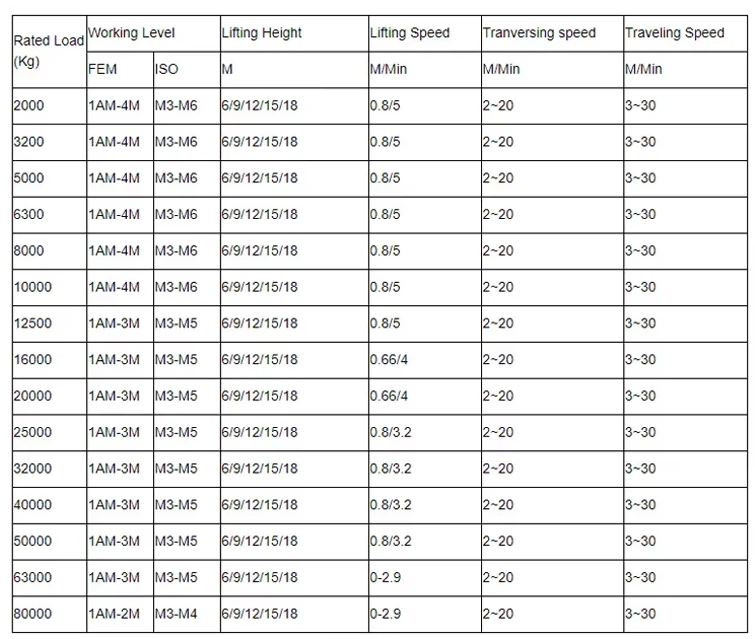
Main technical
Advantages
Advantages of Container Double Girder Gantry Cranes
The double girder design offers significant benefits over single girder models, especially for the demanding task of container handling.
1. Superior Lifting Capacity and Height:
Heavy Loads: Double girders can support much higher capacities, typically ranging from 20 tons to over 100 tons, easily handling fully laden 20', 40', 45', and even 53' containers.
Greater Hook Height: The design allows the hoist and trolley to be placed between the girders, maximizing the lift height under the hook. This is crucial for stacking containers multiple high.
2. Enhanced Durability and Structural Integrity:
The two girders create a robust and rigid structure that can withstand the high dynamic stresses of frequent lifting, moving, and stacking heavy containers. They are less prone to deflection (bending) than single girder cranes, which is critical for precision and safety.
3. Improved Stability and Safety:
The wider base and dual-girder construction provide excellent stability against side pulls and torsional (twisting) forces, especially important in windy outdoor environments like ports. This reduces the risk of load sway and increases overall operational safety.
4. Optimal Use of Space and Span:
These cranes can be built with very large spans, covering multiple container lanes (e.g., 6+1 or more wide) and rail tracks. They maximize vertical storage space by allowing high stacking while leaving the ground area clear for truck and trailer movement.
5. Versatility in Applications:
They can be equipped with various spreaders to handle different container sizes and types (standard, open-top, refrigerated) and even other cargo using a hook attachment. Some can even lift two 20-foot containers simultaneously (twin-lift spreader).
6. High Efficiency and Productivity:
Equipped with powerful hoists and trolleys, these cranes offer high travel and lifting speeds, enabling rapid loading/unloading of ships, trains, and trucks. This speed is essential for meeting tight logistics schedules.
7. Customization and Automation:
They are highly customizable with features like:
GPS Positioning: For precise trolley and gantry movement.
Anti-Sway Systems: To minimize load swing for faster cycling.
Remote Control or Full Automation: Allowing operation from a cabin or a control room, improving operator ergonomics and safety. Automated Stacking Cranes (ASCs) are a common sight in modern terminals.
8. Reduced Long-Term Operating Costs:
While the initial investment is higher than for smaller cranes, their durability, reliability, and high throughput lead to a lower cost per container moved over the crane's lifespan.
Application
Applications of Container Double Girder Gantry Cranes
These cranes are indispensable in the global supply chain, primarily used in the following areas:
1. Port Terminals and Intermodal Yards:
Primary Application: This is their most common use. They are used for stacking containers in the storage yard, moving them between stacking areas, and transferring them to/ from ships (via quay cranes), trucks, and trains.
Railport Terminals: For loading and unloading containers from railroad flatcars (well cars).
2. Container Freight Stations (CFS) and Inland Depots:
Used for stuffing (loading) and stripping (unloading) containers, consolidating cargo, and temporary storage before the container continues its journey.
3. Manufacturing and Industrial Plants:
Large manufacturing facilities that receive raw materials or ship finished goods in bulk via containers use these cranes to handle them efficiently directly from the rail siding or truck bay into the plant.
4. Logistics and Distribution Centers:
Major distribution hubs that have direct rail access use rail-mounted gantry cranes (RMGs) to manage the flow of containers between rail and road transportation.
5. Heavy Lifting and Project Cargo:
While designed for containers, when fitted with a hook, they can handle other oversized and heavy project cargo like machinery, transformers, and construction modules.
Crane production process
The production process of a 200-ton mobile boat/marine lift crane involves several stages, from design and engineering to fabrication, assembly, and testing. Below is a detailed breakdown of the typical production process:
1. Design & Engineering
Conceptual Design: Engineers create initial sketches and 3D models based on load capacity (200 tons), reach, mobility, and environmental conditions (marine use).
Structural Analysis: Finite Element Analysis (FEA) ensures the crane can handle dynamic loads, wind, and wave forces.
Hydraulic & Electrical Systems: Design of hydraulic cylinders, winches, and control systems for smooth lifting operations.
Material Selection: High-strength steel (e.g., ASTM A514) for corrosion resistance in marine environments.
Regulatory Compliance: Meets standards like DNV-GL, ABS, or Lloyd's Register for marine cranes.
2. Material Procurement
Steel Plates & Beams: Sourced for the boom, chassis, and structural framework.
Hydraulic Components: Pumps, cylinders, hoses, and valves from certified suppliers.
Electrical Systems: Motors, sensors, and control panels (often waterproof for marine use).
Wire Ropes & Sheaves: High-grade steel cables for lifting.
3. Fabrication
A. Structural Fabrication
Cutting & Shaping: CNC plasma/laser cutting for precision parts.
Welding: Automated and manual welding (Submerged Arc Welding for thick sections).
Boom Construction: Lattice or telescopic design for strength and mobility.
Chassis & Outriggers: Reinforced for stability during lifts.
B. Hydraulic & Mechanical Assembly
Hydraulic System: Installation of pumps, cylinders, and hoses.
Winches & Drums: Mounted for lifting and lowering operations.
Slewing Mechanism: Allows 360° rotation (if applicable).
C. Electrical & Control Systems
Control Cabin: Waterproof operator station with joysticks/sensors.
Load Monitoring: Load cells and limit switches for safety.
Power Supply: Diesel engine or electric motor (marine-grade).
4. Assembly & Integration
Boom Installation: Mounted onto the chassis with pivot points.
Counterweights: Added for balance (if required).
Final Wiring & Plumbing: Connecting hydraulic and electrical systems.
Painting & Coating: Anti-corrosion paint (epoxy or zinc coatings).
5. Testing & Quality Control
Load Testing: Lifting 200 tons (+25% overload test, per standards).
Functional Tests: Checking hydraulic movements, rotation, and stability.
Environmental Tests: Salt spray tests for marine durability.
Safety Checks: Emergency stop systems, overload alarms.
6. Delivery & Commissioning
Transport: Disassembled for shipping or delivered as a mobile unit.
On-Site Assembly: Reassembled at the dock or shipyard.
Operator Training: Handling and safety protocols.

Workshop view:
The company has installed an intelligent equipment management platform, and has installed 310 sets (sets) of handling and welding robots. After the completion of the plan, there will be more than 500 sets (sets), and the equipment networking rate will reach 95%. 32 welding lines have been put into use, 50 are planned to be installed, and the automation rate of the entire product line has reached 85%.



Hot Tags: 50t container double girder gantry crane, China 50t container double girder gantry crane manufacturers, suppliers, factory
You Might Also Like


Send Inquiry