










50 Tons Rail Mounted Gantry Crane
Products Description
A 50-ton rail mounted gantry crane (RMG crane) is a heavy-duty material handling system designed for lifting and transporting large loads along fixed rail tracks. It features a rigid gantry frame supported by steel wheels that move on rails, and it is equipped with a trolley and hoisting mechanism capable of handling up to 50 tons of load.
This type of crane is widely used in container yards, precast concrete yards, shipyards, and heavy manufacturing plants, where precision, stability, and high lifting capacity are essential. The rail-mounted design provides efficient linear movement across large work areas with minimal deviation, making it ideal for repetitive, high-load operations.
Key Features:
Lifting Capacity: 50 tons, suitable for medium to heavy-duty operations.
Rail-Guided Travel: The entire crane moves along fixed rails installed on the ground.
Double Girder Structure: Ensures greater load support and improved stability.
Trolley with Hoist: Moves along the top of the girders to perform lifting and horizontal load transfer.
Electric or Hydraulic Drive: Ensures smooth and reliable crane and trolley movement.
Benefits:
Provides efficient, accurate, and high-capacity material handling.
Reduces labor and increases productivity in yard and plant operations.
Supports safe and controlled movement of heavy components over long distances.
Ideal for outdoor environments and large-span applications.
Core Components: Gearbox, Motor
Place of Origin: Henan, China
Warranty: 2 years
Weight (KG) : 22600 kg
Video outgoing-inspection: Provided
Machinery Test Report: Provided
Application: Widely
cantilever length : 0-15m
Trolley running speed: 20-40M/MIN
Working system: A5-A7
Lifting speed: 5-15M/MIN
Crane running speed: 30-50M/MIN
Control method: cabin control/wire rope remote control
Color: Request

Pictures & Components
1.Main Girders (Double Beam Structure)
Two horizontal beams forming the primary load-bearing framework.
Constructed from high-strength steel, typically in box or I-beam configuration.
Supports the trolley and the weight of lifted materials.
Gantry Legs
Vertical support structures connecting the girders to the traveling base.
Typically A-frame or box-type legs designed for high stability.
Transfer load from the main girders to the rail system.

Hoist Trolley
A motorized trolley equipped with a 50-ton hoist.
Moves horizontally along the girders for precise load positioning.
Contains lifting motor, gearbox, drum, wire rope, and hook block.
 |
 |
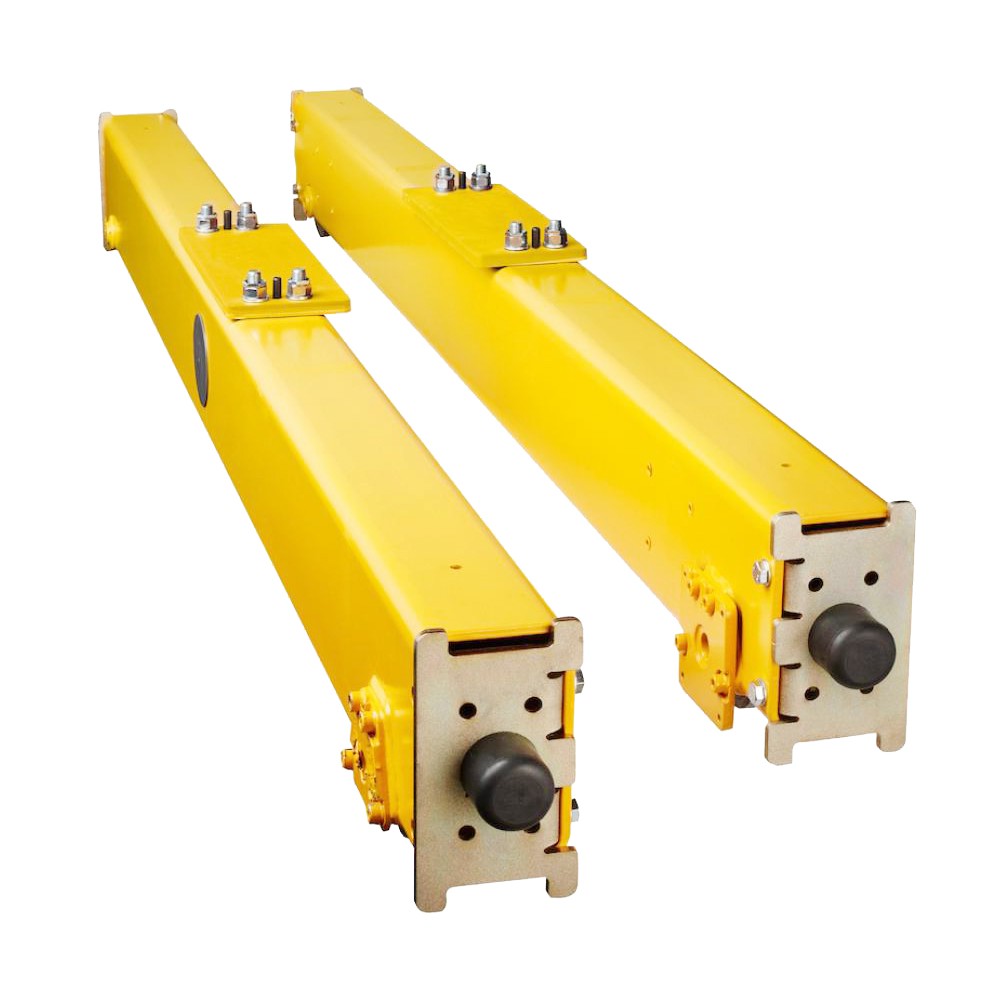
3.End carriage
1) Support and Movement:The end carriage supports the crane's trolley and hoist system, allowing them to move along the ceiling tracks (rails). It is designed to travel along the tracks while carrying the load, providing smooth horizontal motion.
2) Structural Base:The end carriage forms the foundation of the crane's travel mechanism. It houses the wheels or rollers that run along the ceiling rails. These wheels or rollers are designed to handle the loads and stresses exerted during crane movement.
3) Guide and Stability:The end carriage helps keep the crane system aligned and stable, ensuring the hoist and trolley remain on the tracks during operation. It prevents the crane from derailing or misaligning as it moves along the ceiling rails.
4) Load Distribution:The end carriage distributes the load between the two end supports (usually located at the building's walls or ceiling beams). This ensures that the load is lifted evenly and that the crane operates safely under heavy loads.
 |
 |
4.Rail-Mounted Traveling Mechanism
Includes wheels, axle assemblies, motors, and gearboxes that allow the crane to move along fixed rails on the ground.
Enables longitudinal movement across the work area.
Typically includes long travel motors, brakes, and drives.
5.Trolley travelling mechanism
1)Manual Trolley:In manual trolley systems, the trolley is moved by hand, often using a hand chain, pull cord, or crank system. This is common in light-duty applications where precise positioning isn't required, and load capacities are smaller.Manual trolleys are simpler and more cost-effective but require physical effort from the operator, limiting their use in larger, heavier operations.
2)Electric (Motorized) Trolley:Electric trolleys are powered by electric motors and are more common in industrial settings due to their speed, precision, and ease of use. They can be powered by a single-phase or three-phase motor, depending on the load and application.
The electric drive system allows for more precise control over speed and direction, enabling efficient and reliable horizontal movement of heavy loads.
3)Variable-Speed Trolley:Some trolley systems feature variable-speed drives, allowing the operator to adjust the speed of the trolley as needed. This is especially useful in applications requiring precise load handling, such as assembly lines, heavy machinery installation, or in environments where the load is delicate and requires careful movement.
4)Dual-Speed Trolley:Dual-speed trolleys offer two preset speeds for moving the trolley: a fast speed for long-distance travel and a slow speed for precise positioning near the load or destination.
This type of system is commonly used in environments that require both quick and precise movements.
6.Crane wheel
1)Wheel Hub: The hub is the central part of the wheel that holds the axle and connects the wheel to the end carriage or trolley. The hub must be strong enough to handle the forces involved in moving the crane.Tread: The outer part of the wheel that comes into contact with the rail. The tread must match the rail profile to ensure smooth and safe operation.Bearings: Bearings are used inside the wheel hub to reduce friction and allow the wheel to rotate smoothly. Proper bearing selection is critical for ensuring the smooth operation of the crane wheels.Flange: Some crane wheels have a flange, which is a raised part on the outer edge of the wheel. The flange helps keep the wheel properly aligned with the rail, preventing the crane from derailing.
2)Wheel Material and Design Considerations:
Strength and Durability: Crane wheels are designed to bear heavy loads without deforming or wearing out too quickly. For heavy-duty cranes, solid steel or forged steel wheels are typically used for their strength and durability.Wear Resistance: Crane wheels experience continuous friction as they roll along the rails, so material wear resistance is crucial. Steel and cast steel wheels are designed to minimize wear, while rubber-coated wheels can wear down more quickly in heavy-duty environments.Noise and Vibration: Wheels made of rubber or polyurethane are typically quieter than steel wheels, making them ideal for environments where noise reduction is important

7.Crane Hook
1)Function of the Hook:The hook's primary function is to lift and secure the load by attaching to the lifting sling, chain, or hook block that is connected to the load.
It is located at the bottom of the crane's hoist mechanism and moves vertically along the lifting height as the crane performs lifting and lowering operations.The hook must maintain a secure connection with the load throughout the operation to prevent accidents, slippage, or dropping of the load.
2)Hook Dimensions:The size and dimensions of the hook depend on the weight of the load being lifted, the lifting height, and the overall design of the crane system.Hook throat opening: The throat is the space through which the load sling or chain passes. The size of the throat must be large enough to accommodate the lifting equipment while providing a secure grip on the load.Hook length and capacity: The length and overall size of the hook are determined by the crane's lifting capacity and the size of the typical load being lifted. The hook's load-bearing capacity must match or exceed the weight of the heaviest load to be lifted.

8.Motor
1)Function of the Motor:Hoisting Motor: The motor used for lifting and lowering the load is typically located in the hoist unit and is responsible for driving the drum or winch to wind and unwind the rope or chain that raises and lowers the hook.Travelling Motor: Motors are also used to drive the end carriage and trolley movement along the rails, allowing the crane to move horizontally along the gantry. The crane travel motor powers the crane's movement along the ceiling-mounted track or gantry rails, while the trolley motor drives the horizontal movement of the hoist.Rotation Motor: If the crane features a swivel or rotating hook, there may also be a motor that controls the rotational movement of the load.
2)Motor Power and Capacity:The power rating of the motor is essential for determining the crane's lifting capacity and the speed at which it can operate. Higher-power motors are required for heavy-duty cranes that move larger and heavier loads.Hoisting Motor: The power rating of the hoisting motor is based on the weight of the load being lifted and the speed of hoisting required. The motor needs enough torque to lift the load efficiently while maintaining safe operational limits.
Travelling Motors: These motors are rated for the speed and load conditions associated with the crane's horizontal movement. For high-speed operations, more powerful motors may be needed to ensure the crane can move swiftly along the gantry tracks.
3)Motor Control Systems:Variable Frequency Drive (VFD): To provide adjustable speed control, cranes often use a VFD system that adjusts the frequency of the electrical supply to the motor. VFD allow precise control of motor speeds for hoisting, traveling, and positioning, which is crucial in applications requiring careful load placement.Soft Starters: These devices limit the inrush current when the motor is started, providing smoother acceleration and reducing wear on the motor and other components. Soft starters are commonly used in crane systems to extend the lifespan of the motor.Reversing Starter: To change the direction of crane movement , a reversing starter is used. This control allows the motor to run in both directions depending on the load and crane's movement requirements.
4)Motor Speed Control:Hoisting Speed: The hoisting motor must provide enough torque to lift the load at the required speed. In some cases, a dual-speed motor or multi-speed hoisting system may be used to allow operators to adjust the speed depending on the load's weight or lifting requirements.
Travel Speed: The travel speed of the gantry crane is also controlled by the motors. The speed of the crane and trolley movement is often adjusted depending on the load size, work environment, and safety regulations.
Cooling Systems:Motors used in gantry cranes, particularly those in heavy-duty applications, often include cooling systems to prevent overheating during extended use. This is especially critical in applications where the crane

.
9.Sound and light alarm system & limit switch
1)Warning for Movement:When the crane is in motion, the alarm system can alert people in the vicinity that the crane is operating. This reduces the likelihood of accidents, especially in busy or crowded work environments.The alarm system can be activated when the crane begins moving horizontally or vertically (hoisting or traveling).
2)Load Overload Warning:If the crane's load exceeds a predetermined weight limit (based on the crane's rated capacity), the system can trigger an alarm to alert the operator and prevent overloading, which could damage the crane or cause safety hazards.
3)Limit Position Warning:If the crane approaches its travel limit or hoisting limit (i.e., the maximum height or horizontal movement), the alarm system can signal the operator to stop before reaching a dangerous point, thus avoiding damage to the crane or load.
4)Malfunction and Fault Warning:In case of a malfunction or failure in one of the crane's key components (e.g., the motor, brakes, or lifting mechanism), the alarm system can alert the operator to take immediate action or stop the crane for safety inspection.
5)Emergency Warning:In the event of an emergency or safety incident, the sound and light alarm system can activate to provide a clear signal for evacuation or to draw attention to the problem, ensuring quick action is taken to mitigate risks.


10.Safety Devices
1)Overload Protection System Function: The overload protection system ensures that the crane does not exceed its rated load capacity, preventing mechanical failure and damage to the crane or load.
Components:Load Cells: These sensors measure the weight of the load being lifted and provide feedback to the control system.
Overload Limit Switches: These switches activate when the load exceeds the crane's safe operating capacity, stopping further lifting operations.Warning Signals: An alarm or visual signal (light or sound) alerts the operator when the crane is nearing or has exceeded the maximum load limit.Benefits:Protects the crane's structural components (hoist, motor, brakes) from being damaged by excessive loads.Increases safety by preventing overloading incidents, which can lead to crane failure or accidents.
2)Limit Switches:Function: Limit switches are used to prevent the crane from exceeding its maximum travel or hoisting range. They ensure the crane operates within safe boundaries and prevent over extension of the hoist or trolley.
Types:Vertical Limit Switches (Hoisting Limit): Prevent the hook or load from being lifted beyond a specified height.
Horizontal Limit Switches (Travel Limit): Stop the crane from traveling past its designated rails or work area.Trolley Limit Switches: These stop the trolley from moving beyond its designated travel path.
Benefits:Prevents mechanical damage from over-travel or over-hoisting.Ensures the crane doesn't interfere with other machinery or structures by limiting its range of movement.Enhances the safety of the operation by ensuring the crane only moves within the designated safe zones.
11.Control Mode
1) Manual Control Mode:Description: In manual control mode, the crane is operated by the crane operator using physical controls like joysticks, push buttons, or switches. This mode provides direct, hands-on control over the crane's movements.Control Components:Joystick/Control Levers: Used to control the movement of the hoist (up/down), trolley (left/right), and crane (longitudinal travel).Push Buttons/Switches: For turning the crane on/off, activating specific functions, or controlling speed and direction.Pendant Control: A remote control unit that allows the operator to control the crane from a distance, typically used for precise load handling or when operating in tight or hazardous spaces.
2) Radio Remote Control Mode:Description: Radio remote control mode allows the crane operator to control the crane remotely using a wireless control system. This mode is typically used in situations where the operator needs to control the crane from a safe distance,
3) Cabin Control Mode:Description: In this mode, the operator controls the crane from a cabin located on the crane's bridge or trolley. The cabin is equipped with a range of controls, and the operator can monitor the load and environment directly while operating the crane.

12.Sketch

Main technical

Advantages
1. High Lifting Capacity
Specifically engineered to handle up to 50 tons, making it suitable for medium to heavy lifting tasks.
Ideal for handling large components like precast beams, containers, steel structures, and heavy equipment.
2. Stable Rail-Guided Movement
Operates along fixed rails, ensuring precise and straight-line movement over long distances.
Excellent for applications that require repeatable, linear material handling.
3. Durable and Rigid Structure
Built with double girder design and robust gantry legs, providing superior load stability and minimal deflection.
Capable of withstanding harsh outdoor conditions and high-duty cycles.
4. Efficient Use of Space
Suitable for open yards and large facilities, as it does not require overhead runway beams or building support structures.
Maximizes floor space and improves site layout flexibility.
5. Flexible Trolley Operation
Equipped with a motorized hoist trolley that allows for precise cross-travel along the main girders.
Enhances positioning accuracy and operational efficiency.
6. Low Operational Cost
Designed for long service life and low maintenance, reducing downtime and operating expenses.
Energy-efficient motors and components lower power consumption over time.
7. Versatile Applications
Applicable in precast yards, shipyards, container terminals, construction sites, and steel fabrication plants.
Handles diverse lifting requirements, from raw materials to finished products.
8. Safety and Automation Options
Can be equipped with advanced safety features like overload protection, limit switches, anti-collision systems, and emergency stop functions.
Supports automation and remote control systems, improving safety and operator convenience.
9. Weather Resistance for Outdoor Use
Engineered to function in outdoor environments with optional weatherproofing, storm locks, and wind sensors.
Reliable in various climate conditions including rain, sun, and strong winds.
Application
The 50-ton rail mounted gantry crane (RMG) is widely used in various industries for lifting and transporting heavy loads along a fixed rail path. Thanks to its high capacity, structural stability, and precise movement, this type of crane is ideal for both indoor and outdoor applications that require efficient material handling over large areas.
Common Applications:
1. Precast Concrete Yards
Lifting and transporting precast beams, columns, slabs, and girders.
Assists in production, curing, storage, and loading of precast elements.
2. Shipyards and Dockyards
Handling large ship components, engines, and steel blocks.
Used for shipbuilding, repair, and loading/unloading heavy materials near docks.
3. Container Terminals
Moving 20-ft and 40-ft shipping containers between trucks, trains, and storage stacks.
Suitable for logistics centers, intermodal terminals, and ports.
4. Steel Plants and Fabrication Yards
Lifting and shifting steel plates, coils, pipes, and fabricated components.
Facilitates assembly, welding, and cutting processes in large-scale steel workshops.
5. Construction Sites
Handling heavy construction materials such as rebar bundles, precast bridge segments, and steel trusses.
Especially useful in bridge, highway, and large infrastructure projects.
6. Power Plants
Installation and maintenance of heavy machinery, including turbines, transformers, and generators.
Supports both construction and long-term plant operations.
7. Railway and Metro Infrastructure
Lifting and positioning track slabs, U-girders, and box segments.
Widely used in metro, light rail, and high-speed rail construction projects.
8. Heavy Equipment Manufacturing
Moving large machinery parts, vehicle bodies, or equipment assemblies.
Useful in mining, industrial machinery, and aerospace manufacturing.
Crane production procedure
1. Design stage: Understand the specific needs of customers, including load-bearing capacity, span, height and use environment. Carry out preliminary design according to the needs and draw scheme drawings, including structural design, power system and control system design. Carry out structural strength, stability and dynamic analysis to ensure that the design meets relevant standards and specifications.
2. Material preparation: Select suitable materials according to design requirements, such as high-strength steel, aluminum alloy, etc., to ensure good mechanical properties and durability. Purchase the required raw materials and components according to the design drawings, including motors, reducers, hooks, control systems, etc.
3. Processing and manufacturing: Cut the steel and process the main beam, end beam and other structural parts according to the design dimensions. Connect the cut parts by welding to form the main structural frame of the crane. Finish the welded components, including drilling, turning and milling, to ensure the matching accuracy of each component.
4. Assembly: Preliminary assembly of the processed components to check the stability and matching of the structure. Install the lifting mechanism, trolley running mechanism and trolley running mechanism to ensure that all moving parts can run smoothly.
5. Electrical system installation: Install motors, inverters, control panels and other electrical components to ensure that the electrical system is connected correctly. Arrange the cable lines reasonably to ensure safety and beauty, and reduce interference and wear.
6. Commissioning and testing: Test the various functions of the crane, including lifting, moving, braking and alarm systems, to ensure that all functions are normal. Carry out safe load tests to ensure that the crane operates stably under maximum load and meets safety standards.
7. Inspection and quality control: Carry out quality inspections on each link of production to ensure that all components meet design and standard requirements. Carry out qualification certification according to relevant regulations to ensure that the equipment meets national and industry standards.
8. Delivery and installation: Transport the manufactured crane to the customer site. Install it at the customer site, including fixing the foundation, commissioning and connecting the power supply. Provide operation training to customers to ensure that they can use the equipment safely and effectively, and officially deliver it for use.

Workshop view:
The company has installed an intelligent equipment management platform, and has installed 310 sets (sets) of handling and welding robots. After the completion of the plan, there will be more than 500 sets (sets), and the equipment networking rate will reach 95%. 32 welding lines have been put into use, 50 are planned to be installed, and the automation rate of the entire product line has reached 85%.


Hot Tags: 50 tons rail mounted gantry crane, China 50 tons rail mounted gantry crane manufacturers, suppliers, factory
You Might Also Like


Send Inquiry